
AI Discovery and Brady Compliance in the Sam Nordquist Case
The Sam Nordquist case — with seven defendants and massive digital evidence — illustrates how AI-assisted discovery tools can help prosecutors manage evidence but also risk suppressing exculpatory material. This article analyzes the constitutional and practical implications, drawing on new research and governance frameworks.
- Hallucination rate
- Not measured / undisclosed
By mid-July 2026, the Sam Nordquist prosecution had already begun to narrow in the way multi-defendant cases often do: not by trial proof, but by pleas. Seven people were charged in connection with Nordquist’s torture and killing, and the case file publicly described around them was not a tidy folder of witness statements. It included TikTok communications, text messages, social media records, phone data, and motel surveillance footage — the kind of evidence set that makes “manual review” sound principled until someone has to find the one message that changes a charge, a defense theory, or a plea conversation. Patrick Motyka pleaded guilty on June 2 to lesser charges. Precious Arzuaga pleaded guilty on June 26 to all 12 charges, including first-degree murder and kidnapping, with no deal. Jennifer Quijano pleaded guilty on July 15 to all 8 charges, also with no deal. A federal investigation involving Arzuaga and Quijano remained ongoing, and the death penalty remained possible if federal charges were later brought. Assistant District Attorney Kelly Nobles put the practical reality plainly: “when people start pleading guilty, that causes momentum.” [1]
That sentence is doing more work than it may first appear to do. In a seven-defendant prosecution, one plea changes the posture of every remaining defendant. A second plea changes it again. By the third, the case may look less like a contested factual record and more like a narrowing corridor. Discovery completeness matters before trial because plea leverage is built from what each side believes the evidence can prove, what it can undercut, and what it leaves open.
There is no public documentation that prosecutors or defense counsel in the Nordquist case used any particular AI discovery product. The case should not be treated as proof that a specific tool failed, succeeded, or even appeared. Its value is different: it shows the conditions under which AI-assisted discovery becomes hard to avoid and Brady compliance becomes harder to verify. Seven defendants, overlapping communications, video, phone records, and social media do not create a theoretical workflow problem. They create a queue, and constitutional duties sit inside that queue.

The Brady Problem Is Not Volume Alone
Large digital discovery makes AI attractive for reasons that are not frivolous. Messages must be clustered. Near-duplicates must be suppressed. Names, dates, locations, phone numbers, handles, and video references must be connected. In a case built partly from everyday digital traces, the alternative is not a serene common-law process in which lawyers read everything with perfect attention. The alternative is often delay, triage, overbroad dumping, or review fatigue masquerading as caution.
The constitutional danger begins when triage becomes asymmetric. Brady v. Maryland is not satisfied because a review system is generally efficient, or because it finds what the prosecution is most interested in proving. The obligation is to disclose material favorable to the accused, including exculpatory and impeachment evidence. A discovery process can be fast, technically competent, and still structurally poor at surfacing the material most likely to complicate the government’s theory.
That is the central contribution of the June 2026 Columbia Science and Technology Law Review article by Hartline, Wexler, Shan, and Sun, “AI Suppression: E-Discovery Software and Brady.” Using computer science simulations with synthetic datasets, the authors found that technology-assisted review can systematically suppress Brady material when configured around inculpatory evidence. Their point is not that TAR is useless. It is that a single review pass optimized to find evidence of guilt may miss evidence favorable to the defense, and current doctrine gives prosecutors virtually no operational guidance on how to prevent that result. [2]
The use of synthetic data matters. The study is not a forensic audit of the Nordquist file, and it does not establish how any real prosecutor’s database performed in any real case. But its warning fits the kind of case Nordquist represents: when the evidence population is large, mixed, and multi-actor, the settings that decide what rises to the top can become as important as the human reviewer who reads the surfaced documents.
How a Fast Review Can Become a Selective Review
TAR systems do not merely “look through” evidence. They are configured to rank, classify, cluster, or prioritize material according to training examples, search terms, labels, model assumptions, and reviewer feedback. If the seed set and labeling process are built around inculpatory relevance — threats, admissions, coordination, movement, concealment, location data, or co-defendant communications — then the system learns to elevate items that resemble that conception of importance.
Brady material does not always resemble that. It may be a contradiction buried in a co-defendant’s messages. It may be a timestamp that weakens a sequence. It may be a surveillance gap. It may be an impeachment thread that matters only because a witness later becomes central. It may be a document that is not “hot” for guilt but is essential to punishment, intent, participation, identification, or credibility.
| Configuration Choice | What It Can Privilege | Brady Risk |
|---|---|---|
| Training primarily on inculpatory examples | Admissions, threats, coordination, consciousness-of-guilt evidence | Favorable contradictions and impeachment material may be ranked as low priority |
| One-pass review for general relevance | Evidence that fits the prosecution’s charging theory | Exculpatory material may never receive a dedicated search logic |
| Aggressive deduplication or clustering | Efficiency and reduced reviewer burden | Variant messages, context, or outlier items may be collapsed too early |
| Opaque vendor scoring | Speed and apparent precision | Counsel may not know why favorable material was deprioritized |
The danger is not that the machine has an anti-defense motive. Motive is the wrong question. The problem is that a relevance model trained for one prosecutorial task can perform badly at a different constitutional task while still appearing productive. It can produce a confident queue of incriminating material, reduce the visible backlog, and leave the suppressed category largely invisible because no one separately asked the system to find it.
Hartline, Wexler, Shan, and Sun therefore recommend separate TAR workflows for inculpatory and exculpatory material. That recommendation is not a technical nicety. It is a disclosure architecture. A Brady-safe process has to show how favorable evidence is searched for, labeled, tested, escalated, and disclosed. “We reviewed the file with AI” is not an answer to that question. [2]
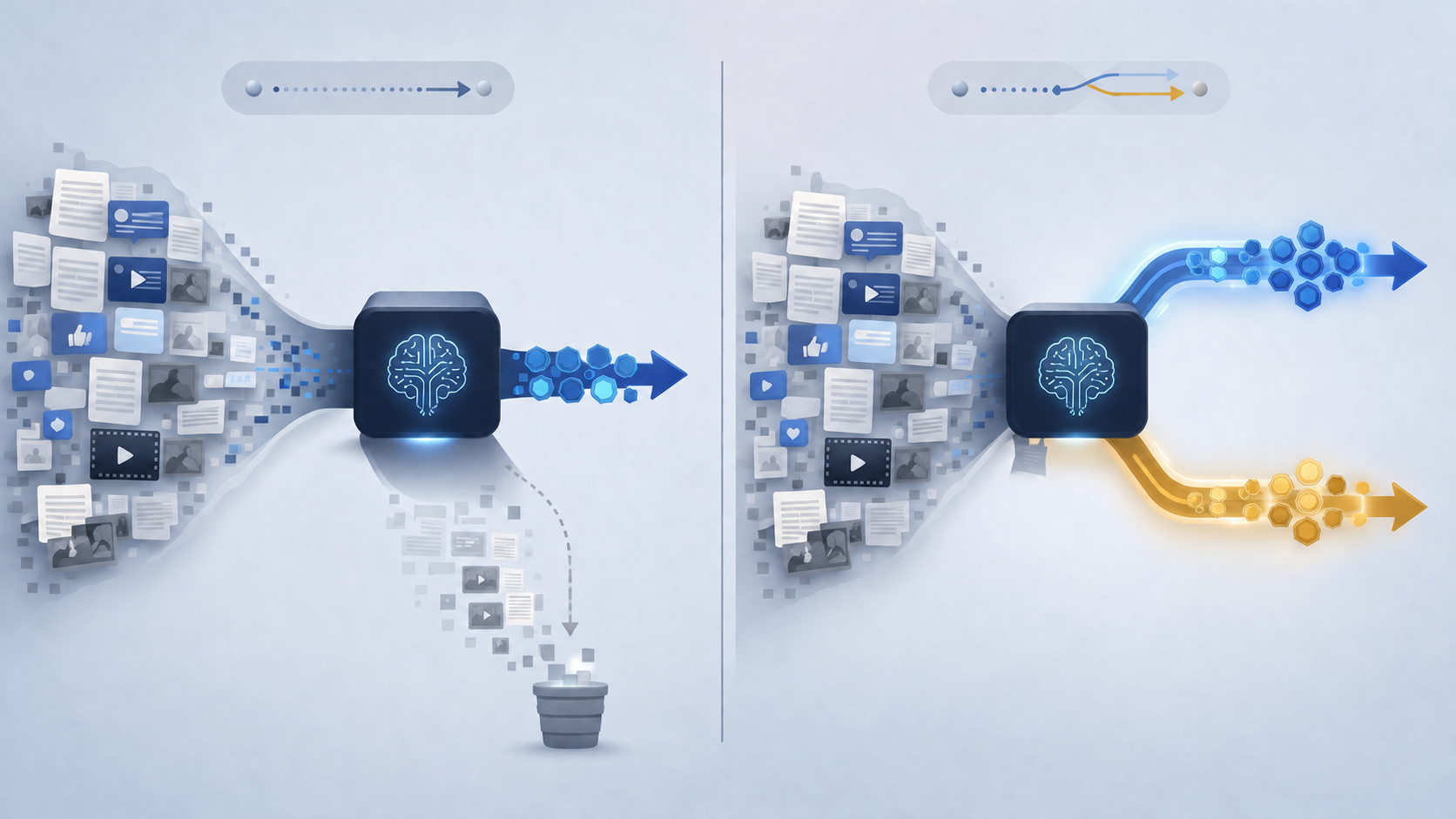
Why Separate Exculpatory Workflows Matter in Plea-Driven Cases
The plea sequence in the Nordquist case makes the timing issue concrete. Motyka’s June 2 plea to lesser charges came before Arzuaga’s June 26 plea to all 12 charges, which came before Quijano’s July 15 plea to all 8 charges. Nobles’s observation about plea momentum describes a familiar pressure: once one defendant accepts responsibility, other defendants and counsel must reassess exposure, cooperation possibilities, trial risk, and sentencing posture. [1]
A missed Brady item does not become constitutionally serious only on the eve of trial. In a case moving through pleas, it can matter when a defendant is deciding whether the government’s account is effectively unanswerable. It can matter when counsel assesses whether another defendant’s statement is impeachable. It can matter when a lesser role, a disputed timeline, or a credibility problem would change bargaining leverage. The injury is not limited to a dramatic trial surprise; it can occur while the case is being priced.
This is where general AI adoption statistics are least helpful. A vendor may say its system processes evidence far faster than humans or achieves high precision in review, and Veritone has publicly claimed that 90% of investigations involve digital evidence, that AI can process evidence 85 times faster, and that its review can reach 92% precision. Those are vendor-sourced claims, not independent proof that a given criminal discovery workflow is Brady-safe. [3]
Self-reported professional surveys have similar limits. An 8am Legal Industry Report for 2026 reported that 64% of criminal law professionals use AI, 29% say AI helps them produce higher-quality work, and 87% cite lack of trust as a barrier. Those figures are useful as atmosphere: AI is present, and lawyers remain uneasy. They do not answer whether exculpatory material is being separately modeled, validated, audited, and disclosed. [4]
Governance Frameworks Exist, but They Do Not Yet Close the Brady Gap
The governance literature has moved faster than many courthouse procurement practices, but it still tends to speak at a higher altitude than the Brady problem requires. The Stanford Law Policy Lab’s March 2026 white paper concluded that no existing institutional model performed well across all six governance design criteria it evaluated, and that criminal justice agencies often lack the technical capacity to assess AI tools. That capacity problem is not abstract. If an office cannot evaluate how a discovery model was trained, tested, and monitored, it cannot confidently represent what the model did not bury. [5]
The ABA/NAPCO five guardrails — transparency, independent validation, human oversight, ethical procurement, and continuous review — are sensible as a starting vocabulary. They push courts and criminal justice actors away from blind procurement and toward documented accountability. But they do not, by themselves, tell a prosecutor how to configure a TAR workflow so that impeachment material is not treated as irrelevant noise because it does not resemble inculpatory training examples. [6]
The DOJ’s December 2024 report remains the most developed federal framework identified in the available materials. It described four application areas for AI in criminal justice and recommended oversight before and after deployment. Its timing matters: it was issued under the prior administration, and later executive orders shifted federal AI policy toward deregulation. The report is still useful, but it should not be mistaken for a settled, current, Brady-specific compliance regime. [7]
The gap is easy to name and hard to administer. General transparency does not necessarily reveal whether a model was trained on defense-favorable examples. Human oversight does not help much if the human sees only what the system elevates. Independent validation may test aggregate accuracy while missing a constitutionally important minority category. Continuous review may monitor system performance without asking whether the system has a separate path for evidence that weakens the government’s case.
What a Brady-Safe AI Discovery Process Would Have to Show
A defensible AI-assisted discovery process in a case like Nordquist would not be measured only by speed, review volume, or reduction in attorney hours. It would need to leave a record of how favorable evidence was sought. That record does not have to expose privileged strategy or turn every prosecutor into a machine-learning engineer, but it has to be specific enough to test the claim that Brady material had a fair chance of being found.
- Separate review logic for inculpatory, exculpatory, and impeachment material, rather than a single relevance pass.
- Documented training examples or criteria showing how favorable material was defined for the tool.
- Sampling and quality checks focused on low-ranked or excluded material, not only the highest-scoring evidence.
- A disclosure workflow that separates “reviewed by AI” from “reviewed for Brady.”
- Human responsibility assigned to lawyers who can explain the process in discovery litigation.
Those requirements sound procedural because Brady compliance is procedural before it is appellate. The question is not whether AI can help lawyers navigate a large digital file. It plainly can. The question is whether the office using it can later explain why the tool’s design did not turn the prosecution’s theory of relevance into the boundary of the defense’s access.
Defense counsel face a related problem from the other side. If the production arrives as a large dump, counsel may not know whether the government’s AI process has already shaped what was collected, prioritized, reviewed, or disclosed. If the production arrives as a curated set, counsel may not know what was filtered out. The AI Legal Playbook’s bright-line rule is sound as far as it goes: AI can surface comparisons and analyze data, but it cannot make plea decisions or weigh client-specific circumstances. The harder point is that counsel’s plea advice can be distorted before that decision point if the discovery pipeline has already hidden favorable material. [8]
The Nordquist Case as a Warning, Not an Accusation
What the case shows is why the issue is no longer academic. A seven-defendant prosecution with TikTok communications, texts, social media records, phone data, and surveillance footage is exactly the environment in which AI review will be tempting, and often necessary. It is also exactly the environment in which plea pressure can build before anyone outside the review team understands how the evidence was sorted.
The constitutional risk is not that prosecutors will use technology. In large digital cases, refusing useful tools can create its own failures. The risk is that current governance lets offices adopt systems optimized for finding incriminating material without forcing an equally disciplined process for finding material that helps the accused. In multi-defendant prosecutions, that imbalance can affect the case long before trial, long before an appellate record exists, and long before anyone can tell whether the system was “working” as intended.
References
- Killing of Sam Nordquist, Wikipedia, https://en.wikipedia.org/wiki/Killing_of_Sam_Nordquist
- AI Suppression: E-Discovery Software and Brady, Columbia Science and Technology Law Review, June 2026, journals.library.columbia.edu/index.php/stlr/article/view/14864
- AI Evidence Analysis: Transforming Digital Investigations, Veritone, veritone.com/blog/ai-evidence-analysis
- AI for Criminal Defense Lawyers, 8am, 2026, 8am.com/blog/ai-for-criminal-defense-lawyers
- AI in Criminal Justice: Why Governance Matters and How to Make It Work, Stanford Law School, March 27, 2026, law.stanford.edu/2026/03/27/ai-in-criminal-justice-why-governance-matters-and-how-to-make-it-work
- AI in the Criminal Courts: Balancing Innovation and Justice, NAPCO, June 2026, napco4courtleaders.org/2026/06/ai-in-the-criminal-courts-balancing-innovation-and-justice
- DOJ Report on AI in Criminal Justice: Key Takeaways, Council on Criminal Justice, December 2024, counciloncj.org/doj-report-on-ai-in-criminal-justice-key-takeaways
- AI Criminal Defense Practice, AI Legal Playbook, ailegalplaybook.com/article/ai-criminal-defense-practice
Chronological incident history
No sanction cases have named this tool in the tracked record set to date. This does not imply the tool is safe — see Risk Digest for ongoing monitoring.
← Compare peer toolsReport a correction or tip
Spotted an outdated figure, a misstated fact, or a ruling this tool profile should reflect? Public comments are disabled for this content given the professional cost of a misreported case outcome, penalty amount, or rule text — use the structured correction channel instead.
Report a correction or tip for this record →