
What Legal Claims Arise When an Airline Employee Threatens to Call ICE?
A legal claims analysis of rights and remedies available when an airline employee threatens to call ICE on a passenger based on national-origin stereotyping, using the July 2026 SFO United incident as a case study. The Unruh Act offers the strongest state-law remedy, but the absence of a federal private right of action and the risk of Airline Deregulation Act preemption create significant practical obstacles.
- Hallucination rate
- Not measured / undisclosed
At SFO Terminal 3, a United employee allegedly told a Mexican-American U.S. citizen that he was "not acting like a citizen" and threatened to call ICE during a ticketing dispute, then pushed his phone away when he began recording.[1] That is not just bad customer service. It is the kind of exchange that raises the first legal question a plaintiff-side lawyer asks immediately: what can actually be sued on, and what theory survives once the facts are stripped down to the elements?
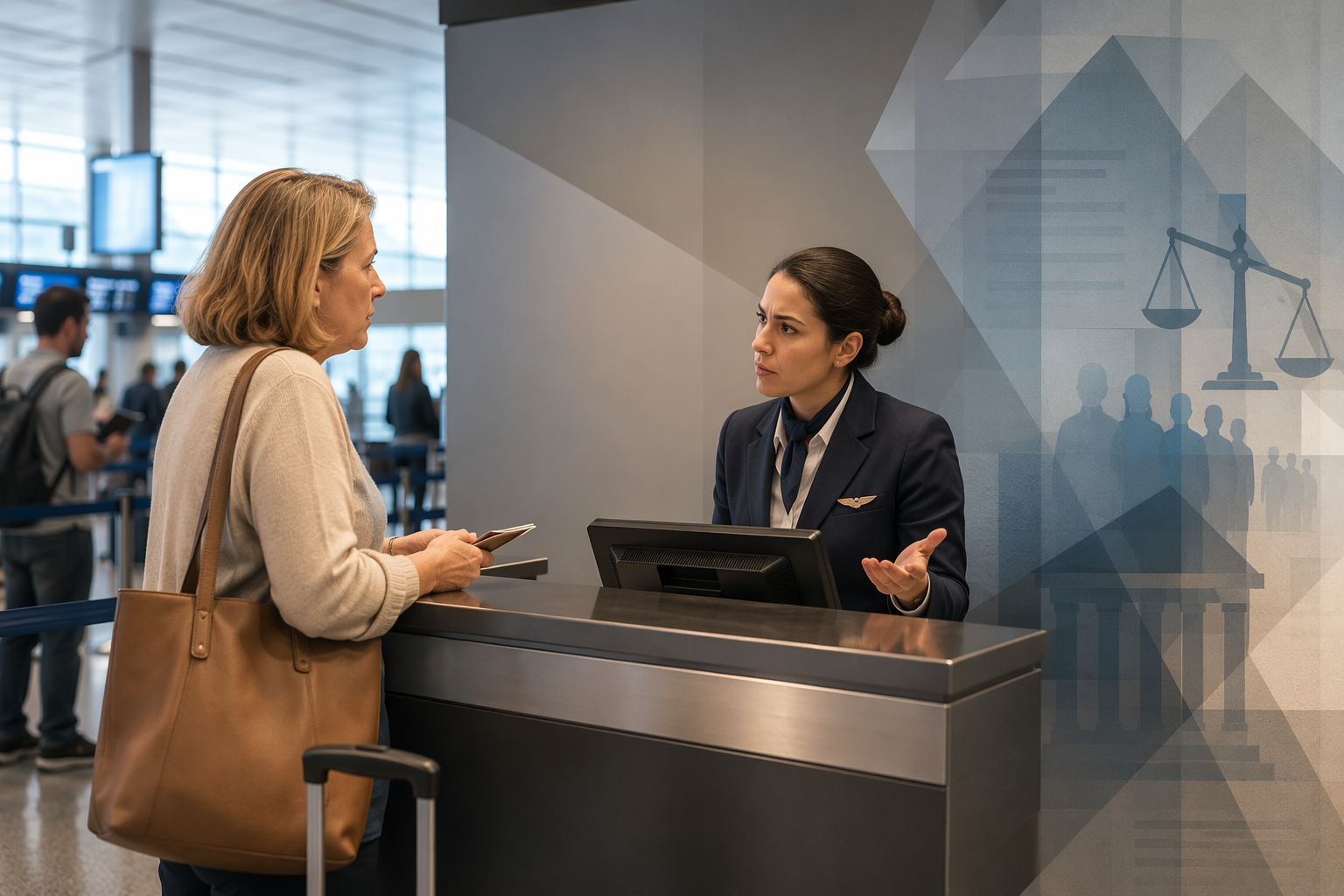
The cleanest way to read the incident is as a discrimination-and-coercion fact pattern with a civil-rights core. The plaintiff's case is strongest if the ICE threat is tied to national-origin or citizenship stereotyping, because that keeps the focus on who used the airport counter as a power lever, who had to record the exchange, and what harm followed. The record is still incomplete, though: the employee's confirmed identity and discipline status are not public, and the passenger was ultimately not denied service.
- Unruh Act: the leading state-law theory if the remark and ICE threat can be tied to citizenship or national-origin discrimination in a business establishment; California's civil-rights guidance says the statute carries a minimum $4,000 in statutory damages per violation, up to treble actual damages, and attorney's fees.[2]
- Bane Act: a plausible but narrower theory, because the plaintiff must show threats, intimidation, or coercion used with specific intent to interfere with civil rights; the phone-push detail helps, but intent will be the contested point.[3]
- IIED and assault: useful supporting claims, especially for emotional harm and the physical gesture around the phone, but usually not the center of gravity unless the facts show more than a brief confrontation.
- 49 U.S.C. section 40127: a federal anti-discrimination rule that points to DOT enforcement, not a private damages action.[4][5]
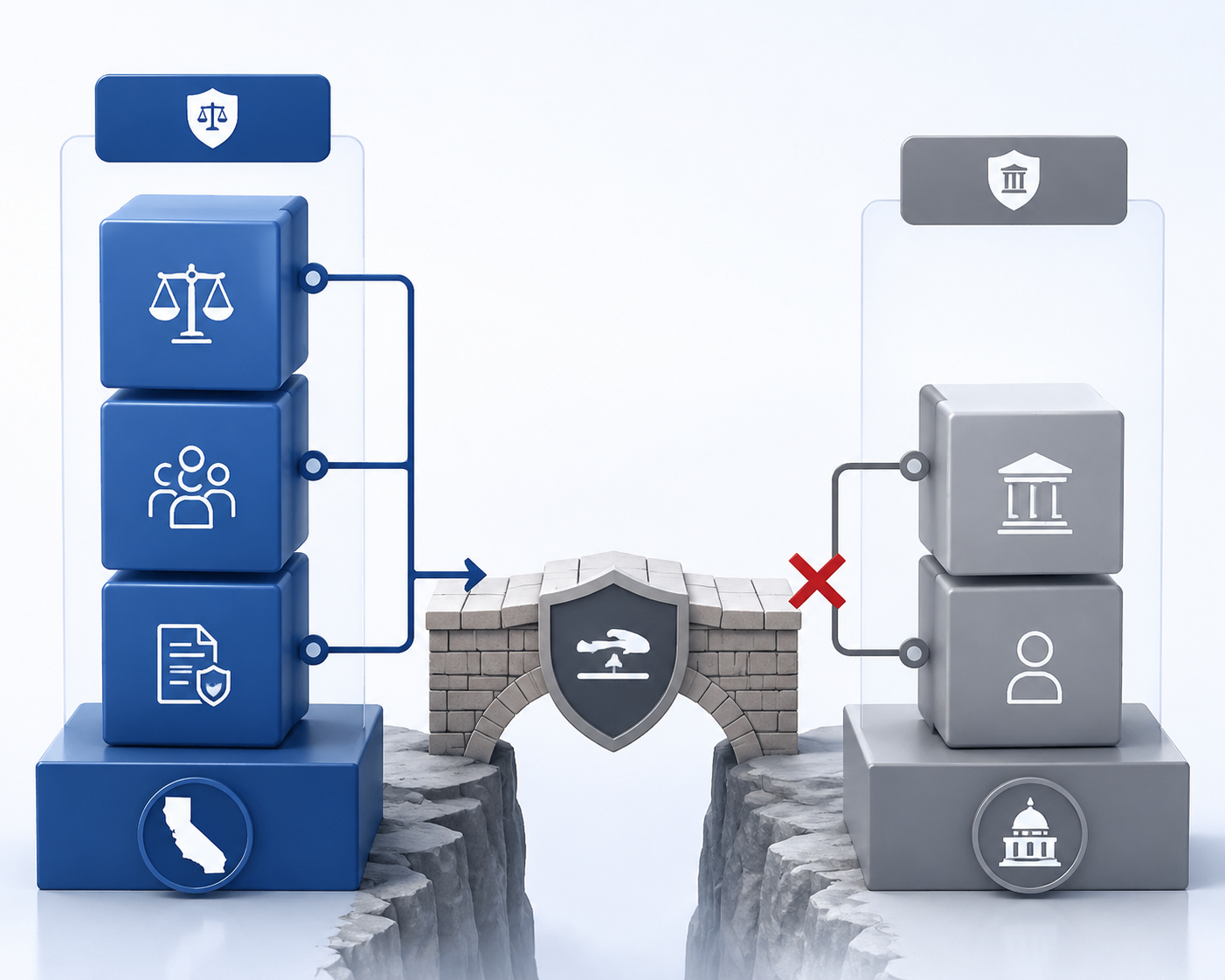
Why Unruh Leads
The Unruh Civil Rights Act is the most potent state-law remedy here because it reaches discrimination by business establishments and expressly covers citizenship and immigration status.[2] If the evidence shows that the employee used the ICE threat as a way to punish or intimidate a passenger because he looked or sounded Mexican, or because she assumed he was not entitled to the same treatment as other customers, the statute fits more naturally than a generic tort theory does. The practical value of Unruh is also remedial: the statutory minimum and attorney's fees make the claim worth serious evaluation even if actual damages are modest.
That said, this is still a fact-specific claim. The fact that the ticketing issue was resolved and the passenger was not turned away helps the defense argue that the episode was an ugly dispute, not a denial of access. But Unruh is not limited to formal exclusion. A plaintiff can still argue that discriminatory treatment at the counter, backed by a citizenship insult and an ICE threat, was itself the injury.
The Bane Act is the next serious statute, but it is more demanding. Section 52.1 targets threats, intimidation, or coercion that interfere with civil rights, and the plaintiff has to show the defendant specifically intended to interfere.[3] A threat to summon ICE can look coercive on its face, especially when paired with a statement that the passenger is "not acting like a citizen." Still, Bane claims tend to rise or fall on proof of the defendant's mental state, so this statute is strong only if the facts support a deliberate civil-rights interference theory rather than a heated service dispute.
The common-law claims matter, but mostly as support. IIED can capture the emotional shock of an immigration threat used as leverage against a passenger who is in the middle of travel logistics. Assault may be available only if the phone incident or surrounding conduct can be framed as an imminent harmful or offensive contact threat. Even so, these claims do not solve the central question: whether the conduct is legally recognizable as discrimination in a business setting, or just an isolated confrontation that happened to involve an airline.
The Federal Route Stops at DOT
The federal anti-discrimination provision in 49 U.S.C. section 40127 is real, but it is not a private damages route. The statute prohibits airline discrimination on protected grounds, and the Department of Transportation describes the remedy path as an administrative complaint process.[4][5] For a passenger looking for a courtroom damages case, that is the wrong kind of federal law: it may help with agency enforcement, but it does not create a private right of action.
That leaves the Airline Deregulation Act as the practical gatekeeper. State-law claims face preemption if they "relate to" airline prices, routes, or services in the way the statute forbids, and the analysis is notoriously fact-sensitive.[6] One plausible reading is that an Unruh claim aimed at discriminatory treatment, rather than airline service design, should survive. But that is an argument, not a settled rule, and it has not been tested on these exact facts. The passenger was not ultimately denied service, which makes a preemption fight more delicate because the defense can try to recast the dispute as a service interaction rather than a civil-rights violation.
That is why the quick comparisons to other airline cases matter only as orientation. American Airlines reached a confidential settlement in a race-discrimination suit brought by three Black men removed after a false body-odor complaint, with reporting that the airline committed to "take concrete actions to address discrimination".[7][8] United later paid $99,000 in an EEOC settlement over a hostile work environment claim involving race and national origin at Denver airport.[9] And in 2023, the ACLU, ADC, and Relman Law Firm sued four major airlines over discrimination against Arab, Middle Eastern, Muslim, and South Asian passengers.[10] Those matters show the industry is no stranger to discrimination exposure, but they do not answer the separate preemption question that controls whether a state-court passenger suit stays alive.
The bottom line is narrow but important: the SFO facts plausibly support overlapping state civil-rights and tort theories, with Unruh as the strongest available remedy and the Bane Act as the main secondary statute, while federal law offers only an administrative path. The unresolved problem is whether the state claims can survive ADA preemption on these facts. And as of July 19, 2026, no lawsuit has been publicly filed.
References
- SFO United Airlines Employee Allegedly Threatens to Call ICE on US Citizen - KQED - July 2026
- Unruh Civil Rights Act - California Civil Rights Department
- California Civil Code section 52.1 - FindLaw
- 49 U.S.C. section 40127 - FindLaw
- Discrimination in Air Travel - U.S. Department of Transportation
- United and Airfare Discrimination Preemption Analysis - View From The Wing
- American Airlines settles racial discrimination lawsuit filed by three Black men - CNN - December 19, 2024
- American Airlines settles race discrimination lawsuit filed by three Black men - Public Citizen
- United Airlines to Pay $99,000 in EEOC Discrimination Case - U.S. Equal Employment Opportunity Commission - January 2025
- ACLU, ADC, and Relman Law Firm Sue Four Major Airlines Over Discrimination Against Arab, Middle Eastern, Muslim, and South Asian Passengers - ACLU - 2023
Chronological incident history
No sanction cases have named this tool in the tracked record set to date. This does not imply the tool is safe — see Risk Digest for ongoing monitoring.
← Compare peer toolsReport a correction or tip
Spotted an outdated figure, a misstated fact, or a ruling this tool profile should reflect? Public comments are disabled for this content given the professional cost of a misreported case outcome, penalty amount, or rule text — use the structured correction channel instead.
Report a correction or tip for this record →