
Vibe Coding Apps Face Apple's Hammer — What's the Legal Impact?
Apple's enforcement of App Store Guideline 2.5.2 against vibe coding apps like Anything and Replit signals a structural collision between AI-driven app generation and platform review models, creating legal exposure under the Digital Markets Act and consumer protection law. This article breaks down what legal professionals need to track as platform regulation meets AI-generated software distribution.
- Hallucination rate
- Not measured / undisclosed
Apple's March 2026 actions were concrete: it blocked Vibecode and Replit updates, removed Anything on March 30, 2026, then restored Anything on April 3, 2026 after modifications. That sequence matters because it shows the dispute is not about a hypothetical future policy; it is about whether AI-generated app submissions can keep moving through a review system that still assumes the submitted binary is the thing users will actually get. [1][2][3]
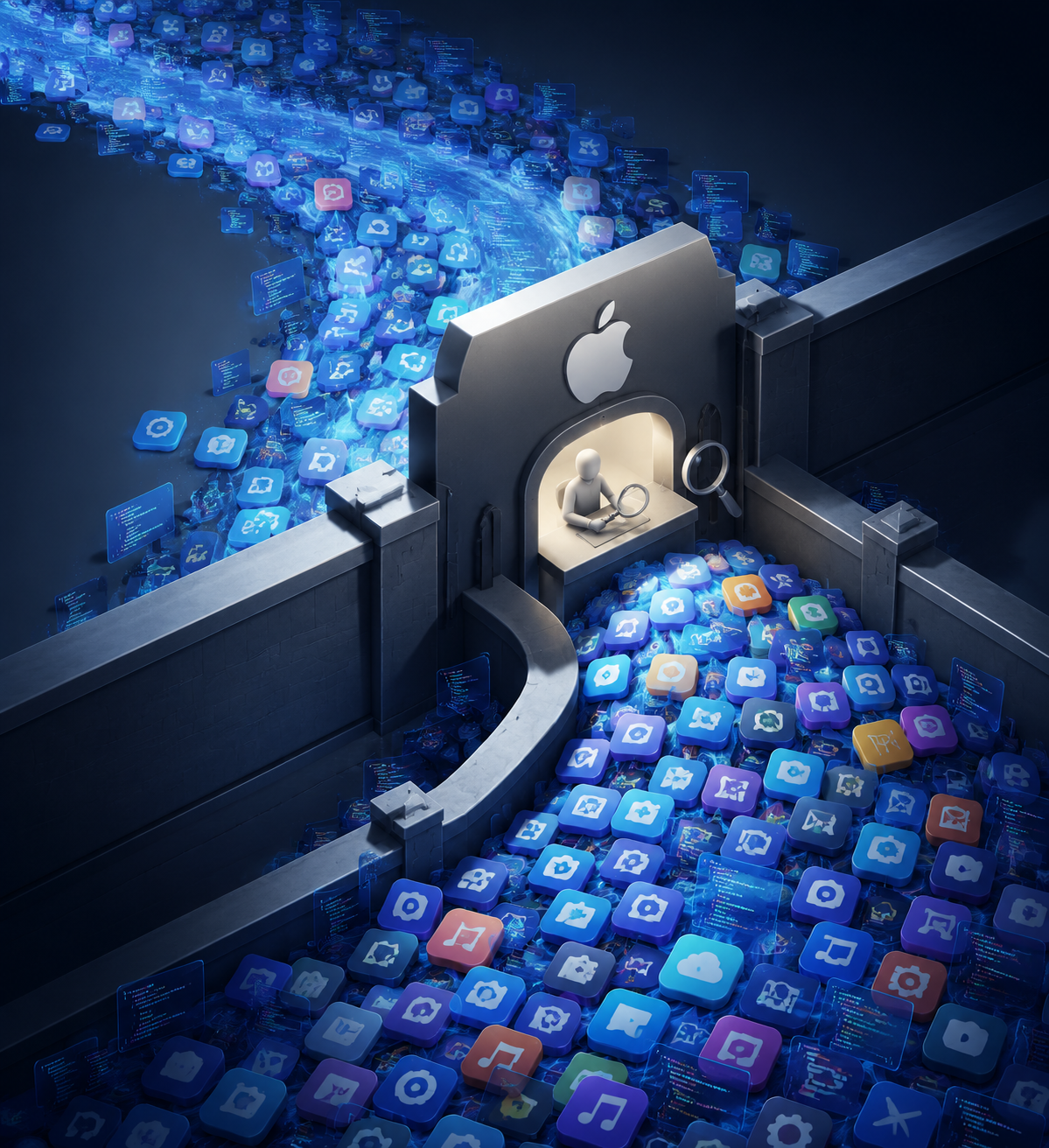
The rule Apple is actually enforcing
The interpretive hinge is App Store Review Guideline 2.5.2 and the Developer Program License Agreement's s.3.3.1(B) carve-out. Read together, they give Apple a basis to say that app code must remain bounded enough for review to mean something, while leaving room for limited educational or otherwise permitted code paths. That is why the legal fight is not simply whether vibe coding is trendy; it is whether a submission that can be regenerated, altered, or expanded after review still fits the platform's model of an approved app.
Apple can say it is not targeting vibe coding as a category, and that is plausible as a formal position. But once the product can behave differently on device than it did at submission, the platform is no longer just checking packaging; it is being asked to police post-review behavior.
The pressure on review is measurable
The timing matters because App Store volume appears to be rising faster than the old review cadence can absorb. One report said vibe coding drove an 84% jump in App Store submissions in a single quarter, while Appfigures data cited by TNW put 2025 at 557,000 new apps. Separate reporting said review delays had stretched from 24-48 hours to as long as 7-45 days in developer-facing accounts, although Apple disputes that the problem is as severe as critics describe. [4][5]
That is not proof that AI-generated apps caused the slowdown, and it does not establish that Apple is blocking more submissions because they are AI-made. The narrower point is structural: when code can be generated, modified, and resubmitted almost instantly, a review queue built for slower development cycles starts to look less like a checkpoint and more like a bottleneck with legal consequences.
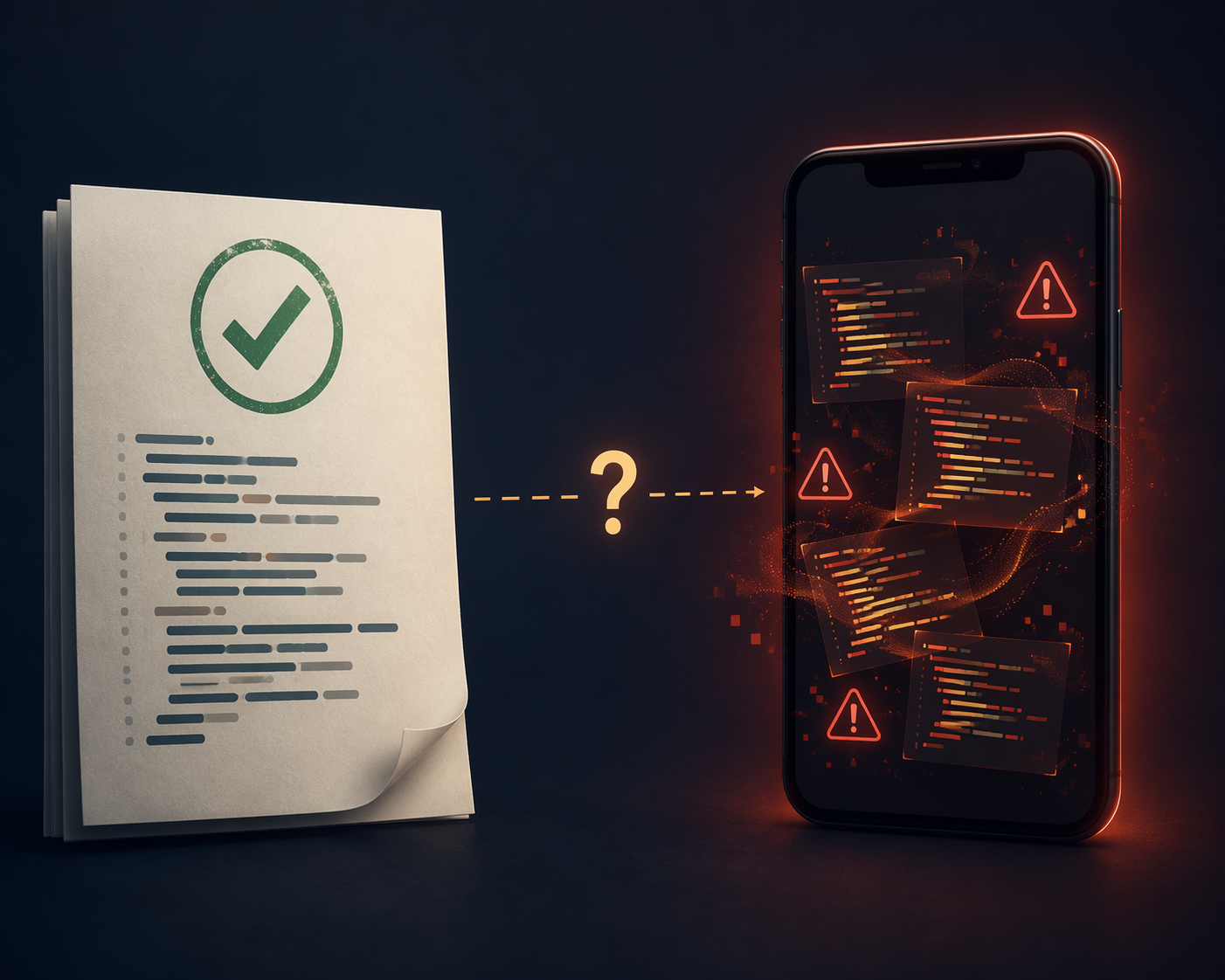
Why the DMA and consumer protection both come into play
The EU angle is real because app review is not just moderation when the store is the gate to distribution. If Apple uses Guideline 2.5.2 to decide which AI-assisted apps can ship, regulators can frame that either as a necessary quality-control measure or as evidence of control over a distribution chokepoint. The conflict-of-interest argument gets sharper because Apple is also investing in Xcode AI coding tools, which gives critics a ready-made story about a platform policing rivals while building its own adjacent tooling. [5]
Consumer protection is where the risk becomes less abstract. AI-generated code can be changed after review, and unreviewed dynamic behavior raises the question of who answers when what was approved is no longer what runs on the device. A Legit Security survey of 1,000 consumers found that 47% were concerned about AI in apps and 53% said they trust the official app store as a security signal. Those numbers do not settle liability, but they do show that consumer concern and trust in official app stores can point in different directions at once, which is exactly why a trust-based distribution model becomes legally fragile when the software itself can keep moving. [6]
The Oxford Political Review described this as a responsibility vacuum: the reviewer approves one version of the app, the generator changes the code, and the user experiences the result. Once that chain exists, blame is no longer a clean developer-versus-platform question. [7]
What legal teams should watch
The next legal tests are consistency and consequence: whether Apple applies the rule the same way across vendors, whether EU regulators treat the crackdown as quality control or market power, whether consumer-harm theories gain force if dynamic code causes a concrete incident, and whether app-store operators start to face some form of secondary responsibility for AI-generated defects.
References
- Apple boots vibe coding app Anything from App Store — Mashable
- Apple Pulls Vibe Coding App 'Anything' From App Store, Escalating Enforcement — MacRumors
- Apple App Store Guidelines Have Some Vibe Coding Apps in Limbo — CNET
- Vibe coding drove an 84% jump in App Store submissions. Apple is cracking down. — TNW
- Apple Blocks Vibe Coding Tools From Store — Forbes
- Survey reveals consumer sentiment on AI-created apps — Legit Security — September 2025 / updated April 2026
- The Responsibility Vacuum: How Vibe Coding Breaks Legal Accountability — Oxford Political Review — 2026-03-19
Chronological incident history
No sanction cases have named this tool in the tracked record set to date. This does not imply the tool is safe — see Risk Digest for ongoing monitoring.
← Compare peer toolsReport a correction or tip
Spotted an outdated figure, a misstated fact, or a ruling this tool profile should reflect? Public comments are disabled for this content given the professional cost of a misreported case outcome, penalty amount, or rule text — use the structured correction channel instead.
Report a correction or tip for this record →