
Cleo Fields' Career Tracks the Voting Rights Act's Dismantling
This article traces Representative Cleo Fields' congressional career through two landmark Supreme Court rulings thirty years apart that eliminated his majority-Black districts, showing how his personal story illuminates the Voting Rights Act's transformation from a robust racial vote dilution remedy to a near-dead letter under the Roberts Court.
- Hallucination rate
- Not measured / undisclosed
Cleo Fields’ latest redistricting fight ended not with another emergency filing, but with a retreat to a smaller ballot. On July 21, 2026, the Louisiana Democrat said he would not seek reelection to Congress after the state replaced his majority-Black 6th District with a new seat that NOLA.com reported backed Donald Trump by 61.1% in 2024 and was rated Solid Republican by the Cook Political Report. Fields instead moved toward a special election for his old state Senate seat, opened by the death of Sen. Regina Barrow Selders earlier in July.[1]
That is the concrete endpoint for Fields’ redistricting fights: a sitting Black member of Congress, elected in 2024 from a court-ordered majority-Black district, looking at the legal map after Louisiana v. Callais and deciding Congress was no longer a viable race. The Voting Rights Act did not vanish from the U.S. Code. The remedy that had just put him back in Washington did.

The disruption was not confined to Fields’ campaign calendar. After the Supreme Court’s April 2026 ruling, Louisiana suspended its House primaries, and more than 42,000 absentee ballots that had already been returned were voided because they were cast under election rules that no longer governed the race.[2] Procedure, in this corner of election law, has a habit of sounding sterile right up to the moment a voter’s completed ballot becomes scrap paper.
The District That Had Just Worked
Fields’ 2024 return to Congress came through a familiar Section 2 path. Black voters and civil-rights plaintiffs challenged Louisiana’s congressional map, arguing that a state where Black residents make up roughly one-third of the population had packed Black voting power into one congressional district when a second majority-Black district could be drawn. The litigation produced a new 6th District stretching from Baton Rouge toward Shreveport, and Fields won it in 2024.[3]
NPR’s reporting on the district supplied the part that legal opinions often compress into party labels and demographic percentages: Press Robinson, an 88-year-old plaintiff, and James Verrett, a 91-year-old civil-rights veteran, saw the case as a continuation of work that began long before contemporary redistricting software made racial and partisan sorting look deceptively technical.[3]
Fields himself understood the symbolism. NPR reported that he compared the case’s place in Louisiana’s racial history to Homer Plessy, the New Orleans plaintiff whose challenge to segregation produced Plessy v. Ferguson.[3] The comparison was not a claim that a congressional district could repair that history. It was a claim that Louisiana’s legal fights over race and citizenship have never stayed neatly inside their case captions.
For readers following the broader 2026 election-law map, our analysis of how the Trump administration reshaped election law for 2026 covers the surrounding midterm litigation. Fields’ case is narrower and more revealing: it shows how quickly a Section 2 victory can become unusable when the Court changes what plaintiffs must prove.
The First Time the Court Took Fields’ District Away
Fields had lived this before. In the 1990s, he represented a majority-Black Louisiana congressional district created after the 1982 amendments to the Voting Rights Act strengthened Section 2’s vote-dilution remedy. In 1996, the Supreme Court’s decision in Hays v. Louisiana struck down the district under the racial-gerrymandering doctrine associated with Shaw v. Reno. Fields lost the district that had sent him to Congress.[3]
The doctrine then treated race-conscious districting as constitutionally suspect when race predominated over traditional districting principles. The practical lesson to mapmakers was already hard enough: comply with Section 2, but do not look too openly as though race guided the map. The law invited states to remedy racial vote dilution, then threatened the remedy if its racial purpose became too visible.
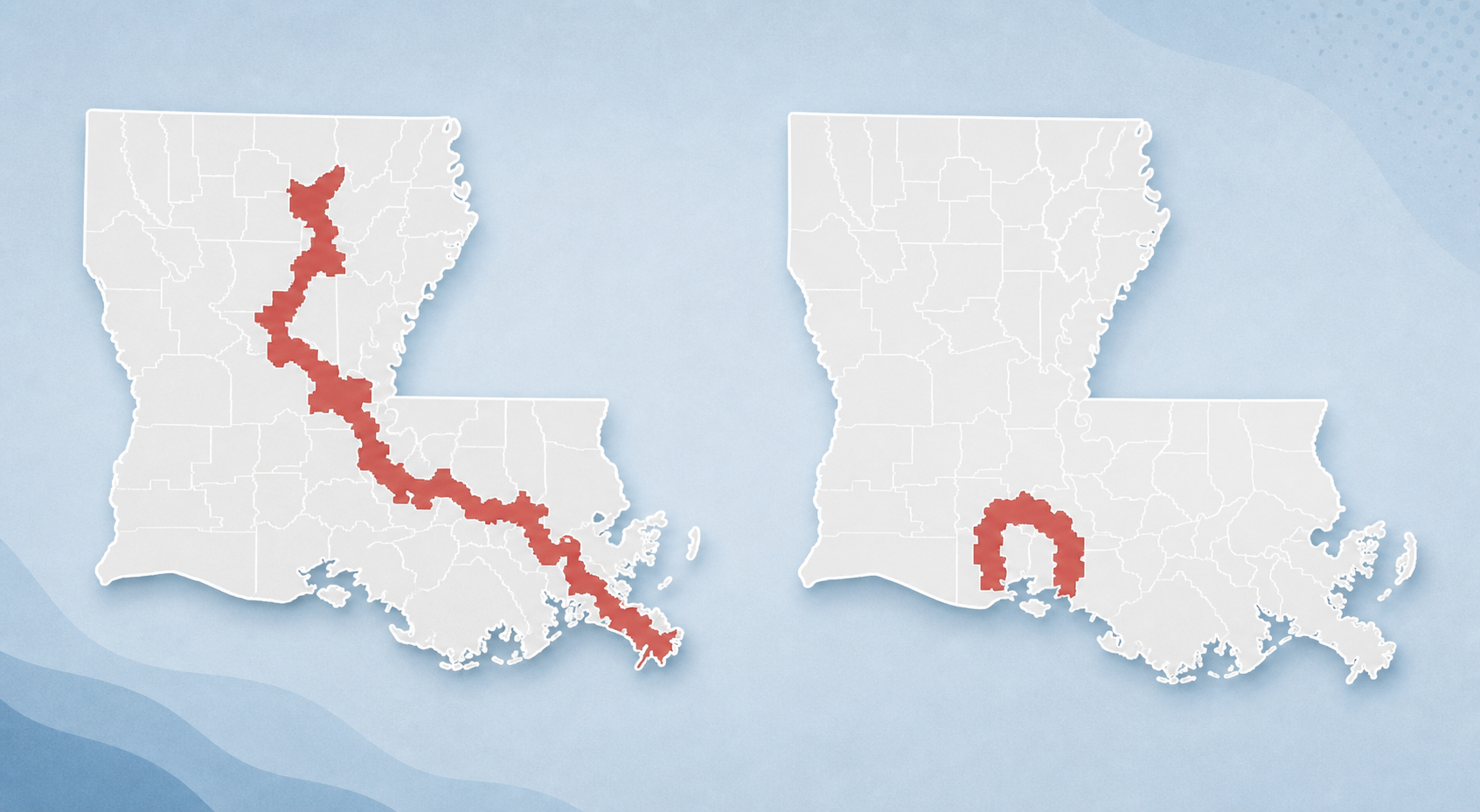
That tension did not begin with Fields and did not end with him. But his career gives it a rare continuity. In one era, the Court removed his district because the state had relied too much on race to create a majority-Black seat. Three decades later, the Court removed his district after civil-rights plaintiffs had used Section 2 to obtain a second majority-Black seat. The theories differed. The result looked familiar.
What Callais Changed
The Supreme Court’s April 2026 decision in Louisiana v. Callais did more than reject one Louisiana map. SCOTUSblog described the 36-page opinion as a major Voting Rights Act ruling that altered the Section 2 framework by changing how courts apply the Thornburg v. Gingles preconditions, the test plaintiffs have long used to prove that a map dilutes minority voting strength.[4]
| Question after Callais | Why it matters in Louisiana |
|---|---|
| Can plaintiffs separate race from party? | When Black voters heavily support Democrats and white voters heavily support Republicans, the evidence needed to show racial vote dilution can be recast as partisan evidence. |
| Can plaintiffs prove discriminatory intent? | Section 2 has traditionally allowed vote-dilution claims without requiring proof that lawmakers acted with racist purpose. |
| Can the remedy satisfy state goals such as incumbent protection? | A map that creates an additional majority-Black district may fail if it disrupts political priorities the Court treats as legitimate. |
Harvard Kennedy School’s Maya Sen and Jack Deschler explained the new burden in practical terms: plaintiffs now face a test that requires them to control for party, account for state goals, and show intent in ways that make Section 2 litigation far harder where race and party are closely linked.[5] In Louisiana, that is not a footnote problem. It is the central evidentiary problem.
The older Section 2 inquiry asked whether minority voters were sufficiently numerous and geographically compact to form a district, whether they were politically cohesive, and whether the majority voted as a bloc usually enough to defeat their preferred candidates. That structure did not require pretending that race and party had no relationship. It asked whether the electoral system denied minority voters an equal opportunity to elect candidates of their choice.
After Callais, the overlap between Black voters and Democratic voters becomes a legal obstacle rather than part of the factual setting. A state can argue that what looks like racial vote dilution is really partisan sorting. Plaintiffs then have to isolate race from party in a political geography where the two often travel together because of history, candidate choice, coalition patterns, and voter behavior. The Court’s language may be administrable in abstraction. In litigation, it moves the evidary burden to the people least able to satisfy it without being accused of relying too directly on race.
Justice Elena Kagan’s dissent, as summarized by SCOTUSblog, warned that the ruling weakened Section 2 by making it more difficult for minority voters to prove dilution claims.[4] That warning did not need a long incubation period. Louisiana’s map, its suspended primaries, and Fields’ exit supplied the immediate translation.
Incumbent Protection Becomes a Voting Rights Problem
The most politically candid part of the new test may be the least exotic: incumbent protection. States have long defended maps by pointing to continuity, constituency relationships, and the desire not to pair sitting members. Courts have often treated those as ordinary districting goals. Callais makes that ordinary politics more potent when weighed against a Section 2 remedy.
That matters because a second majority-Black district in Louisiana cannot be drawn in a vacuum. It must move voters, alter lines, and change the electoral security of incumbents. If plaintiffs must produce a map that remedies racial vote dilution while also satisfying every state goal, including incumbent protection, the remedy becomes narrower than the violation. The state’s political preferences become part of the test the plaintiffs must pass.
The vocabulary is mild. “State goals” sounds neutral. “Controlling for party” sounds empirical. “Incumbent protection” sounds almost courteous. But in a state where the fight is over whether Black voters can elect a second candidate of their choice, those phrases do the work of deciding who gets a district and who must go home.
The New Map Had an Immediate Partisan Shape
The partisan consequences were not subtle. After Callais, Louisiana adopted SB 121, a congressional map expected to produce a 5-1 Republican delegation, replacing the 4-2 split made possible by Fields’ 2024 district.[1] That does not convert the case into a generic partisan-gerrymandering story. It shows why the Court’s race-party distinction carries so much force in the South: the same line can decide racial representation and partisan control.
Republicans understood the opportunity. NOTUS reported that Fields had been placed on the National Republican Congressional Committee’s target list before he announced he would not run again.[6] Roll Call reported on July 20, 2026, that the NRCC added seven more Democratic-held seats to its 2026 target list, including Fields’ Louisiana seat.[7] The timing was blunt: one day later, Fields said he would leave the congressional race.
Fields’ own statement, reported by NOTUS, framed the decision as a move toward the state Senate rather than an extended legal lament.[6] That is how political exits often sound. Candidates talk about service, home, and the next race. The legal system supplies the map; politicians supply the graceful sentence.
The Plaintiffs Did What Section 2 Asked Them To Do
The hardest part of the Fields arc is that the 2024 plaintiffs did not lose because they slept on their rights. They brought a Section 2 case, built a record, won a remedy, and produced a district where Black voters could elect a preferred candidate. The NAACP Legal Defense Fund’s case materials describe Louisiana v. Callais as a challenge that threatened the ability of Black voters in Louisiana to secure fair representation after the earlier Section 2 litigation.[8]
There is a difference between a statute losing every case and a statute becoming so burdened that winning no longer holds. Fields’ 2024 district existed long enough to elect him. It did not last long enough to make his reelection a plausible proposition after the Court’s new rule reached the ground.
That distinction is why Fields is more than an unlucky incumbent. His first congressional career ended after the Court treated a majority-Black district as an unconstitutional racial gerrymander. His second ended after the Court made it harder for plaintiffs to defend a majority-Black district as a required vote-dilution remedy. The law did not simply move from one doctrine to another. It tightened from both sides.
What Remains After Fields Leaves
Fields’ pivot to the Louisiana Senate is not a retirement from politics. It is a recognition of the ballot he actually faces. A congressional district that sent him to Washington in 2024 was replaced by one that NOLA.com reported gave Trump more than three-fifths of its 2024 vote.[1] No serious candidate ignores that arithmetic.
For Section 2 plaintiffs, the larger lesson is harsher. After Callais, they may still plead racial vote dilution. They may still cite Gingles. They may still draw illustrative maps. But in states where race and party are tightly correlated, they must now do so while separating what politics has fused, proving intent where results once mattered, and accommodating state goals that may be incompatible with a meaningful remedy.
Fields’ congressional career now runs almost exactly along that legal narrowing. A majority-Black district sent him to Congress. The Court took it away. Decades later, Section 2 litigation sent him back. The Court took that district away too. The Voting Rights Act remains on the books, but for plaintiffs seeking a durable majority-Black congressional district after Callais, the path Fields traveled may no longer be open.
References
- Rep. Cleo Fields not running for reelection, NOLA.com, July 21, 2026
- Louisiana suspends House primaries after VRA ruling, NPR, April 30, 2026
- Louisiana's 6th district traces the Voting Rights Act fight, NPR, May 13, 2026
- In major Voting Rights Act case, Supreme Court strikes down redistricting map challenged as racially discriminatory, SCOTUSblog, April 29, 2026
- What Louisiana v. Callais means for the Voting Rights Act, Harvard Kennedy School
- Cleo Fields Won't Seek Reelection After Redistricting in Louisiana, NOTUS, July 21, 2026
- NRCC adds 7 more seats to 2026 target list, Roll Call, July 20, 2026
- Louisiana v. Callais, NAACP Legal Defense Fund
Chronological incident history
No sanction cases have named this tool in the tracked record set to date. This does not imply the tool is safe — see Risk Digest for ongoing monitoring.
← Compare peer toolsReport a correction or tip
Spotted an outdated figure, a misstated fact, or a ruling this tool profile should reflect? Public comments are disabled for this content given the professional cost of a misreported case outcome, penalty amount, or rule text — use the structured correction channel instead.
Report a correction or tip for this record →