
How Elliot Page's Advocacy Fits the Post-Skrmetti Legal Landscape
The Supreme Court's 2026 rulings in Skrmetti and B.P.J. effectively closed federal equal protection challenges to state bans on gender-affirming care and trans sports participation. This article examines the remaining legal avenues — due process, state constitutional, and ACA Section 1557 claims — and analyzes how Elliot Page's advocacy campaigns like 'More Than A Game' operate as a parallel political track rather than a doctrinal strategy.
- Hallucination rate
- Not measured / undisclosed
After the Supreme Court’s two most important transgender-rights rulings of the last two terms, the legal question is no longer whether the main federal equal protection theory remains broadly available against state gender-affirming-care and sports bans. In practical terms, that route has been shut. The harder question is what remains open, and what kind of work advocacy by figures such as Elliot Page can still do when the constitutional standard has already been set.
In United States v. Skrmetti, decided June 18, 2025, the Court upheld Tennessee’s ban on gender-affirming medical care for minors in a 6-3 opinion by Justice Brett Kavanaugh. The majority treated the law as subject to rational basis review and declined to classify it as sex-based for equal protection purposes. Harvard Law Review later described the move as a “double deference” framework: first accepting the state’s account of the law as sex-neutral, then applying highly deferential rational basis review to the state’s asserted interests.[1]
The operational consequences were immediate. KFF’s post-Skrmetti analysis identified 25 state bans on gender-affirming care for minors as remaining in effect, with Arkansas and Montana standing apart because their bans were blocked on other grounds. The same analysis, citing Williams Institute and ACLU data, reported that more than 100,000 transgender minors live in states with active care bans.[2]
Then came the sports cases. On June 30, 2026, in the B.P.J. and Hecox litigation, the Court ruled that states may maintain sex-separated sports teams under Title IX and, by a 6-3 vote, may exclude transgender athletes from girls’ and women’s teams under equal protection analysis. SCOTUSblog described the ruling as affecting Idaho and “25 other states” with similar restrictions; other contemporary counts placed the number slightly higher, so the most careful formulation is that roughly 26 to 27 states restrict transgender sports participation, depending on how the count is drawn.[3]
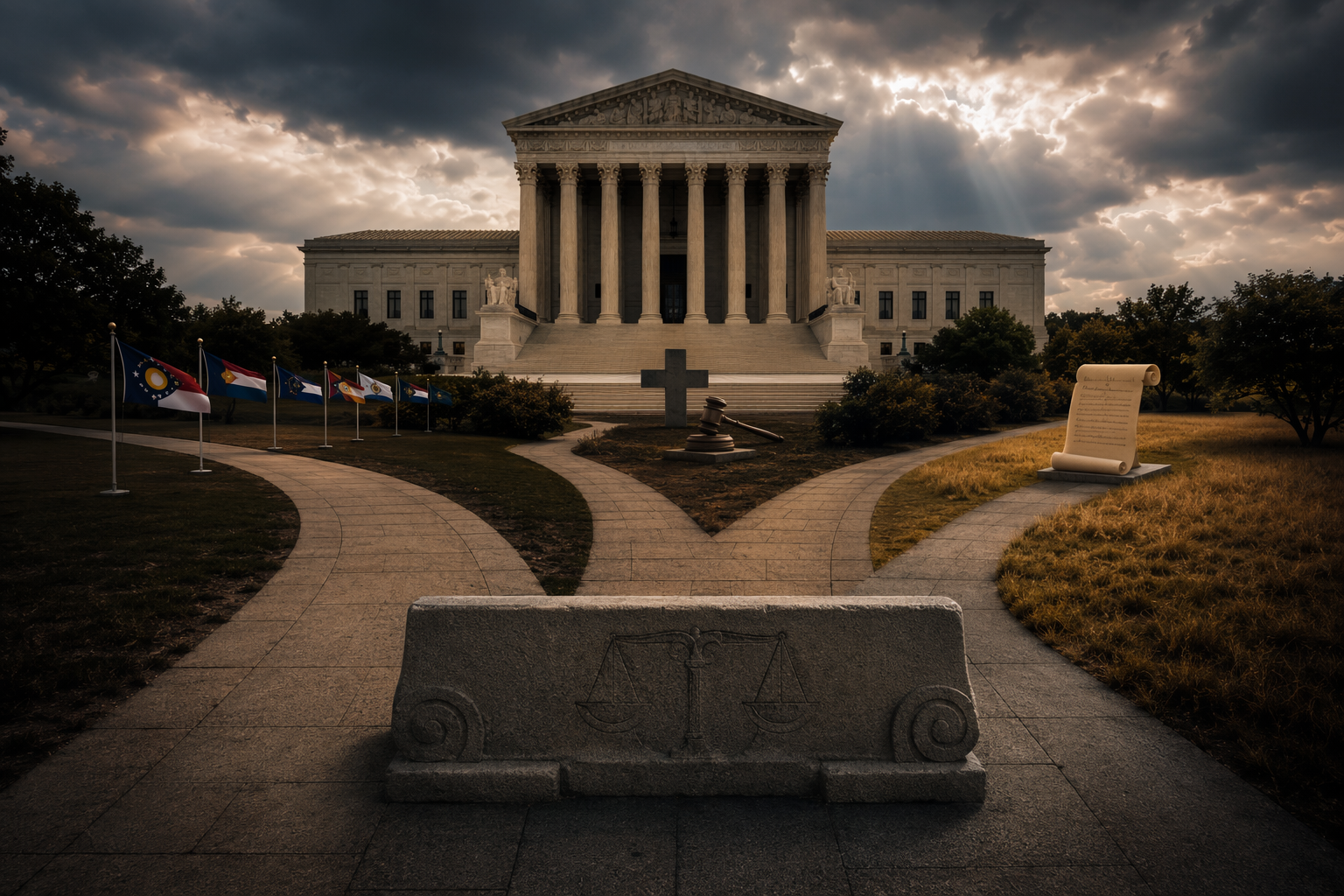
What the Court closed
Skrmetti matters because of the verb it refused to use. The majority did not say Tennessee’s law classified on the basis of sex. It treated the statute as regulating medical interventions for minors, not as drawing a sex-based line. Once the Court framed the law that way, rational basis review did most of the remaining work.
That is why federal equal protection challenges to state care bans now face a much steeper path. Rational basis review does not ask whether a law is wise, fair, medically optimal, or supported by the best record. It asks whether lawmakers could have had a rational reason for the classification the Court recognizes. In Skrmetti, the Court accepted that state legislatures could act amid asserted medical uncertainty over care for minors.[1]
The Harvard Law Review critique is useful precisely because it does not merely disagree with the outcome. It identifies a sequence: the Court first defers to the state’s description of what the law is doing, then defers again under rational basis review. If that sequence hardens, the practical effect is not limited to transgender-rights litigation. A state can avoid heightened scrutiny by persuading a court that its law does not classify in the constitutionally relevant way at all.[1]
That warning should not be inflated into a prediction that every adjacent claim will fail. It is a doctrinal pressure point, not a completed map. But for federal equal protection theories aimed directly at care bans, Skrmetti is now the controlling obstacle.
B.P.J. and Hecox did comparable work for sports bans. The Court permitted states to retain sex-separated teams under Title IX and upheld exclusions of transgender athletes under equal protection analysis. For school districts, state athletic associations, and higher-education compliance offices, that means Title IX cannot be read as automatically preempting these state restrictions, and federal equal protection is no longer the obvious vehicle for defeating them.[3]
What remains legally visible
The remaining litigation landscape is narrower, but it is not empty. Three kinds of claims still appear in the record after Skrmetti: due process claims, state constitutional claims, and statutory claims under Section 1557 of the Affordable Care Act. They should not be treated as interchangeable substitutes for equal protection. Each asks a different court to examine a different source of law.
| Track | What it tests | Current posture reflected in the record |
|---|---|---|
| Due process | Whether a ban unlawfully burdens parental decision-making or related liberty interests | Arkansas’s ban is blocked on due process grounds |
| State constitutional claims | Whether a state ban violates protections such as privacy or equal protection under a state constitution | Montana’s ban is blocked under state constitutional privacy and equal protection grounds |
| ACA Section 1557 | Whether a restriction in federally funded health programs constitutes prohibited sex discrimination | A possible statutory avenue, but its strength after Skrmetti remains uncertain |
Due process after the Arkansas exception
Arkansas is the cleanest example of why Skrmetti did not decide everything. KFF identifies Arkansas as one of the two states where a care ban is blocked despite the Supreme Court’s ruling, because the litigation turned on due process and parental-rights grounds rather than the federal equal protection theory rejected in Skrmetti.[2]
That distinction matters for parents and providers reading the cases after the fact. A due process claim does not ask only whether the state drew a suspect classification. It asks whether the state has impermissibly interfered with protected liberty interests, including parental authority over medical decisions for a child. The theory has a different grammar: burdens, liberty, family decision-making, medical judgment.
Nothing in the available record supports treating due process as the next broadly winning theory. The Arkansas posture shows that the claim remains live; it does not show that every state ban with similar subject matter will fall on the same ground. The evidentiary record, the statute’s wording, the state’s asserted interests, and the reviewing court’s approach to parental rights all matter.
State constitutions are not federal equal protection by another name
Montana supplies the second blocked exception. KFF’s survey identifies Montana’s ban as blocked under the state constitution’s privacy and equal protection guarantees.[2] That posture is more than a procedural footnote. State constitutions can contain privacy language, interpretive traditions, and state-court precedents that do not mirror federal doctrine.
For lawyers, this is where the map becomes jurisdiction-specific very quickly. A state constitutional claim depends on the text and history of a particular state constitution, the authority of that state’s courts to read it independently, and the relationship between state privacy doctrine and medical decision-making. A federal equal protection loss does not automatically defeat those claims. It also does not validate them.
This is also the track most likely to frustrate national shorthand. “Care bans upheld” is true at the level of federal equal protection after Skrmetti. It is incomplete for a state like Montana, where a state-law ground keeps the ban blocked. Compliance teams cannot stop at the Supreme Court headline if state constitutional litigation is still controlling the local rule.
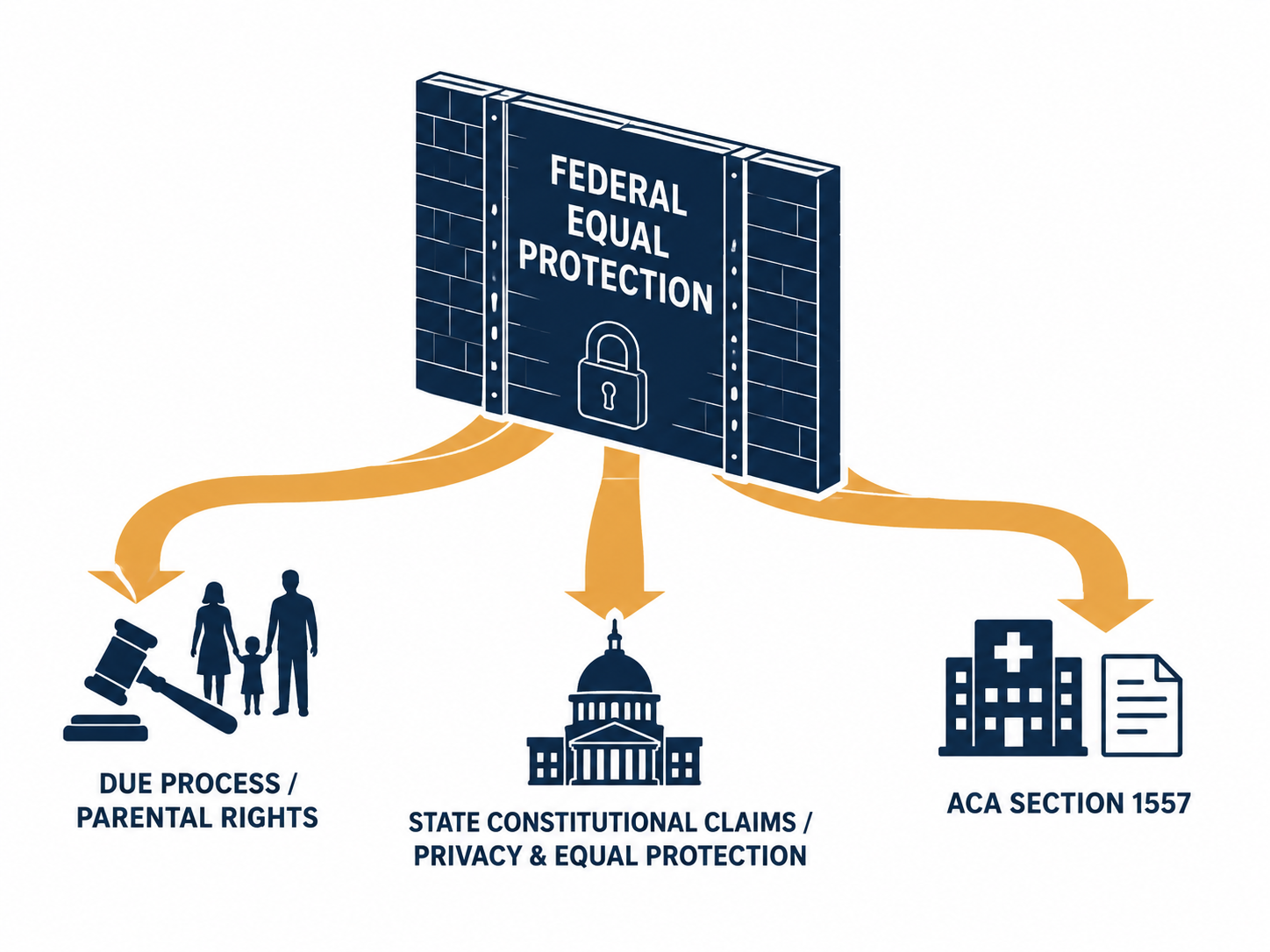
Section 1557 remains possible, not proven
Section 1557 of the Affordable Care Act remains another visible path because it addresses sex discrimination in certain federally funded health programs. In the post-Skrmetti environment, the question is whether a care restriction can be challenged as prohibited sex discrimination under the statute even when a constitutional equal protection claim receives only rational basis review.
That possibility should be stated carefully. Section 1557 is statutory, not constitutional, and the governing questions include program coverage, funding, regulatory interpretation, and the relationship between sex discrimination and gender-identity discrimination in health care. But lower courts may still be influenced by Skrmetti’s framing of state care bans, especially if defendants argue that the restriction turns on medical intervention rather than sex classification.
For regulated entities, Section 1557 is therefore not a simple escape hatch from Skrmetti. It is a separate litigation track with its own statutory elements and uncertainties. The available materials support that narrower conclusion, and not much more.
Where Elliot Page’s legal advocacy fits
Elliot Page enters this landscape on a parallel track. His advocacy has been unusually tied to litigation calendars and formal legal campaigns, but it does not change the level of scrutiny, the statutory text, or the binding effect of Supreme Court holdings. The distinction is not dismissive. It is necessary.
In December 2023, Page joined an amicus effort by transgender adults urging the Supreme Court to review challenges to Tennessee and Kentucky restrictions on gender-affirming care. The advocacy was not merely atmospheric; it was attached to a request for review in litigation that would become central to the Court’s treatment of care bans.[4]
On September 4, 2024, Page also joined an amicus brief organized by Advocates for Trans Equality and signed by more than 60 transgender adults in L.W. v. Skrmetti. The brief argued that gender-affirming care had “relieved gender dysphoria and, for some, has even saved their lives.”[4] That sentence belongs in the record as testimony about lived experience and reliance, not as a substitute for a constitutional test.
Page’s presence around the Court also received public attention. The Advocate reported on his appearance at the Supreme Court in connection with the Tennessee case, placing him among public figures and affected individuals visibly opposing the ban.[5] That visibility may matter to political institutions, donors, media coverage, and families trying to understand that they are not isolated. It does not make rational basis review less deferential.
The “More Than A Game” campaign and the sports cases
The advocacy track became even more explicit in January 2026, when the ACLU launched “More Than A Game” one day before Supreme Court arguments in the sports-ban cases. The campaign featured Elliot Page, Megan Rapinoe, Sue Bird, Naomi Watts, and B.P.J. herself, the West Virginia student-athlete whose case was before the Court.[6]
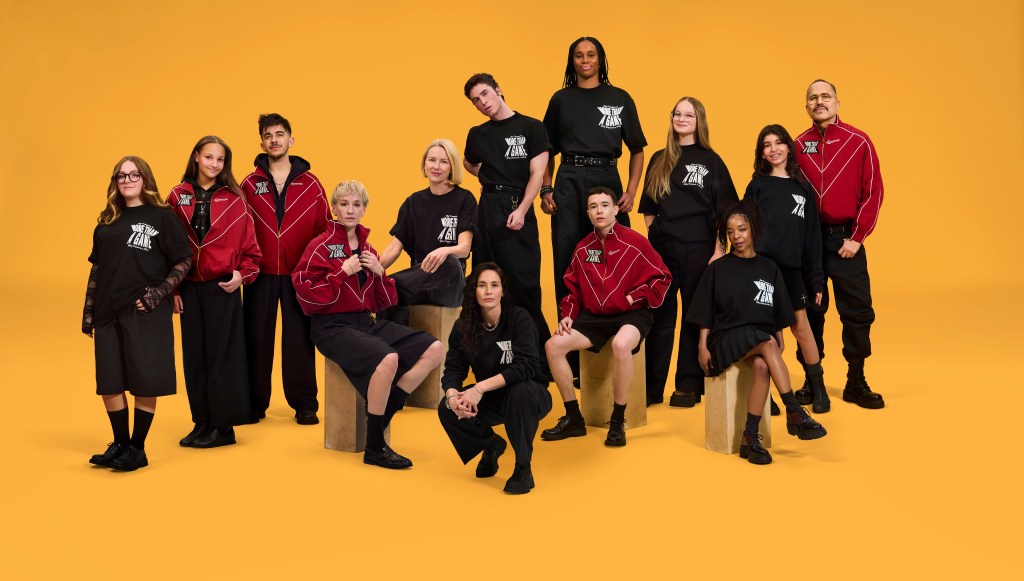
The inclusion of B.P.J. is the part worth pausing over. Celebrity advocacy campaigns often put famous supporters in front of an issue while the litigants remain abstract. Here, the lead plaintiff was part of the public-facing campaign tied to live Supreme Court arguments. That choice made the case harder to treat as a dispute over administrative categories alone; it kept the student at the center of the public narrative while the legal briefing proceeded on Title IX and equal protection grounds.[6]
Variety’s coverage placed Page and Watts within that campaign effort and described the project as a coordinated public response to the sports-ban litigation.[7] The timing was not incidental. The campaign operated in the narrow window when public attention to the Court was highest: the day before argument, when parties, reporters, advocates, and institutions were all watching the same docket.
Still, the legal consequence of B.P.J. came from the Court’s opinion, not from the campaign. The Court allowed states to maintain sex-separated teams and exclude transgender athletes under equal protection analysis.[3] For Title IX coordinators, athletic departments, and state education agencies, the campaign may explain the social stakes of the dispute. It does not supply the governing rule.
Public identity work is related, but not the same thing
Page’s broader public work—interviews, documentary promotion, and public discussion of transgender identity—belongs near this article, but not at its center. It can shape how audiences understand transgender lives. It can make the people affected by statutes less abstract. It can help build the political conditions in which lawmakers defend, narrow, expand, or repeal restrictions.
That work is not litigation strategy in the strict sense unless it is attached to a brief, a campaign coordinated around a case, testimony, institutional lobbying, or another identifiable legal or political intervention. The line is not always emotionally satisfying, but it is analytically useful. A documentary interview and an amicus brief do not ask the same institution to do the same thing.
The most accurate account of Elliot Page’s trans-rights legal advocacy, then, is not that his work reopens federal equal protection claims after Skrmetti and B.P.J. It is that his advocacy has helped place affected people, including litigants themselves, in front of the public while formal litigation tests the narrower theories still available.
The disciplined boundary
After Skrmetti, federal equal protection challenges to state bans on gender-affirming care for minors face rational basis review. After B.P.J. and Hecox, federal equal protection and Title IX challenges to sex-separated sports restrictions face a similarly altered field. Those are not small adjustments at the margins. They change what lawyers can responsibly argue as the main federal route.
The remaining legal work is narrower and more technical: due process claims like the Arkansas litigation, state constitutional claims like the Montana litigation, and statutory claims under Section 1557. None should be described as a guaranteed successor theory. None has yet produced a new Supreme Court rule undoing what Skrmetti and B.P.J. did.
Campaigns such as “More Than A Game” sit on the political and narrative side of the fight. They can affect attention, legitimacy, coalition pressure, and the conditions in which statutes are debated or defended. They do not alter the constitutional test. The post-Skrmetti legal landscape requires holding both facts in view at once: litigation can still test unresolved theories, and advocacy can shape the world around those tests.
References
- Skrmetti Beyond Scrutiny — Harvard Law Review, Vol. 139
- What Are the Implications of the Skrmetti Ruling for Minors' Access to Gender Affirming Care? — KFF
- Court Rules That States Can Exclude Transgender Athletes from Girls' and Women's Sports Teams — SCOTUSblog, June 2026
- Elliot Page, Nicole Maines, and Over 60 Other Transgender Adults Urge Supreme Court to Block Ban — Advocates for Trans Equality, September 4, 2024
- Elliot Page at SCOTUS as justices hear Tennessee transgender care ban case — The Advocate
- ACLU Launches ‘More Than A Game’ — American Civil Liberties Union, January 12, 2026
- Elliot Page, Naomi Watts Join ACLU Campaign Supporting Trans Youth Ahead of Supreme Court Arguments — Variety, January 2026
Chronological incident history
No sanction cases have named this tool in the tracked record set to date. This does not imply the tool is safe — see Risk Digest for ongoing monitoring.
← Compare peer toolsReport a correction or tip
Spotted an outdated figure, a misstated fact, or a ruling this tool profile should reflect? Public comments are disabled for this content given the professional cost of a misreported case outcome, penalty amount, or rule text — use the structured correction channel instead.
Report a correction or tip for this record →