
House rejects transgender military ban amendment for 2027 NDAA
The House voted 212-217 to reject an amendment that would have codified Trump's transgender military ban into the FY2027 NDAA. This analysis explains the vote breakdown, the limited practical effect given the ongoing executive order and D.C. Circuit ruling, and the broader anti-trans amendments that did pass the same day.
- Hallucination rate
- Not measured / undisclosed
The House rejected Rep. Lauren Boebert’s Amendment No. 18 to the FY2027 National Defense Authorization Act on July 21, 2026, voting 212-217 against a proposal that would have written President Donald Trump’s transgender military policy into statute. All Democrats voted no, joined by four Republicans, producing a narrow but real cross-party defeat for the codification effort. [1]
That result matters, but it does not mean the transgender military ban is gone. The amendment would have converted Executive Order 14183 from an executive-branch policy into U.S. Code through the defense bill, making it harder for a later president to undo by executive action. Its failure prevented that statutory entrenchment. It did not repeal the executive order, settle the pending litigation, or reopen enlistment for transgender applicants.
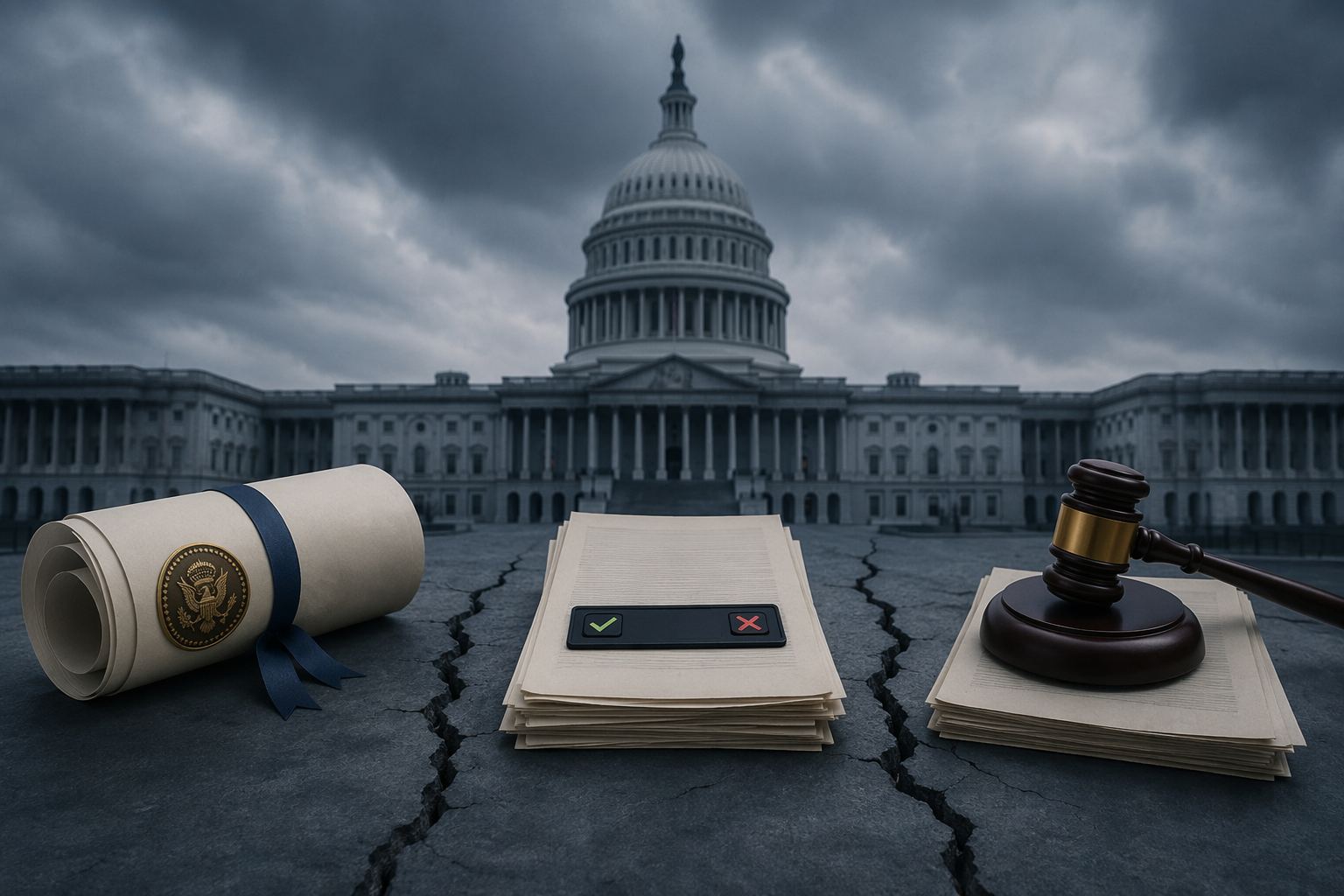
What The Failed Amendment Would Have Changed
The legal difference between an executive order and a statute is the point of the vote. Executive Order 14183, signed Jan. 27, 2025, directs the military to bar individuals whose “gender identity” diverges from biological sex, while avoiding the word “transgender” in the operative framing. [2] Because it is an executive policy, its durability depends on presidential control, agency implementation, and judicial review.
Boebert’s amendment aimed at a different kind of durability. By folding the policy into the FY2027 NDAA, the House would have moved the ban from presidential directive into statutory law. That would not have ended constitutional challenges, but it would have changed the institution that future opponents would need to persuade. A new president can rescind or revise an executive order. Undoing a statute usually requires Congress.
So the cleanest description is narrow: the House declined to codify Trump’s transgender military ban in the FY2027 NDAA. It did not vote to repeal the executive order. It did not create a statutory protection for transgender service members. It did not give commanders, recruiters, military doctors, or affected families a stable final rule.
The Policy Still Runs Through The Executive Order And Talbott
The governing landscape is already split because of Talbott v. United States. On June 1, 2026, a divided D.C. Circuit panel ruled 2-1 that the Pentagon policy implementing Executive Order 14183 violated equal-protection principles as applied to active-duty transgender troops. The majority, Judges Wilkins and Rogers, barred expulsions of active-duty service members under the policy, while Judge Katsas dissented. [3]
The same ruling left the new-enlistee ban in place for now. That distinction is the part that gets lost when the vote is described as if Congress simply rejected a ban. A currently serving transgender soldier, sailor, airman, Marine, Guardian, or Coast Guardsman is in a different practical position from an applicant trying to enter the force. The D.C. Circuit ruling protects the first group from expulsion under the challenged policy; it does not fully open the door for the second. [3]
The panel majority also distinguished the 2025 policy from the first Trump administration’s Mattis policy, finding that the later version was driven by “animus against transgender people.” [3] That is a serious judicial finding, but it is not the end of the case. The government can still seek further review, and either the full D.C. Circuit or the Supreme Court could alter the practical result.
| Legal instrument | Current status as of July 22, 2026 | Practical effect |
|---|---|---|
| Executive Order 14183 | Still in force | Continues to supply the executive-branch policy basis for the ban |
| Boebert Amendment No. 18 | Rejected by the House, 212-217 | Did not codify the ban into the FY2027 NDAA |
| Talbott v. United States | D.C. Circuit panel ruling remains operative unless changed by further review | Blocks expulsions of active-duty transgender troops while leaving the new-enlistee restriction in place |
That table is the working hierarchy for compliance purposes. A failed House amendment changes the legislative trajectory. It does not, by itself, displace an executive order or a court order.
The Same Day Was Not A Broad Defeat For Anti-Trans Amendments
The Boebert vote was not the only transgender-related vote on the House floor that day. The same House that rejected codification of the military ban passed Rep. Nancy Mace’s Amendment No. 19, which restricts TRICARE gender-related medical coverage, by 219-208. It also passed Amendment No. 20, restricting transgender participation in Department of Defense Education Activity sports, by 221-203. [1]
That sequence matters more than the headline frame. One major personnel-policy amendment failed because four Republicans crossed over. Other anti-trans provisions advanced. For military families, the day did not resolve into a single institutional message. It produced one limit on statutory entrenchment, alongside new House-passed restrictions aimed at health coverage and school athletics.
The contrast also explains why “rejected” needs a noun after it. The House rejected the Boebert amendment. It did not reject every anti-trans amendment attached to the defense bill. It did not reject the executive policy already being litigated. It did not reject the FY2025 direction Congress had already taken on some military-family health care questions.
The FY2025 Precedent Is Context, Not The Main Event
The fight did not begin with the FY2027 bill. In December 2024, the FY2025 NDAA included Section 708, a provision barring TRICARE coverage for gender-affirming care for minors. Civil-rights groups described it as the first anti-LGBTQ provision enacted by Congress since “Don’t Ask, Don’t Tell.” [4][5]
That precedent helps locate the 2026 House votes, but it does not answer the immediate legal question. Section 708 concerned coverage for minors under TRICARE. Boebert’s Amendment No. 18 concerned whether an executive restriction on transgender military service would be hardened into statutory law. The shared political terrain is obvious; the legal instruments are different.
Where The NDAA Process Stands Now
H.R. 8800 is a defense authorization bill of roughly $1.15 trillion. Before reaching the floor, it passed the House Armed Services Committee 44-12 after about 14 hours of debate on roughly 900 amendments. [6] Those figures explain why a single amendment vote can be politically important without being procedurally final.
As of July 22, 2026, House consideration had paused after the July 21 votes, amendments remained pending, the Senate had not passed its version of the bill, and any final NDAA would still have to survive the conference process. That is not a technical footnote. It is the difference between a House floor vote and enacted law.
For now, the practical answer is limited but important: Congress has not codified the transgender military ban into the FY2027 NDAA. Executive Order 14183 still governs executive policy. Talbott limits expulsions of active-duty transgender troops but leaves enlistment restrictions in place. And the same NDAA process still contains live anti-trans measures that have already cleared the House.
References
- House rejects NDAA transgender ban amendment, The Hill
- Prioritizing Military Excellence and Readiness, The White House, Jan. 27, 2025
- DC Circuit rules Pentagon policy banning transgender soldiers unconstitutional, Courthouse News
- House Passes Defense Bill Including Attack on Military Families’ Transgender Youth, ACLU
- Senate Passes Defense Bill Blocking Health Care for Trans Military Children, Human Rights Campaign
- NDAA amendments target Pentagon as House Armed Services advances defense bill, The Hill
Chronological incident history
No sanction cases have named this tool in the tracked record set to date. This does not imply the tool is safe — see Risk Digest for ongoing monitoring.
← Compare peer toolsReport a correction or tip
Spotted an outdated figure, a misstated fact, or a ruling this tool profile should reflect? Public comments are disabled for this content given the professional cost of a misreported case outcome, penalty amount, or rule text — use the structured correction channel instead.
Report a correction or tip for this record →