
Combat Death in Jordan Triggers Title 10, Not SOFA Criminal Law
The July 2026 combat deaths of US service members in Jordan, including 1st Lt. Tyler Feehan, fall under combat casualty law and war powers — not the host-nation criminal jurisdiction that governed the 2016 King Faisal Air Base shooting. This article explains the differing legal regimes for benefits, accountability, and military authority.
- Hallucination rate
- Not measured / undisclosed
The legal ramifications of 1st Lt. Tyler James Feehan’s death in Jordan do not begin with the question that the 2016 Jordan shooting tends to invite: which court gets the case? They begin with a different fact pattern. On July 17, 2026, Feehan and Pvt. Isabella Gonzales were killed in an Iranian missile and drone strike on Muwaffaq Salti Air Base in Jordan, where roughly 3,000 U.S. troops were hosted; one U.S. service member was also reported missing.[1] That is not the same legal problem as a soldier being shot by an individual perpetrator on a partner-nation base.
The distinction matters because “Jordan” is only geography. It is not the legal regime. The 2016 King Faisal Air Base shooting involved a Jordanian soldier who killed U.S. trainers and others, was tried in a Jordanian military court, convicted, and sentenced to life with hard labor.[2] The July 2026 attack, by contrast, occurred during the active 2026 Iran War and was attributed in contemporaneous reporting to an Iranian missile and drone strike.[1] That moves the analysis away from the familiar SOFA-criminal-jurisdiction frame and into combat casualty law, POW/MIA accounting, international humanitarian law, and war-powers authority.
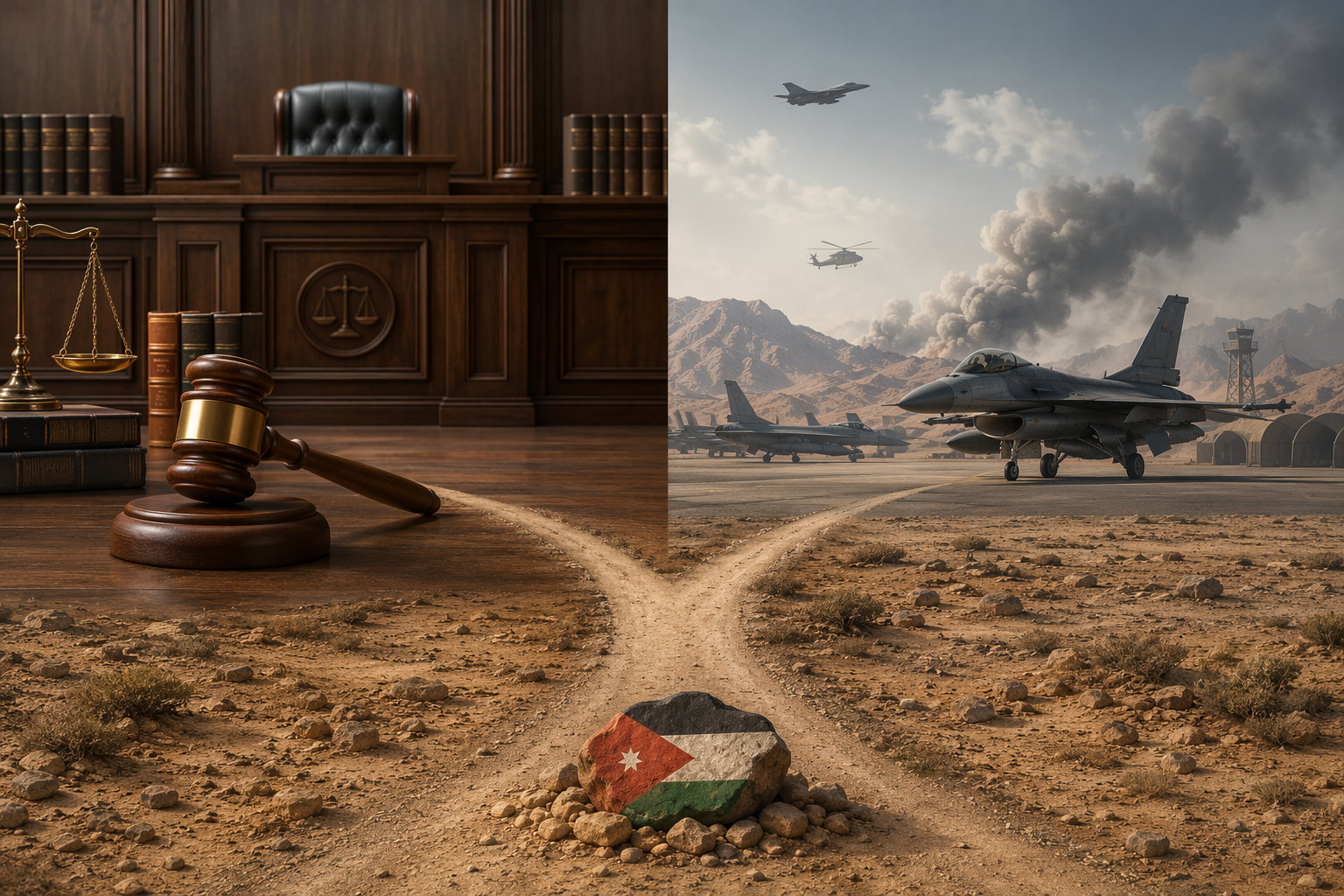
Why the 2016 Jordan Shooting Is the Wrong Door
The 2016 case is legally memorable for a reason. It gave lawyers and military families a recognizable procedural object: an alleged shooter, a host-nation prosecution, a conviction, and a sentence. The incident also made Status of Forces Agreement questions visible because U.S. personnel were killed on Jordanian soil and the accused was a Jordanian soldier.[2]
That is precisely why it can mislead. A host-nation prosecution answers a criminal-law question about an individual actor. The July 2026 deaths raise a combat-casualty question first. There is no publicly identified Jordanian soldier-defendant analogous to the 2016 shooter, no reported Jordanian military-court proceeding serving as the central legal event, and no reason on the present record to treat the deaths as a base-security homicide case merely because the attack landed in Jordan.
A SOFA may still matter at the margins: it can govern the presence, privileges, and jurisdictional position of U.S. forces in the host state. But the full U.S.-Jordan SOFA text was not available in the research record used here, and secondary descriptions cannot carry more weight than they can bear. More importantly, even a fully available SOFA would not convert an Iranian strike during active hostilities into the kind of host-nation criminal prosecution that defined the 2016 case.
| Question | 2016 King Faisal Air Base shooting | July 2026 Muwaffaq Salti Air Base attack |
|---|---|---|
| Immediate legal frame | Individual shooting prosecuted in Jordanian military court | Combat deaths during an active armed conflict |
| Main procedural consequence | Host-nation criminal adjudication and sentence | Title 10 casualty benefits, missing-person accounting, IHL and war-powers analysis |
| Why the distinction matters | A court could assign criminal responsibility to a defendant | Legal consequences flow before, and apart from, any later accountability proceeding |
Combat Death Is a Legal Classification, Not Just a Description
Calling Feehan’s death a combat death does not answer every accountability question. It answers a narrower but consequential threshold question: which machinery starts moving when a U.S. service member is killed in an attack tied to active hostilities overseas. The first legal consequences are administrative and statutory, not theatrical. The family does not wait for a criminal indictment, a captured perpetrator, or a final public theory of presidential power before core military survivor benefits begin to matter.
Under the death-gratuity framework described by the Department of Defense, eligible survivors receive a tax-free $100,000 payment, and the department states that the payment is normally made within 72 hours of official notification.[3] Separately, 2026 survivor-benefit materials describe Servicemembers’ Group Life Insurance coverage of up to $500,000, monthly Dependency and Indemnity Compensation at about $1,699 for a surviving spouse, and education and housing-related benefits that may apply depending on status and eligibility.[4]
Those figures are not a substitute for accountability. They are the legal consequences that Congress and the executive branch have already made operational for the family-facing side of military death. That point is easy to understate. In a criminal case, the family may spend years watching jurisdiction, charging, trial, appeal, and sentence unfold. In a combat-casualty case, some consequences are meant to trigger quickly because the legal system has already classified the relationship between military service, death, and survivor entitlement.
Nor should pending benefit legislation be treated as if it had already changed the law. The HONOR Gold Star Families Act, H.R. 7932, was described as a proposal that would double the death gratuity to $200,000, but it had not been enacted as of the July 2026 attack date in the materials reviewed.[4] For a lawyer advising a family or writing about the case, that distinction is not clerical. Proposed benefit expansion is not an accrued statutory entitlement.
The Missing Service Member Creates a Separate Track
The reported missing service member should not be folded casually into the death-benefits discussion. Missing is a legal status with its own consequences. Under the 10 U.S.C. § 1501 et seq. accounting framework described in the research record, a presumptive finding of death process may apply after specified waiting periods, commonly 12 months in most cases. Newsweek reported that unidentified remains had been found during search operations as of July 20–21, 2026, but the public record described in the research brief did not confirm whether the missing service member was killed, captured, or still missing.[5]
That uncertainty affects more than wording. A confirmed death, an unresolved missing status, and a captivity determination can place different obligations on the government and create different timing for family-facing decisions. It also affects how casualty totals should be written. The research record flagged variation between contemporaneous counts and the need to cross-check any total U.S. fatality number against official Department of Defense casualty data before publication.
Benefits Are Not the Same Thing as Accountability
The cleanest mistake to avoid is treating survivor benefits as if they settle the legal case. They do not. They show what happens to the U.S. service member’s family under domestic military-benefits law. They do not decide whether Iran’s attack violated international law, whether any particular commander or political leader can be held responsible, or whether later U.S. retaliation complied with domestic or international limits.
For the July 2026 Jordan attack, accountability is more likely to be discussed in the language of armed conflict than in the language of ordinary territorial criminal jurisdiction. An Iranian strike on a base hosting U.S. forces in Jordan raises questions about Jordan’s territorial sovereignty as host state, the status of U.S. forces present there, and the rules governing attacks during an armed conflict. The research record also notes broader claims that U.S. retaliatory strikes raise jus ad bellum proportionality questions, while more than 100 international law experts had already characterized the initial U.S. strikes in the 2026 Iran War as a war of aggression.[6][7]
Those are serious questions, but they are not the same question as “who prosecutes the Jordan death case?” International humanitarian law can condemn, regulate, or structure responsibility for conduct in war without producing a local murder trial that resembles the 2016 proceeding. A lawful or unlawful use of force may have diplomatic, military, reparations, sanctions, or international-claims consequences. It does not necessarily produce a courtroom with a defendant in Jordan.
Where War Powers Enter the Analysis
The July 2026 deaths also sit inside a contested domestic authority frame. Congress had passed a concurrent War Powers Resolution, H.Con.Res.38, in late June 2026 directing the president to end hostilities with Iran, while the administration treated the measure as nonbinding on the view that a concurrent resolution cannot veto presidential military action under the War Powers Resolution framework.[8][9] The research record also places the Jordan attack after the collapse of the Islamabad Memorandum ceasefire, which had been dated June 17, 2026 and collapsed on July 8.[8]
For post-Jordan retaliatory strikes, the reported administration theory rested on Article II inherent authority and an ancillary self-defense reading of the 2001 and 2002 AUMFs. The materials reviewed did not include a public Office of Legal Counsel opinion laying out that theory, and the research brief characterizes the theory as untested at this scale against a state actor. That limitation should remain visible. A CENTCOM statement, a press explanation, and historical AUMF practice are not the same thing as a formal public legal opinion.
This war-powers dispute does not erase the Title 10 consequences for Feehan’s family. It also does not become irrelevant just because benefits are available. Domestic survivor benefits, missing-person accounting, international-law accountability, and presidential authority are separate legal lanes. They can all arise from the same attack, but they do not answer each other’s questions.
The Practical Legal Answer
For the search term “us army lieutenant killed jordan legal ramifications,” the practical answer is that the July 2026 deaths trigger the legal consequences of a U.S. combat casualty in an active theater on foreign soil. That means immediate attention to Title 10 death gratuity and survivor benefits, SGLI, DIC, education and housing-related eligibility, and, for the missing service member, the separate POW/MIA and presumptive-death framework if the status remains unresolved.[3][4][5]
It also means that accountability is not likely to look like the 2016 Jordan case. The earlier case involved a Jordanian soldier, Jordanian military prosecution, and a sentence imposed by a Jordanian court.[2] The 2026 case involves an attributed Iranian strike during an active war, with the legal analysis distributed across armed-conflict law, host-state sovereignty, U.S. military benefits law, missing-person accounting, and the contested domestic authority for continued or retaliatory hostilities.
The remaining items that would need verification before a later update are concrete: official Department of Defense casualty totals, the missing service member’s confirmed status, the then-current legislative status of H.R. 7932, and any later formal administration legal rationale for retaliatory strikes. Without those, the safest legal conclusion is also the narrowest one: the relevant question is not who prosecutes the Jordan death case like 2016, but what legal consequences follow from a U.S. combat casualty in an active theater on foreign soil.
References
- US says two military personnel killed by Iranian attack in Jordan, Reuters, July 18, 2026
- King Faisal Air Base shooting, Wikipedia
- Death Gratuity, Department of Defense
- Every Benefit Available to Surviving Military Spouses in 2026, Military.com
- Three US Troops Killed and One Missing in Escalating Iran Conflict, Newsweek
- 2026 Iran war, Wikipedia
- Law and the Biden Administration's Response to the Attack in Jordan, Lawfare
- Explainer: Congress backed an Iran war powers resolution... now what?, Reuters
- Congress passes war powers measure for first time..., BBC
Chronological incident history
No sanction cases have named this tool in the tracked record set to date. This does not imply the tool is safe — see Risk Digest for ongoing monitoring.
← Compare peer toolsReport a correction or tip
Spotted an outdated figure, a misstated fact, or a ruling this tool profile should reflect? Public comments are disabled for this content given the professional cost of a misreported case outcome, penalty amount, or rule text — use the structured correction channel instead.
Report a correction or tip for this record →