
Who Bears Liability for a Legionnaires' Disease Outbreak?
The liability framework for Legionnaires' disease outbreaks now reaches beyond property owners to contractors, vendors, and municipalities, driven by courts adopting ASHRAE standards and new municipal testing requirements. This analysis examines the changing standard of care through the lens of recent New York City outbreaks and emerging litigation.
- Hallucination rate
- Not measured / undisclosed
The legal liability for a Legionnaires' disease outbreak now usually starts with the building system, not the deed. In New York City, that shift has become hard to miss. The 2025 Harlem outbreak produced claims aimed not only at the City of New York, but also at construction companies, hospitals, and water-treatment actors after reports tied the outbreak to a Harlem Hospital cooling tower and a public-health-lab construction site. The reported toll was 118 cases and 7 deaths in one lawsuit account, while other reporting placed the case count at 114 and described negligence claims against construction companies connected to work at Harlem Hospital.[1][2]
The 2026 Upper East Side outbreak is still developing, but it is already following the same legal pattern. Reporting in July 2026 described more than 72 cases, 2 deaths, and victims retaining counsel.[3] At the same time, New York City had a new 31-day cooling-tower testing rule in effect, and public reporting on enforcement data showed roughly 250 cooling-tower violations since January 2025, with 59% of towers in the Upper East Side outbreak zone cited and 76 of 183 towers testing PCR-positive.[4][5]
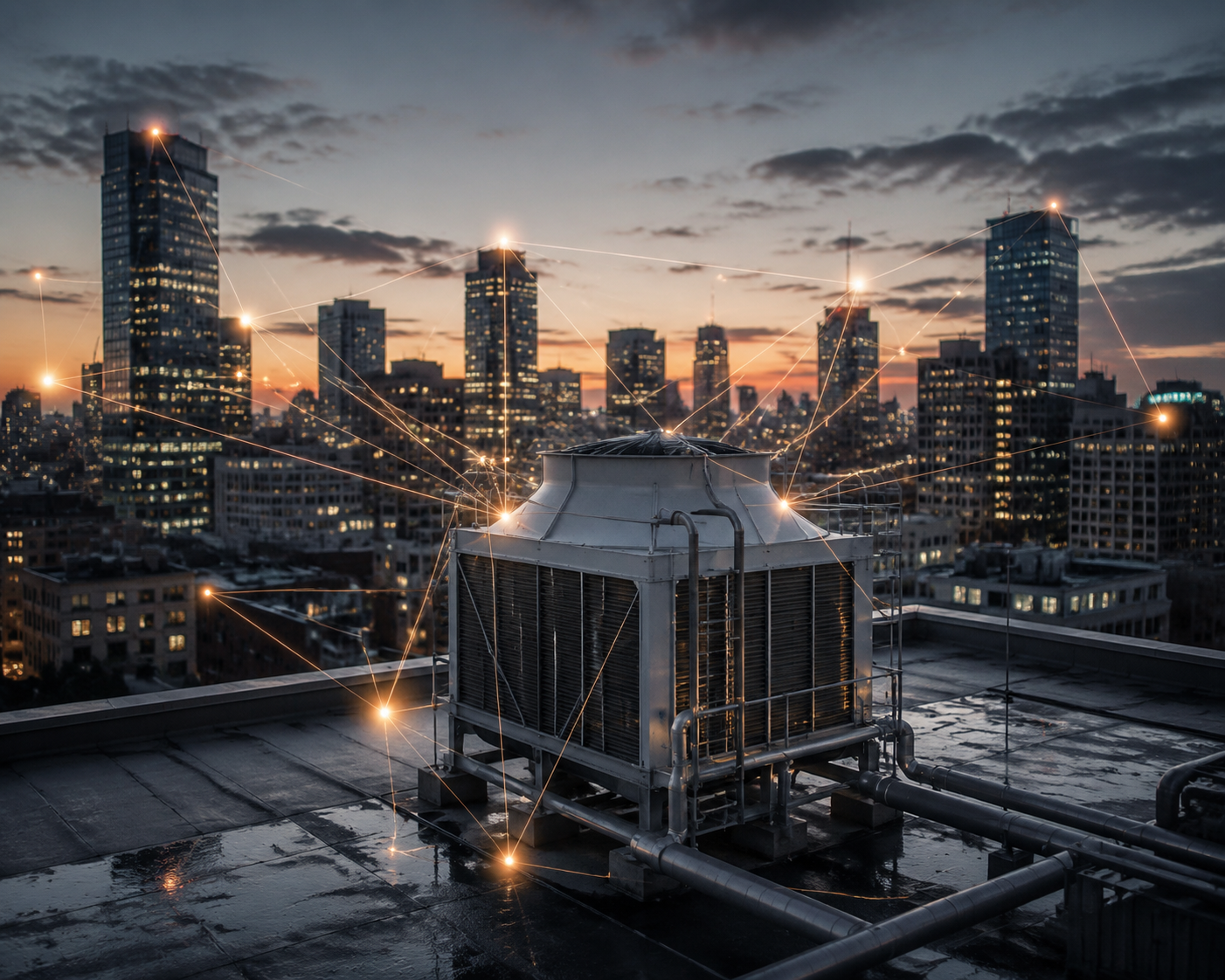
Those numbers do not prove liability by themselves. PCR-positive testing is not the same thing as a genetic match to a patient's infection, and a violation history is not automatically causation. But for lawyers, they change the starting file. They point to notice, inspection cadence, contractor scope, water-management records, indemnity tenders, insurance reservations, and the question that drives most serious outbreak litigation: which actor had control over the condition that allowed Legionella to grow and aerosolize?
The public-health scale is real, but it should not be overstated with stale precision. The CDC has estimated 8,000 to 18,000 Legionnaires' disease hospitalizations annually, while also cautioning that the figure may undercount actual disease burden; reported cases were 6,100 in 2016 and 7,500 in 2017.[6] In litigation, those figures provide context, not proof. The case still turns on exposure, source attribution, standard of care, breach, causation, and damages.
The Standard of Care Is Becoming More Concrete
A Legionnaires' disease complaint still has to survive the ordinary negligence architecture: duty, breach, causation, and damages. The more interesting development is that duty and breach are becoming less abstract. CLM Magazine's premises-liability analysis frames Legionella claims through that four-element structure and notes that courts routinely reject res ipsa loquitur in this setting.[7] That rejection matters. Plaintiffs usually cannot rely on the mere existence of an outbreak to say the defendant must have been negligent.
Instead, the fight moves into records: cooling-tower registration, water-management plans, biocide logs, sampling results, maintenance tickets, cleaning certificates, work orders, email warnings, municipal notices, consultant reports, and who signed off when an abnormal result appeared. A pleading that once might have said a property owner failed to maintain safe premises now has room to allege a specific missed test, a delayed remediation, an ignored vendor recommendation, or a contractor handoff that left no one performing the required control measure.
ASHRAE Standard 188-2021 and Standard 514 are central to that change. The available legal commentary treats those standards as increasingly important evidence of the applicable standard of care in Legionella matters, especially for buildings with cooling towers, healthcare facilities, and other complex water systems.[7] They do not make every failure negligence per se. They do, however, give litigants a vocabulary for asking whether a defendant identified hazardous building water systems, assigned responsibility, monitored control measures, responded to test results, and documented corrective action.
New York City's 2026 rule makes that vocabulary easier to plead. The Health Department announced regulations requiring cooling-tower testing every 31 days, effective May 8, 2026.[4] In New York, that is a regulatory floor. Outside New York, plaintiffs will likely cite it more cautiously, as evidence of an emerging benchmark rather than binding law. Defense counsel will answer that local regulation does not set a national duty. Both arguments can be true enough to survive the first exchange; the practical effect is that a defendant with no comparable testing rhythm now has to explain why its program was reasonable anyway.
| Litigation issue | Why the newer standards matter |
|---|---|
| Complaint drafting | Allegations can identify missed testing, deficient water-management planning, or failure to follow a recognized protocol instead of relying on generalized unsafe-premises language. |
| Motion practice | Defendants may still contest causation and control, but it becomes harder to argue that no concrete maintenance duty existed where regulations or recognized standards applied. |
| Discovery | Requests can target cooling-tower logs, ASHRAE-based plans, vendor scopes, sampling cadence, remediation records, municipal notices, and chain-of-custody materials. |
| Indemnity and tenders | Contracts matter because the alleged breach may sit inside an HVAC, water-treatment, construction, or facilities-management scope rather than with the titled owner alone. |
| Insurance reservations | Carriers may reserve on pollution exclusions, notice, occurrence issues, and insured status while the source and responsible actor remain disputed. |
Ownership Is Only One Route to Responsibility
The easy version of the answer is that a building owner can be liable when a contaminated cooling tower or water system injures people. The more useful answer is that ownership is only one route to legal responsibility. Legionella litigation now tends to follow control, maintenance knowledge, contractual assignment, and regulatory noncompliance.
Pritzker Hageman's analysis of the New York litigation names a broader universe of potentially responsible actors, including Chem-Aqua, Homeyer, Skanska, Rising Sun, NYC Health + Hospitals, and the New York City Economic Development Corporation.[8] The point is not that each named entity is liable. It is that the outbreak file no longer fits neatly into a landlord-tenant or owner-invitee frame. A water-treatment vendor may have testing obligations. A construction firm may have dust, water, or equipment-control duties. A hospital operator may have heightened water-system obligations. A municipal entity may own, operate, supervise, or contract around the relevant site.

That expanded pool changes the pleadings. A plaintiff who names only the property owner may miss the actor that actually tested the tower or controlled remediation. A defendant owner who tenders only to its premises carrier may miss an additional insured path under an HVAC or water-treatment contract. A construction defendant may argue that it never controlled the cooling tower, while a plaintiff points to site conditions, temporary systems, or work that allegedly disturbed or exposed contaminated water. The dispute becomes operational before it becomes doctrinal.
Municipal defendants add another layer. The first reported Harlem lawsuit against the City of New York framed the outbreak as a failure connected to city-linked facilities and public oversight.[1] Claims against public entities can introduce notice-of-claim rules, governmental-function defenses, contractor-allocation disputes, and questions about whether the city was acting as owner, operator, regulator, or some combination of those roles. Those distinctions are not procedural clutter. They decide who stays in the case long enough for discovery.
Healthcare facilities sit in a different posture from ordinary commercial buildings. Hospitals and long-term-care facilities serve patients whose age, immune status, or underlying illness may make Legionnaires' disease more severe. The legal issue is still not strict liability for every infection. It is whether the facility's water-management program, testing cadence, and response to known risks met the standard of care for a building where vulnerable people could inhale contaminated aerosols.
Causation Still Has to Be Built, Not Assumed
The defendant map can expand quickly, but causation keeps it from becoming limitless. A plaintiff still needs a path from illness to exposure to source to breach. In a cooling-tower case, that may require epidemiological investigation, environmental sampling, genetic comparison where available, medical diagnosis, location history, incubation timing, and expert analysis. A cluster near a tower is not the same thing as proof that the tower caused a particular plaintiff's illness.
That is why the Upper East Side enforcement data is important without being conclusive. Seventy-six PCR-positive towers among 183 towers in the reported zone gives plaintiffs a discovery map and gives public agencies a remediation problem.[5] It does not identify which tower, if any, caused an individual infection. For defendants, the same data may support alternative-source arguments. For plaintiffs, it may support notice, regulatory breach, and a request for testing records across multiple properties.
This is also where maintenance contracts become evidence rather than paperwork. If a vendor agreed to sample monthly but skipped a cycle, if a property manager received a positive result and waited, if a subcontractor certified remediation without adequate follow-up, or if a municipal facility had repeated violations before the outbreak, the legal question narrows. The case is no longer about who owned the building in a general sense. It is about who had the duty to interrupt the chain before exposure occurred.
Exposure Numbers Are Useful, but Not Predictive
Settlement and verdict figures belong in the analysis, but only with their limits visible. Reported Legionnaires' disease settlement ranges run from $225,000 to $6.45 million, and Pritzker Hageman reports more than $100 million in aggregate recoveries.[8] Those figures come from plaintiff-side or otherwise selective public materials and may not represent the full distribution of outcomes, especially where settlements are confidential.
The Napa outbreak settlement reported in May 2026 provides another exposure marker, not a conversion table for New York claims.[9] Different source evidence, death counts, defendant roles, venue, insurance towers, medical histories, and confidentiality provisions can move a case dramatically. A severe case with a strong source match and a bad maintenance record is not comparable to a mild case with uncertain exposure and multiple possible sources.
Insurance-market commentary also reflects the concern. Howden's 2026 report described a liability gap and identified settlements or verdicts over $5.2 million in this space.[10] For risk managers, that is less a prediction of claim value than a warning that Legionella losses may pierce the assumptions built into ordinary premises, facilities-management, and contractor-risk programs.
Coverage Fights Often Follow the Source Fight
Once a Legionella claim is tendered, the liability file often becomes a coverage file. Commercial general liability policies may respond to bodily-injury claims, but carriers frequently examine pollution exclusions, fungi or bacteria exclusions, notice provisions, additional insured status, contractual indemnity, and whether the alleged release fits the policy's definition of pollutant.
Saxe Doernberger & Vita's analysis of CGL pollution exclusions discusses Westport and Connors as examples of courts addressing Legionella-related coverage disputes, while also emphasizing that the issue varies by jurisdiction.[11] That limitation matters. Westport is not a national rule, and Connors does not settle the question outside its own jurisdictional setting. A reservation of rights may be predictable; the outcome is not.
Coverage positioning also depends on defendant identity. A building owner may tender to its own premises carrier and seek additional insured coverage from an HVAC contractor's policy. A water-treatment vendor may face professional-services arguments or contractor exclusions. A municipal defendant may have self-insurance, retained limits, or statutory claims-handling requirements. The same outbreak can therefore produce several coverage tracks before anyone reaches the merits of breach.
Where the 2026 New York Cases Leave the Liability Question
The fairest current answer is narrow but important: legal liability for a Legionnaires' disease outbreak can reach any actor that owed and breached a duty tied to control, maintenance, testing, remediation, construction activity, or water-system oversight, if causation and damages can be proved. That can include property owners, healthcare operators, municipal entities, HVAC subcontractors, construction firms, water-treatment vendors, and facilities managers. It does not include every actor whose name appears near a building file.
The Harlem litigation gives the more developed case study because claims have already been reported against city and construction-related defendants.[1][2] The Upper East Side outbreak is fresher and less settled; as of July 2026, victims were reportedly retaining lawyers, and the outbreak data remained part of a developing public-health and litigation record.[3] The difference matters. Harlem can be used to examine pleaded theories. Upper East Side, for now, is better read as evidence of how quickly testing mandates, violation histories, and source investigations can shape the next defendant map.
The practical movement is away from ownership alone. ASHRAE standards, New York City's 31-day testing requirement, repeated cooling-tower violations, and contractor-heavy building operations are making Legionnaires' disease liability a systems-liability problem. The actor most exposed may be the owner, but it may also be the party that accepted operational responsibility, received the abnormal result, controlled the tower, supervised the work, or treated water management as a checklist after the risk had already become foreseeable.
References
- First lawsuit filed against the City of New York over Harlem Legionnaires' disease outbreak, PRNewswire, May 2026.
- Lawsuit filed against construction companies in Harlem Hospital Legionnaires' disease outbreak, ABC7, August 2025.
- Upper East Side Legionnaires' disease outbreak victims lawyer up, Crain's New York Business, July 2026.
- NYC Health Department announces new 31-day cooling tower testing regulations, NYC Health, May 2026.
- Cooling tower violations and Upper East Side Legionnaires' disease outbreak enforcement data, New York Post, July 2026.
- Legionnaires' Disease Surveillance and Reporting, Centers for Disease Control and Prevention.
- Legionnaires' Disease and Premises Liability, CLM Magazine.
- Legionnaires' Disease Liability Analysis, Pritzker Hageman.
- Napa Legionnaires' disease outbreak settlement, The Mercury News, May 2026.
- Insurance liability gap report addressing Legionnaires' disease settlements and verdicts, Howden, 2026.
- CGL Pollution Exclusion and Legionella Coverage Analysis, Saxe Doernberger & Vita.
Chronological incident history
No sanction cases have named this tool in the tracked record set to date. This does not imply the tool is safe — see Risk Digest for ongoing monitoring.
← Compare peer toolsReport a correction or tip
Spotted an outdated figure, a misstated fact, or a ruling this tool profile should reflect? Public comments are disabled for this content given the professional cost of a misreported case outcome, penalty amount, or rule text — use the structured correction channel instead.
Report a correction or tip for this record →