
Bloom Energy Fuel-Cell Deals Now Meet FERC's Netting Rules
- Authority
- Federal Energy Regulatory Commission (FERC)
- Rule type
- regulation
- Jurisdiction scope
- US federal
- Effective date
- Jun 18, 2026
- Source text
- Read primary rule text ↗
Six RTOs/ISOs must justify or reform tariff treatment of netting on-site generation against large-load demand, with generation-adequacy reports and tariff filings due within 30 and 60 days.
Category slug: regulation-ethics. Last verified: Aug. 4, 2026 UTC. This is a regulatory record analysis, not legal advice. Primary-source caveat: the FERC order PDFs, docket captions, RM26-4 references, and the six EL docket numbers should be rechecked against the actual Commission record before any filing, closing memo, or publication copy treats them as cite-ready.
The status line for a Bloom Energy-style AI data center power deal is short but uncomfortable: FERC has not banned behind-the-meter fuel cells, co-location, or a data center buying on-site power. What the Commission did on June 18, 2026, in unanimous Section 206 show-cause orders, was preliminarily find unjust and unreasonable the practice of reducing wholesale transmission charges by netting on-site generation against large-load demand in FERC-jurisdictional RTO and ISO tariffs [1]. The earlier Dec. 18, 2025 PJM co-location order, reported as 190 FERC ¶ 61,115, remains part of the record and accepted a net-injection interconnection approach for a specific co-location framework [2]. Those two points can coexist. The deal problem is which demand number the tariff recognizes when transmission charges are assessed.
| Record item | Current posture | Why it matters to a fuel-cell PPA |
|---|---|---|
| Dec. 18, 2025 PJM co-location order | Already issued and part of the record; primary FERC citation still should be rechecked before publication. | Supports net-injection interconnection treatment in PJM-style co-location structures, but does not settle gross-versus-net transmission billing for every behind-the-meter design. |
| June 18, 2026 Section 206 show-cause orders | Pending, material, and not final tariff reform; the orders require responses, justification, or tariff changes on set deadlines. | Directly threatens deal economics that assume on-site fuel-cell output can be subtracted from large-load demand for wholesale transmission charges. |

The tariff question is gross demand, not whether fuel cells work
A behind-the-meter fuel-cell PPA for an AI data center usually reaches counsel after the engineering case has already become attractive. The site wants fast, modular power. The supplier wants a long-term offtake contract. The investor wants a creditworthy load and a predictable payment stream. The transmission question arrives later and is less forgiving: when the RTO bills the facility or its load-serving arrangement, does it see the data center’s gross demand, or only the net amount left after the fuel cells serve part of the load?
The June 2026 orders make that accounting premise the center of the legal risk. White & Case describes the Commission’s preliminary finding as aimed at netting on-site generation against large-load demand in a way that reduces wholesale transmission charges. The same account identifies the large-load definition used in the orders as more than 50 MW at more than 69 kV, together with 30-day generation-adequacy reporting and 60-day tariff-justification or tariff-reform obligations [1]. For a large AI campus, that threshold is not a footnote. It decides whether the project is treated as the sort of load whose demand accounting can no longer be quietly assumed.
There are many ways to describe the commercial package: bring-your-own-power, on-site generation, co-located load, behind-the-meter supply, or resilience infrastructure. The tariff administrator still has to assign a number. If the data center has 300 MW of demand and 200 MW of fuel-cell output in a hypothetical structure, the contract may be priced around a 100 MW net exposure. The June finding asks whether the transmission tariff can instead assess charges on the 300 MW gross load. That is the difference between a power solution and a cost shift.
The posture matters. A Section 206 show-cause order is not the same thing as a final tariff revision. It is also not something a closing checklist can ignore. If the project model depends on a net demand number for transmission charges, the risk is pending and specific: the Commission has already identified the practice it considers unjust and unreasonable on a preliminary record.
The six-region frame should be checked, not generalized
The June orders were directed to the six FERC-jurisdictional RTOs and ISOs, not to ERCOT. Subject to primary-source verification, the expected list is PJM, MISO, SPP, CAISO, NYISO, and ISO-NE. Associated Press reported that the Commission acted unanimously and that the affected grid operators serve roughly 200 million Americans [3]. That coverage number explains the institutional weight of the orders, but the legal work is still regional. Each tariff has its own demand definitions, transmission-service structure, interconnection rules, and settlement mechanics.
Duane Morris treats the June action as a six-region reform wave and emphasizes that the required responses vary by region. Its account also flags PJM’s projected data-center-driven load pressure and SPP’s study timing, including 90-day study references, as part of the reason the Commission pressed for faster tariff scrutiny [4]. Those facts are useful context. They do not change the immediate drafting question: a party negotiating today needs to know whether the applicable tariff will bill transmission on gross demand, net demand, or some defined measurement that does not map neatly onto either label.
| Item to verify in the applicable RTO tariff | Why it changes the PPA model |
|---|---|
| Large-load threshold and voltage level | Determines whether the project falls into the class targeted by the June orders. |
| Demand measurement method | Controls whether the billing determinant is gross facility demand, net grid withdrawal, coincident peak, network load, or another tariff-defined measure. |
| Transmission-service responsibility | Allocates network, point-to-point, ancillary, or related charges that may not disappear because generation is physically nearby. |
| Generation-adequacy reporting obligation | Creates a near-term information burden and may expose assumptions about how the project affects reliability. |
| Tariff justification or reform deadline | Creates change-in-law and closing-condition risk before the Section 206 proceedings are finally resolved. |
| Materiality threshold | May decide whether a proposed structure is treated as too small to require reform or large enough to trigger Commission concern; the exact threshold should be pulled from the order text. |
The PJM co-location order accepted net injection; it did not sell immunity from transmission billing
The December 2025 PJM order is important because it keeps the June action from being misread as a sudden federal rejection of co-location. In the PJM record, FERC accepted a net-injection approach for interconnection treatment: the grid impact of the generator-load configuration could be studied by looking at what the combined facility injected into the grid, not by pretending the co-located load was absent [2]. For data center developers, that was commercially meaningful. It meant a project could pair generation and load in an electrically proximate design without automatically forcing the entire gross generator output through the same interconnection analysis as a standalone merchant plant.
Morgan Lewis describes features of the PJM co-location framework that deal lawyers should preserve carefully: electrically proximate two-bus configurations, examples involving a 1,000 MW generator serving a 900 MW co-located data center load, and agreements addressing cost recovery [5]. Those details point to a structured interconnection and cost-allocation framework, not a blanket rule that a large load may subtract local generation from every wholesale billing determinant.
That distinction is the useful comparison. December addressed how a co-located arrangement could be modeled for interconnection and net injection. June addressed whether reducing transmission charges by netting on-site generation against large-load demand is unjust and unreasonable. The same physical design can therefore be acceptable for one tariff purpose and exposed for another.
This is also where some public shorthand becomes dangerous. “Off-grid” may be fair for a truly isolated facility with no dependence on transmission service, standby supply, interconnection rights, wholesale market participation, retail netting, or emergency support. Many data center power structures are not that. They are grid-adjacent, grid-backed, or tariff-dependent. A fuel cell behind a meter does not erase the need to ask which legal regime is doing the billing.
For related PJM cost-allocation pressure, see the site’s prior analysis of PJM data center power costs. The same cascade appears here: a technical load arrangement becomes a tariff question, and the tariff question becomes a dispute over who pays for capacity, transmission, and reliability obligations.
Deadlines now matter even before final tariff changes
The June orders are not merely policy essays. The reported compliance structure requires 30-day generation-adequacy reports and 60-day filings in which each grid operator must justify existing tariff treatment or propose reforms [1]. For a transaction with a signed term sheet, those windows are short enough to collide with financing, interconnection milestones, equipment deposits, and corporate approvals.
Counsel should not treat those deadlines as if they automatically amend the tariff on day 60. They do something more procedural and still commercially significant: they force the RTO or ISO to take a position. A tariff administrator that previously had no reason to bless a bespoke netting assumption may now be required to explain, reform, or defend its treatment of large loads with on-site generation.
- If the buyer’s base case assumes net transmission demand, the model needs a gross-demand sensitivity.
- If the seller promises delivered savings rather than delivered energy, the PPA needs to say who bears tariff reclassification risk.
- If the project depends on a particular interconnection treatment, the closing conditions should track both interconnection status and transmission-billing treatment.
- If standby or backup service is part of the design, the agreement should avoid language suggesting the facility is economically independent of the grid when the tariff says otherwise.
- If market-based-rate authority, exempt wholesale generator status, or affiliate arrangements are involved, those questions should be kept separate from the retail power-supply story.
The open questions are not academic. They affect who invoices the transmission charge, who can pass it through, who has a termination right, and whether a projected data center power price survives the RTO’s settlement method. A PPA that is silent on gross-versus-net demand may have answered the engineering problem while leaving the billing determinant unresolved.
Bloom’s BYOP pitch explains why the issue is live now
Bloom Energy is relevant here because its fuel-cell business fits the kind of modular, on-site power structure AI data center buyers are actively considering. Utility Dive reported Bloom’s statement that it was on track for 2 GW of annual production capacity, noted more than 400 MW deployed, described a $5 billion Brookfield partnership, and quoted public “BYOP era” framing around customers bringing their own power to load growth [6]. Those are commercial facts, not tariff conclusions.
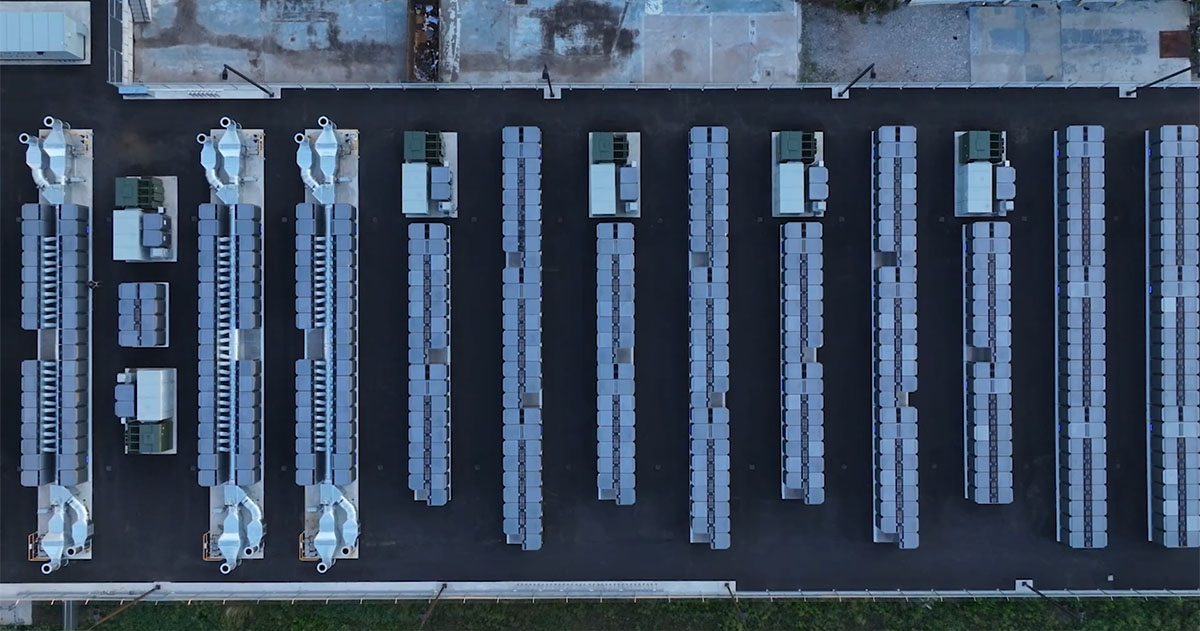
The same Utility Dive account included Bloom CEO comments about net-metering arrangements [6]. That point needs careful handling. Retail net metering is not the same legal question as FERC-jurisdictional transmission-side netting. A state retail tariff, utility bill credit, or customer-sited generation arrangement may decide how a retail customer’s bill is calculated. The June 2026 FERC finding, as reported, addresses wholesale transmission charges and RTO/ISO tariff treatment of large-load demand. Conflating those two regimes would overstate the federal order and understate the remaining importance of state retail law.
That distinction helps both sides of the deal. Bloom-style fuel cells are not condemned because they sit behind a meter. A retail arrangement is not invalidated merely because FERC is scrutinizing transmission-side netting. But if the project economics assume the same subtraction works for wholesale transmission billing, counsel needs an express legal basis in the applicable tariff, not a marketing phrase.
How the risk should show up in documents signed now
A deal being negotiated in Q3 2026 should preserve the legal posture in the term sheet and the model. The June orders should not be treated as a final prohibition, and transmission-side netting should not be priced as settled law.
| Document issue | Counsel-facing treatment |
|---|---|
| Energy price and savings representation | Avoid promising savings that depend on net transmission demand unless the tariff basis and change-in-law allocation are explicit. |
| Transmission and ancillary charges | State whether charges are passed through on a gross-load, net-load, or tariff-as-settled basis; do not leave the demand determinant implied. |
| Interconnection assumptions | Separate net-injection interconnection treatment from transmission-charge netting; acceptance of one does not prove the other. |
| Cost recovery | Identify who pays for required network upgrades, standby service, reliability measures, metering changes, and tariff compliance costs. |
| Conditions precedent | Tie closing or notice-to-proceed to the RTO’s treatment of the specific configuration, not merely to equipment delivery or site control. |
| Change in law | Include the pending Section 206 proceedings, later tariff revisions, and settlement-method changes within the allocation language. |
| Retail arrangements | Keep retail net metering, bill credits, and state-jurisdictional supply obligations in a separate clause from FERC transmission treatment. |
The cleanest contract language will not say the facility is “off-grid” unless the legal design can carry that word. It will describe the actual dependencies: interconnection, standby service, wholesale transmission treatment, retail service, metering, settlement, resource adequacy, and cost recovery. Those are the points at which a fuel-cell project becomes a billing rule.
For deals signed now, transmission-side netting risk is pending, not final. It is nevertheless material enough to affect PPA economics, interconnection assumptions, cost-allocation language, financing conditions, and closing rights until the Section 206 proceedings conclude.
References
- FERC orders grid operators to promptly revise or justify interconnection rules for data centers and large loads, White & Case
- FERC's PJM Co-Location Order: A Turning Point for AI Data Center Power Strategy, Steptoe & Johnson
- Grid operators are ordered to speed power to energy-hungry AI data centers, AP
- FERC Acts to Advance Data Center and Large Load Integration in Six RTO Regions, Duane Morris
- FERC Weighs in on PJM Data Center Co-Location Rules, Morgan Lewis
- Bloom Energy says it's on track for 2 GW annual production capacity, Utility Dive
Operationalizing workflow
No workflow has been explicitly linked to this obligation yet. See Workflows generally.
Illustrative cases
No illustrative case is currently tracked for this obligation. See Risk Digest for documented incidents generally.
← Back to RegulationReport a correction or tip
Spotted an outdated figure, a misstated fact, or a ruling this regulation entry should reflect? Public comments are disabled for this content given the professional cost of a misreported case outcome, penalty amount, or rule text — use the structured correction channel instead.
Report a correction or tip for this record →