
The five legal barriers to Chinese automakers' US entry
- Authority
- U.S. Department of Commerce, Bureau of Industry and Security
- Rule type
- regulation
- Jurisdiction scope
- US federal
- Effective date
- Mar 17, 2025
- Source text
- Read primary rule text ↗
Prohibits certain connected-vehicle transactions with China/Russia nexus; requires annual Declarations of Conformity, 10-year recordkeeping, and supply-chain due diligence.
Last verified: August 3, 2026
The legal challenges behind Chinese automakers’ US entry are less a market-share story than a dated compliance calendar. Jim Farley told Ford employees on July 30, 2026 that Chinese automakers could enter the US market within five to 10 years, “more likely the latter,” according to a Reuters account based on three attendees at a private employee meeting; Ford declined to comment on the meeting. Bill Ford separately said the industry “can’t expect to keep them out forever,” Reuters reported.[1]
That timeline is credible only if it is read through the effective-date columns. The current US wall is not one rule. It is a stack of tariff, vehicle-security, statutory, customs, and licensing mechanisms that can each fail, expire, tighten, or be bypassed on different dates.

| Barrier or valve | Authority, effective date, or trigger | Operational obligation | Litigation or legislative status | Possible escape valve |
|---|---|---|---|---|
| Section 301 tariffs | Chinese EV tariff increased from 25% to 100% in September 2024; lithium-ion EV batteries separately carry a 25% rate.[2][3] | Importer must price, classify, and declare against the applicable tariff line; battery content cannot be collapsed into a single unsupported “EV tariff” number. | No pending direct challenge is identified in the supplied record; the rate remains a live import cost. | Non-China production, different product classification, or a supply chain that avoids the Chinese-origin exposure. |
| Section 232 autos and parts tariffs | Additional 25% autos-and-parts layer remains in place; Tax Foundation estimates current tariff policy would raise $635 billion over the next decade.[4] | Importer must test whether the auto or part falls within the covered Section 232 measures, separately from Section 301. | Earlier Section 232 steel challenges were rejected by the Supreme Court; no active court challenge to Section 232 auto tariffs is confirmed here.[4] | Product-specific exclusions, sourcing changes, or future executive modification. |
| BIS connected-vehicle rule, 15 CFR Part 791 | Final rule effective March 17, 2025; software prohibition begins with model year 2027, hardware prohibition with model year 2030.[5] | Covered importers and manufacturers must police VCS hardware/software and ADS software with a China or Russia nexus, file annual Declarations of Conformity, keep records for 10 years, and conduct supply-chain due diligence.[5] | In force; penalties are tied to IEEPA exposure, including civil penalties up to $377,700 per violation or twice the transaction value, and criminal penalties up to $1 million and 20 years.[5] | Specific Authorization from Commerce, if granted, or redesign of covered software, hardware, ownership, and supplier relationships. |
| Connected Vehicle Security Act of 2026 | Introduced April 29, 2026; Senate Commerce Committee approved it by voice vote on July 22, 2026.[6][7] | Would add a statutory ban paralleling the 2027 software and 2030 hardware timing, while potentially widening entity coverage through a contested 15% Chinese-ownership test.[6][7] | Not passed by the full Senate as of August 3, 2026; Duckworth amendment failed 9–19, and Cruz withdrew an amendment to replace the 15% test with CFIUS-style factors.[7] | Amendment, narrowing before enactment, agency interpretation, or a final statutory scope that leaves some non-Chinese brands with Chinese shareholders outside the ban. |
| USMCA, customs origin, and North American routing | USMCA duty-free treatment depends on a 75% regional-value-content threshold; Mexico and Canada routing remain under scrutiny.[8][2] | Importer must prove origin, regional value, and substantial transformation rather than merely point to final assembly in North America. | USMCA review is ongoing as of July 2026; Mexico and Canada pathways are politically visible and fact-dependent. | Genuine North American manufacturing that satisfies USMCA and customs-origin tests, subject to tariff, connected-vehicle, and ownership rules still applying. |
| Specific Authorization escape valve | Commerce has discretion to authorize otherwise covered connected-vehicle transactions; Volvo announced a Specific Authorization on May 26, 2026.[9] | Applicant must persuade Commerce that the covered transaction can proceed despite the China/Russia nexus rule; the public record may not reveal the application theory. | Applications and decisions are not routinely published. Reuters reported Ford asked Commerce for authorization to continue importing the China-built Lincoln Nautilus.[10] | The authorization itself. This is the narrow gate in the wall. |
Tariffs: the expensive layers should stay separate
The first barrier is still a blunt one. The Section 301 tariff on Chinese EVs rose from 25% to 100% in September 2024, while lithium-ion EV batteries are separately listed at 25%.[2][3] Those two figures often get compressed into a cumulative shorthand. For an import plan, that shorthand is where errors begin.
A finished Chinese-origin EV, a battery, a battery component, and a vehicle assembled outside China with Chinese content can present different tariff questions. The answer turns on origin, classification, and the product actually being imported. Counsel briefing management should resist a single “China tariff” number unless the underlying transaction has already been classified.
Section 232 is a different authority and should not be treated as a footnote to Section 301. It adds a separate 25% autos-and-parts layer, and the Tax Foundation has estimated that current tariff policy would raise $635 billion over the next decade.[4] Earlier Section 232 steel challenges were rejected by the Supreme Court, but that does not mean every current auto-tariff application is litigation-proof. It means only that no active court challenge to Section 232 auto tariffs is confirmed in this record, and that the operative risk for importers is compliance unless a challenge or executive change actually appears.
There is also a near-term legislative clock in the tariff background. The Section 122 replacement issue carries a 150-day congressional-approval window, with autos exempt from the 10% surcharge described in the supplied tariff record.[4] That is not the same thing as relief for Chinese EVs. It is a reminder that tariff authority can shift faster than product-cycle planning.
The BIS connected-vehicle rule is the hard calendar
The most administrable barrier is the Commerce Department’s connected-vehicle rule. The BIS final rule, codified at 15 CFR Part 791, became effective March 17, 2025. It prohibits covered transactions involving connected vehicles that contain vehicle connectivity system hardware or software, or automated driving system software, with a China or Russia nexus.[5]
The rule applies to covered connected passenger vehicles under 10,001 pounds.[5] That weight threshold matters. It keeps the analysis tied to the vehicle class, not to an undifferentiated fear of software, batteries, or “China tech” generally.
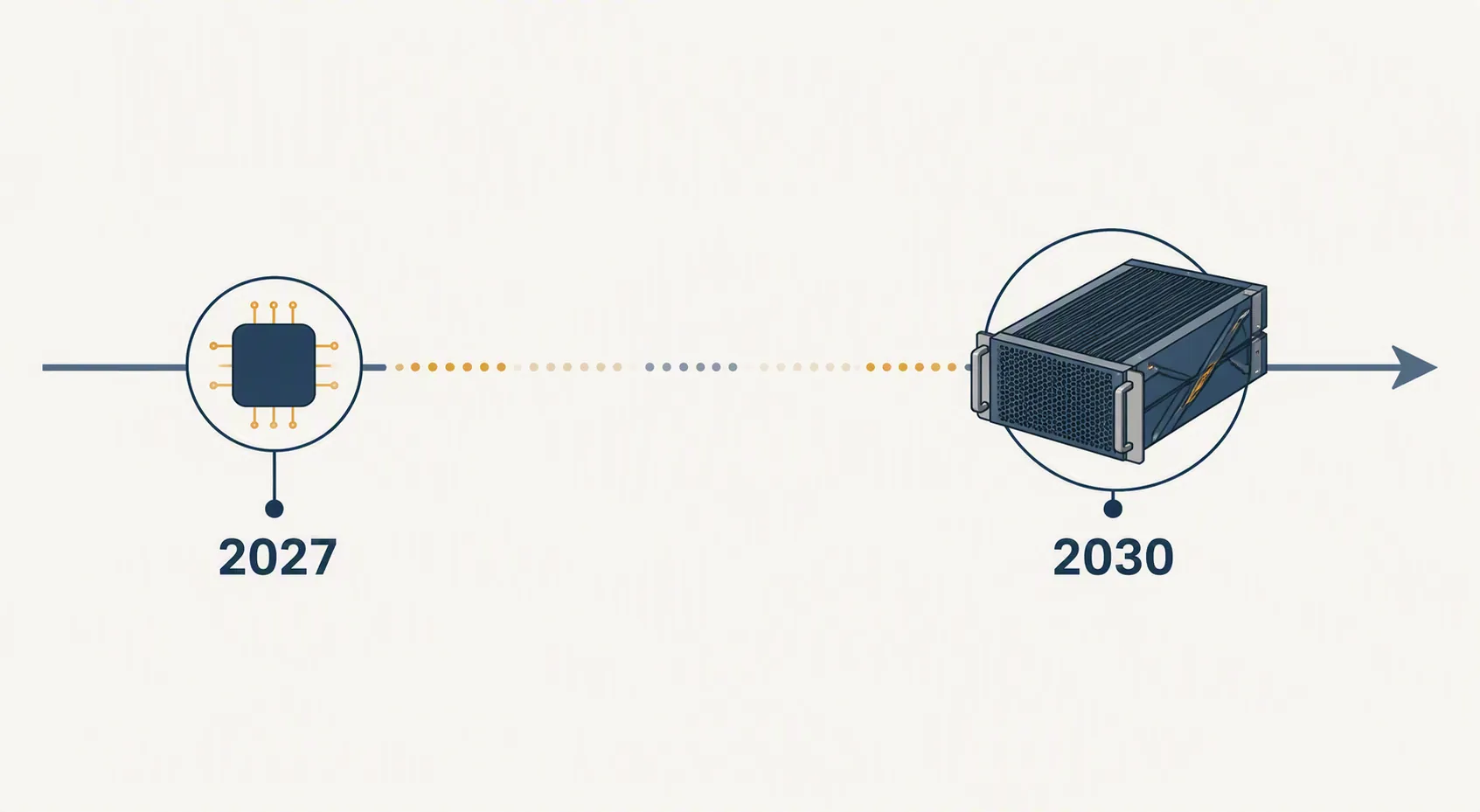
The dates do most of the work. The software prohibition begins with model year 2027. The hardware prohibition begins with model year 2030.[5] For a product lawyer, that staging changes the immediate question. The first review is not simply whether a vehicle has Chinese-origin parts. It is whether covered VCS software or ADS software with the prohibited nexus is present in the 2027 model-year vehicle, and whether the hardware architecture will become unlawful by the 2030 model-year line.
The compliance burden is annual and documentary. The rule requires annual Declarations of Conformity, 10-year recordkeeping, and supply-chain due diligence.[5] A company cannot safely treat this as a one-time import memo prepared at launch. Supplier ownership can change. Software development can move. A module can be redesigned. A remote update can alter what the vehicle contains after the commercial team has stopped thinking about customs entry.
That is why the certification chain is as important as the ban itself. Someone inside the importer or manufacturer must know which suppliers touch VCS hardware, which teams write or maintain ADS software, which affiliates count for a China or Russia nexus, and which records will still be available years later if Commerce asks. The 10-year retention requirement is not a clerical detail; it is the memory system for a vehicle platform whose software, suppliers, and ownership records may outlive the original launch team.[5]
The penalty exposure gives the rule its force. Gibson Dunn’s summary of the final rule cites IEEPA civil penalties up to $377,700 per violation or twice the transaction value, and criminal penalties up to $1 million and 20 years.[5] Those numbers are too large to leave the analysis with engineering or procurement alone. Legal has to translate them into approval gates: no covered software without provenance, no hardware sourcing assumption without ownership diligence, no declaration without records that can survive audit.
Where the connected-vehicle review starts
A practical review starts with the vehicle, not with the brand. Is it a covered connected passenger vehicle under the weight threshold? Does it contain VCS hardware or software? Does it contain ADS software? Which entities designed, developed, manufactured, or supplied those covered elements? Only after that mapping does the China or Russia nexus analysis become reliable.
The difficult cases will not always look like a Chinese badge on the hood. A non-Chinese brand can have Chinese ownership. A US-developed software package can be installed in China. A North American assembly strategy can still carry covered hardware. The rule’s structure makes public branding a weak proxy for compliance.
Congress may turn the agency rule into a broader statutory test
The Connected Vehicle Security Act of 2026 matters because it would harden the agency rule into statute while potentially broadening the entity screen. Senators Bernie Moreno and Elissa Slotkin introduced the bill on April 29, 2026; the Senate Commerce Committee approved it by voice vote on July 22, 2026.[6][7] As of August 3, 2026, it has not passed the full Senate.
The bill tracks the BIS rule’s basic timing: vehicle and software restrictions in 2027, hardware restrictions in 2030.[6] The more contested feature is the 15% Chinese-ownership test. During committee consideration, Senator Ted Cruz warned that the bright-line threshold could reach companies such as Mercedes-Benz, citing an approximately 20% Chinese-held stake; he withdrew an amendment that would have replaced the 15% test with CFIUS-style factors.[7]
Senator Tammy Duckworth’s amendment to align the bill with Commerce’s less-stringent hardware standard failed 9–19.[7] Those amendment votes are useful because they show where the next compliance dispute is likely to sit. The question is not only whether China-built vehicles may be imported. It is whether a non-Chinese automaker, with Chinese shareholders or Chinese-linked suppliers, can certify that it falls outside a statutory definition once Congress finishes writing it.
Mexico and Canada are routing questions, not magic doors
North American routing is the practical backdoor everyone tests first. It is also where loose language creates bad advice. Final assembly in Mexico or Canada does not, by itself, make a Chinese automaker’s US entry lawful, duty-free, or outside the connected-vehicle rule.
USMCA duty-free treatment depends on meeting a 75% regional-value-content threshold.[8] If a vehicle cannot satisfy the regional-content requirement, the customs treatment changes. If it can satisfy the threshold, that still does not answer the BIS software, hardware, ownership, or authorization questions.
Mexico is already under pressure as a routing jurisdiction. PBS/AP reported a 50% tariff on Chinese EVs entering the US via Mexico and a new customs ruling focused on “substantial transformation.”[8] Substantial transformation is the lawyer’s issue hiding under the manufacturing press release: what changed, where did it change, and did the change create a new article of commerce for origin purposes?
Canada is not outside the frame either. CNBC reported a July 2026 deal involving 49,000 units and 6.1%.[2] The limited point for counsel is that Canadian treatment is being negotiated and counted, not assumed. A North American plan that depends on Canadian or Mexican routing needs origin support, USMCA support, tariff support, and connected-vehicle support in the same file.
Specific Authorization is the part of the wall that can open
The clean five-layer chart becomes less clean once Specific Authorizations enter the record. Volvo Cars, majority-owned by Geely, announced on May 26, 2026 that it had received the first publicly confirmed Specific Authorization under the connected-vehicle rule.[9] That is the fact that keeps the BIS rule from being only a prohibition story.

A Specific Authorization does not repeal the rule. It permits a covered transaction if Commerce grants relief on the applicant’s facts. That distinction is critical for anyone advising another automaker. Volvo’s authorization shows that Commerce can open the gate; it does not show that a different brand, supplier chain, software stack, or ownership structure will receive the same treatment.
Ford is now part of the same licensing story. Reuters reported on June 15, 2026 that Ford confirmed it had asked Commerce for authorization to continue importing the China-built Lincoln Nautilus, with US-developed software installed in China.[10] That fact sits awkwardly beside Farley’s later warning. Ford can warn that Chinese automakers may arrive in five to 10 years while also seeking permission for a China-built vehicle to remain in its own US lineup.
The awkwardness is not hypocrisy; it is the ordinary shape of a licensing regime. Once authorization is possible, the hardest question is no longer “is the wall closed?” It is “which facts persuade Commerce to open it, and will anyone outside the agency ever see enough of those facts to rely on them?” Reuters has reported that Commerce does not publish applications or decisions, creating opacity for companies trying to benchmark their own requests.[10]
That opacity has direct consequences for legal departments. A published rule can be reduced to a checklist. An unpublished authorization practice cannot. Counsel may know that Volvo received relief and Ford asked for it, but not the decisive facts: whether Commerce cared most about software provenance, data controls, governance rights, supplier replacement, mitigation undertakings, or some combination of all of them.
The same uncertainty touches other China-built imports. GM’s Buick Envision may be affected, and GM has announced a Kansas move by 2028, according to the supplied record. That is not proof of how Commerce would rule on any authorization request. It is evidence that production planning is already being moved around the regulatory calendar.
Polestar shows why status labels go stale quickly
Polestar’s status is a caution against writing permanent conclusions into a moving file. Consumer Reports reported on June 25, 2026 that Polestar was withdrawing from the US market, while CNBC had reported on May 26, 2026 that Polestar said it continued working with US authorities.[11][2] Those statements are not identical, and they should not be forced into one clean answer.
For a briefing memo, the safer formulation is narrow: Polestar’s US posture was in flux as of mid-2026. That is enough to warn executives that brand status, authorization status, and import status may diverge. It is not enough to predict whether a similarly situated automaker will exit, pause, relabel, restructure, or obtain relief.
What counsel should treat as open
Several issues remain open as of August 3, 2026. The Connected Vehicle Security Act has committee momentum but no full Senate passage. The USMCA review is ongoing. The Section 122 replacement issue has a short congressional clock. The Section 232 auto-tariff record does not show an active court challenge. The Specific Authorization process is operating, but not transparently.
That mix makes Farley’s five-to-10-year window useful, but only in a bounded way. It should not be read as a forecast that Chinese brands will certainly arrive, or as proof that current barriers will certainly hold. It is better understood as the product of dated bans, review clocks, ownership tests, tariff layers, and an unpublished licensing valve.
The first visible crack is unlikely to come from a headline debate over whether Chinese automakers are “coming.” It is more likely to appear in Commerce’s treatment of Specific Authorization requests: who receives one, on what facts, with what conditions, and whether the agency ever lets the market see enough to plan around the answer.
References
- Reuters report on Jim Farley’s July 30, 2026 employee-meeting remarks, Reuters, July 30, 2026
- CNBC report on Chinese EV tariffs, Polestar status, and July 2026 Canada deal, CNBC, 2026
- Automotive Logistics tariff table, Automotive Logistics
- Tariff estimates and Section 232 materials, Tax Foundation
- Final Rule Prohibiting Certain Connected Vehicle Transactions, Gibson Dunn client alert
- Moreno, Slotkin Introduce Connected Vehicle Security Act of 2026, Senator Bernie Moreno press release, April 29, 2026
- Senate Commerce Committee action on Connected Vehicle Security Act, Roll Call, July 22, 2026
- PBS/AP report on Chinese EVs via Mexico and customs substantial-transformation ruling, PBS/AP
- Volvo Cars receives Specific Authorization, Volvo Cars press release, May 26, 2026
- Reuters report on Ford request for Commerce authorization for China-built Lincoln Nautilus, Reuters, June 15, 2026
- Consumer Reports report on Polestar US withdrawal, Consumer Reports, June 25, 2026
Operationalizing workflow
No workflow has been explicitly linked to this obligation yet. See Workflows generally.
Illustrative cases
No illustrative case is currently tracked for this obligation. See Risk Digest for documented incidents generally.
← Back to RegulationReport a correction or tip
Spotted an outdated figure, a misstated fact, or a ruling this regulation entry should reflect? Public comments are disabled for this content given the professional cost of a misreported case outcome, penalty amount, or rule text — use the structured correction channel instead.
Report a correction or tip for this record →