
Claude's June 2026 outages expose law firm ethics risk
- Authority
- American Bar Association, Texas Center for Legal Ethics
- Rule type
- ethics opinion
- Jurisdiction scope
- US federal, US state
- Effective date
- Feb 1, 2025
- Source text
- Read primary rule text ↗
Law firms must have a documented, tested fallback plan for AI provider unavailability to satisfy competence and supervision duties under ABA Opinion 512 and Texas Opinion 705.
The legal impact of Claude’s June 2026 outages is not hard to state: if a law firm had built a filing-critical workflow around Claude, the tool became unavailable often enough that “the provider might go down” can no longer be treated as a remote inconvenience. On June 23, 2026, reports of Claude problems peaked at 7,119 on Downdetector during an outage TechRadar tracked in real time, and ThousandEyes separately analyzed the event from a network-observability perspective; the incident lasted roughly three hours and was reported as resolved across Claude models.[1][2] That followed a June 2 incident described as roughly 10 hours of intermittent disruption and a June 18 major outage for which public duration details remain less precise.[3][4]
The June incidents also did not sit alone. StatusGator documented 155 Claude outages since January 2026 and reported eight additional outages in April 2026.[5] Pulsetic, using a separate commercial tracking methodology, reported 140 incidents in a 90-day window, including 41 classified as major or critical.[6] Those are not Anthropic admissions, and the services do not use identical definitions. But for a lawyer deciding whether downtime is foreseeable, the difference between “155 outages since January” and “140 incidents in 90 days” is not the difference that matters. Both point in the same operational direction.
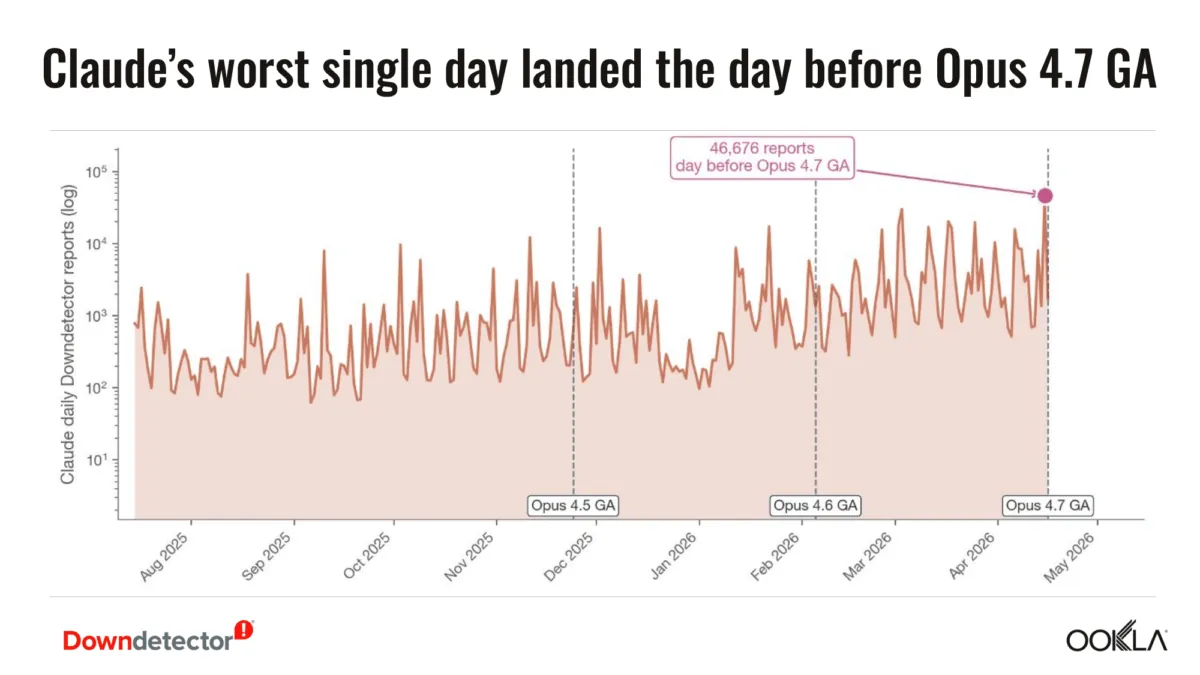
Last verified July 30, 2026: no bar opinion located for this article has said, in direct terms, that AI-provider downtime is itself a competence violation. That matters. The stronger analysis is narrower and more useful: repeated outages make availability a known limitation of the tool, and existing competence and supervision duties already require lawyers to understand and manage known limitations.
The failure mode is no longer hypothetical
Lawyers have spent the last several years discussing generative AI as if the central risk were always a bad answer: hallucinated cases, distorted quotations, missing caveats, or false confidence. Those risks remain real. The June 2026 Claude outages expose a different failure mode. The model may not be wrong. It may simply be unavailable when a team has already allocated the research, drafting, cite-checking, or document-review sequence around it.
That distinction changes who absorbs the damage. A partner may have approved Claude as a productivity tool. Procurement may have reviewed a subscription. A knowledge-management lawyer may have trained the team. But when the service is down near a filing deadline, the immediate burden usually falls on the associate, paralegal, staff attorney, or KM lawyer who must reconstruct the task in another system while preserving privilege, confidentiality, version control, and supervisory review.
A firm does not need to ban Claude to take that risk seriously. It needs to be able to answer basic documentary questions: which matters used Claude for deadline-sensitive work, which tasks were dependent on it, what substitute workflow had already been approved, who was authorized to switch, and how the supervising lawyer would be notified before the deadline was compromised.
| Reliability fact | What it supports | Important qualification |
|---|---|---|
| June 23, 2026 outage; Downdetector peak reported at 7,119; roughly three-hour disruption; resolved across models | A filing team could lose meaningful working time during a live deadline window | Downdetector is report-based; ThousandEyes provides separate network analysis |
| June 2, 2026 incident described as roughly 10 hours of intermittent disruption | The June pattern was not confined to one short event | Intermittent disruption can affect users unevenly |
| June 18, 2026 major outage | A third June event belongs in the risk record | Public duration details are approximate and less independently developed |
| Eight additional outages in April 2026; 155 documented outages since January 2026 | Availability had become a recurring operational issue before June ended | StatusGator is a commercial tracker, not Anthropic’s own post-mortem |
| Pulsetic reported 140 incidents in 90 days, including 41 major or critical | A separate methodology still shows a substantial incident pattern | Pulsetic and StatusGator do not necessarily count incidents the same way |
ABA Formal Opinion 512 makes limitations part of competence
ABA Formal Opinion 512, issued in July 2024, did not treat generative AI as forbidden technology. It instead required lawyers using a generative AI tool to have “a reasonable understanding of the capabilities and limitations” of that tool.[7] The phrase matters because limitations are not limited to hallucination. A tool’s limits include the conditions under which it cannot reliably be used.
For a law firm using Claude only for non-urgent experimentation, a record of outages may call for caution and user education. For a firm using Claude inside a filing-critical workflow, the same record requires more. The relevant question becomes whether the lawyer supervising the work understood that Claude had a demonstrated availability problem and had a practical way to continue the work when that problem appeared.
A reasonable understanding of the tool’s limitations should include at least three availability facts: that the tool can become unreachable, that disruptions may occur during ordinary business operations rather than planned maintenance windows, and that recovery time is not controlled by the law firm. The June 2, June 18, and June 23 incidents make those facts concrete rather than speculative.
The hard part for an ethics inquiry is not whether the lawyer can recite that AI systems sometimes fail. It is whether the firm’s documents show that someone translated that knowledge into workflow design. A dated fallback policy, a tested alternate research path, an approved manual process, a matter-level instruction, or a supervising-attorney signoff trail will do more work than a general statement that the firm “uses AI responsibly.”
Texas Opinion 705 turns the spotlight toward supervision
Texas Ethics Opinion 705, issued in February 2025, states that “human oversight [is] mandatory for all AI-generated legal work.”[8] In a downtime scenario, oversight is not satisfied merely because a lawyer planned to review Claude’s output eventually. If the tool goes dark before the output exists, the supervising lawyer still has to know how the work will be completed, who is taking over, and whether the deadline plan remains realistic.
That is where single-provider dependence becomes difficult to defend. If a team’s actual process is “wait until Claude returns” or “ask the associate to figure it out,” the supervision problem has already arrived. The invisible fallback person may be diligent, but diligence after failure is not the same thing as supervision before failure.
A defensible supervision record should identify the human decision points. Someone must decide when the team stops waiting for the provider. Someone must decide which substitute tool or manual process is authorized for confidential client material. Someone must review any work product created under time pressure after the switch. Someone must tell the supervising lawyer that the original workflow failed before the missed step becomes a missed filing.
The Texas opinion’s oversight principle therefore reaches more than review of output. It reaches the governance of the AI-assisted process. A lawyer who cannot show how the firm maintained human control when the system became unavailable will have trouble showing that the work was meaningfully supervised.
The sanctions cases are about verification, but they change the atmosphere
The best-known sanctions cases do not decide the Claude outage question. Mata v. Avianca produced a $5,000 sanction in 2023 after fake AI-generated citations entered a federal filing. Park v. Kim produced a Second Circuit referral in 2024. Lacey v. State Farm resulted in a $31,000 sanction in 2025, with a Special Master writing that “no reasonably competent attorney should outsource research and writing to this technology, particularly without any attempt to verify.” Couvrette v. Wisnovsky resulted in $110,000 in sanctions in 2025 and involved concealment of AI errors.[9]
Those cases predate the June 2026 Claude outages and concern verification failures rather than provider downtime. They should not be cited as if a court has already sanctioned a lawyer for relying on an unavailable AI service. The more disciplined point is that courts have moved past the educational-warning phase when lawyers allow AI-related failures to reach filed work.
That trajectory matters in a downtime event because time pressure is a predictable consequence of an outage. If Claude is unavailable and the team compresses research, cite-checking, or privilege review into the remaining hours before filing, the court will still judge the filed work. An outage may explain why the team was under pressure. It will not, by itself, verify a citation, complete a supervisory review, or excuse a filing that should not have been submitted.
Service credits are not an ethics plan
Procurement records matter, but only if they answer the right question. Forbes reported on May 5, 2026, that Anthropic’s enterprise SLA was negotiated case by case rather than published as a standard contract. The same analysis reported Claude Max uptime at approximately 84% against a claimed 99%, attributing the measurement to independent monitoring without naming the monitoring vendor; it also described service credits capped at 5–10% of monthly fees.[10] Individual enterprise customers may have different negotiated terms, and that uncertainty is precisely why firms should preserve the actual contract language they rely on.
Even a favorable SLA does not solve the ethics problem by itself. A service credit may compensate the subscription account after the fact. It does not draft the motion, restore the lost review window, notify the supervising lawyer, protect privileged material during an improvised workaround, or create a record that the firm had a reasonable plan before the provider failed.
Contract clauses still deserve attention. Redress Compliance’s May 2026 discussion of Claude enterprise terms focuses on provisions such as renewal caps, overage rates, model substitution, and data-use language.[11] Those terms affect cost, control, confidentiality, and business leverage. They should be reviewed. But they are adjacent to the competence analysis, not a substitute for it.
The same is true of comparing deployment routes. Forbes contrasted Claude arrangements with AWS Bedrock’s published 99.9% uptime and default-enforced financial penalties.[10] That may be relevant for procurement. It does not eliminate the need for a fallback. A higher-uptime channel reduces risk; it does not transfer the lawyer’s duty of competence to the cloud provider.
What a defensible fallback record should show
A firm that uses Claude in filing-critical work should be able to produce more than a vendor invoice and an AI-use policy. The useful record is operational. It shows how the work continues when Claude is slow, degraded, or unavailable, and it shows that the plan was known before the outage.
- A dated inventory of Claude-dependent tasks, separating low-risk productivity uses from filing-critical uses.
- A written trigger for switching away from Claude during deadline-sensitive work, tied to practical conditions such as service unavailability, degraded access, or inability to complete review in time.
- An approved alternate workflow, which may include another vetted provider, a hosted model through a different channel, conventional legal-research tools, manual review, or reassignment to a trained team member.
- Confidentiality instructions for the fallback path, including whether client material may be entered into the substitute system.
- A named role responsible for notifying the supervising lawyer when the fallback is activated.
- A review requirement for work product created during the fallback process, especially citations, quotations, record references, and legal conclusions.
- A procurement file containing the actual SLA, service-credit terms, exclusions, data-use provisions, model-substitution rights, and support commitments for the firm’s account.
- Evidence that the fallback was practiced or at least tested, not merely described in a policy nobody had used.
None of that requires a firm to treat Claude as uniquely dangerous. The same analysis would apply to any single AI provider placed inside a deadline-dependent legal workflow. What the June 2026 record does is remove the comfort of abstraction. The outage pattern gives an ethics investigator a simple first question: before the deadline was at risk, who at the firm knew this tool could fail this way, and where is the plan showing what the team was supposed to do next?
The product verdict is not the ethics verdict
Using Claude is not unethical per se. A lawyer can use a general-purpose AI system productively, carefully, and within existing professional duties. The problem is the undocumented leap from “we use Claude” to “Claude is part of the filing infrastructure.” Once a tool becomes part of the path to filed work, availability becomes part of competence.
The defensibility test is practical: if Claude went down during a filing-critical task, could the firm show, from documents created before the outage, who would verify the work, who would switch workflows, who would alert the supervising lawyer, and how the deadline would still be protected? If the answer is no, the risk is not that every Claude outage will become a malpractice claim. The risk is that the firm will be unable to demonstrate the reasonable understanding and human supervision that existing ethics opinions already require.
References
- TechRadar live blog. TechRadar. June 23, 2026.
- Claude Outage Analysis: June 23, 2026. ThousandEyes.
- Claude outage, June 2026: Reckoning with AI's increasing status as infrastructure. Thoughtworks.
- Claude Down? 2026 Anthropic Outage & Expert Failover Tips. Deployflow.
- Claude status page. StatusGator.
- Claude status monitoring. Pulsetic.
- ABA Formal Opinion 512. American Bar Association. July 2024.
- Texas Ethics Opinion 705. Texas Center for Legal Ethics. February 2025.
- AI Legal Ethics in 2026: 6 Cases, 4 Rules, 1 Policy Template. GC AI.
- Enterprises Need To Be Careful Before They Go All-In On Anthropic. Forbes. May 5, 2026.
- Claude Enterprise Contract Clauses: 2026 Guide. Redress Compliance. May 2026.
Operationalizing workflow
No workflow has been explicitly linked to this obligation yet. See Workflows generally.
Illustrative cases
No illustrative case is currently tracked for this obligation. See Risk Digest for documented incidents generally.
← Back to RegulationReport a correction or tip
Spotted an outdated figure, a misstated fact, or a ruling this regulation entry should reflect? Public comments are disabled for this content given the professional cost of a misreported case outcome, penalty amount, or rule text — use the structured correction channel instead.
Report a correction or tip for this record →