
Constitutional risks in Trump's parliamentarian pressure
- Authority
- U.S. Senate
- Rule type
- statute
- Jurisdiction scope
- US federal
- Source text
- Read primary rule text ↗
Satisfy six statutory tests for extraneous matter in reconciliation bills
President Trump’s demand that Majority Leader John Thune fire Senate Parliamentarian Elizabeth MacDonough was framed in public as a personnel fight. On Truth Social, Trump called MacDonough “brutal” and a “nasty holdover” from the Obama era while pressing Thune to move the SAVE America Act through reconciliation despite her adverse rulings.[1] That language matters less as insult than as diagnosis: the pressure campaign is aimed at a staff office being blamed for limits Congress itself wrote into the reconciliation statute.
The legal object at issue is not simply an internal Senate preference about what belongs in a fast-track bill. The Byrd Rule is codified in Section 313 of the Congressional Budget Act of 1974, and it supplies six statutory tests for identifying “extraneous” matter in reconciliation legislation.[2] Treating MacDonough’s advice as if it were merely an inconvenient memo from a Senate employee misses the harder question: what happens when presidential pressure is used to induce Senate leadership to disregard a statutory screen that the chamber ordinarily applies through its own procedures?
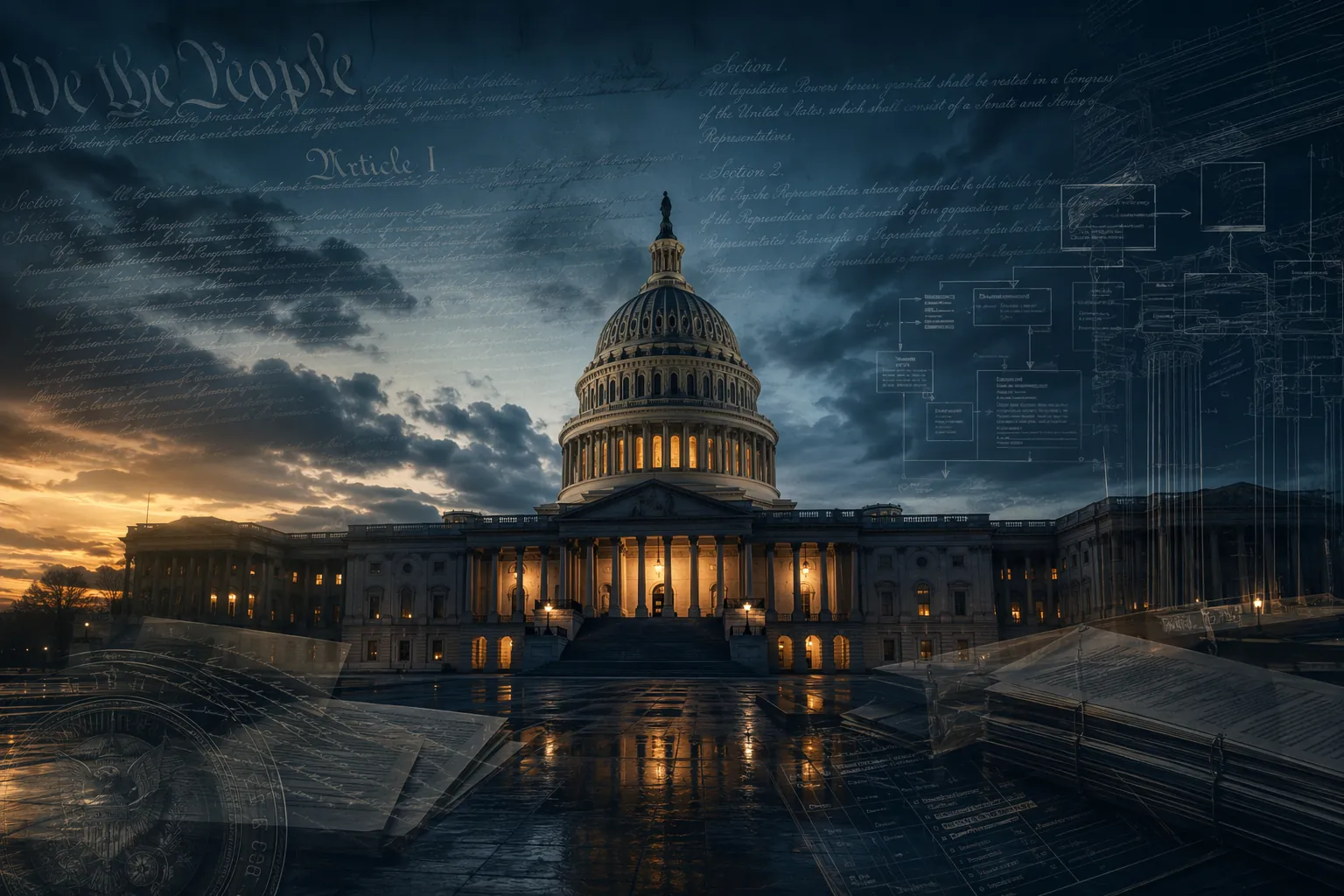
That is why this dispute points to something narrower, and more consequential, than another Trump-versus-Senate-Republicans story. The president has no direct constitutional power to decide Senate reconciliation procedure. The Senate parliamentarian does not hold binding legal authority over senators. And yet an override of Byrd Rule advice can still become a constitutional-risk event if the practical effect is to bypass statutory reconciliation constraints in a zone where courts may be reluctant, or unable, to intervene.
The Byrd Rule Is Not Just Senate Etiquette
Reconciliation is powerful because it changes the voting environment. Measures that qualify can move under procedures that avoid the ordinary filibuster. The Byrd Rule is the principal statutory gatekeeper for that privilege. Section 313 does not merely announce a norm that senators should keep reconciliation budget-related; it identifies categories of extraneous matter that may be excluded from a reconciliation bill.[2]
That distinction does a great deal of work. If the Byrd Rule were only a Senate custom, then the argument for discarding it would sound like a hardball version of ordinary majority control. But Section 313 is part of the Congressional Budget Act. The Senate still applies it through Senate procedure, and the chamber retains broad control over its internal rules, but the test being applied is statutory. A demand to overrule the parliamentarian therefore does not merely ask senators to change the chamber’s mood about reconciliation. It asks them to treat a statutory eligibility screen as politically disposable.
The existing procedural fight over the SAVE America Act turns on exactly that screen. A companion analysis, Why the Byrd Rule Blocks Thune’s SAVE Act Reconciliation Strategy, covers the mechanics of why voter-eligibility provisions face reconciliation trouble. The constitutional problem begins one step later: once the statutory screen produces a politically intolerable answer, who is being asked to negate it, by what authority, and with what prospect of legal correction?
MacDonough Advises; The Senate Acts
The parliamentarian’s office is old enough to be institutionally serious and limited enough not to be sovereign. The Senate created the position in 1937 as an advisory office, and Senate precedents place formal ruling authority in the presiding officer, not the parliamentarian.[3] MacDonough’s advice matters because senators and the chair rely on it to administer a complex body of statutes, rules, and precedents. But she does not cast votes, issue judicial orders, or personally invalidate legislation.
That advisory status is often invoked too quickly, as if it ends the analysis. It does not. In institutional law, advisory offices can become important precisely because they regularize decisions that formal actors do not want to improvise every time. The Senate could not run reconciliation at speed if every Byrd Rule question had to be newly litigated on the floor without a trusted procedural interpreter. MacDonough’s authority is not coercive, but it is operational.
There is also no clear statutory removal mechanism for the parliamentarian. That does not mean the president is legally blocked from urging Senate leaders to seek her removal; it means the demand falls into a less tidy category. The office is a Senate staff function, governed by Senate practice rather than a codified tenure statute. A clean unlawful-removal claim against Trump is therefore the wrong frame. The risk is not that he is formally exercising a removal power he lacks. It is that he is pressuring Senate leadership to disable the internal mechanism by which the Senate applies a statutory reconciliation limit.
The Override Chain Is Short, But It Is Not Simple
An override scenario has several distinct legal actors. Collapsing them into “the parliamentarian blocked it” or “the Senate can do whatever it wants” obscures the actual chain of authority.
| Actor | Function | Legal significance |
|---|---|---|
| Parliamentarian | Advises on whether a provision violates the Byrd Rule | Influential but formally advisory |
| Presiding officer | Rules on points of order and procedural questions | Holds the formal ruling role under Senate practice |
| Senators | May challenge, sustain, or overturn rulings through chamber procedure | Exercise the Senate’s institutional power |
| Courts | May be asked to review collateral consequences | Face Article I, Section 5 limits and justiciability barriers |
The first step is advice. MacDonough evaluates whether a contested provision satisfies Section 313. The second step is a ruling by the chair. The third is the chamber’s response: senators may sustain or reject the ruling under Senate procedure. Only after those steps does the legal question migrate outside the chamber, if anyone tries to litigate the result.
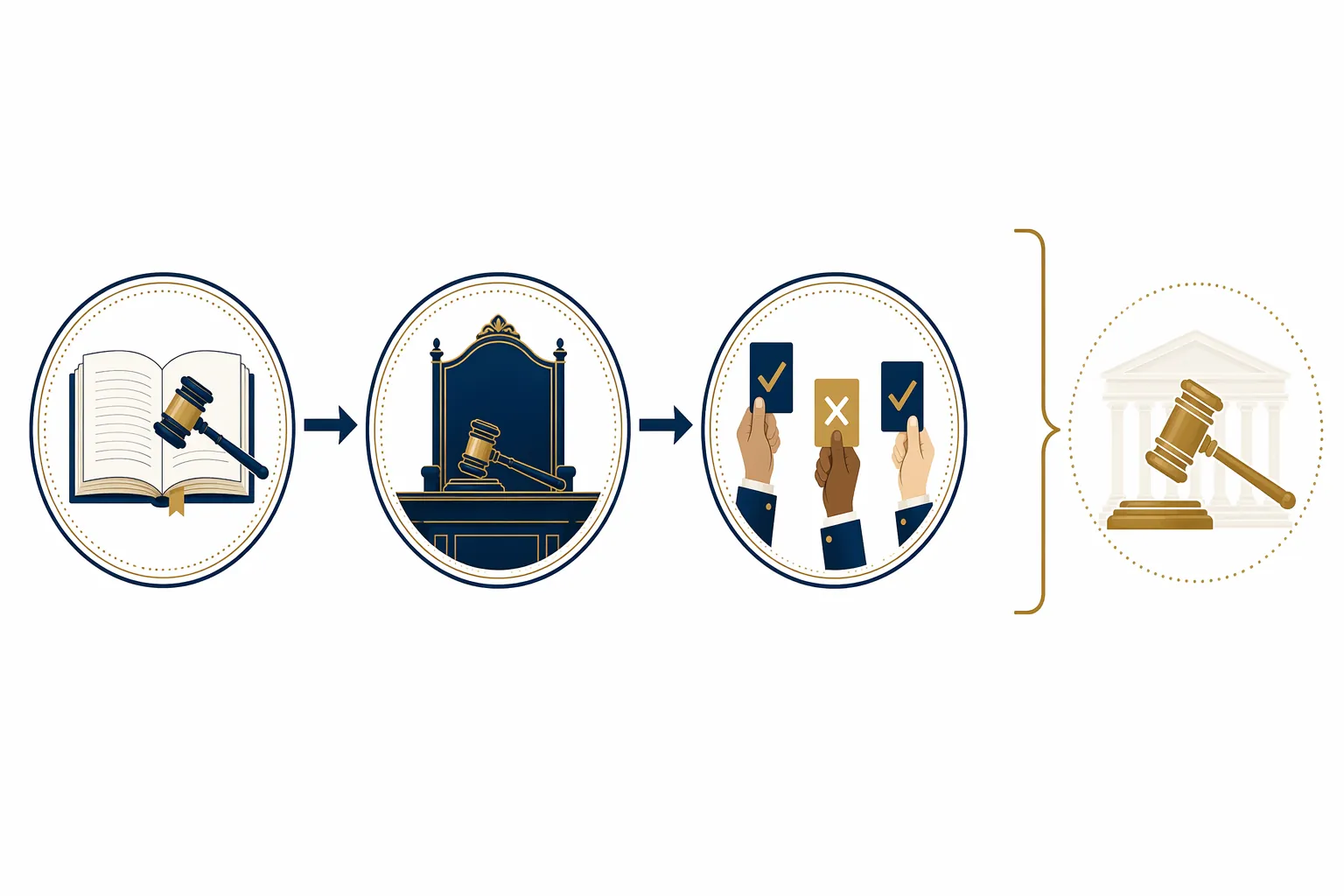
Article I, Section 5 is the complication that keeps this from becoming a straightforward statutory-enforcement story. Each chamber determines the rules of its proceedings. That constitutional allocation does not erase the statutory character of the Byrd Rule, but it does make judicial review unusually difficult. A court asked to police whether the Senate correctly applied Section 313 would have to confront the possibility that the claim is, in practical terms, an invitation to supervise Senate proceedings.
The resulting ambiguity is not comforting. An override could be institutionally radical and evasive of the statutory reconciliation design while still being hard to remedy in court. That combination is the legal risk. It is not illegality proved by bad motive, and it is not immunity created by the word “procedure.” It is a separation-of-powers pressure point created when a statutory gate is operated almost entirely through chamber-controlled machinery.
Thune’s Resistance Has Been Procedural, Not Sentimental
Thune’s public resistance is notable because it has not sounded like a civics lecture about institutional manners. In January 2025, he told Punchbowl News that overruling the parliamentarian on reconciliation was “totally akin to killing the filibuster” and that Republicans “can’t go there.”[4] That comparison is revealing. It treats a reconciliation override not as a one-off workaround but as a chamber-level escalation with durable consequences for minority rights, budget procedure, and future majorities.
After Trump escalated, Thune’s answer stayed practical. The Hill reported that he warned firing MacDonough “would create even more vote issues.”[1] That is not an abstract defense of staff autonomy. It is a vote-counting judgment about the cost of turning reconciliation rulings into a loyalty test. For a majority leader, that cost matters because the same senators who might support a policy outcome may not support changing the procedural ground beneath it.
This is also why the pressure campaign is different from ordinary presidential lobbying. Presidents routinely push Congress to schedule bills, attach provisions, and accept political risk. Here, the requested move is narrower and more structural: remove or overrule the Senate’s procedural interpreter because her application of statutory reconciliation tests blocks the president’s desired path. The president still lacks direct command authority over the Senate. But presidential pressure can matter constitutionally when it seeks to convert congressional control over procedure into a vehicle for evading a congressional statute.
The SAVE America Act Is The Live Test
The SAVE America Act provisions are the most important anchor because they connect the legal architecture to an active legislative route. Roll Call reported in March 2026 that the Byrd Rule posed a challenge for voter-ID legislation in reconciliation.[5] The same week, Roll Call described Thune reviving the idea of using reconciliation even as the voter-ID strategy faced procedural obstacles.[6] The policy fight is about election rules; the legal fight in this article is about whether the majority can use a budget vehicle to move provisions that the statutory reconciliation screen treats as extraneous.
The SAVE Act’s status has remained fluid. The research materials state that the House attached it to the NDAA on July 22, 2026, by a 216-212 vote, and that Senate Democratic Leader Chuck Schumer has said the NDAA “will not pass the Senate” with the voter-eligibility language attached. Those facts underscore the procedural pivot: after the parliamentary ruling complicated reconciliation, Thune looked to the defense authorization route. That is a different legislative vehicle with its own political constraints, but it avoids pretending that reconciliation can absorb any high-priority policy item simply because the majority wants expedited floor treatment.
MacDonough’s rulings have not been limited to election legislation. Reporting also identified adverse rulings affecting $1 billion for White House ballroom security upgrades and proposed CFPB budget cuts.[7] Those examples are useful not because each requires a separate policy verdict, but because they show the same procedural office constraining several significant Republican priorities during the 2025-2026 reconciliation fights. The through-line is not ideological neutrality as a moral claim. It is the practical consequence of a statutory filter applied across very different policy subjects.
Where The Constitutional Risk Actually Sits
The cleanest overstatements should be set aside. “Trump cannot do this” is too broad if it means he cannot criticize a Senate employee, lobby Thune, or demand a different procedural outcome. Presidents can say a great deal to Congress. “The Senate can do whatever it wants” is also too broad if it treats Section 313 as no different from an unenforced courtesy. Congress enacted the Byrd Rule into law; the Senate’s procedural autonomy does not make that statutory fact disappear.
The harder problem is a mismatch between legal duty and legal forum. Section 313 supplies a statutory standard. Senate actors apply that standard through advice, rulings, and votes. Article I, Section 5 gives the chamber strong control over its proceedings. If the Senate were to disregard the parliamentarian’s application of the Byrd Rule, affected parties might find it difficult to identify a judicially manageable claim, a proper plaintiff, and a remedy that does not require a court to second-guess floor procedure.
That does not make the issue legally empty. It makes it a risk-management problem rather than a litigation prediction. Counsel watching federal funding, election legislation, agency budgets, or government contracts should not ask only whether a court would immediately invalidate a reconciliation title. They should ask whether an enacted measure rests on a contested procedural bypass, whether the bypass concerns a statutory eligibility rule, and whether later implementation could be challenged through more conventional routes.
Related separation-of-powers disputes already show how executive pressure can create litigation risk even when the immediate legal theory is uncertain. The fights covered in Trump-Thune DHS Shutdown: A Legal Analysis, USAID Dismantling Ruling Explained, and Rogoff v. Trump tests presidential firing power over U.S. attorneys concern different legal mechanisms, but they share a useful caution: formal power and practical pressure are not the same thing, and the gap between them is often where institutional risk accumulates.
The Precedent Is More Dangerous Than The Personnel Fight
MacDonough should not be turned into the constitutional protagonist. The legal authority formally sits with the presiding officer and the Senate. The parliamentarian’s role is to advise the institution on what its statutes, rules, and precedents require. That is why the personal attack on her is both beside the formal point and central to the practical one. It identifies the weakest visible link in a system whose real constraint comes from law enacted by Congress and procedure controlled by senators.
If Senate leadership holds the line, the episode remains a pressure campaign that failed to alter the chamber’s application of Section 313. If leadership yields, the constitutional significance would not be that the president personally removed a Senate official by decree. It would be that executive pressure helped induce the Senate majority to bypass statutory reconciliation constraints through an internal procedural route that may be insulated from ordinary judicial correction.
That is the narrow but serious legal danger. The confrontation is not best understood as a clean unlawful-removal case against Trump, and it is not resolved by saying the parliamentarian is only advisory. The risk lies in a precedent: when a statutory gatekeeper produces the wrong political answer, the executive pressures Senate leadership to remove the adviser, overrule the advice, and rely on Article I autonomy to keep the courts mostly outside the room.
References
- Trump calls on Thune to fire Senate parliamentarian to pass SAVE America Act, The Hill
- Can Reconciliation Save the SAVE America Act?, Legislative Procedure Blog, Mar. 24, 2026
- Senate Parliamentarian Doesn’t Make the Rules, R Street
- Thune to Senate GOP: Don’t overrule parliamentarian on reconciliation, Punchbowl News
- ‘Byrd rule’ poses challenge for voter ID bill in reconciliation, Roll Call, Mar. 25, 2026
- In the Senate, Thune resurrects idea of reconciliation, Roll Call, Mar. 24, 2026
- Senate Parliamentarian Says GOP Spending Package Violates Rules, The Well News
Operationalizing workflow
No workflow has been explicitly linked to this obligation yet. See Workflows generally.
Illustrative cases
No illustrative case is currently tracked for this obligation. See Risk Digest for documented incidents generally.
← Back to RegulationReport a correction or tip
Spotted an outdated figure, a misstated fact, or a ruling this regulation entry should reflect? Public comments are disabled for this content given the professional cost of a misreported case outcome, penalty amount, or rule text — use the structured correction channel instead.
Report a correction or tip for this record →