
How Culver City's Drive-Through Zoning Law Affects In-N-Out
- Authority
- Culver City City Council
- Rule type
- regulation
- Jurisdiction scope
- US state (California)
- Effective date
- Jun 8, 2026
- Source text
- Read primary rule text ↗
New drive-through uses are subject to an interim citywide moratorium on new building permits and land-use entitlements; existing drive-throughs are unaffected.
| Record field | Current entry |
|---|---|
| Practice area | Regulation & Ethics / municipal land-use status record |
| Jurisdiction | City of Culver City, California |
| Last verified | August 3, 2026, UTC |
| Legal-background reviewer | Ana M. Reyes, J.D., municipal land-use research reviewer |
| Non-advice disclaimer | This article is a public-record status review, not legal advice and not a substitute for counsel’s review of the ordinance, staff reports, city docket, and project file. |
| Status flags | Interim urgency ordinance; applies to new building permits and entitlements for new drive-through uses; existing drive-throughs unaffected; CEQA-exempt as status-quo-maintaining; no known formal In-N-Out application, lawsuit, referendum, or ballot measure on file as of verification. |
For readers searching the Culver City In-N-Out drive-through zoning law, the first correction is simple: Culver City has not shut down existing drive-throughs, and the 2026 ordinance did not newly create the downtown-corridor drive-through ban. The operative restriction is narrower. It is an interim urgency moratorium on accepting or approving new building permits and land-use entitlements for new drive-through uses citywide.
The load-bearing record begins with two council actions. On June 8, 2026, the City Council adopted a 45-day moratorium on new drive-through businesses by a 4-0 vote, with Councilmember Dan O’Brien recused; local coverage also flagged the Culver City Charter §614 four-fifths urgency-vote issue in that posture.[1][2] On July 13, 2026, the Council extended the moratorium for 10 months and 15 days, again on a 4-0 vote with O’Brien recused.[3][4]
What the urgency ordinance actually does
The July 13 staff report states the city’s working concern in permitting terms: while staff studies a permanent ordinance, the interim ordinance stops new drive-through uses from moving through the permit or entitlement pipeline. That is different from a general prohibition on every business that currently operates with a drive-through window, lane, speaker box, or queuing area.
The city’s public notice also frames the ordinance as maintaining the status quo for California Environmental Quality Act purposes. The notice invokes the common-sense exemption under 14 CCR §15061(b)(3), the provision used when an activity can be seen with certainty to have no possibility of a significant environmental effect.[5]
| Question | Current answer |
|---|---|
| Does it close existing drive-throughs? | No. The record supports a moratorium on new drive-through uses, not the removal of existing drive-through operations. |
| Does it apply only to the proposed In-N-Out? | No. The moratorium is citywide, though the proposed In-N-Out at 11046 Jefferson Blvd. is the practical project that pushed the issue into public view. |
| Does it newly ban drive-throughs downtown? | No. City materials describe the downtown-corridor restriction as already existing; the 2026 interim ordinance leaves that framework in place. |
| Is it permanent? | No. It is an interim urgency ordinance while the city works on a possible permanent ordinance. |
The statutory clock matters more than the slogan
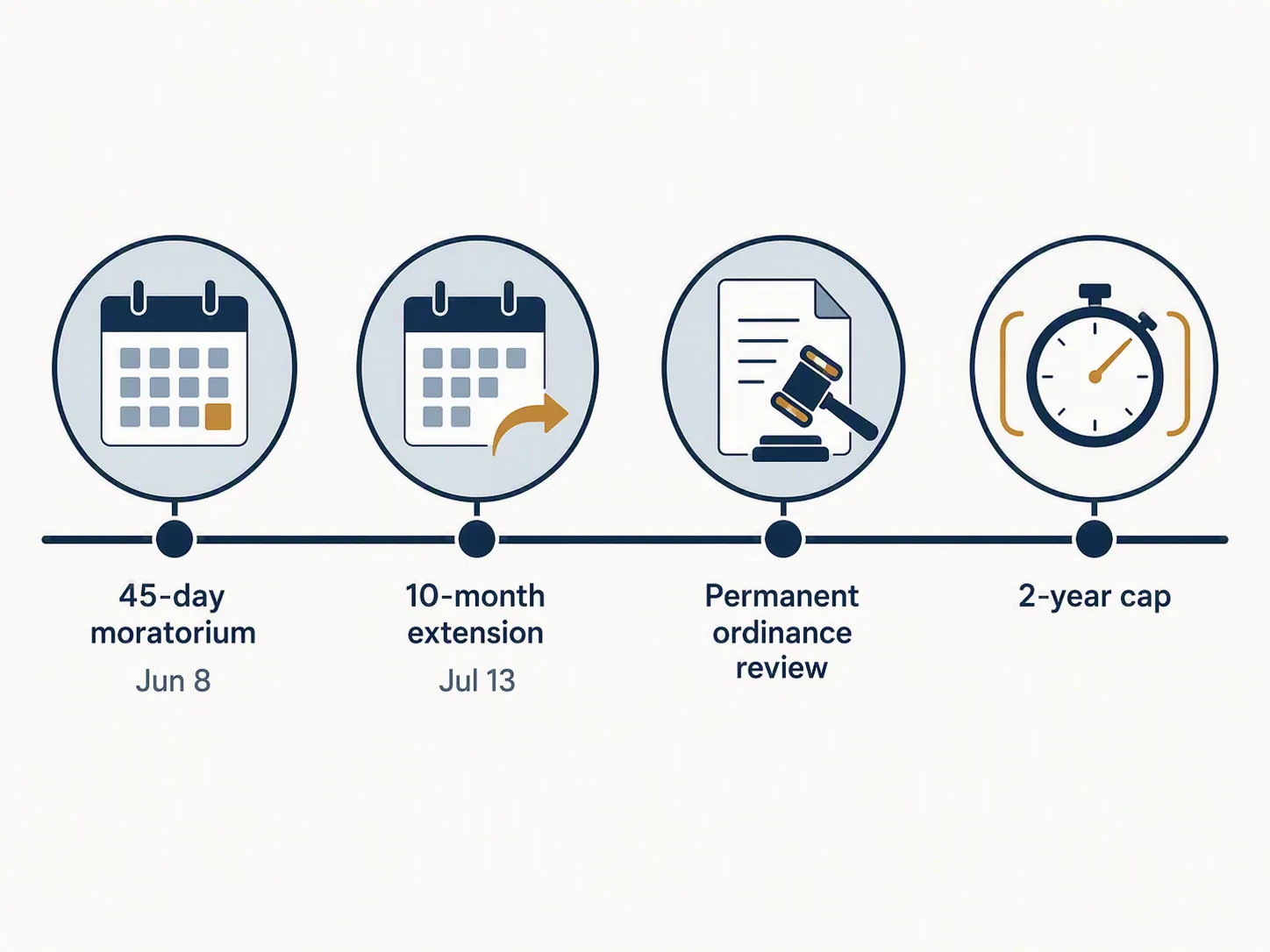
California Government Code §65858 is the statute doing most of the procedural work. It allows a city, without following the ordinary zoning-ordinance schedule first, to adopt an interim ordinance as an urgency measure if the legislative body makes findings that there is a “current and immediate threat to the public health, safety, or welfare” and that approval of additional permits or entitlements would result in that threat.[6]
The statute also sets the calendar. An initial interim ordinance may run for 45 days. After notice and public hearing, the city may extend it for 10 months and 15 days, and then, if it still needs more time, for one additional year. The total life of the interim ordinance may not exceed two years.[6]
That is why the June 8 and July 13 votes should be read together rather than as separate political episodes. The June action started the 45-day moratorium. The July action used the first major extension authorized by §65858. If the city wants more interim time after that extension, it must work within the statute’s remaining one-year extension authority and the two-year outside cap measured from the initial adoption date.[3][6]
Section 65858 also requires a written report describing the measures taken to alleviate the condition that led to the interim ordinance. That report must be issued at least 10 days before expiration or any extension. For counsel tracking the matter, that report is not housekeeping; it is one of the next docket items that can show whether the city is merely preserving time or has developed the record for a permanent ordinance.[6]
The vote count is not a decorative detail either. Section 65858 requires a four-fifths vote for adoption. Culver City’s record adds the Charter §614 urgency-vote question and O’Brien’s recusal to the analysis, because the council was acting with four participating members rather than five.[2][6]
Scope: new drive-through uses, existing drive-throughs, and the downtown corridor
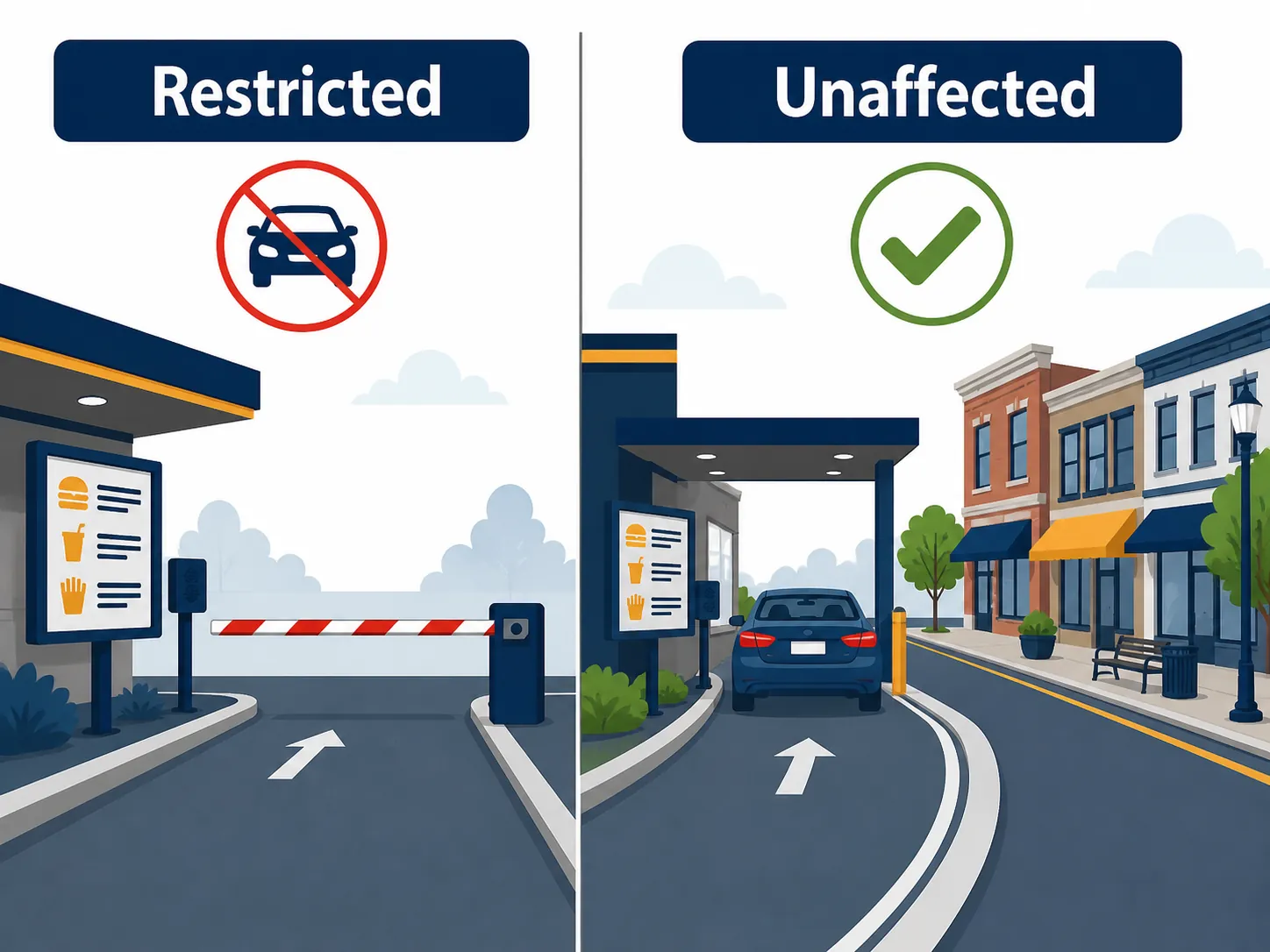
The staff materials describe the moratorium as applying to new drive-through uses through new building permits and land-use entitlements. Existing drive-through operations are not treated as newly unlawful by the interim ordinance. That distinction is the difference between a temporary pause in the entitlement pipeline and a citywide shutdown of drive-through commerce.[3]
The exact number of existing drive-throughs should be treated with care. LAist and the Los Angeles Times reported eight existing drive-throughs, while Culver Crescent reported nine.[7][8][2] The discrepancy does not change the operative scope: whether the correct count is eight or nine, the interim ordinance is aimed at new drive-through uses, not the forced closure of existing ones.
The downtown-corridor point is similarly easy to overstate. City staff materials describe drive-throughs as already prohibited in that corridor. The 2026 moratorium matters because it reaches new drive-through uses citywide while staff evaluates a permanent citywide approach; it does not rewrite the downtown restriction as if it had not existed before.[7][9]
Where the proposed In-N-Out fits
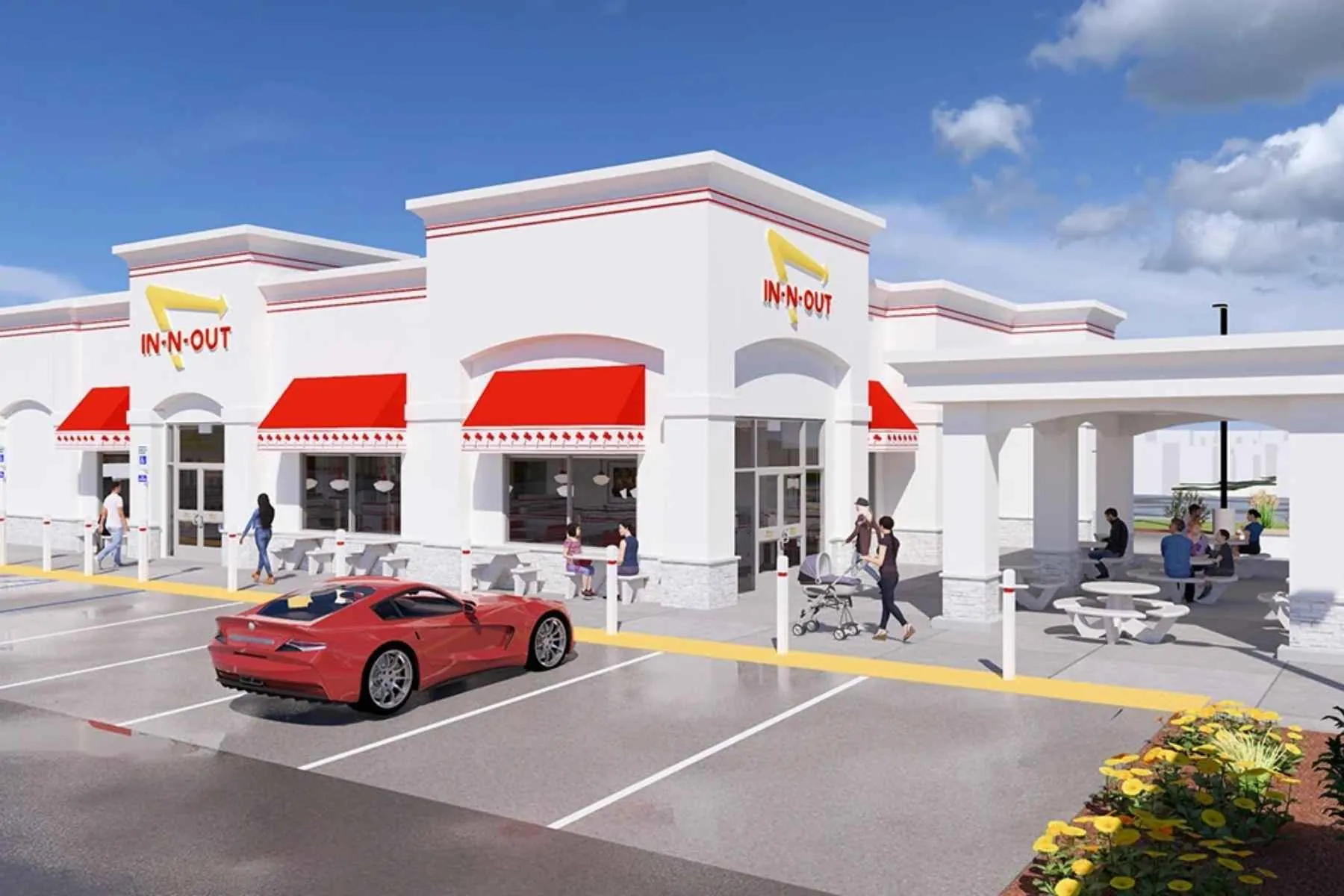
The proposed In-N-Out is at 11046 Jefferson Blvd., in the Studio Village Shopping Center. City project materials describe a 3,887-square-foot restaurant with 84 indoor seats, 44 outdoor seats, 26 drive-through queue spaces, and 61 parking spaces.[10] Some secondary reports round or state the building size as 3,890 square feet; the city figure is the safer one to use.
The project’s timeline explains why the moratorium has practical force even without a formal application on file. City materials identify community meetings on January 6 and February 3, 2026, and a Preliminary Project Review Request filed on March 2, 2026.[9][10] Reporting before the extension said a formal application had been planned by June 15, 2026, but the July 13 staff report stated that no formal application had been submitted as of that extension hearing.[3][11]
That sequence is enough to answer the current permit question without inventing a lawsuit or referendum. As of the August 3, 2026 verification date, the public record reviewed for this article does not show a formal In-N-Out application accepted after the moratorium, an In-N-Out lawsuit, a referendum petition, or a ballot measure. If any of those appears later, it would be a new procedural event, not something already embedded in the July ordinance record.
There is also an unresolved boundary fact that should not be turned into a claim of record: reports conflict on whether an In-N-Out already operates within Culver City limits. Because the staff materials needed for the moratorium analysis do not turn on that point, this article does not use either version as an established fact.
What happens next
The next consequential step is not a court date on the present record. It is the permanent-ordinance process. City staff’s stated path is to bring a draft permanent ordinance to the Planning Commission for a recommendation before the matter returns to the City Council. As of August 3, 2026, no specific Planning Commission or Council hearing date for that permanent ordinance had been verified in the cited public materials.[7]
If the city does not complete a permanent ordinance before the current extension expires, §65858 supplies the next constraint: one more extension may be available, but the interim ordinance cannot run beyond the statute’s two-year cap. Measured from the June 8, 2026 adoption date, that outside limit falls in June 2028, subject to the city’s exact expiration calculations and any later docket action.[6]
A later challenge could test whether the city made the findings §65858 requires and whether the moratorium properly fits the urgency authority. But that is a risk category, not a current case filing. The live record, as verified, is a temporary citywide pause on new drive-through entitlements while Culver City decides whether to adopt a permanent ordinance.
References
- City Council Meeting Summary, June 8, 2026; City of Culver City; June 8, 2026.
- Council Moves to Ban New Drive-Through Businesses in Culver City; Culver Crescent.
- Legistar File 27-35; City of Culver City; July 13, 2026.
- City Council Extends Moratorium on Drive-Thru Restaurants; Culver City Observer; July 30, 2026.
- CC Drive-Through Ban Urgency Ordinance; City of Culver City.
- California Government Code § 65858; Justia.
- Culver City Drive-Thru Ban Proposal; LAist.
- In-N-Out Culver City drive-thru ban; Los Angeles Times; July 26, 2026.
- Legistar File 26-930; City of Culver City.
- Community Meeting on Proposed In-N-Out; City of Culver City.
- Culver City to consider citywide ban on new drive-thrus; Desert Sun; July 10, 2026.
Operationalizing workflow
No workflow has been explicitly linked to this obligation yet. See Workflows generally.
Illustrative cases
No illustrative case is currently tracked for this obligation. See Risk Digest for documented incidents generally.
← Back to RegulationReport a correction or tip
Spotted an outdated figure, a misstated fact, or a ruling this regulation entry should reflect? Public comments are disabled for this content given the professional cost of a misreported case outcome, penalty amount, or rule text — use the structured correction channel instead.
Report a correction or tip for this record →