
Who Holds DoorDash's FAA Drone Delivery Certificate?
- Authority
- Federal Aviation Administration
- Rule type
- regulation
- Jurisdiction scope
- US federal
- Effective date
- Jul 29, 2026
- Source text
- Read primary rule text ↗
Confirm the FAA-supervised Part 135 operator and its specific certificate type, operating limitations, and pending approvals before relying on a drone-delivery arrangement.
Status check: DD Holdings A, LLC holds the DoorDash certificate
For DoorDash drone delivery, the FAA certification answer starts with the legal entity: DD Holdings A, LLC is the certificate holder, identified in the record as DoorDash. On July 29, 2026, the FAA issued an air carrier certificate authorizing DD Holdings A, LLC to conduct daytime Part 135 drone-delivery operations. The same FAA statement said DoorDash “has not started those operations yet,” and that its aircraft and proposed operations still required FAA review and approval before delivery operations could begin. Reuters, DoorDash, and TechCrunch also reported the July 29 DoorDash Air certificate event, but the operational caveat sits in the FAA’s statement, not in the launch framing. [1][2][3][4]
That distinction is the whole diligence problem. DoorDash’s certificate is real. It is not, by itself, proof that a given DoorDash-branded order is being flown by DoorDash’s certificate-holding entity, on an approved aircraft, under approved operations, in an approved location. Through late July 2026, the US DoorDash drone programs in the record were partner-operated, including Wing flights in Christiansburg, Virginia, and Dallas-Fort Worth.
Why the certificate holder matters more than the marketplace brand
For contract review, the operator of record is the FAA-supervised entity. A consumer may see DoorDash in the ordering flow, a merchant may have a DoorDash commercial agreement, and a press release may call the service DoorDash drone delivery. None of that answers the regulatory question: whose FAA certificate, exemptions, operating specifications, aircraft approvals, and airspace authorizations cover the flight?
The FAA’s package-delivery framework draws the important line. Small drones may conduct narrower visual-line-of-sight delivery under Part 107, but carrying another person’s property for compensation beyond visual line of sight requires Part 135 air carrier authority. Supply Chain Dive’s 2019 coverage of UPS’s approval made the same practical point: Part 135 was the path for broader compensated package delivery operations, while exemptions and location-specific limits still mattered in the early operating model. [5][6]
Part 135 is also not a single permission level. The certificate type affects scale, staffing, and the scope of what the operator may do. A buyer that asks only, “Do you have FAA approval?” has not asked enough.
| Part 135 certificate type | Operational significance for diligence |
|---|---|
| Single-Pilot | Tied to one named pilot; a poor fit for a scaled marketplace delivery promise unless the promised operation is very narrow. |
| Single Pilot in Command | Allows a limited structure around one pilot in command; still requires close attention to staffing and scope. |
| Basic | Limited to a maximum of five pilots and five aircraft; the cap matters if the contract assumes multi-market expansion. |
| Standard | No size or scope limit at the certificate-type level, but each operation type still has to be authorized in the operator’s specifications. |
DoorDash’s July 2026 announcement therefore should not be treated as a general-purpose green light. The FAA statement described the authority as daytime Part 135 operations and separately said the aircraft and proposed operations still needed agency review and approval. Those are not footnotes; they are the boundaries a contracting party has to map before relying on the service. [1]
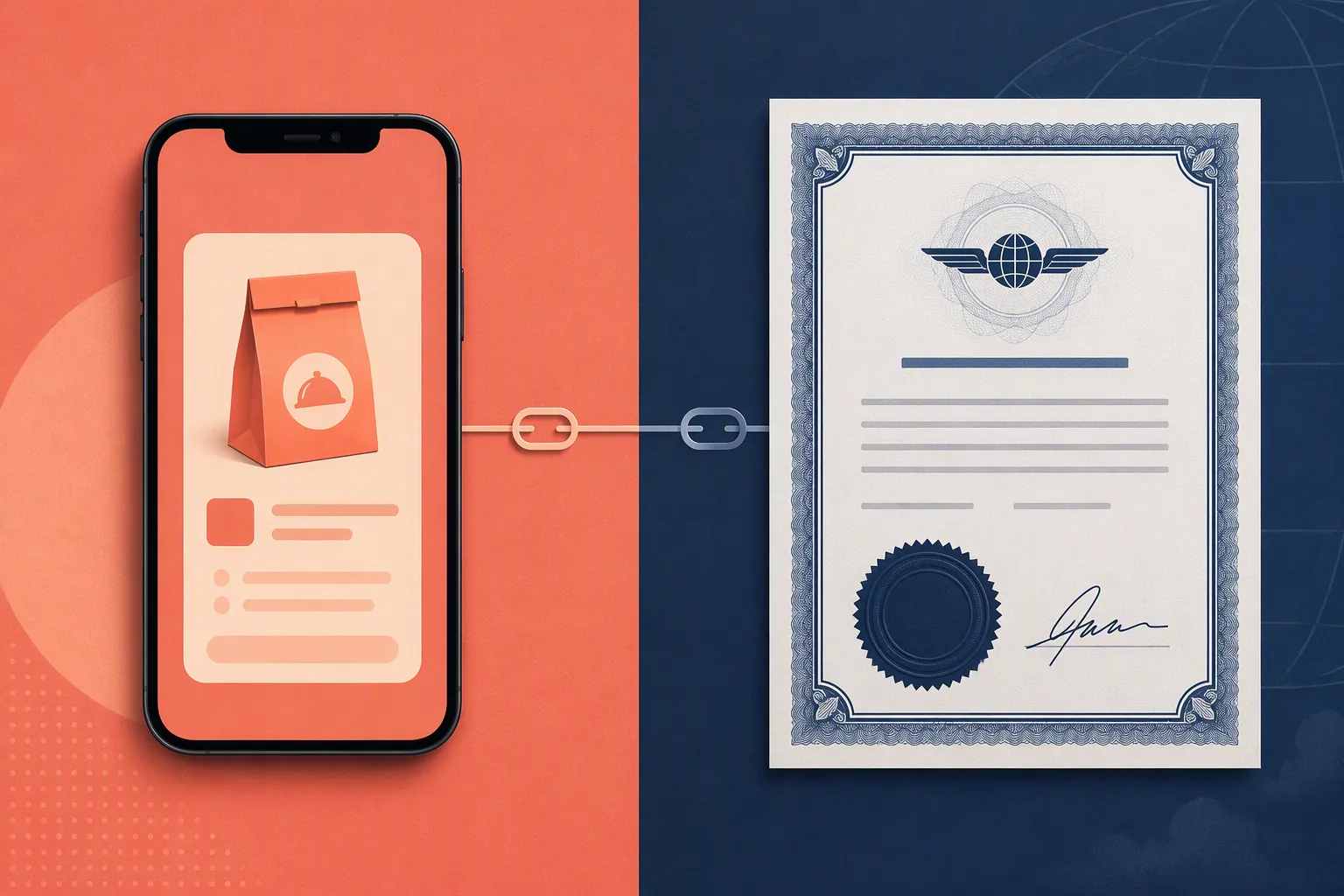
How DoorDash-branded US orders were covered before DoorDash’s own operations began
The partner timeline is useful because it proves the brand/operator split is not theoretical. DoorDash and Wing announced a US drone-delivery pilot in Christiansburg, Virginia, on March 21, 2024. Wing had already become the first FAA-certified air carrier for drone delivery in April 2019, so the regulatory anchor for that pilot was Wing’s certificate, not a DoorDash Part 135 certificate. [7][8]
DoorDash and Wing then expanded into Dallas-Fort Worth, with TechCrunch reporting the launch on December 18, 2024. Again, the public-facing order could be DoorDash-branded while the aircraft operator was Wing. [9]
DoorDash’s consumer help center also describes drone delivery as involving partner operators and names Wing, Flytrex, and Manna. That help-center language is not a certificate record, but it is consistent with the diligence point: DoorDash can be the marketplace interface while another aviation entity conducts the regulated flight. [10]
This is also why a DoorDash-Zipline relationship should not be inferred from Zipline’s separate FAA history. Zipline holds its own Part 135 certificate and has its own FAA environmental records for particular operations, but the materials here do not identify Zipline as a DoorDash US operating partner.
The current Part 135 drone-delivery operator count
As of the DoorDash certificate event, the best supported count is eight Part 135 drone-delivery certificate holders, but with one recordkeeping wrinkle: the FAA’s package-delivery operator page had last been updated on July 21, 2026 and still reflected seven operators, while the eighth rests on DoorDash’s July 29 announcement and the FAA’s statement to Newsweek about DD Holdings A, LLC. [5][1][3]
| Certificate holder | Certificate timing in the record | Relevance to DoorDash diligence |
|---|---|---|
| Wing Aviation | April 2019 | DoorDash partner in the US pilots identified in the record. |
| UPS Flight Forward | October 2019 | Important precedent for Part 135 package delivery and exemption/location review. |
| Amazon Prime Air | August 2020 | Separate certificate holder; not a DoorDash operator in this record. |
| Zipline International | June 2022 | Separate certificate holder; no DoorDash relationship should be assumed from these materials. |
| Causey Aviation Unmanned | January 2023 | Separate certificate holder. |
| DroneUp | November 2024 | Separate certificate holder. |
| Drone Express / DEXA | April 2025 | Separate certificate holder. |
| DD Holdings A, LLC | July 2026 | DoorDash’s own certificate holder; FAA said operations had not started and further approvals were still required. |
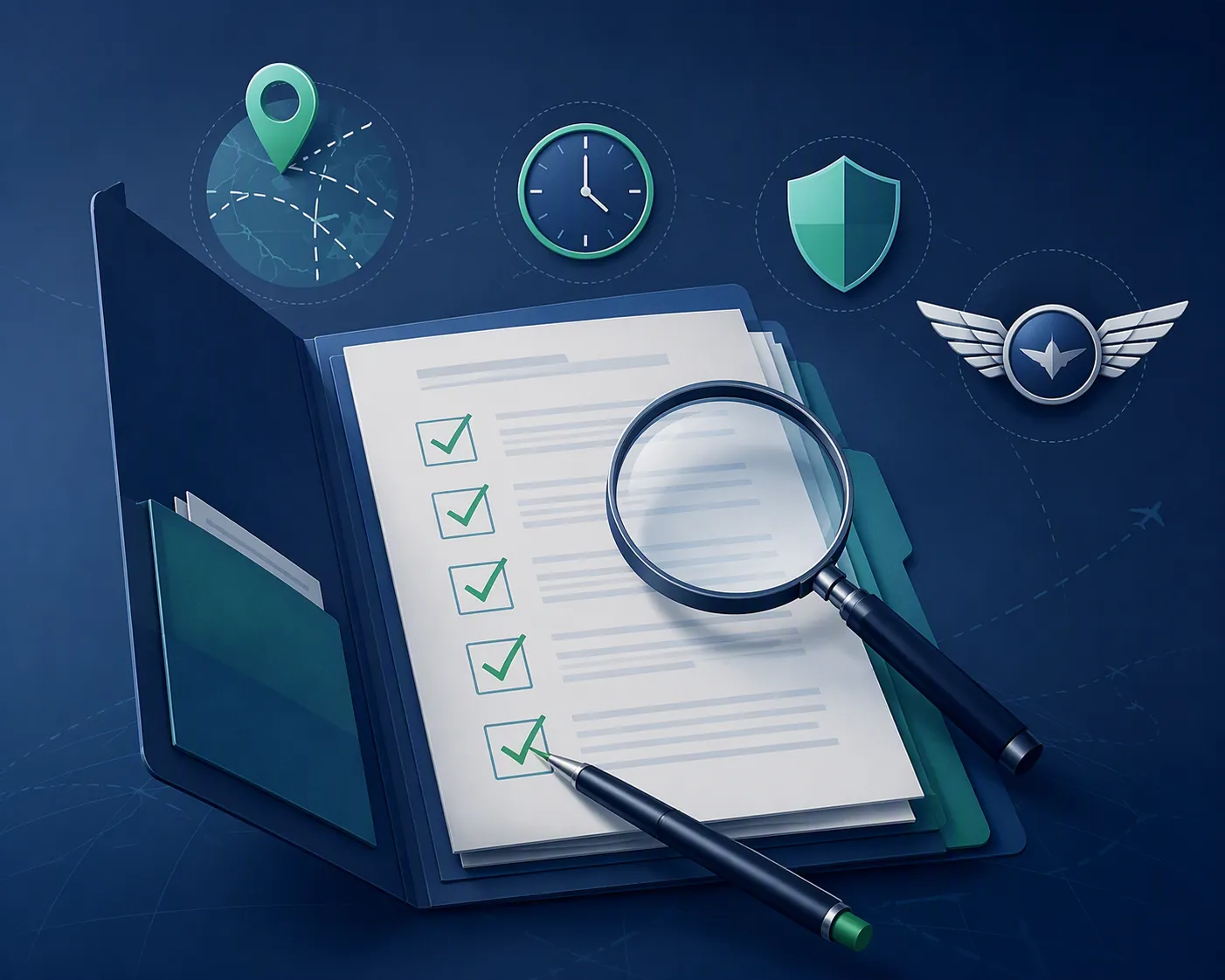
The diligence fields to verify against DD Holdings A, LLC or any partner operator
A contract file should identify the aviation entity first and the consumer brand second. If DoorDash is selling the service but Wing, Flytrex, Manna, or another operator is flying it, the agreement should not leave the certificate holder buried in implementation notes. The entity name determines which FAA records can be checked and who is responsible for complying with the aviation permissions.
- Legal certificate holder: Ask for the exact legal name of the Part 135 certificate holder, any d/b/a names, and the role of the marketplace brand. For DoorDash’s own July 2026 certificate, the named entity is DD Holdings A, LLC. [1]
- Certificate type: Confirm whether the operator holds Single-Pilot, Single Pilot in Command, Basic, or Standard authority. A Basic certificate’s five-pilot and five-aircraft cap, for example, is not compatible with every commercial rollout promise. [5]
- Operations specifications and limitations: Request the current OpSpecs and any operating limitations. For DoorDash, the FAA statement described daytime Part 135 authority, which means time-of-day authority is an immediate verification item. [1]
- Aircraft and proposed-operation approvals: Do not assume the aircraft named in a product presentation has been approved for the operation being sold. The FAA said DoorDash’s aircraft and proposed operations still required review and approval before delivery operations could begin. [1]
- BVLOS basis: If the operation is beyond visual line of sight, identify the exact legal basis. Under the current FAA package-delivery framework, Part 135 is the route for small drones carrying another’s property for compensation BVLOS; narrower visual-line-of-sight delivery may fit under Part 107. [5]
- 49 U.S.C. Section 44807 exemptions: Ask for the exemption docket and the locations covered. Early UPS materials illustrate why this matters: before type certification, exemptions could apply location by location rather than as a blanket permission for every route a business team wanted to launch. [6]
- Airspace authorizations: Match the authorized airspace to the delivery geography in the commercial schedule. A merchant address, restaurant trade area, or suburban launch zone is not automatically inside the operator’s permitted airspace.
- NEPA coverage where relevant: If the operation depends on FAA environmental review, request the environmental assessment, Finding of No Significant Impact, or Record of Decision. Zipline’s Salt Lake City package-delivery record is a useful example of what a location-specific FAA environmental file can look like; it is not evidence of a DoorDash-Zipline operation. [11]
- Community, zoning, and site permissions: Confirm who obtained local approvals for launch, recovery, loading, charging, storage, and customer-delivery areas. These permissions may sit outside the FAA certificate but still determine whether the operation can actually run.
- Pending approvals and certification phase: If the operator says the program is approved “subject to final FAA review,” put the remaining approvals in the contract schedule. For DoorDash’s own program, the unresolved approvals were not hypothetical; the FAA expressly identified them. [1]
How to read DoorDash Air in a contract file
DoorDash Air is commercially important because it moves DoorDash from a marketplace using drone partners toward a model in which a DoorDash-controlled entity can become the FAA-supervised operator. That is a strategic change. It gives DoorDash a direct aviation compliance path that it did not have in the US pilots identified before July 29, 2026.
But the paperwork sequence still matters. A certificate can exist before the approved aircraft, routes, operating procedures, and location-specific permissions needed for a live delivery program are in place. The FAA’s DoorDash statement is unusually useful because it says both things at once: the certificate was issued, and the deliveries under that certificate had not begun. [1]
The clean way to document the arrangement is to separate three roles: the marketplace brand that takes or presents the order, the merchant or retailer whose goods are carried, and the certificated air carrier that operates the aircraft. Sometimes those roles may converge. In DoorDash’s earlier US drone programs, they did not. In DoorDash’s own future operations, DD Holdings A, LLC may be the operator, but the file still needs the actual FAA permissions for the aircraft, geography, and operating conditions being promised.
Part 108 is not the current answer yet
The pending Part 108 rule belongs in the “watch” column, not the current-law column. It may eventually change how routine BVLOS operations are approved, but as of early August 2026 the contract review still has to work from the permissions actually held by the operator: Part 135 authority where required, any Part 107 basis for narrower visual-line-of-sight operations, exemptions, waivers, airspace approvals, operating limitations, and location-specific records.
That is the practical judgment for “DoorDash drone delivery” language in a commercial agreement. Before relying on the DoorDash brand, verify the FAA-supervised entity and its actual permissions. The brand on the consumer order is not necessarily the certificate holder responsible for the flight.
References
- DoorDash Drone Delivery Worker Skills FAA Approval — Newsweek, July 2026.
- DoorDash launches in-house drone delivery program after FAA certification — Reuters, July 29, 2026.
- DoorDash Air — DoorDash, July 29, 2026.
- DoorDash is building its own drone delivery business — TechCrunch, July 29, 2026.
- Package Delivery by Drone — Federal Aviation Administration.
- Part 135 FAA drone delivery UPS — Supply Chain Dive, October 18, 2019.
- DoorDash and Wing Announce Drone Delivery Pilot in the U.S. — DoorDash, March 21, 2024.
- Wing becomes first certified air carrier for drones in the US — Wing, April 2019.
- Wing and DoorDash launch drone deliveries in Dallas-Fort Worth — TechCrunch, December 18, 2024.
- Drone Delivery — DoorDash Help Center.
- Final Environmental Assessment, Finding of No Significant Impact/Record of Decision for Zipline Package Delivery Operations in Salt Lake City — Federal Aviation Administration, December 23, 2022.
Operationalizing workflow
No workflow has been explicitly linked to this obligation yet. See Workflows generally.
Illustrative cases
No illustrative case is currently tracked for this obligation. See Risk Digest for documented incidents generally.
← Back to RegulationReport a correction or tip
Spotted an outdated figure, a misstated fact, or a ruling this regulation entry should reflect? Public comments are disabled for this content given the professional cost of a misreported case outcome, penalty amount, or rule text — use the structured correction channel instead.
Report a correction or tip for this record →