
Can Fauci Plead the Fifth Despite a Presidential Pardon?
- Authority
- U.S. Supreme Court
- Rule type
- case law
- Jurisdiction scope
- US federal and state
- Source text
- Read primary rule text ↗
Assess pardon scope, state exposure, and waiver before invoking the Fifth Amendment.
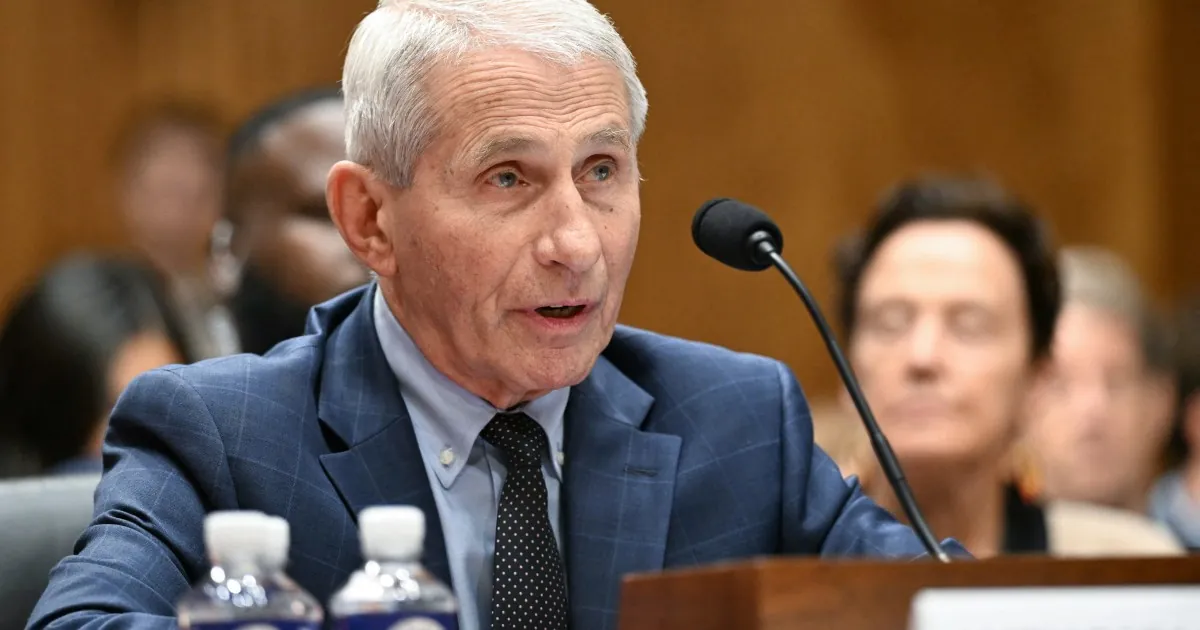
Dr. Anthony Fauci’s reported 111 Fifth Amendment invocations at the July 29, 2026 Senate COVID hearing present a narrower legal question than the television version of the story suggests. The question is not whether invoking the privilege after accepting a presidential pardon looks awkward. It is whether any realistic criminal exposure remained outside the pardon. On the reporting available as of Aug. 2, 2026, the answer is yes enough to make the privilege colorable, though not guaranteed: a presidential pardon can remove federal jeopardy for covered conduct, but it does not automatically eliminate fear of state prosecution, conduct outside the covered period, or new false-statement exposure created after the pardon.
That answer needs two cautions at the threshold. First, no court appears to have squarely decided whether a witness who accepted a preemptive presidential pardon may still invoke the Fifth before Congress on the theory that non-covered prosecution remains possible. Second, the reported pardon scope—Jan. 1, 2014 through Jan. 19, 2025—comes from news reporting; the primary Justice Department PDF was not available for inspection. Those limits matter because the Fifth Amendment question turns on the pardon’s actual boundaries, not on the political fact that a pardon exists. Fauci reportedly invoked the privilege about 111 times, and the same reporting described the pardon as covering the Jan. 1, 2014–Jan. 19, 2025 period.[1]
The pardon narrows the Fifth; it does not erase it
Senators who treated the pardon as a serious limit on Fauci’s privilege were not making a frivolous point. The Fifth protects against compelled testimonial self-incrimination. If a witness truly faces no possibility of criminal prosecution, the usual reason for silence disappears. That is why the pardon matters. It may remove a large body of federal exposure that otherwise would have supported an invocation.
But “large” is not “all.” A pardon does not answer the privilege question until counsel has worked through four things: the covered conduct, the covered sovereign, any waiver created by what the witness has already said, and the proof supporting a reasonable fear of prosecution. A lawyer advising the witness in the room cannot stop at the sentence, “He was pardoned.” The next sentence is the one that matters: pardoned for what, by whom, and against whose future prosecution?
The privilege is also assessed question by question. A witness may have no valid Fifth Amendment objection to one question and a plausible one to the next. “Did you accept the pardon?” is different from “Who reviewed the grant proposal?” or “What did you tell a state investigator after January 2025?” The senators’ frustration may be understandable, but the legal analysis does not improve by counting invocations as though the 111th answer proves what the first one did not.
What the reported pardon likely took off the table
Assuming the reported dates are accurate, the federal pardon would be strongest as to federal offenses arising from covered conduct between Jan. 1, 2014 and Jan. 19, 2025. That is the government’s best argument against a broad privilege claim: for that federal, covered-period conduct, the witness should not be able to say that truthful testimony would expose him to prosecution by the pardoning sovereign.
That still leaves meaningful gaps. Some are temporal. Conduct before Jan. 1, 2014 would not be covered by a pardon limited to the reported start date. Conduct after Jan. 19, 2025 would not be covered by a pardon limited to the reported end date. And testimony given at the July 2026 hearing would itself be post-pardon conduct. A pardon for past acts does not give a witness license to commit a new false-statement or perjury offense in the hearing room.
| Potential exposure | Why the pardon may not end the Fifth analysis |
|---|---|
| Federal conduct within the reported Jan. 1, 2014–Jan. 19, 2025 period | This is the government’s strongest anti-privilege category if the pardon text actually covers the conduct. |
| Conduct before Jan. 1, 2014 | A reported date-limited pardon would not necessarily reach it. |
| Conduct after Jan. 19, 2025 | A reported date-limited pardon would not necessarily reach it. |
| False testimony or false statements made after the pardon | Those would be new post-pardon acts, not merely pardoned historical conduct. |
| State prosecution | A presidential pardon reaches federal offenses; it does not bind state sovereigns. |
The hardest category for Fauci is the first one. If a question asked only about federally pardon-covered conduct and carried no realistic risk of state prosecution or later false-statement exposure, the privilege claim would be vulnerable. The more a question moved toward state matters, post-January 2025 events, or links in a chain that could supply evidence for non-covered charges, the stronger the invocation became.
Brown v. Walker is the starting point, not the answer
The case senators and counsel have to confront is Brown v. Walker, decided in 1896. Brown held that a witness could be compelled to testify after Congress supplied immunity broad enough, in the Court’s view, to replace the protection of the Fifth Amendment. The Court reasoned that when prosecution is legally foreclosed, the privilege no longer supplies a basis to refuse testimony.[2]
Brown gives Senator Rand Paul’s side its cleanest line: if the pardon removed the danger, the privilege should fall away. That argument deserves to be taken seriously. The Fifth is not a general right to avoid embarrassment, reputational damage, political harm, or difficult questioning. It protects against criminal self-incrimination. If there is no criminal jeopardy left, Congress can argue that silence is no longer constitutionally justified.
The trouble is that Brown was an immunity case, not a presidential-pardon case. Statutory immunity and a pardon can both reduce prosecution risk, but they do not operate in identical posture. Immunity is usually granted to compel testimony going forward; a pardon forgives covered past offenses. Brown also treated the possibility of state prosecution as too remote on the record before it, calling that concern “imaginary and unsubstantial.”[2] That phrase is doing a great deal of work when Brown is moved from its own facts into a modern congressional hearing involving a separately announced state investigation.
The Brown dissent also matters, not because it controls, but because it marks the constitutional anxiety that has never fully gone away. Justices Shiras, Gray, and White resisted the idea that a legislative substitute could displace the constitutional privilege. The majority won that fight in the immunity context. It did not decide the precise question now being asked about an accepted presidential pardon, a congressional hearing, and state exposure.[2]
That is why the correct formulation is not “Brown says the pardon wipes out the Fifth.” Brown supports a narrower proposition: when the law removes any realistic danger of prosecution, the Fifth may no longer be invoked. The fight is over the premise. Did this pardon remove any realistic danger of prosecution by any relevant sovereign for every question asked?
The state-prosecution problem
State prosecution is the clearest reason the privilege did not simply vanish. A presidential pardon is a federal act. It does not bind a state prosecutor. The National Constitution Center’s discussion of the Fauci situation framed the post-pardon privilege question around whether there remains a realistic prospect of prosecution by an American government, federal or state, and it treated the federal-state distinction as central to the analysis.[3]
That point is not a technicality invented for this hearing. The federal pardon power has long been understood as limited to federal offenses. Burdick v. United States is usually remembered for the proposition that a pardon may be refused and that acceptance carries consequences; in Fauci’s case, acceptance weakens any argument that he can stand in the exact posture of a witness who rejected clemency. But Burdick does not convert a federal pardon into a state pardon. The state-sovereign limit remains.[3]
The timing is what makes the state issue more than an academic footnote. Florida Attorney General James Uthmeier announced a state investigation on July 29, 2026, the same day as the Senate hearing, according to the available legal and news analysis. No charges had been filed, and the record does not show process served as of Aug. 2, 2026. Still, for Fifth Amendment purposes, a formally announced state investigation is materially different from a lawyer waving vaguely at “possible state problems.”[3]
This is where Brown’s “imaginary and unsubstantial” language becomes difficult to deploy without qualification. If no state official had said anything, a court might be more receptive to the argument that state jeopardy was speculative. Once a state attorney general publicly opens an investigation, the witness has a concrete sovereign outside the pardon. Counsel still has to connect particular questions to plausible state exposure. But the state-risk theory is no longer just atmosphere.
That does not mean every invocation was necessarily valid. A state investigation can support a privilege claim only to the extent a truthful answer could furnish evidence, a link in an evidentiary chain, or an investigative lead for a non-covered prosecution. The Fifth does not permit silence because a state official issued a press release. It permits silence where the witness can show a reasonable fear that the answer may tend to incriminate him in a case the pardon does not bar.
Why waiver mattered almost as much as scope
Once a witness starts talking, the next trap is waiver. Rogers v. United States is the warning label. In Rogers, the Supreme Court held that a witness who voluntarily disclosed incriminating facts could not then invoke the Fifth to block follow-up questions seeking details about the same subject. The principle is simple enough to be dangerous in a hearing room: partial answers can open the door.[4]
That is why seemingly mundane questions can be strategic. If a senator asks a witness to confirm a harmless biographical fact, identify a document, or answer a question as bland as what he wore or who prepared him, counsel has to think beyond the immediate answer. A safe answer on one subject may be harmless. A voluntary answer touching the substance of the investigation may let the committee argue that the witness chose to testify and cannot stop when the questioning becomes more damaging.
Rogers should not be overread either. It does not say that any spoken sentence destroys the privilege for the rest of the hearing. Waiver is tied to the subject matter disclosed. A witness does not waive all Fifth Amendment rights by stating his name, acknowledging receipt of a subpoena, or making a general protest. The hard question is whether the witness has made a factual assertion about the very conduct Congress then seeks to probe.
The closest modern analogue in the congressional setting is the Lois Lerner contempt dispute. Lerner made an opening statement before invoking the Fifth. The House treated that as a waiver; the Department of Justice declined to prosecute her for contempt. DOJ reasoned that Lerner’s general claims of innocence did not waive the privilege as to the committee’s questions.[5]
That declination is useful, not binding. It does not control the Senate, a court, or a future Department of Justice. It also does not mean every opening statement is safe. Fauci’s reported statement was more pointed in its criticism of Paul than a bland assertion of innocence would be, and a more specific factual account would create more waiver risk. But Lerner is still a serious obstacle to the easy claim that an opening statement alone forfeits the Fifth.
The better hearing-room practice is tedious and essential: preserve the privilege question by question. If the witness answers, counsel should know why the answer does not touch the incriminating subject. If the witness refuses, counsel should be prepared to identify the non-covered exposure at the level possible without revealing the very information the privilege protects. Generalized invocations invite contempt rhetoric. Over-explaining can create waiver. The useful record sits between those two hazards.
Contempt is available in theory, underdeveloped in this record
Congress has contempt tools, but the existence of a tool does not decide whether this witness committed contempt. Criminal contempt of Congress is governed by 2 U.S.C. §§ 192 and 194, and the process generally requires a chamber certification to the appropriate U.S. attorney after a contempt vote. The Congressional Research Service describes both the statutory mechanism and the practical role of executive-branch discretion in whether a contempt referral results in prosecution.[6]
The recent enforcement record also counsels against treating contempt threats as automatic. CRS reported that since 2008 the House had approved six criminal contempt citations against executive-branch officials or former officials, and only Steve Bannon and Peter Navarro were prosecuted.[6] That number does not predict what would happen in Fauci’s case, but it does show why a contempt announcement and a contempt prosecution are different events.
As of Aug. 2, 2026, the committee had not yet held the reported contempt vote, which was expected during the week of Aug. 3–7. Reporting also treated Paul’s suggested direct referral to DOJ as legally marginal because the usual statutory route runs through the Senate’s contempt process rather than a unilateral senator-to-DOJ shortcut.[7]
Even if a contempt referral were made, the privilege issue would remain. DOJ or a court would still have to confront the same questions: Did the pardon cover the conduct? Did a state prosecution risk remain? Did the witness waive the privilege by his own statements? Were particular refusals unjustified? A contempt label does not make those questions disappear.
The practical answer for a pardoned witness
The most defensible legal answer is deliberately unsatisfying to both sides. Fauci’s Fifth Amendment invocations were colorable, not certain to prevail. Paul’s contrary theory is not frivolous, but it depends on extending Brown v. Walker from statutory immunity to an accepted presidential pardon and then concluding that no realistic non-covered prosecution risk remained. The same-day Florida investigation makes that second move harder.
For counsel, the lesson is not to treat a pardon as either a magic shield or a privilege eraser. The pardon narrows the terrain. It may take federal covered-period conduct off the board. It may make some invocations untenable. But it does not answer state exposure, conduct outside the reported period, or post-pardon testimony risks.
- Obtain and read the actual pardon text before the hearing; reported scope is not enough for privilege advice.
- Separate federal exposure from state exposure, and identify any state sovereign that has announced, threatened, or could realistically pursue charges.
- Map each question to the covered period, uncovered periods, and possible post-pardon false-statement risk.
- Avoid broad opening statements that supply factual detail on the very subject the committee wants to examine.
- Preserve the privilege question by question, without turning the invocation into a speech.
After a pardon, silence is harder to justify. It is not gone. The witness who can document a reasonable fear of non-covered prosecution remains on real constitutional ground; the witness who cannot is relying on a slogan. In a congressional hearing, that difference may be the whole case.
References
- Reporter’s Notebook: Why Fauci’s 111 Fifth Amendment pleas could end up before courts — Fox News
- Brown v. Walker, 161 U.S. 591 (1896) — Cornell Legal Information Institute — 1896
- Do Presidential Pardons Remove the Fifth Amendment Rights of Recipients? — National Constitution Center
- Rogers v. United States, 340 U.S. 367 (1951) — FindLaw — 1951
- DOJ Tells Boehner It Will Not Prosecute Lerner for Contempt — Tax Notes — 2015
- Criminal Contempt of Congress FAQ, LSB10974 — EveryCRSReport.com
- Fauci on solid legal ground — BBC
Operationalizing workflow
No workflow has been explicitly linked to this obligation yet. See Workflows generally.
Illustrative cases
No illustrative case is currently tracked for this obligation. See Risk Digest for documented incidents generally.
← Back to RegulationReport a correction or tip
Spotted an outdated figure, a misstated fact, or a ruling this regulation entry should reflect? Public comments are disabled for this content given the professional cost of a misreported case outcome, penalty amount, or rule text — use the structured correction channel instead.
Report a correction or tip for this record →