
The Mixed Record of Federal Conspiracy Charges Against ICE Protesters
- Authority
- U.S. Congress
- Rule type
- statute
- Jurisdiction scope
- U.S. federal
- Source text
- Read primary rule text ↗
Prohibits conspiracies by two or more persons to impede, threaten, or injure federal officers or their property; up to six years' imprisonment.
Last verified: Aug. 4, 2026, UTC. Jurisdiction: U.S. federal criminal law. Scope: reported ICE-protest prosecutions using 18 U.S.C. § 372, with adjacent conspiracy or protest cases separated where the source record does not show a § 372 charge. This record is legal information, not legal advice. Pending cases are treated as pending; indictment allegations are not findings.
- Legal-background review: Regulation & Ethics legal-background editor, Aug. 4, 2026.
- Primary statutory source: 18 U.S.C. § 372.
- Live-status flags: Spokane Rule 29 issues reported as filed; Minnesota discovery and evidence litigation remains unresolved; Broadview dismissal was with prejudice as of the last verification date.
The compact answer is this: 18 U.S.C. § 372 is now the federal statute to check first when reviewing reported ICE-protest conspiracy prosecutions after January 2025, but it is not producing one uniform result. The statute reaches conspiracies by two or more persons to impede, threaten, or injure federal officers or their property in specified ways, and it carries a maximum prison term of six years; NPR’s review of court records found more than three dozen people charged in at least 10 § 372 cases since January 2025, plus nearly 50 more charged under other conspiracy statutes in Michigan, Texas, and Minnesota [1][2].
| Case or cluster | Defendant count in current source record | Status / outcome | Procedural posture that matters |
|---|---|---|---|
| Spokane, Washington ICE protest case | 9 charged | 6 pleaded guilty; 3 were convicted on May 28, 2026 | Rule 29 motions were reported as filed; Judge Rebecca Pennell precluded a First Amendment defense; former acting U.S. Attorney Richard Barker was reported to have resigned rather than sign the indictment [3]. |
| Broadview Six, Illinois | 6 defendants | Dismissed with prejudice on May 21, 2026 | Judge April Perry found prosecutorial misconduct in the grand-jury process; Lawfare reported that the government had conceded a “spontaneous conspiracy” theory [4][5]. |
| Minnesota 15 / Direct Action Minnesota indictment | 15 charged | Pending; 14 pleaded not guilty on July 1, 2026 | DOJ announced an eight-count indictment on June 16, 2026, including § 372 conspiracy-to-impede allegations alongside stalking, threats, solicitation, assault, and property-destruction counts; the record includes extensive quoted Signal-message allegations and a reported 15-16 terabyte discovery dispute [6][7][8]. |
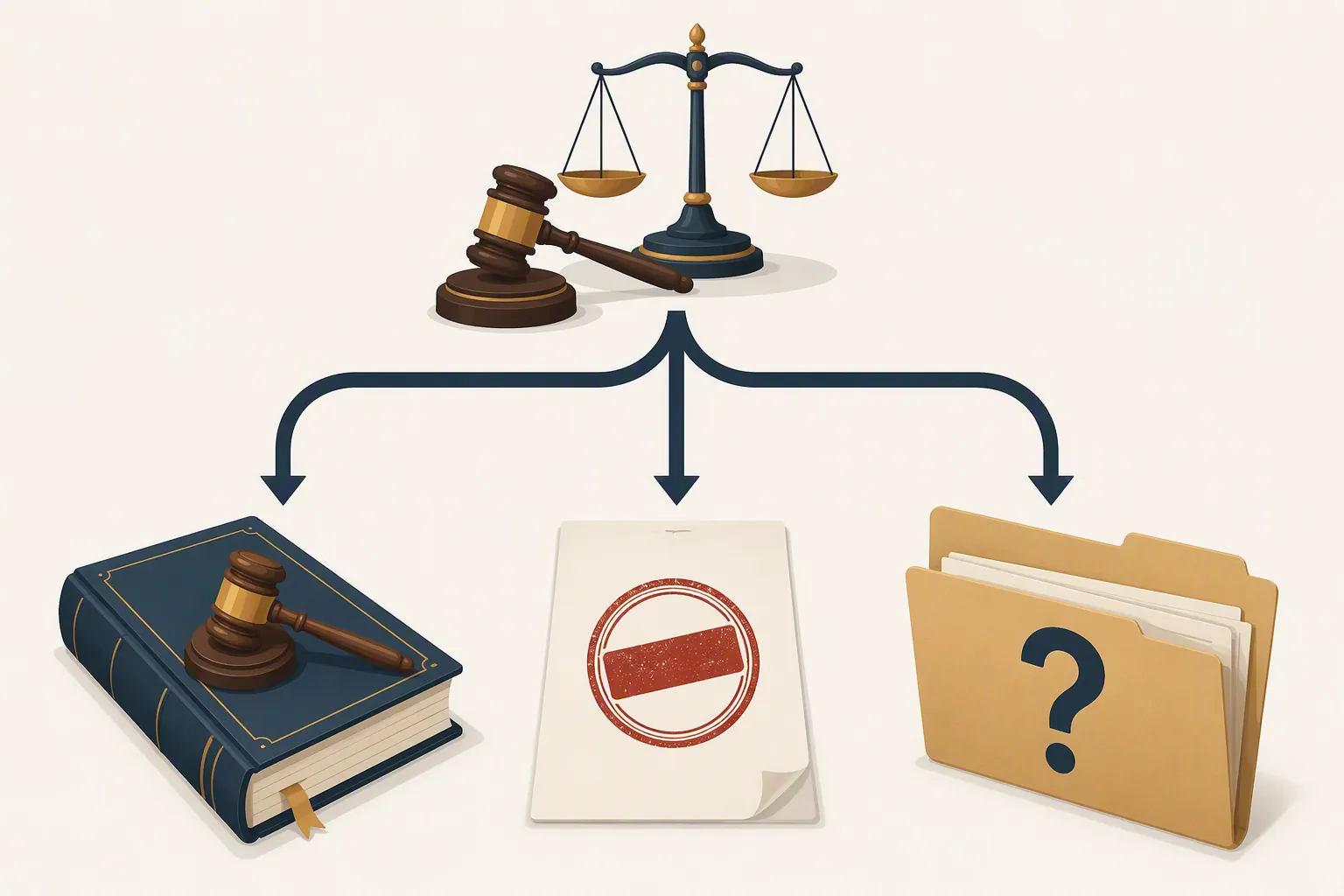
The statute is short; the record is not
Section 372 does not require a reader to admire nineteenth-century drafting. It requires attention to its operative clauses. The provision applies when two or more persons conspire to prevent, by force, intimidation, or threat, a person from accepting or holding a federal office, trust, or place of confidence, or from discharging duties of that office. It also reaches conspiracies to induce a federal officer by like means to leave the place where duties must be performed, to injure the officer in person or property because of lawful discharge of duties, or to injure the officer’s property so as to molest, interrupt, hinder, or impede the officer’s discharge of duties [1].
The penalty is also easy to overstate or understate if the statute is read through press-release shorthand. Section 372 authorizes a fine, imprisonment for not more than six years, or both [1]. The Spokane coverage separately reported exposure of up to six years and a $250,000 fine for the convicted defendants, which is a case-level account of the sentencing exposure described there, not a finding about any sentence imposed [3].
Section 372 should not be collapsed into 18 U.S.C. § 371, the general federal conspiracy statute. Section 371 covers conspiracies either to commit an offense against the United States or to defraud the United States, and its text includes an overt-act requirement; CRS’s federal conspiracy overview also treats agreement as something the government may prove circumstantially rather than only by direct admission [9][10]. That contrast matters in protest cases because the fight is often not over whether a crowd existed. It is over whether the government can prove an agreement to do the forbidden thing, and whether conduct or speech being offered as evidence is being used to prove agreement rather than mere association.
Spokane: when the government’s theory reached verdict
Spokane is the case that prevents an easy claim that § 372 protest prosecutions are only charging theater. The reported record is nine charged defendants, six guilty pleas, and three convictions on May 28, 2026, including army veteran Bajun Mavalwalla II [3]. For defense counsel looking at federal conspiracy charges against ICE protesters, that is the first practical warning: the statute can get past the courthouse door, and at least in one reported ICE-protest case it has produced jury convictions.
The stronger analytical point is narrower. Spokane is not proof that every disruptive protest near immigration enforcement is a § 372 conspiracy. It is proof that a prosecution can survive long enough to produce pleas and verdicts when the court allows the government’s case to proceed and excludes a First Amendment defense from the trial presentation. The Guardian reported that Judge Rebecca Pennell precluded that defense and that Rule 29 motions were filed after trial [3]. Those two details are more useful than the headline outcome. They show where future records will have to be built: sufficiency of the evidence after the government rests, preservation of objections to the exclusion of constitutional defenses, and a clean record on whether the alleged agreement was proved rather than inferred from shared protest activity.
The reported resignation of Richard Barker, the former acting U.S. Attorney who declined to sign the indictment, belongs in the record but should not carry more than it can bear. It is not a judicial ruling on the indictment’s validity. It is, however, a material prosecutorial-history fact in a case where the government’s theory was contested from the start and later produced convictions [3].
Broadview: the misconduct counterrecord
Broadview points the other way. The dismissal with prejudice of the Broadview Six prosecution was not a minor pleading correction or a routine continuance. Judge April Perry dismissed the case on May 21, 2026, after finding prosecutorial misconduct in the grand-jury process [4][5]. Dismissal with prejudice is the procedural fact that matters because it closes the door to simply cleaning up the same charging theory and refiling it against the same defendants.
The government’s reported “spontaneous conspiracy” concession is the part that should make litigators slow down [4]. Conspiracy law can tolerate tacit agreement and circumstantial proof; it does not require conspirators to sign minutes. But a theory still has to identify an agreement in a way that separates coordinated criminal conduct from contemporaneous presence, shared anger, or crowd momentum. If the government’s own presentation blurs that line before the grand jury, the problem is not the age of § 372. The problem is the proof and the way it was presented.
Broadview is therefore the cleanest counterweight to Spokane. It does not establish that § 372 is unavailable in protest settings. It establishes that a court can treat the government’s grand-jury conduct and evidentiary theory as case-ending defects, even where the same general federal statute is being used in the same national enforcement environment.
Minnesota: serious allegations, unresolved proof
The Minnesota 15 indictment is the record’s live file, not its verdict. DOJ announced on June 16, 2026, that 15 members of Direct Action Minnesota had been charged in an eight-count indictment involving conspiracy to impede federal officers, interstate stalking, threats, solicitation to commit a crime of violence, assault on federal officers, and destruction of government property [6]. PBS reported that 14 defendants pleaded not guilty on July 1, 2026 [7].
The government’s Minnesota allegations are more document-heavy than the label “protest case” suggests. The Guardian reported that prosecutors built the case around more than 100 quoted Signal messages across more than a dozen groups, and also reported a pending discovery dispute involving 15-16 terabytes of material [8]. That does not prove the charged agreement. It does explain why this indictment cannot be responsibly analyzed as though it were based only on public chanting, march attendance, or generalized opposition to ICE.
The DOJ release uses the phrase “antifa ties” in describing the group, but that phrase should not substitute for an element-by-element analysis of the indictment [6]. The litigation question is not whether the defendants can be placed near an ideology, network, or protest current. It is whether admissible evidence proves that each charged defendant knowingly joined an agreement to impede federal officers by means covered by § 372, or committed the separate charged offenses. Until that is tested through motions, discovery, trial proof, plea proceedings, or dismissal, the presumption of innocence is not a courtesy label. It is the posture of the case.
The boundary around the § 372 record
NPR’s broader tally is useful, but it must be kept in its lane. NPR described its number as a review of court records, not as an official DOJ statistical release, and it counted both § 372 prosecutions and nearly 50 additional people charged under other conspiracy statutes in Michigan, Texas, and Minnesota [2]. That distinction matters because the legal risk analysis changes when the charge changes. A § 371 case, a material-support case, and a § 372 case may all sit near protest activity, but they do not ask the same element questions.
The same boundary applies to adjacent prosecutions that are being discussed in the same political cycle. NPR’s account includes the Prairieland, Texas material-support convictions, with reported sentences of 30 to 100 years, and a Minnesota church case involving 39 charged people [2]. Those matters may be important to the federal protest-enforcement picture. They should not be counted as part of the verified § 372 ICE-protester record unless the charging documents actually show § 372 charges.
The statute’s origin story also needs restraint. Cornell’s notes, Lawfare’s account, and the Guardian’s broader “Civil War-era” framing do not line up neatly enough to justify a confident shorthand year in this record without a separate codification-history check [1][3][4]. The safer formulation is that § 372 is a Civil War-era federal obstruction-conspiracy provision now being used in a modern immigration-enforcement protest setting. The same caution applies to the often-repeated claim that DOJ’s Office of Legal Counsel once called the statute “infrequently used”: unless the underlying 1977 memo has been verified, the phrase should remain a lead rather than a cited premise.
What counsel should preserve in the next case file
The immediate defense work after these cases is not abstract commentary about whether protest should be criminalized. It is record work. The Spokane convictions make Rule 29 preservation and First Amendment exclusion issues central. Broadview makes grand-jury presentation, charging accuracy, and sanctions or dismissal remedies central. Minnesota makes discovery management and message-by-message attribution central.
- Separate association evidence from agreement evidence. Shared membership, shared ideology, or presence in the same protest space may be relevant in context, but those facts do not by themselves answer whether a defendant joined a § 372 agreement.
- Preserve sufficiency arguments early and specifically. A Rule 29 motion that only attacks the case as political may miss the harder issue: which evidence proved force, intimidation, threat, injury, property damage, or impediment as to which defendant.
- Test discovery production before trial posture hardens. In a message-heavy case, volume can become its own litigation event; defense review obligations change when the government’s proof depends on quoted chats, group membership, and digital attribution.
- Keep adjacent cases out of the elements analysis. Material-support convictions, general conspiracy charges, and large protest-arrest clusters may affect public perception, but they do not prove what § 372 requires in a different indictment.
The verified record is mixed for a reason. The divergence so far is not mainly about an unreadable statute. It is about the quality of agreement evidence, the government’s charging and grand-jury conduct, and judicial decisions about how far First Amendment defenses may enter the case record.
References
- 18 U.S. Code § 372 - Conspiracy to impede or injure officer, Cornell Legal Information Institute.
- The DOJ is increasingly charging ICE protesters with criminal conspiracy, NPR via Iowa Public Radio, Aug. 3, 2026.
- ICE protesters conspiracy charges, The Guardian, May 28, 2026.
- R.I.P. Chicago Protester Prosecution, 2025-2026, Lawfare.
- Chicago Broadview Six Trump administration, The Guardian, June 8, 2026.
- 15 Members of Direct Action Minnesota, a Minneapolis-Based Direct Action Group with Antifa Ties, U.S. Department of Justice, June 16, 2026.
- Federal prosecutors charge 15 people with conspiracy to impede agents during Minnesota immigration crackdown, PBS NewsHour.
- Minneapolis ICE protesters conspiracy charges, The Guardian, July 10, 2026.
- 18 U.S. Code § 371 - Conspiracy to commit offense or to defraud United States, Cornell Legal Information Institute.
- Federal Conspiracy Law: A Brief Overview, Congressional Research Service, Jan. 20, 2016.
Operationalizing workflow
No workflow has been explicitly linked to this obligation yet. See Workflows generally.
Illustrative cases
No illustrative case is currently tracked for this obligation. See Risk Digest for documented incidents generally.
← Back to RegulationReport a correction or tip
Spotted an outdated figure, a misstated fact, or a ruling this regulation entry should reflect? Public comments are disabled for this content given the professional cost of a misreported case outcome, penalty amount, or rule text — use the structured correction channel instead.
Report a correction or tip for this record →