
How Courts Ruled on ICE Enforcement in New York in 2025
- Authority
- New York State Attorney General
- Rule type
- guidance
- Jurisdiction scope
- US state (New York)
- Source text
- Read primary rule text ↗
Administrative immigration warrants and ICE detainers are not judicial warrants; do not hold individuals past release solely on them.
Scope, verification posture, and 2025 scorecard
This Regulation & Ethics record is not legal advice. It is a last-verified docket and source review for counsel screening ICE-related exposure in New York. Last verified: August 4, 2026 UTC. A useful legal analysis of ICE enforcement operations in New York in 2025 starts with procedural posture: some records produced rulings, some produced only complaints, and several 2026 developments are status updates rather than new 2025 holdings.
| Record | Forum / docket field | 2025 action | What the record decided or alleges | Status last verified Aug. 4, 2026 |
|---|---|---|---|---|
| United States v. State of New York | N.D.N.Y.; docket number not supplied in the reviewed source | Complaint filed June 12, 2025; dismissal reported Nov. 17, 2025 | The district court dismissed the federal challenge and found New York’s Protect Our Courts Act and two executive orders were not preempted by federal immigration law, as reported by the Brennan Center case tracker. [1] | United States appeal filed January 2026; the 2025 dismissal is therefore a ruling, but not the last word. [1] |
| United States v. City of New York, including claims involving Mayor Eric Adams | E.D.N.Y.; docket number not supplied in the reviewed source | DOJ announced the suit on July 24, 2025 | DOJ alleged that New York City sanctuary policies were unlawful. The press release is the government’s litigation position, not a merits ruling. [2] | Pending in the reviewed materials; no 2025 merits holding supplied. |
| Rikers Island Executive Order 50 litigation | New York Supreme Court; docket number not supplied in the reviewed source | Justice Mary Rosado ruled Sept. 8, 2025 | The court declared the mayoral order “null and void” in a ruling reported as turning on the appearance of a conflict of interest, not on a statewide rule governing every ICE-access question. [3] | City appeal pending. [3] |
| Suffolk County ICE-detainer class action | Federal court; docket number not supplied in the reviewed source | Federal jury verdict reported in 2025 | A jury awarded $112 million to 674 plaintiffs held past release on ICE civil detainers: $75 million on Fourth Amendment claims and $37 million on due-process claims. [4] | Judge declined to disturb the verdict in June 2026; county appeal pending, so damages are not final. [4] |
The table is doing more than organizing names. It separates holdings from pleadings. The N.D.N.Y. sanctuary-law dismissal and the Rikers EO 50 decision are 2025 rulings. The Suffolk matter is a 2025 verdict with a 2026 post-verdict status update. The E.D.N.Y. suit against New York City is a live federal complaint, and DOJ’s description of it should be read as advocacy by a party, not as law.
That distinction matters because the legal exposure falls on people who do not write press releases: jail counsel deciding whether a detainer is enough to hold someone; city lawyers reviewing executive orders under pressure; courthouse administrators and agency counsel trying to tell staff what a federal agent may do in a waiting room; and institutional compliance teams that need a warrant rule before Monday morning intake.
The preemption track: the state-law dismissal, the appeal, and the separate city suit
The strongest 2025 preemption ruling in the reviewed record is the N.D.N.Y. dismissal in United States v. State of New York. DOJ filed the complaint on June 12, 2025, targeting New York’s Protect Our Courts Act and two executive orders. On Nov. 17, 2025, the district court dismissed the challenge and found those measures were not preempted by federal immigration law, according to the Brennan Center’s case tracker. [1]
For counsel, the useful holding is narrower than the political headline. The dismissal supports the proposition that, at least at the district-court level in that case, New York’s courthouse-protection and sanctuary measures survived the federal government’s preemption attack. It does not resolve every ICE-access question in every New York building, and it does not convert local refusal to assist into immunity from all federal pressure.
Nor is the dismissal procedurally closed. The United States appealed in January 2026. [1] That appeal is a status change after the 2025 ruling, not a new 2025 holding. The practical consequence is simple: counsel can cite the district-court dismissal when screening sanctuary-law risk, but any advice that treats the preemption issue as finally settled is already stale.
The E.D.N.Y. case against New York City sits in a different column. DOJ announced on July 24, 2025, that it had sued the city over sanctuary policies. [2] That source proves the filing and the department’s theory. It does not prove that the city’s policies are unlawful. Until a court rules, the case is best treated as pending federal litigation that may affect city agencies, contractors, and institutional partners depending on the relief sought and any later order.
The two tracks should not be blended. The state-law case produced a 2025 dismissal now on appeal. The city case produced a 2025 complaint that remained pending in the reviewed materials. Both matter; only one had produced a merits ruling in the sources reviewed for this record.
Rikers EO 50: a city-governance ruling, not a universal ICE-access holding
The Rikers Island Executive Order 50 ruling belongs in the scorecard, but it should not be inflated. On Sept. 8, 2025, New York Supreme Court Justice Mary Rosado declared the order “null and void,” with reporting describing the ruling as based on the appearance of a conflict of interest. [3]
That makes the Rikers record important for city governance, delegation, and conflicts review. It is not a general judicial rule saying ICE can never be given access to a correctional setting, nor a final appellate answer to how New York City may structure any future coordination. The city’s appeal remained pending in the reviewed materials. [3]
The compliance lesson is therefore procedural. Before a city agency treats an executive order as operating authority for an ICE-related arrangement, counsel needs to know who issued it, under what authority, with what conflict review, and whether any injunction or appeal has changed the risk profile. The Rikers ruling is a warning against shortcutting that review under political pressure.
Suffolk County: when detainer compliance became damages exposure
The Suffolk County verdict is the record that turns an abstract detainer debate into a damages file. A federal jury awarded $112 million to 674 plaintiffs who were held past release on ICE civil detainers, with $75 million allocated to Fourth Amendment claims and $37 million to due-process claims. [4]
The operative fact is not that the county communicated with ICE. It is that people were kept in custody after they otherwise should have been released, based on civil immigration detainers rather than judicial warrants. That is the point at which paperwork becomes jail time, and jail time becomes compensable injury if the detention is unlawful.
The verdict also has to stay in its procedural lane. The reviewed source reports that the judge declined to disturb the verdict in June 2026 and that the county appeal is pending. [4] That means the verdict is a serious liability signal, not a final appellate rule. A sheriff, county attorney, or risk manager would be foolish to ignore it; they would also be imprecise to describe the damages as finally immune from appellate reduction or reversal.
The Suffolk file is especially relevant because state guidance has long distinguished administrative immigration documents from judicial warrants. The New York Attorney General’s immigration-enforcement guidance states that administrative warrants and detainers are not judicial warrants. [5] After Suffolk, that distinction is not merely academic. It is the difference between release processing and a potential class-wide damages theory.
Where enforcement moved: data points that should not be merged

The enforcement record after these rulings does not support a single clean “surge” number. Detainers, ICE arrests, immigration-court arrests, and courthouse-access guidance measure different things. They also come from different institutions with different incentives and methods. Put together carefully, they show operational displacement toward places the 2025 rulings did not finally control, especially immigration courthouses and administrative-warrant home-entry disputes.
| Source | What it measured | Period / scope | Number reported | How to use it |
|---|---|---|---|---|
| NYIC summary of Mayor’s Office audit | NYC ICE arrests | January 2025 through March 2026 | 5,567 arrests, up 71%; NYIC reported that more than half occurred at immigration courts, including 26 Federal Plaza, 290 Broadway, and 201 Varick. [6] | Useful for operational displacement, but it is an advocacy summary of an audit and covers a period extending into 2026. |
| DHS press release | ICE detainers in NYC | Jan. 20 through July 23, 2025 | DHS said it lodged 6,025 detainers in NYC, described that as a more than 400% increase, and said NYC honored only a handful. [7] | Useful as DHS’s own count and enforcement position; it is not a court finding and it measures detainers, not arrests. |
| THE CITY analysis republished by CT Mirror | NYC immigration-court arrests | Through June 2025, with a separate May 26–June 8 window | 181 immigration-court arrests through June 2025 versus 11 in all of 2024; 134 arrests from May 26 through June 8, about 31% of NYC ICE arrests in that window. [8] | Useful for courthouse concentration; the tally is described in the research materials as an undercount and should not be merged with citywide arrest totals. |
| THE CITY analysis republished by CT Mirror | Dismissal posture in immigration-court arrest cases | Subset of the 181 reported courthouse arrests | In 100 of the 181 cases, DHS sought dismissal; immigration judges denied dismissal in 69. [8] | Useful for understanding how courthouse enforcement interacted with case-processing tactics, not for counting total ICE activity. |
| March 2026 SDNY letter described by The American Prospect | Government position on ICE courthouse guidance | Letter in ongoing litigation concerning May 27, 2025 ICE Guidance | U.S. Attorney Jay Clayton wrote that the May 27, 2025 ICE Guidance “does not and has never applied” to EOIR courts. [9] | A 2026 litigation statement, not a 2025 judicial holding; relevant to courthouse-arrest authority and notice. |
The NYIC figure is the broadest arrest count in the reviewed New York materials: 5,567 ICE arrests in New York City from January 2025 through March 2026, up 71%, with more than half reported at immigration courts. [6] Its time window crosses into 2026, and the source is an advocacy organization summarizing a Mayor’s Office audit. It is still useful because it points to where enforcement was happening in practice.
DHS’s detainer count is not the same thing. DHS said that from Jan. 20 through July 23, 2025, ICE lodged 6,025 detainers in New York City, a more than 400% increase, and that the city honored only a handful. [7] Those numbers belong in a different column because a detainer is a request or notice in the custody pipeline; it is not itself an arrest tally, a courthouse pickup tally, or a judicial finding that the city violated federal law.
The courthouse layer is more specific and, for institutional counsel, more operationally urgent. THE CITY’s analysis reported 181 immigration-court arrests in New York City through June 2025, compared with 11 in all of 2024. It also reported 134 arrests from May 26 through June 8, 2025, about 31% of NYC ICE arrests during that window. [8] If a hospital, landlord, employer, or legal-services organization is trying to understand where clients, tenants, employees, or witnesses may encounter ICE, that is a different risk map than a jail-detainer report.
The reported dismissal pattern adds a second operational layer. In 100 of the 181 courthouse-arrest cases, DHS sought dismissal, and immigration judges denied dismissal in 69. [8] That does not prove why any individual arrest occurred. It does show that courthouse enforcement was entangled with case-processing decisions, so counsel reviewing immigration-court safety, attendance, and adjournment questions should not treat the courthouse as a neutral background location.
The March 2026 SDNY letter makes the venue issue sharper, but it also has to be attributed carefully. In ongoing litigation, U.S. Attorney Jay Clayton wrote that the May 27, 2025 ICE Guidance “does not and has never applied” to EOIR courts. [9] That is the government’s litigation statement about the scope of its own guidance. It is not an adjudicated finding that every courthouse arrest was lawful, and it is not a 2025 ruling.
Administrative warrants and the home-entry problem left outside the 2025 rulings
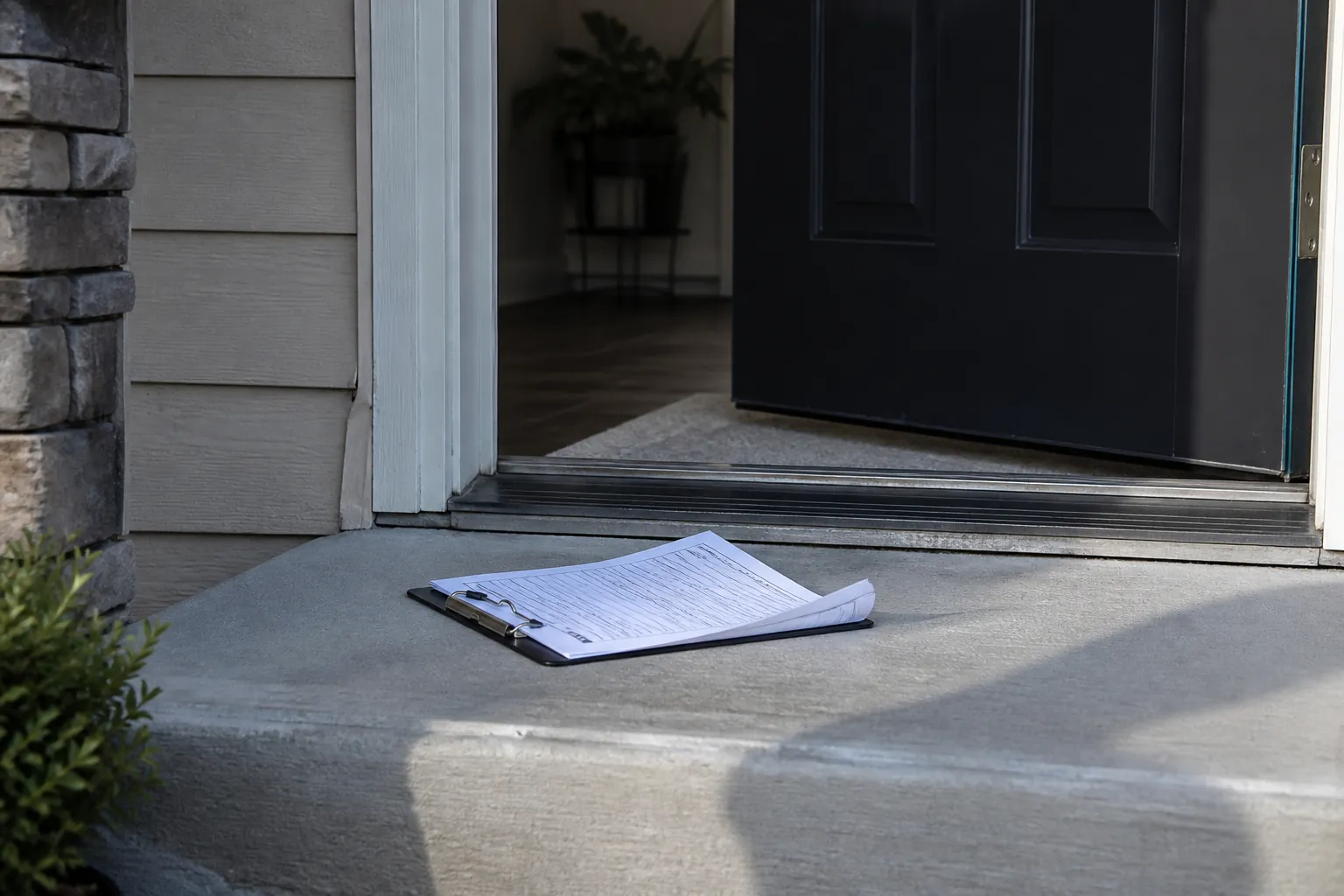
The same warrant distinction that made Suffolk dangerous for jail custody also matters at the threshold of a home. The New York Attorney General’s guidance states that administrative warrants and detainers are not judicial warrants. [5] That is a starting point for institutional advice, not the end of the Fourth Amendment analysis.
The reviewed 2025 New York rulings did not finally decide when, if ever, an administrative immigration warrant can support entry into a residence without consent or a judicial warrant. That issue is not solved by saying “sanctuary,” and it is not solved by treating every ICE form as if it came from a judge. For property managers, shelter operators, employers with staff housing, hospitals, and local agencies, the operational question is usually more concrete: who may open the door, what document has been shown, whether consent is being requested or asserted, and whether anyone is being held while counsel is called.
The unresolved home-entry issue also shows why the courthouse data cannot carry the whole legal analysis. Courthouse arrests, detainer requests, and residential encounters arise at different legal surfaces. A rule limiting local detention on a civil detainer does not automatically answer the warrant question at a private threshold. A preemption dismissal protecting state courthouse-access rules does not, by itself, decide the validity of an administrative warrant during a home operation.
Where the 2026 risk file sits
For New York counsel, the durable exposure is now concentrated in a few unfinished places. The settled-looking documents are often not final, and the loudest agency statements are often only pleadings or press positions.
- The N.D.N.Y. dismissal in United States v. State of New York remains important, but the United States appealed in January 2026. [1]
- The E.D.N.Y. suit against New York City is a pending federal challenge, not a 2025 merits ruling. [2]
- The Rikers EO 50 order was declared null and void in 2025, but the city appeal remains pending. [3]
- The Suffolk County $112 million verdict is a major liability signal for detainer-based overdetention, but the county appeal remains pending. [4]
- The enforcement record points toward immigration courthouses and administrative-warrant home-entry disputes, but the key courthouse guidance statement came in a 2026 litigation letter and the home-entry issue was not finally resolved by the 2025 New York rulings. [8][9]
The working file should therefore stay document-level: judicial warrant or administrative form; detainer request or custody order; court holding or agency allegation; final judgment or appeal. That is where New York ICE-enforcement risk actually sits in 2026.
References
- United States v. State of New York, Brennan Center.
- Justice Department Sues New York City Over Sanctuary Policies, U.S. Department of Justice, July 24, 2025.
- New York State Supreme Court blocks opening of ICE office at Rikers Island, invalidating Mayor Adams' executive order, ABC7.
- Suffolk ordered to pay $112 million in damages in class action lawsuit over unlawful detention of immigrants, RiverheadLOCAL, Nov. 14, 2025.
- Immigration enforcement, New York State Attorney General.
- Mayor’s Audit of Sanctuary Protections Shows Aggressive ICE Tactics, New York Immigration Coalition, May 2026.
- Sanctuary City NYC Sees More Than 400% Spike in ICE Detainers as DHS Prioritizes American Safety, U.S. Department of Homeland Security, July 23, 2025.
- NYC immigration courthouse arrests data analysis, THE CITY via CT Mirror, Aug. 11, 2025.
- ICE Lied About Its Authority to Make Courthouse Arrests, The American Prospect, March 25, 2026.
Operationalizing workflow
No workflow has been explicitly linked to this obligation yet. See Workflows generally.
Illustrative cases
No illustrative case is currently tracked for this obligation. See Risk Digest for documented incidents generally.
← Back to RegulationReport a correction or tip
Spotted an outdated figure, a misstated fact, or a ruling this regulation entry should reflect? Public comments are disabled for this content given the professional cost of a misreported case outcome, penalty amount, or rule text — use the structured correction channel instead.
Report a correction or tip for this record →