
Offense Sentencing for Insulting the National Anthem
- Authority
- Hong Kong Legislative Council
- Rule type
- statute
- Jurisdiction scope
- Multinational
- Source text
- Read primary rule text ↗
Penalties vary: up to 3 years imprisonment in China, Hong Kong, India; fines in Russia; no penalty in US.
What sentence does an insulting national anthem offense carry? As of Q3 2026, the answer is jurisdiction-specific enough that a single sentence would be misleading. In some places the exposure is criminal custody; in others it is a minor fine, an unpassed draft, a withdrawn proposal, or no enforceable penalty at all.
This is a legal-status map, not legal advice. The entries below separate enacted law from pending or withdrawn measures, and they give priority to statutory text and official summaries over press shorthand. “Last verified” means checked against the sources listed here on August 3, 2026; it does not mean every court docket, gazette page, or local enforcement record has been independently exhausted.

Jurisdictional map: enacted penalties, reported sentences, and status flags
| Jurisdiction | Status | Maximum stated exposure | Documented sentence or enforcement note | Last verified |
|---|---|---|---|---|
| Mainland China | Enacted | National Anthem Law: warning or up to 15 days’ detention for deliberate alteration, distortion, or disrespectful performance; serious public disrespect may trigger criminal liability, reported as up to 3 years after the 2017 Criminal Law amendment [1][2]. | No individual sentencing record in the cited sources is used here as a mainland benchmark. | Aug. 3, 2026 |
| Hong Kong | Enacted | National Anthem Ordinance, Cap. A405: up to 3 years’ imprisonment and HK$50,000 fine [3]. | Reported outcomes include 3 months’ imprisonment for online distribution of an anthem-insult video in 2023, and 180 hours’ community service for a student who turned his back during the anthem at a 2024 football qualifier, sentenced in 2025 [4][5]. | Aug. 3, 2026 |
| India | Parliament passed amendment; operative status should be checked against assent and gazette text before relying on it | Prevention of Insults to National Honour Act framework: up to 3 years and/or fine for anthem insult; 2026 amendment materials state extension to Vande Mataram and a mandatory 1-year minimum for repeat offenders [6][7]. | No sentencing record in the cited sources. Some reporting outside the official summary has described a higher ceiling, so the 3-year figure should be read against the final gazetted text before operational use. | Aug. 3, 2026 |
| Turkey | Enacted | Penal Code Article 300(2): 6 months to 2 years for publicly degrading the national anthem; penalty rises by one-third when committed abroad by a Turkish citizen [8]. | No individual sentencing record in the cited sources. | Aug. 3, 2026 |
| Russia | Administrative penalty currently identified; 2016 criminal draft not verified as enacted | Administrative fines reported at roughly US$45 to US$2,200; a 2016 Supreme Court-approved draft would have criminalized anthem mockery, including online publication, with up to 1 year, but passage is not verified in the cited sources [9][10]. | Treat criminal jail claims as unverified unless an enacted statute is produced. | Aug. 3, 2026 |
| Malaysia | Enacted | National Anthem Act 1968, s.8: fine up to RM100 or imprisonment up to 1 month; the provision reaches failure to stand at attention [11]. | No individual sentencing record in the cited sources. | Aug. 3, 2026 |
| Nigeria | Withdrawn proposal, not law | The 2024 Counter Subversion Bill drew attention for a 10-year/N5 million anthem-related penalty, but the bill was withdrawn [12]. | Do not cite the 10-year figure as current Nigerian law. | Aug. 3, 2026 |
| United States | No enforceable federal punishment for anthem disrespect | 36 U.S.C. § 301 supplies anthem etiquette but no enforcement mechanism; compelled-speech and protest cases mark the constitutional boundary [13][14]. | No federal jail or fine exposure for insulting the anthem as such. | Aug. 3, 2026 |
The table is deliberately blunt because this subject is easy to overstate. “Can you go to jail for insulting the national anthem?” is the wrong first question. The first question is whether the cited item is a statute, a bill, a court outcome, an etiquette rule, or a viral paraphrase of one of those things.
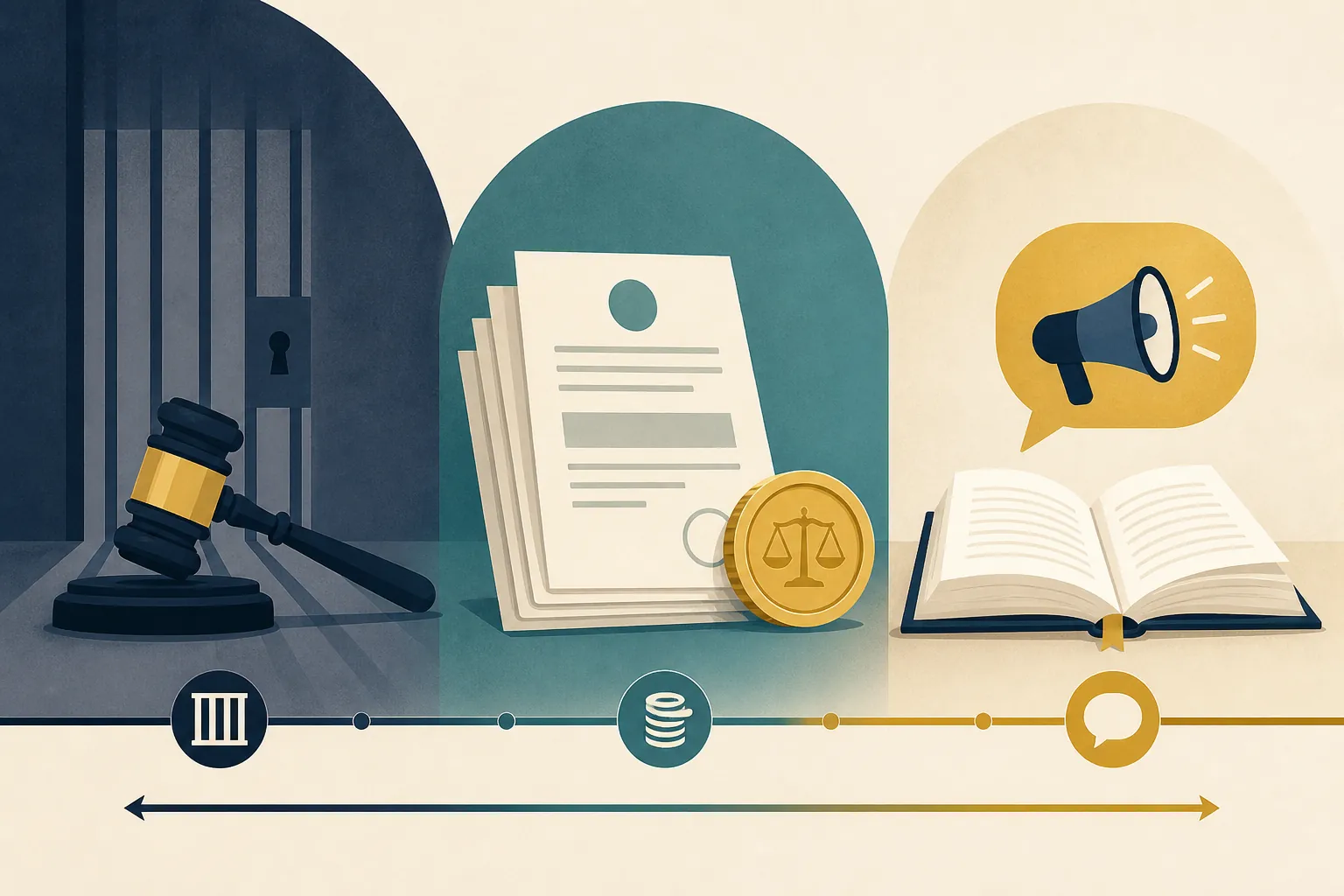
China and Hong Kong: statutory ceilings plus reported sentences
China’s National Anthem Law took effect on October 1, 2017. Article 15 addresses deliberate alteration of the lyrics or score, distorted or disrespectful performance, and other conduct that insults the national anthem; it provides for a warning or up to 15 days’ detention by public security authorities, and refers serious cases to criminal liability where a crime is constituted [1]. A November 2017 criminal-law amendment then supplied the more severe public-facing figure: up to 3 years for serious disrespect of the national anthem [2].
That distinction matters. A police detention provision and a criminal imprisonment ceiling are not interchangeable, and it is sloppy to collapse them into one generic “anthem jail law.” The mainland rule has both an administrative front end and a criminal-law escalator for serious cases.
Hong Kong’s enacted statute is easier to pin down on the ceiling. The National Anthem Ordinance, Cap. A405, makes misuse or insult of the national anthem punishable by a fine at level 5 and imprisonment for 3 years; the statutory fine is commonly reported as HK$50,000 [3]. The ordinance is not merely ceremonial. The reported cases show that prosecutors have used it and magistrates have imposed both custody and community service.
In July 2023, Cheng Wing-chun was sentenced at Eastern Magistrates’ Court to 3 months in jail for insulting the national anthem after he distributed a YouTube video, reportedly viewed about 90,000 times, that replaced the anthem with protest song audio at a Hong Kong rugby match [4]. That is the concrete remedial burden: not an abstract debate over patriotic feeling, but a custodial sentence after online distribution.
A second reported Hong Kong outcome sits differently. Lau Pun-hei, a 19-year-old student, was given 180 hours of community service after turning his back for about one minute during the anthem at a June 6, 2024 Hong Kong-Iran World Cup qualifier; three spectators had been arrested at the match [5]. The sentencing date is not as clean across public reports as the underlying legal exposure: HKFP reports the sentence on August 27, 2025, while other reporting uses a different August date. Without the primary court record, the safer treatment is to cite the sentence and flag the date discrepancy rather than pretend the file is cleaner than it is.
Those two Hong Kong outcomes should not be turned into a sentencing range. They are reported Magistrates’ Court determinations, not appellate guidance. They do, however, prove something narrower and more useful: under Hong Kong’s enacted ordinance, anthem-insult prosecutions can result in real court orders, including imprisonment.
India’s 2026 amendment: current, consequential, and still status-sensitive
India is the 2026 development that deserves attention, but not shortcut treatment. On July 29, 2026, India’s Parliament passed the Prevention of Insults to National Honour (Amendment) Bill, extending the national-honour protection framework to the national song Vande Mataram, according to official and press accounts cited here [6][7].
The existing Prevention of Insults to National Honour Act framework already treats intentional prevention of singing, or disturbance of an assembly engaged in singing the national anthem, as punishable by imprisonment up to 3 years, or fine, or both. The 2026 official summary also describes a mandatory 1-year minimum for repeat offenders under a new Section 3A [6]. That repeat-offender minimum is the practical change counsel should not miss: it narrows judicial discretion once the repeat-trigger applies.
The ceiling needs care. The cited sources note conflicting public reporting about an “up to five years” figure, while the official summary used here supports the 3-year ceiling. Until the assented, gazetted text is checked, this article treats the 3-year figure and the 1-year repeat minimum as the strongest sourced position, not as a substitute for final text review.
Turkey and Malaysia: narrower but still enacted exposure
Turkey’s rule is a criminal offense, not an etiquette provision. Penal Code Article 300(2) provides 6 months to 2 years for publicly degrading the national anthem; if the offense is committed abroad by a Turkish citizen, the punishment is increased by one-third [8]. The abroad enhancement is the detail that changes cross-border risk analysis. A public act outside Turkey may not remove the Turkish-law issue if the statutory nationality condition is met.
Malaysia’s exposure is much smaller, but it is still statutory. The National Anthem Act 1968 provides a fine up to RM100 or imprisonment up to 1 month for certain anthem-related misconduct, and Section 8(4)(a) reaches failure to stand at attention [11]. That is not in the same penalty class as China, Hong Kong, or India, but it is also not nothing.
Russia and Nigeria: why draft status cannot be upgraded into jail exposure
Russia is a useful warning against headline drift. The current exposure identified in the cited sources is administrative: fines reported at roughly US$45 to US$2,200 for insulting state symbols. In 2016, Russian reporting said the Supreme Court had approved a draft bill that would criminalize mocking the national anthem, expressly including internet publication, with a possible term of up to 1 year [9][10].
Approval of a draft is not enactment. Unless passage can be verified against an enacted Russian statute, the criminal 1-year figure belongs in a pending-or-unverified note, not in the main sentencing exposure. The difference is not pedantic; it is the difference between a current legal risk and a legislative possibility.
Nigeria belongs even farther from the enacted-penalty column. In 2024, the Counter Subversion Bill attracted criticism for a provision reported as carrying up to 10 years’ imprisonment or a N5 million fine for refusing to sing the national anthem, but the bill was withdrawn [12]. That figure may explain a past controversy. It should not be cited as Nigerian law.
United States: anthem etiquette without enforceable punishment
The United States is the sharp contrast. Federal law at 36 U.S.C. § 301 describes conduct during the national anthem, but it is etiquette language without an enforcement mechanism. It does not create a federal punishment for insulting the anthem [13].
The constitutional boundary is also unusually clear for a subject that attracts noisy claims. West Virginia State Board of Education v. Barnette held in 1943 that the government could not compel schoolchildren to salute the flag or recite the pledge, and Texas v. Johnson held in 1989 that flag burning as political protest was protected expression [13][14]. The same First Amendment structure is why a federal anthem-insult prosecution is not sitting behind the etiquette statute.
Older state-law anecdotes do not change that result. The often-retold 1944 Igor Stravinsky episode in Massachusetts involved a 1917 statute against embellishing the anthem, with a stated $100 penalty, but that kind of law is now treated as constitutionally unenforceable in light of modern First Amendment doctrine [13][14].
How to read an anthem-insult sentencing claim
A reliable insulting national anthem offense sentencing claim should answer four questions before it announces a jail term:
- Is the source identifying an enacted statute, an administrative rule, a bill, a withdrawn proposal, or a court sentence?
- Does the number describe a statutory maximum, a mandatory minimum, a fine ceiling, a police detention period, or an actual sentence imposed?
- Is the conduct covered anthem insult, refusal to stand, disturbance of singing, online distribution, degradation of state symbols, or something broader?
- Is there a verified court record or only press reporting, and if it is press reporting, do the dates and procedural posture match across sources?
For internal tracking work, the same discipline used in other status-sensitive legal maps is useful here: keep enacted law separate from draft material, keep reported sentences separate from statutory ceilings, and date-stamp the verification. That is especially important in a field where a proposal in one country and a sentence in another are easily fused into one inaccurate claim. For a comparable status-flag approach, see the site’s legal timeline format and its broader jurisdictional safeguards map.
The live risk is not “anthem insult equals jail.” It is that jurisdiction, enactment status, and verified sentencing record control the answer.
References
- National Anthem Law of the P.R.C. — China Law Translate
- China criminalizes disrespect of national anthem — DW, November 4, 2017
- National Anthem Ordinance, Cap. A405 — Hong Kong e-Legislation
- Hong Kong court sentences man to 3 months jail for insulting national anthem — Reuters, July 20, 2023
- Hong Kong student given community service order for insulting national anthem during World Cup qualifier — Hong Kong Free Press, August 27, 2025
- Prevention of Insults to National Honour (Amendment) Bill 2026 backgrounder — Press Information Bureau, Government of India
- Vande Mataram Bill passed in Rajya Sabha; insults to national song now criminal offence — India Today, July 29, 2026
- Degrading the Symbols of State Sovereignty, Article 300, Penal Code of Turkey — Lewik
- Russian Supreme Court Approves Bill Criminalizing Insulting National Anthem — The Moscow Times, May 24, 2016
- Could Mocking the Russian National Anthem Land You in Jail? — Newsweek
- Stand up for Negaraku or risk jail, group tells Malaysians — The Malaysian Insight
- Bill Seeking 10-Year Jail Term For Those Who Refuse To Sing National Anthem Sparks Outrage — Channels Television, August 14, 2024
- Does the United States or other countries compel national anthem etiquette? — National Constitution Center
- National Anthem, Government Regulation — First Amendment Encyclopedia, Middle Tennessee State University
Operationalizing workflow
No workflow has been explicitly linked to this obligation yet. See Workflows generally.
Illustrative cases
No illustrative case is currently tracked for this obligation. See Risk Digest for documented incidents generally.
← Back to RegulationReport a correction or tip
Spotted an outdated figure, a misstated fact, or a ruling this regulation entry should reflect? Public comments are disabled for this content given the professional cost of a misreported case outcome, penalty amount, or rule text — use the structured correction channel instead.
Report a correction or tip for this record →