
Does the July 2026 SSI Double Payment Threaten Your Eligibility?
- Authority
- Social Security Administration
- Rule type
- regulation
- Jurisdiction scope
- US federal
- Source text
- Read primary rule text ↗
Treat the July 31 early SSI deposit as August income and exclude it from the August 1 resource count only if that deposit alone causes the excess; retained funds are countable on September 1.
The answer before the account balance starts talking
If an SSI recipient sees a July 1, 2026 deposit and then another SSI deposit on July 31, the July 31 money is the August SSI payment arriving early because August 1 falls on a Saturday. It is not a bonus, and the July 31 deposit does not, by itself, threaten SSI eligibility under the 2026 resource limits of $2,000 for an individual or $3,000 for a couple [1].
The legal reason is more specific than “don’t worry.” SSA’s POMS income-counting rule treats an advance-dated SSI payment caused by a weekend or holiday as income in the month of normal receipt, which here is August [2]. SSA’s POMS resource rule then excludes an early SSI deposit from the first-of-month resource calculation when that early deposit is the only reason the account balance appears to exceed the limit [3].
This article is POMS-based legal analysis, not individualized legal advice or a single SSA July 2026 eligibility memo. It is a synthesis from SSA primary-source policy materials and benefit-rate sources, with legal-background review for regulation-and-benefits source use. Last verified: July 31, 2026.
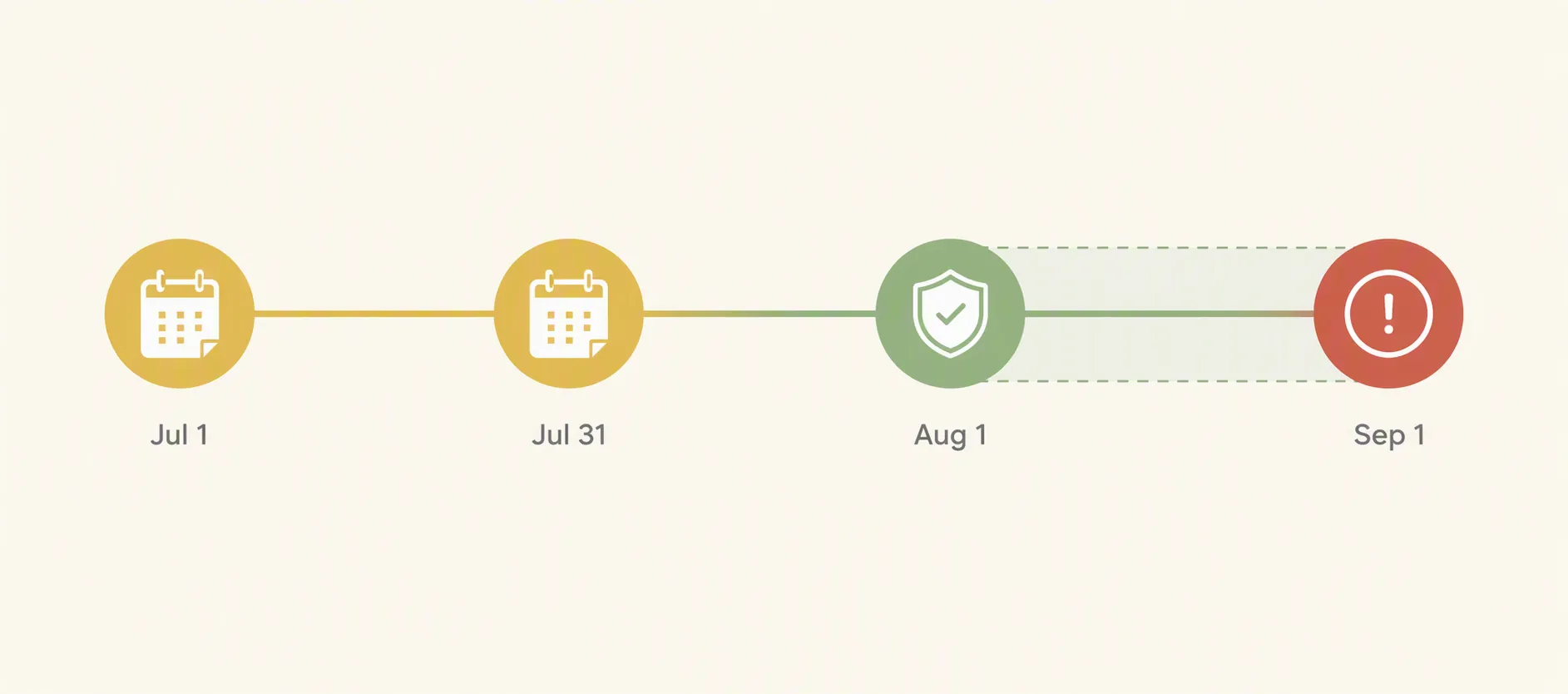
The calendar is not the whole legal answer
The payment calendar explains why two SSI deposits appear in July 2026: the regular July SSI payment arrives July 1, and the August SSI payment arrives July 31 because the first day of August is not a banking day. For the statutory and regulatory authority behind SSI payment-date shifts, see What Legally Authorizes SSI Payment Schedule Changes.
But the eligibility problem people are actually worried about is not the calendar. It is the first-of-month resource test. A recipient near the $2,000 or $3,000 resource ceiling may open the banking app on July 31 and see a balance that looks dangerous. The question is whether SSA counts that July 31 deposit against the recipient before the recipient has a fair chance to use it for August expenses.
That is where the POMS rules matter. Ordinary “double payment” coverage often stops after saying the second deposit is not extra money. That is true, but it does not answer the resource-limit question. The controlling sequence is income month first, resource snapshot second, retained funds third.
First rule: the July 31 SSI deposit is August income
POMS SI 00810.030 says that income is generally counted in the month it is received, but it carves out the exact problem created by weekends and holidays. When an SSI payment is issued before its normal delivery month because the regular payment date falls on a weekend or legal holiday, SSA counts the payment as income for the month in which it normally would have been received. The POMS applies that treatment to advance-dated checks and to electronic funds transfers [2].
So the July 31, 2026 EFT is not July income for SSI counting purposes. It is August SSI income paid one day early. For 2026, the federal SSI benefit rate is $994 for an eligible individual, $1,491 for an eligible couple, and $498 for an essential person, before any applicable reductions or supplements [4].
| Date | What the deposit represents | Income-counting treatment |
|---|---|---|
| July 1, 2026 | Regular July SSI payment | July income |
| July 31, 2026 | August SSI payment issued early | August income under the advance-payment rule |
| August 2026 | No separate regular August 1 SSI deposit | The July 31 payment is the August SSI payment |
That income rule solves only half the fear. The second half is whether the money sitting in the account on August 1 is a countable resource.
Second rule: the early deposit can be removed from the August 1 resource count
SSI resource eligibility is unforgiving because the ceiling is low: $2,000 in countable resources for an individual and $3,000 for a couple in 2026 [1]. That is why a one-day-early payment can look like a crisis. A recipient could be eligible on the morning of July 31, receive the August SSI deposit later that day, and appear over the resource limit when the August 1 snapshot arrives.
POMS SI 01140.200D.6 addresses that exact kind of early-deposit problem. SSA excludes an early SSI deposit from resources for the month after the month of receipt when the early deposit is the cause of the excess resources. The rule points to early-deposit months identified under SSA systems procedure, and it is written to stop an early federal payment from creating a resource violation by itself [3].
The worked POMS example is the piece worth reading slowly. SSA describes a recipient whose bank balance is over $2,000 on the first of the month because an SSI payment arrived early at the end of the prior month. In the example, early SSI deposits of $771 and $783 are excluded from the first-of-month bank balance when those deposits are the reason the balance appears to exceed the limit. After SSA backs out the early SSI money, the recipient’s countable resources are below the $2,000 limit [3].
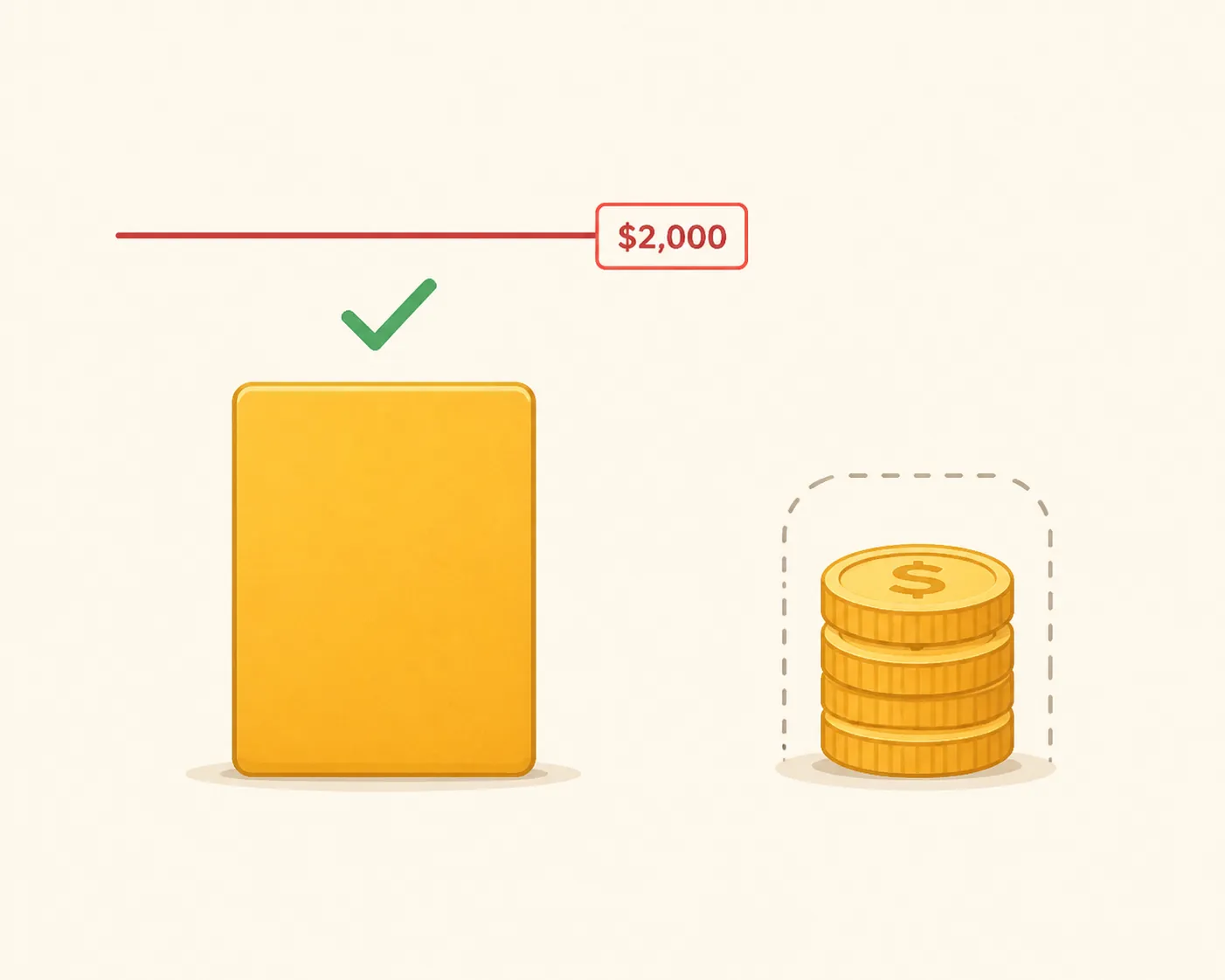
That example is the practical template for July 31, 2026. SSA is not pretending the bank did not receive the money. SSA is asking a narrower resource-test question: if the July 31 advance is subtracted from the August 1 balance, are the recipient’s countable resources still at or below the applicable limit?
| August 1 resource question | Result under the POMS framework |
|---|---|
| The account is over the limit only because the July 31 SSI advance is included. | The early SSI deposit is excluded from the August 1 resource calculation. |
| The account would still be over the limit even after the July 31 SSI advance is removed. | The exclusion does not cure the excess; other countable resources remain the problem. |
| Money from the July 31 deposit remains in the account on September 1. | It is no longer protected as an early-deposit timing issue and may be counted as a resource. |
The important dates are July 31, August 1, and September 1
For July 31, the recipient’s immediate problem is usually emotional and logistical: the account balance suddenly looks too high. Legally, the July 31 receipt is protected by the income-counting rule because it is August income paid early [2].
For August 1, the resource question is protected only to the extent the early SSI deposit itself caused the apparent excess. If the recipient’s other countable resources were already too high, or if the account remains over the limit even after removing the July 31 advance, the early-deposit exclusion is not a general amnesty [3].
For September 1, the protection changes. POMS SI 00810.030D.1 states that income retained into the month after the month of receipt becomes a resource. Because the July 31 payment is counted as August income, any part of it still retained as of the first moment of September is no longer merely an early August payment for August 1 timing purposes; it may be a countable September resource [2].
- July 1 money retained into August can already be part of the August 1 resource picture, unless another exclusion applies.
- July 31 money is treated as August income and can be excluded from the August 1 resource count if it alone creates the excess.
- Money still held on September 1 is the point at which the recipient should expect a resource question, not a calendar reassurance.
What recipients and advocates should check before September
The useful review is not “did two SSI deposits arrive in July?” The useful review is whether the recipient’s countable resources, after excluding the July 31 SSI advance, were within the limit on August 1, and whether funds remain countable on September 1.
- Keep the bank record showing the July 31 SSI deposit and the August 1 balance.
- Separate the July 31 SSI advance from older retained funds when reviewing the August 1 balance.
- Do not assume the exclusion fixes resources that were already over the limit before the advance arrived.
- Plan August spending or lawful sheltering before September 1 if retained SSI would otherwise push countable resources over the limit.
- For an SSI recipient who is ABLE-eligible, an ABLE account may be part of the sheltering discussion, but the account’s own eligibility and contribution rules need separate review.
State supplementation deserves a careful footnote rather than a confident shortcut. POMS SI 01140.200D.6 includes a state-administered-supplement point, but it is tied to state-specific procedures. A recipient who receives a state-administered supplement should not assume the federal early-deposit resource treatment automatically answers every state bookkeeping question [3].
The practical legal boundary
The July 31, 2026 SSI deposit should not cause a loss of eligibility merely because it lands in July. Under the POMS framework, it is August income, and it is excluded from the August 1 resource calculation when that early payment is the only reason the balance appears too high [2][3].
The danger is later and more ordinary: money still sitting in the account on September 1 can become a countable resource. Readers tracking the rest of the 2026 SSI calendar should re-check the same resource-timing issue around later double-payment months reported for October 30 and December 31, but the legal test remains the same: the early deposit itself is not the disqualifying event; retained funds after the protected timing window may be.
References
- Fact Sheet: 2026 Social Security Changes, Social Security Administration.
- SI 00810.030 When Income Is Counted, Social Security Administration POMS.
- SI 01140.200 Checking and Savings Accounts, Social Security Administration POMS.
- SSI Federal Payment Amounts for 2026, Social Security Administration Office of the Chief Actuary.
Operationalizing workflow
No workflow has been explicitly linked to this obligation yet. See Workflows generally.
Illustrative cases
No illustrative case is currently tracked for this obligation. See Risk Digest for documented incidents generally.
← Back to RegulationReport a correction or tip
Spotted an outdated figure, a misstated fact, or a ruling this regulation entry should reflect? Public comments are disabled for this content given the professional cost of a misreported case outcome, penalty amount, or rule text — use the structured correction channel instead.
Report a correction or tip for this record →