
Is There a Binding FAA 2030 Leaded Avgas Phaseout?
- Authority
- FAA
- Rule type
- regulation
- Jurisdiction scope
- US federal
- Source text
- Read primary rule text ↗
Covered federally obligated airports must not restrict 100LL before Dec. 31, 2030, unless FAA-approved unleaded alternative exists.
As of Aug. 2, 2026, there is not one binding “FAA 2030 leaded avgas phaseout regulation” that directly bans every airport, FBO, flight school, fuel distributor, or aircraft operator from selling or using 100LL. There is a stack of instruments with different verbs, different addressees, and different enforcement paths. The difference matters because the most immediate enforceable airport obligation runs in the opposite direction from the casual phrase “2030 ban”: certain federally assisted airports must not restrict 100LL before Dec. 31, 2030, unless an FAA-approved near-fleet-wide unleaded alternative is available.
Status note: this record is current to Aug. 2, 2026, and is for regulatory tracking, not legal advice.

The Obligations Record
| Instrument | Issuer | Date or trigger | Actor bound now | Current legal effect | Enforcement path |
|---|---|---|---|---|---|
| Transition Plan to Unleaded Aviation Gasoline V1.0 | FAA | Released July 28, 2026; FAA newsroom release July 30, 2026 | FAA as planner and implementer; regulated parties are not directly bound by the plan but may be affected later through standards, approvals, procurement, and future rulemaking | Roadmap for testing, approvals, deployment, and future rulemaking; not itself a retail ban on 100LL | Future rulemaking and agency implementation, not a present fuel-sale prohibition |
| Clean Air Act aircraft-engine endangerment finding for lead emissions from certain aircraft engines | EPA | Published Oct. 20, 2023; effective Nov. 20, 2023 | EPA and FAA | Triggers statutory duties for EPA to address emissions standards and for FAA to address compliance and safety-related implementation; does not itself order fuel sellers to stop selling 100LL | Clean Air Act Sec. 231 and Sec. 232 machinery, followed by standards and compliance regulations |
| FAA Reauthorization Act of 2024, Sec. 827 | Congress | Enacted in 2024; directs FAA transition planning with end-2030 and end-2032 targets | FAA and federal implementation actors | Requires a transition plan and sets target dates for eliminating leaded avgas use: end of 2030 for the contiguous United States and end of 2032 for Alaska | Statutory direction to FAA; not a self-executing retail fuel ban |
| Grant Assurance 40 protection for 100LL availability | FAA | FAA notice reported Apr. 25, 2025; applies to covered federally obligated airports that sold 100LL in 2022 | AIP-funded airports covered by the assurance | Bars covered airports from restricting 100LL until Dec. 31, 2030, or until an FAA-approved near-fleet-wide unleaded alternative exists | AIP grant-assurance enforcement, including civil-penalty exposure |
That table is the answer counsel usually needs before the policy story begins. If the question is “may this airport ban 100LL now because the FAA has a 2030 phaseout,” the current answer for a covered airport is no. If the question is “has federal law started a mandatory transition away from leaded avgas,” the answer is yes, but the present duties attach mainly to EPA, FAA, and covered airports in different ways.
Four Instruments, Four Different Verbs
The July 2026 FAA transition plan plans. The EPA finding finds. The 2024 statute directs. Grant Assurance 40 prohibits certain airport restrictions. Those verbs are not interchangeable.
The FAA’s 72-page Transition Plan to Unleaded Aviation Gasoline V1.0 was released on July 28, 2026. It organizes the federal transition work into phases for fuel authorization, safety review, deployment, and future rulemaking, with a later Version 2.0 expected after additional work. The plan is important because it tells agencies, fuel developers, airports, aircraft owners, and fuel suppliers where the FAA expects the transition machinery to move next. It is not, by itself, the operative regulation that ends 100LL sales nationwide.[1]
The EPA’s endangerment finding does something legally heavier than publish a preference. EPA found that lead emissions from certain aircraft engines cause or contribute to air pollution that may reasonably be anticipated to endanger public health and welfare. The finding was published at 88 FR 72372 on Oct. 20, 2023, and became effective Nov. 20, 2023.[2] That finding starts statutory work under the Clean Air Act; it does not itself tell a local FBO that a retail pump must close on a date certain.
The FAA Reauthorization Act of 2024 then gives the transition a congressional clock. Section 827 directs the FAA to develop and carry out a transition plan, with targets tied to the end of 2030 for the contiguous United States and the end of 2032 for Alaska.[3] Those dates are not meaningless. They are also not, standing alone, the same thing as a fuel-sale prohibition enforceable tomorrow against every retail seller.
Grant Assurance 40 is different because it is already an enforcement-grade condition for the covered airports. FAA’s 2025 grant-assurance change protects access to 100LL at airports that sold it in 2022 by barring those airports from restricting the fuel before Dec. 31, 2030, or before the FAA approves a near-fleet-wide unleaded replacement.[4]
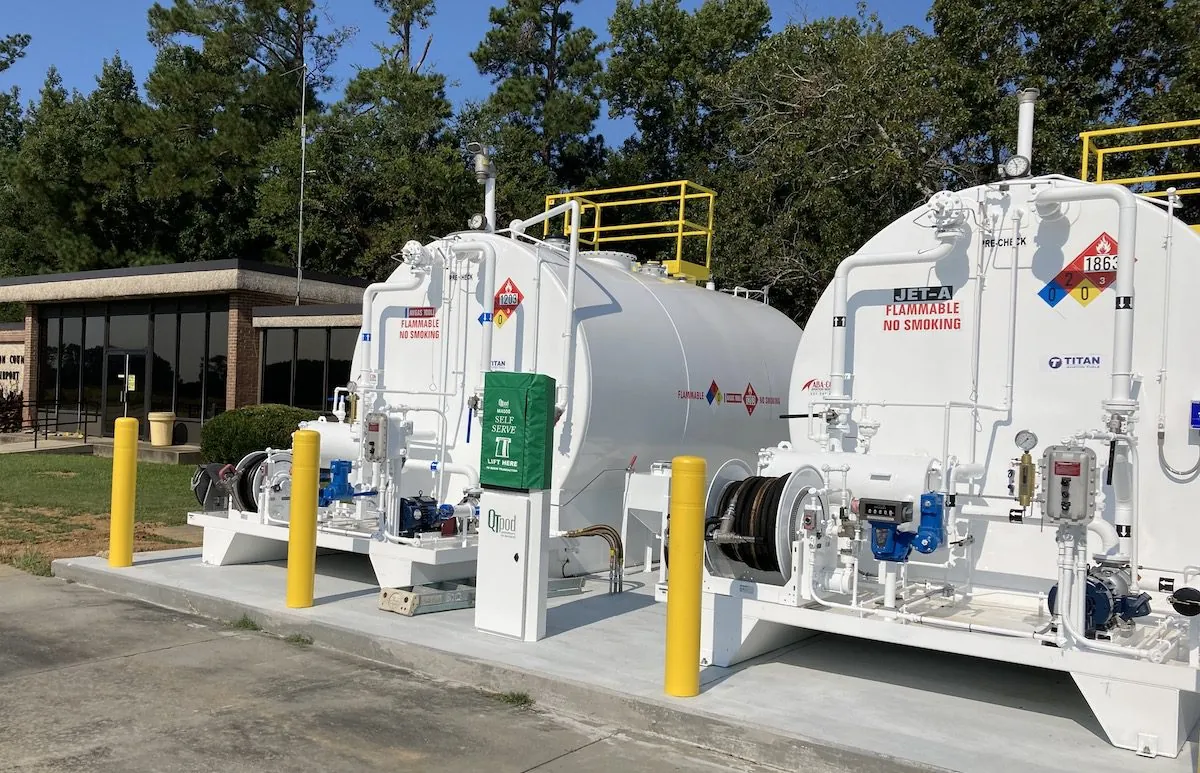
The Counterintuitive Airport Rule: Keep 100LL Available
Grant Assurance 40 is the piece most likely to be misstated in board packets and compliance memos. A phaseout program exists, but the present airport-side duty for covered airports is not “remove leaded avgas.” It is “do not restrict it yet,” unless the FAA-approved alternative condition is satisfied.
Santa Clara County is the cleanest practical warning. On Mar. 24, 2025, the FAA issued a final determination concluding that Santa Clara County’s 2022 100LL ban at county airports violated AIP grant assurances.[5] The lesson is not that airports have no role in the transition. The lesson is that federally obligated airports cannot assume that an environmental phaseout objective authorizes unilateral near-term fuel restrictions.
For airport counsel, the first filter is not whether the airport supports unleaded avgas. It is whether the airport is federally obligated, whether it sold 100LL in 2022, what its grant assurances require, whether a proposed restriction would affect 100LL access, and whether the FAA has approved a near-fleet-wide unleaded alternative. A public commitment to transition does not cure a grant-assurance breach.
- Covered airport: check AIP obligations and whether 100LL was sold in 2022 before adopting any restriction.
- FBO or fuel seller: distinguish the airport sponsor’s grant duties from any contract, lease, or fuel-supply obligations.
- Airport board or public agency: avoid describing the federal program as a present 2030 retail ban unless citing the specific rule that imposes that duty.
- Risk staff: track the date, actor, source, and enforcement mechanism separately for each asserted obligation.
What the 2026 FAA Plan Actually Adds
The FAA released Version 1.0 of the transition plan after a draft-plan comment window that ran from Jan. 12 to Mar. 13, 2026.[1] The agency’s July 30, 2026 announcement described the plan as a path for moving general aviation aircraft to unleaded fuel, not as the completed rule that already ends leaded-fuel sales.[6]

The plan’s structure should not be confused with the earlier EAGLE program’s “four pillars.” The 2026 plan uses phases. The 2022 EAGLE initiative described a government-industry path built around pillars for fuel evaluation and authorization, research and development, infrastructure, and communication.[7]
| Plan phase | Current description | Compliance significance in Q3 2026 |
|---|---|---|
| Phase 1 | Testing and authorization work, with activity running through spring 2027 | Relevant to fuel developers, aircraft owners, and operators monitoring candidate fuels; not a ban |
| Phase 2 | Further implementation work through roughly mid-to-late 2028, including rulemaking work scheduled to begin | Important because this is where rulemaking toward ending leaded-fuel sales is expected to start; not yet completed rulemaking |
| Phase 3 | National transition work for the contiguous United States | No firm date in the available plan materials cited here beyond the statutory end-2030 target |
| Phase 4 | Alaska transition path | Tracked separately because Congress used an end-2032 target for Alaska |
AeroTime’s coverage of the final plan reported that Phase 2 extends into the mid-to-late 2028 period and that unresolved details include production capacity and the timing of later phases; it also reported discussion of roughly 180 million gallons per year in the avgas demand or capacity context.[8] Those points are useful for procurement and market-readiness planning. They are not a substitute for the operative legal question: has a final rule now prohibited 100LL sales? On the materials available as of Aug. 2, 2026, no.
This is also where overcorrection becomes sloppy. A roadmap is not nothing. It can shape fuel investment, airport planning, aircraft-owner expectations, insurance questions, and board-level risk registers. It can also tell counsel when to expect the next legal instrument. But a plan becomes enforceable against a regulated actor only through the relevant legal mechanism: rulemaking, grant conditions, approvals, contracts, standards, or another binding source.
EPA’s Finding Starts the Machinery, It Does Not Finish It
EPA’s 2023 endangerment finding is the legal hinge behind the federal transition. Under the Clean Air Act aircraft-emissions framework, once EPA makes the finding, EPA must address aircraft-engine emission standards, and FAA must address implementation in a way that accounts for aviation safety and compliance.[2]
That allocation is easy to lose in public shorthand. EPA did not merely publish background science. It made a finding with statutory consequences. But the consequence is assigned agency action, not an immediate private-party ban on a fuel transaction. The regulated-entity duties arrive through later standards, FAA compliance rules, fuel authorizations, grant assurances, and related instruments.
The finding also does not resolve every operational question that airports and aircraft operators care about: which unleaded fuels will be approved for which aircraft, how supply will be scaled, how fuel availability will be handled in remote markets, and when a final retail prohibition will be enforceable. Those are precisely the questions the FAA plan and later rulemaking are supposed to move from policy into administration.
The 2030 Date Is a Target With Legal Consequences, Not a Single Universal Command
Section 827 of the FAA Reauthorization Act of 2024 gives the transition its statutory target dates: end of 2030 for the contiguous United States and end of 2032 for Alaska.[3] Those dates should appear in compliance trackers. They should not be translated into “FAA has already banned 100LL in 2030” unless the memo identifies the binding instrument that imposes that ban on the actor being advised.
There is public disagreement over how rigid the 2030 date will prove to be. AOPA’s Murray Huling was quoted in January 2026 describing the date as a goal and saying it could change.[9] AeroTime later reported FAA Deputy Administrator Chris Rocheleau describing the schedule as “aggressive” at AirVenture 2026.[8] Other commentary has argued that the date is effectively final. That conflict is worth tracking as advocacy and risk context, but it does not change the current legal inventory.
The same discipline applies to TEL supply reports. Reported production-cessation windows for tetraethyl lead suppliers may affect transition urgency and fuel-market planning, but unless tied to a verified primary statement or binding legal requirement, they should not be cited as a federal prohibition. Supply risk and legal duty belong in different columns.
How to Cite the Rule in a Compliance Memo
A defensible Q3 2026 memo should not use “the FAA 2030 phaseout” as if it were one enforceable rule. It should cite the instrument that binds the actor being discussed.
| If the actor is | Do not write | Write instead |
|---|---|---|
| A covered AIP-funded airport that sold 100LL in 2022 | The FAA phaseout lets us ban 100LL now. | Grant Assurance 40 restricts the airport from restricting 100LL before Dec. 31, 2030, or before an FAA-approved near-fleet-wide unleaded alternative exists. |
| FAA | FAA has already completed the 2030 ban. | FAA has issued Transition Plan V1.0 and has future rulemaking and implementation work scheduled. |
| EPA | EPA banned 100LL in 2023. | EPA issued an endangerment finding effective Nov. 20, 2023, triggering statutory standards work. |
| Congressional or board reporting | The 2030 deadline is meaningless. | The 2024 Act sets end-2030 and end-2032 transition targets that matter for planning, even though they are not self-executing retail prohibitions. |
| FBO, flight school, or aircraft operator | All regulated entities are already under the same 2030 ban. | Check lease terms, airport grant obligations, fuel approvals, aircraft compatibility, and later FAA/EPA rulemaking before stating a direct duty. |
This is the same basic discipline used in other deadline-driven regulatory trackers, where the operative question is not whether a policy trend exists but which named actor has a duty by which date. For a parallel format, see the site’s tracker on AI literacy in schools as a legal requirement.
Current Legal Force
As of Aug. 2, 2026, the enforceable regulated-entity obligation that most directly changes airport conduct is Grant Assurance 40: covered airports may face grant-assurance consequences if they restrict 100LL too soon.[4][5] EPA’s finding is legally consequential because it triggers agency duties.[2] The 2024 Act matters because Congress set transition targets and directed FAA planning.[3] The 2026 FAA plan matters because it schedules the work toward standards, approvals, deployment, and later rulemaking.[1]
The practical conclusion is narrow and important: do not cite “the FAA 2030 leaded-avgas phaseout” as a single binding rule. Cite the EPA finding when discussing EPA and FAA statutory duties. Cite Section 827 when discussing congressional transition targets. Cite Grant Assurance 40 and Santa Clara when advising covered airports on near-term 100LL restrictions. Cite the July 2026 transition plan when discussing the roadmap toward future rulemaking.
References
- Transition Plan to Unleaded Aviation Gasoline V1.0, FAA, July 28, 2026.
- Finding That Lead Emissions From Aircraft Engines That Operate on Leaded Fuel Cause or Contribute to Air Pollution That May Reasonably Be Anticipated To Endanger Public Health and Welfare, Federal Register, Oct. 20, 2023.
- FAA Reauthorization Act of 2024, enrolled text, GovInfo, 2024.
- FAA airport grant assurance changes include protection for 100LL, AOPA, Apr. 25, 2025.
- 2025-03-24 final determination, FAA, Mar. 24, 2025.
- FAA releases plan for transitioning general aviation aircraft to unleaded gas, FAA, July 30, 2026.
- FAA and industry chart path to eliminate lead emissions from general aviation by end of 2030, FAA, Feb. 23, 2022.
- FAA finalizes 100LL phaseout plan but leaves key details unresolved, AeroTime.
- FAA seeks feedback on unleaded fuel transition, AOPA, Jan. 14, 2026.
Operationalizing workflow
No workflow has been explicitly linked to this obligation yet. See Workflows generally.
Illustrative cases
No illustrative case is currently tracked for this obligation. See Risk Digest for documented incidents generally.
← Back to RegulationReport a correction or tip
Spotted an outdated figure, a misstated fact, or a ruling this regulation entry should reflect? Public comments are disabled for this content given the professional cost of a misreported case outcome, penalty amount, or rule text — use the structured correction channel instead.
Report a correction or tip for this record →