
Who can challenge nuclear waste storage licensing?
- Authority
- U.S. Supreme Court
- Rule type
- court decision
- Jurisdiction scope
- US federal
- Effective date
- Jun 18, 2025
- Source text
- Read primary rule text ↗
Obtain admission as a party in the NRC licensing proceeding before seeking Hobbs Act review of a final license.
After NRC v. Texas, the courthouse threshold for private spent-fuel storage challenges is narrower than the merits fight that produced it. The decisive question is not whether a state, landowner, or advocacy group has a serious argument that the Nuclear Regulatory Commission exceeded its statutory authority. It is whether that challenger was admitted as a party in the NRC licensing proceeding. The Supreme Court held that Texas and Fasken Land and Minerals were not “parties aggrieved” entitled to Hobbs Act review of the Interim Storage Partners license, and it expressly left the NRC-authority question undecided.[1]
The Louisiana connection is the forum, not the waste site: the New Orleans-based Fifth Circuit first vacated the ISP license, then denied rehearing en banc by a 9-7 vote, and later had to deal with the case after the Supreme Court reversed its jurisdictional ruling.[2]
| Status point | Current reading as of Q3 2026 |
|---|---|
| Jurisdictional gate | Hobbs Act review, as incorporated through 42 U.S.C. § 2239, turns on whether the petitioner was a party admitted to the NRC licensing proceeding, not merely a commenter or affected opponent.[1] |
| Issuing courts | The Fifth Circuit in New Orleans created the live conflict by vacating the ISP license; the Supreme Court reversed on June 18, 2025.[1][2] |
| Current posture | The Supreme Court decision controls the party-aggrieved issue. Post-decision Fifth Circuit dismissals and the Beyond Nuclear cert sequence are treated below as docket-sensitive posture items because the supplied record cites secondary reports rather than a direct Fifth Circuit or Supreme Court docket extract for every later event. |
| Last verified | 2026-08-02 UTC, against the cited primary opinions and the supplied secondary reports. |
| Use limit | This is a legal-risk and procedure tracker, not legal advice. |
The New Orleans case map
The chronology matters because each later argument depended on an earlier procedural choice. The spent-fuel issue reached the Supreme Court only after the Fifth Circuit treated Texas and Fasken as eligible petitioners and reached the NRC-authority question. The Supreme Court did not simply disagree with the Fifth Circuit about nuclear policy. It held that the Fifth Circuit should not have opened the merits door to those petitioners in the first place.[1]
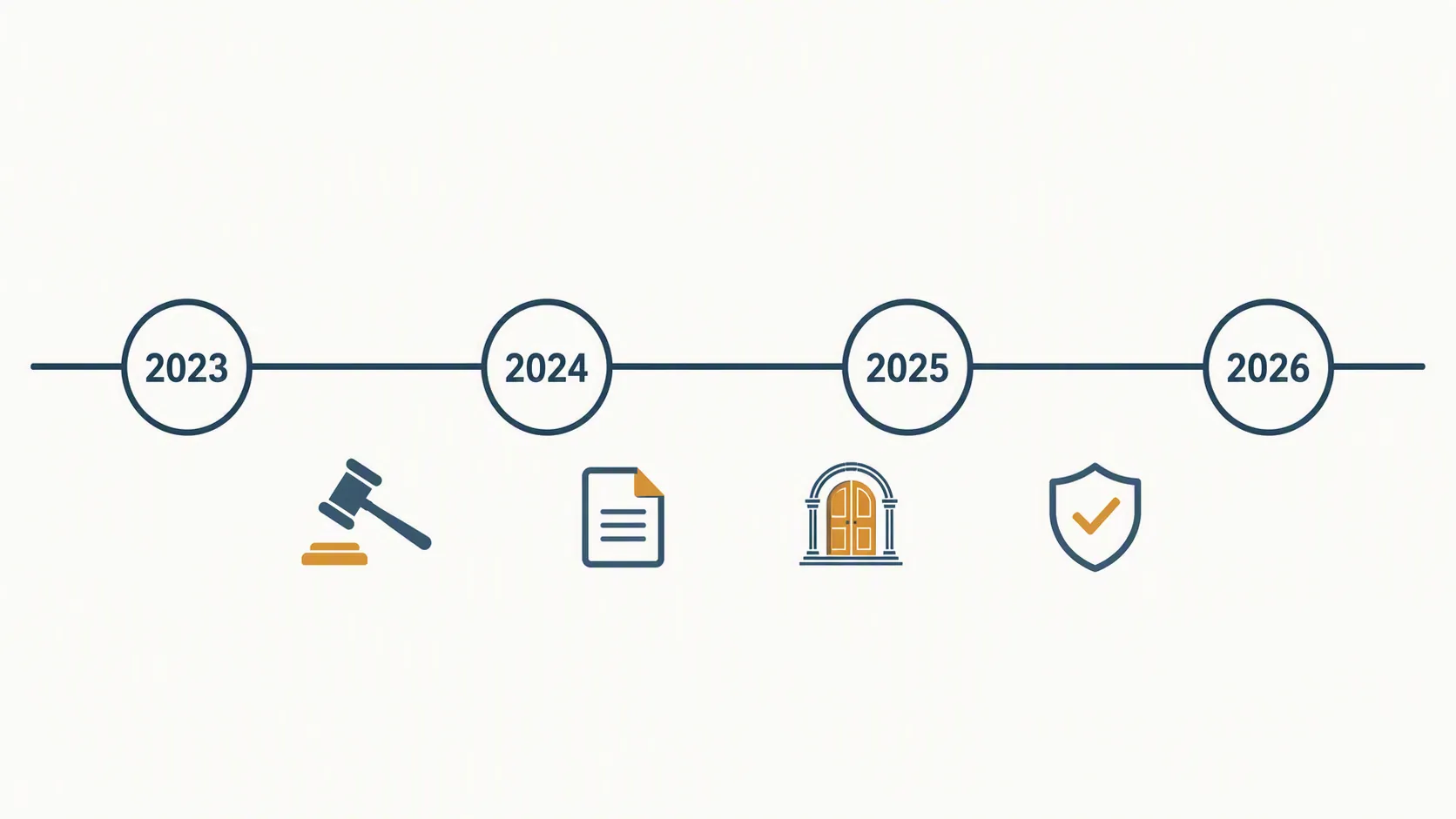
| Date or period | Procedural event | Why it matters |
|---|---|---|
| September 2021 | The NRC issued ISP a 40-year license for a private away-from-reactor spent-fuel storage facility in Andrews County, Texas, with figures in the record including up to 5,000 MTU and 231.3 metric tons of Greater-Than-Class-C waste.[2] | This was the licensing action Texas and Fasken later sought to challenge. |
| August 2023 | A Fifth Circuit panel vacated the ISP license.[2] | New Orleans became the forum where a broad NRC-authority challenge briefly prevailed. |
| 2024 | The Fifth Circuit denied rehearing en banc by a 9-7 vote in the order reported at 95 F.4th 935.[2] | The close vote preserved the panel result and sharpened the case for Supreme Court review. |
| October 4, 2024 | The Supreme Court granted certiorari in NRC v. Texas.[3] | The Court took up the threshold review question and the Fifth Circuit conflict. |
| March 5, 2025 | The case was argued at the Supreme Court.[3] | The arguments put party status, intervention, and ultra vires review at the center. |
| June 18, 2025 | The Supreme Court decided NRC v. Texas, reversing the Fifth Circuit in a 6-3 decision.[1] | The Court held Texas and Fasken were not parties aggrieved eligible to challenge the license. |
| October 20, 2025 | The supplied research identifies Fifth Circuit dismissals on remand of both the ISP and Holtec license petitions; that date should be treated as docket-sensitive unless checked directly against the Fifth Circuit docket before operational reliance.[4] | The remand posture shows the practical effect of losing party-aggrieved status. |
| November 4, 2025; January 12, 2026 | ANS reported Beyond Nuclear’s cert petition sequence in No. 25-540, and ExchangeMonitor reported that certiorari was denied on January 12, 2026.[8][9] | Those reports point to the continued importance of procedural posture, but the denial date should be verified against the Supreme Court docket before being treated as a docket-certified fact. |
What “party aggrieved” did to the case
The Supreme Court’s operative move was statutory and procedural. Under the Hobbs Act path available for NRC licensing orders, the petitioner must be a “party aggrieved.” The Court read that phrase in this context to mean a party to the agency proceeding, not any person or sovereign that can satisfy Article III injury or identify a serious defect in the license.[1]
That distinction separated five common acts that are easy to blur in nuclear licensing fights:
- Submitting comments on the environmental or licensing record.
- Seeking intervention or a hearing before the NRC.
- Being admitted as a party in the licensing proceeding.
- Appealing the denial of intervention.
- Waiting for the final license and then petitioning a court to set it aside.
Only the third status — admission as a party — carries a challenger through the statutory gate. Texas did not seek intervention in the NRC licensing proceeding. Fasken did seek intervention, but the NRC denied it, and that denial had already been upheld in the D.C. Circuit. The Supreme Court treated those facts as controlling. Fasken could not relitigate its denied party status by styling a later license challenge as a challenge to agency power.[1]
The Court’s rule is severe because it attaches jurisdictional consequences to the administrative doorway. A state attorney general’s office may have a politically salient objection. A landowner may claim direct local consequences. An environmental group may have participated heavily in comments. None of those facts, standing alone, answers the Hobbs Act question after NRC v. Texas.
Texas and Fasken were not in the same procedural position
Texas’s problem was absence from the party track. It opposed the project but did not ask to intervene in the NRC proceeding. That made the later petition look like an attempt to enter judicial review without first becoming a party before the agency.[1]
Fasken’s problem was different and, for future challengers, more instructive. It did try to intervene. But once the agency denied intervention and the D.C. Circuit upheld that denial, Fasken no longer had an open path to attack the final license as though it had been admitted all along. The Supreme Court’s analysis gives intervention denials their own appellate significance. If that denial is wrong, the fight is over the denial. It is not preserved indefinitely for a later collateral attack on the license.[1]
That is the line that now matters for lawyers building or resisting a record. Comment participation can preserve issues for agency consideration, but it does not itself create party status. A petition to intervene can start the route, but a denied petition must be challenged directly and successfully. A final license challenge cannot be used as a second entrance if the party-status fight has already been lost.
The rejected ultra vires exception
The most tempting escape route was the ultra vires label. Texas and Fasken argued, in substance, that the NRC lacked statutory authority to license private away-from-reactor interim storage. If the agency had acted outside its power, they contended, judicial review should not depend on whether they had been admitted as parties below.[1]
The Supreme Court rejected that move. The majority characterized the proposed exception as “basically dress[ing] up a typical statutory authority argument” and refused to let it displace the party-aggrieved requirement.[1] That passage does important work. It means a challenger cannot convert an ordinary argument about the agency’s statutory authority into a jurisdictional bypass simply by calling the license ultra vires.
The holding does not make the NRC right on the authority question. It makes the challenger too late, or in the wrong procedural posture, to obtain that ruling through this petition. That is a different proposition, and it is the one that controls future cases.
The dissent’s separation-of-powers objection
Justice Gorsuch, joined by Justices Thomas and Alito, would have treated the review doorway differently. The dissent viewed Texas and Fasken’s participation as enough to make them parties aggrieved and objected to allowing the agency’s own intervention rulings to determine who may later obtain judicial review.[1]
That objection deserves more than a parenthetical because it identifies the cost of the majority’s rule. If an agency can deny party status and the challenger does not overturn that denial, the final license may become insulated from that challenger even when the objection is that the agency had no statutory authority to act. Gorsuch also took the view that the licensing was unlawful, a position reported in contemporary coverage of the decision and legal commentary on the case.[5][6]
But the dissent did not supply the controlling rule. For current litigation planning, the majority’s sequence governs: intervention first, party status next, direct review of any denial, and only then a viable path to challenge the final licensing order.
What the remand dismissals teach
The post-decision posture is where the rule stops being abstract. The supplied record identifies October 20, 2025 Fifth Circuit dismissals on remand of both the ISP and Holtec license petitions.[4] Because the research file does not include a direct Fifth Circuit docket link for those remand dismissals, that date should be docket-checked before a brief, board memo, or enforcement-risk filing relies on it. The legal lesson, however, follows from the Supreme Court opinion itself: once party-aggrieved status fails, the Fifth Circuit has no merits dispute to decide under that petition.[1]
For state attorney general offices, the point is timing. A state that wants to challenge a spent-fuel storage license cannot treat the NRC process as optional while reserving all objections for a federal petition after the license issues. If the state wants Hobbs Act review of the license, it must plan for the NRC hearing process early enough to obtain party status or to litigate denial of that status directly.
For landowners and local opponents, Fasken is the harder warning. Asking to intervene is not the same as being admitted. A denied intervention petition is not just a procedural setback; it may become the whole case. The appeal from that denial is the place to preserve access to later judicial review.
For environmental organizations, the distinction between comment practice and party practice is now critical. Comments may shape the administrative record. They may support environmental objections. They may also matter in other procedural settings. But under NRC v. Texas, comment participation does not itself satisfy the party-aggrieved requirement for this licensing-review route.[1]
For utilities, storage developers, and license applicants, the case changes the defensive map. The strongest procedural defense may arise long before appellate merits briefing: who sought intervention, who was admitted, whose intervention was denied, and whether that denial became final. That does not eliminate authority challenges by properly positioned parties. It does make the administrative party ledger the first exhibit in any later petition-to-review fight.
What the Court did not decide about NRC authority
The authority question remains an unresolved remainder, not the holding. The Supreme Court noted that agency history and prior appellate precedent offered “significant support” for the NRC’s longstanding interpretation, but it did not decide whether the NRC may license private away-from-reactor interim storage.[1] Legal analyses of the decision have emphasized the same point: the majority’s favorable language is dicta, not a merits holding that validates every private storage license.[4][5]
The existing merits backdrop is still relevant. The D.C. Circuit in Beyond Nuclear v. NRC and the Tenth Circuit in Skull Valley had upheld NRC authority, while the Fifth Circuit panel went the other way before the Supreme Court reversed on procedural grounds.[3][4] That means the Fifth Circuit’s merits ruling did not survive as controlling authority, but neither did the Supreme Court deliver the final nationwide merits answer that some industry-side readings imply.
Holtec’s New Mexico license and parallel licensing questions remain part of the practical landscape. Commentary after NRC v. Texas flagged continuing regulatory questions for interim storage and related licensing disputes, including how the procedural holding affects challenges beyond the ISP license.[7] Those questions should be analyzed through the same first filter: not whether the argument is important, but whether the petitioner reached court through the required agency-party route.
Beyond Nuclear and the cert-denial posture
Beyond Nuclear’s later Supreme Court sequence should be kept separate from the Texas/Fasken posture. ANS reported in November 2025 that Beyond Nuclear brought an interim-storage case back to the Supreme Court, and ExchangeMonitor later reported that the Court declined to hear the case on January 12, 2026.[8][9] The supplied research specifically cautions that the denial date should be verified against the Supreme Court docket for No. 25-540 before publication-level reliance, so the safest use here is as a reported posture marker rather than an independently docket-verified event.
Its importance is not that cert denial decides the merits. A denial of certiorari does not approve the lower court’s reasoning as Supreme Court law. The importance is practical: after NRC v. Texas, any party trying to tee up the NRC-authority question must arrive with a clean procedural pedigree. A live merits issue can still fail at the threshold if the challenger cannot show the status the review statute demands.

The operating rule for the next challenger
A future challenger does not preserve court access by saving its best statutory argument for the petition for review. The first legal task is to become a party in the NRC licensing proceeding. If intervention is denied, the next fight is the denial itself. If that fight is not taken, or is taken and lost, a later final-license challenge may never reach the NRC-authority question.
That is the enforceable lesson from the New Orleans-to-Washington path of the ISP litigation: the next challenger’s route into court begins inside the NRC licensing proceeding, and if the agency closes that door through an intervention denial, the appeal must be from that closure rather than from the final license months or years later.
References
- Nuclear Regulatory Commission v. Texas, Supreme Court of the United States, June 18, 2025, https://www.supremecourt.gov/opinions/24pdf/23-1300_b97c.pdf
- Texas v. Nuclear Regulatory Commission, 95 F.4th 935, U.S. Court of Appeals for the Fifth Circuit, https://www.ca5.uscourts.gov/opinions/pub/21/21-60743-CV1.pdf
- Nuclear Regulatory Commission v. Texas, SCOTUSblog, https://www.scotusblog.com/cases/case-files/nuclear-regulatory-commission-v-texas/
- Supreme Court decides interim storage case on procedural grounds in NRC v. Texas, Hogan Lovells, https://www.hlc.com/en/publications/supreme-court-decides-interim-storage-case-on-procedural-grounds-in-nrc-v-texas
- License to Store: Supreme Court Addresses Judicial Review and Nuclear Policy, Goldberg Segalla, https://www.goldbergsegalla.com/blog/environmental-law-monitor/regulations/license-to-store-supreme-court-addresses-judicial-review-and-nuclear-policy/
- Supreme Court melts down opposition to Texas nuclear waste storage site, Courthouse News, https://www.courthousenews.com/supreme-court-melts-down-opposition-to-texas-nuclear-waste-storage-site/
- Justices' NRC Ruling Raises New Regulatory Questions, Holland & Knight/Law360, July 2025, https://www.hklaw.com/en/insights/publications/2025/07/justices-nrc-ruling-raises-new-regulatory-questions
- Beyond Nuclear brings interim storage case back to Supreme Court, ANS, November 13, 2025, https://www.ans.org/news/2025-11-13/article-7537/beyond-nuclear-brings-interim-storage-case-back-to-supreme-court/
- Supreme Court Declines To Hear Beyond Nuclear Case On Waste Storage License, ExchangeMonitor, https://www.exchangemonitor.com/supreme-court-declines-to-hear-beyond-nuclear-case-on-waste-storage-license-3/?printmode=1
Operationalizing workflow
No workflow has been explicitly linked to this obligation yet. See Workflows generally.
Illustrative cases
No illustrative case is currently tracked for this obligation. See Risk Digest for documented incidents generally.
← Back to RegulationReport a correction or tip
Spotted an outdated figure, a misstated fact, or a ruling this regulation entry should reflect? Public comments are disabled for this content given the professional cost of a misreported case outcome, penalty amount, or rule text — use the structured correction channel instead.
Report a correction or tip for this record →