
How Flinn v. Evanston shapes Mamdani's NYC reparations risk
- Authority
- U.S. Department of Justice
- Rule type
- statute
- Jurisdiction scope
- US federal
- Source text
- Read primary rule text ↗
No NYC cash-reparations payout law is enacted; race-based eligibility for public funds must be tied to specific, individualized past discrimination.
For anyone tracking the Zohran Mamdani reparations NYC legal proposal, the threshold answer is narrower than the political argument around it: as of August 3, 2026, New York City has no enacted cash-reparations payout law. Viral claims that Mamdani has already imposed cash payments on white New Yorkers have been fact-checked as false; what exists is a set of political statements, a city reparations study process, and prior Council legislation setting up that process, not an administered payment program.[1]
That distinction matters before any constitutional analysis starts. Mamdani has signaled openness to reparations and has said he will await the city commission’s work, but those statements do not appropriate money or define beneficiaries.[2][3] The Council’s September 2024 package created municipal machinery for studying reparations and related truth-and-healing work; the city’s CORE process is studying the issue; and New York State’s separate commission says it “does not have the authority to distribute financial payments.”[4][5][6] This is a Regulation & Ethics risk record, not legal advice, and it treats active litigation as a warning about drafting exposure rather than as a prediction about any future New York City bill.
What New York City has actually authorized
The clean version of the record is this: no city payout has been enacted; CORE is not a benefits office; and the 2024 Council vote was not a 2026 cash-payment bill. The “41-8” vote that has circulated in later commentary refers to the Council’s September 12, 2024 legislative package, including Local Laws 91 and 92, not to a new municipal payment scheme adopted after Mamdani’s later comments.[4]
The city process still sits on the study side of the line. CORE’s published schedule has been reported to include a reparations study report due July 1, 2027, a Truth, Healing and Reconciliation final report in June 2027, and implementation work extending to June 18, 2028; those dates should be re-verified against the live primary CORE page before any legal filing, client alert, or publication relies on them.[3][5] The important point for present purposes is not the calendar alone. It is that no payment rule exists until findings are translated into Council text, enacted, funded, and administered.
That is where much of the public discussion gets sloppy. A commission can gather testimony, preserve history, frame remedies, and give advocates a public forum. Those are not trivial acts. But they are not the same legal object as a local law instructing an agency to give a defined class of people a publicly funded benefit.
Evanston is the live template, not just a talking point
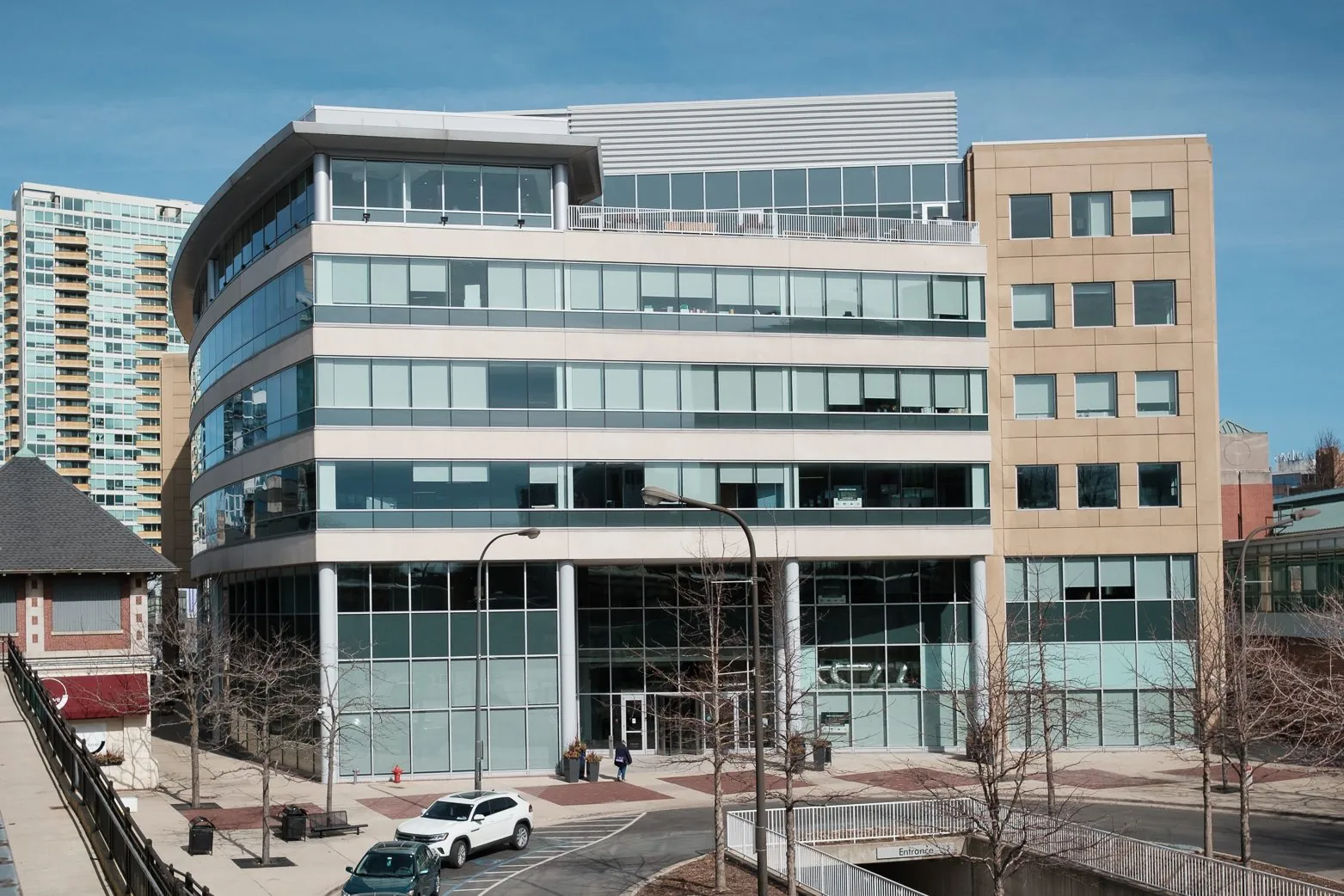
The municipal case to study is Flinn v. City of Evanston, No. 24-cv-4269 in the Northern District of Illinois. Evanston created a $10 million reparations fund in 2019 using cannabis-tax revenue, and in 2021 adopted the Restorative Housing Program, which provides up to $25,000 in housing-related benefits to eligible Black residents who lived in Evanston between 1919 and 1969 and to their descendants.[7][8] The program has paid more than $5 million, according to the Justice Department’s description of the case.[7]
That design has now reached the point New York City has not reached: federal litigation over an operating municipal benefit. The plaintiffs challenge the Evanston program under the Equal Protection Clause and the Fair Housing Act; the federal court denied Evanston’s motion to dismiss in March 2026; and the Justice Department moved to intervene on June 16, 2026.[7][8] The denial of dismissal is not a final merits ruling. It does, however, mean the complaint survived the first threshold attack and the city must litigate the structure of the program rather than rely on broad statements about historical harm.
The Justice Department’s theory is the drafting problem in one sentence: it alleges that Evanston’s program is “not narrowly tailored to remediating specific, identified instances of past discrimination.”[7] The Hill’s coverage placed the intervention in the national debate over the first funded municipal reparations program, but for city lawyers the more useful reading is procedural and architectural: the federal government is attacking the fit between the class of beneficiaries, the public money, the housing remedy, and the discrimination the city says it is remedying.[9]
| Evanston design feature | Why it matters for a future NYC payout |
|---|---|
| Public money | A funded municipal benefit gives plaintiffs a concrete payment rule to challenge, rather than only a report or political statement.[7][8] |
| Race-based eligibility | The DOJ intervention treats the racial classification itself as the central constitutional problem unless the city can justify and narrow it.[7] |
| Housing-related benefit up to $25,000 | The remedy is not an abstract apology; it is an administrable benefit tied to housing costs, making the match between injury and remedy reviewable.[7][8] |
| 1919–1969 residency frame and descendant eligibility | Temporal and lineage limits make the program more specific than a general reparations statement, but they also become pleading targets if plaintiffs argue the limits do not identify individual victims of discrimination.[7][8] |
| Equal Protection Clause and Fair Housing Act claims | A city payout can face both constitutional and statutory housing-discrimination theories if the benefit is race-based and housing-linked.[7][8] |
Evanston therefore should not be treated as a symbolic precedent that either blesses or dooms local reparations. It is more useful as a pleadings map. It shows where a plaintiff will point: the eligibility form, the ordinance findings, the administrative criteria, the funding source, the city’s record of past discrimination, and the gap between the identified harm and the people receiving money now.
Where the constitutional risk attaches in New York City
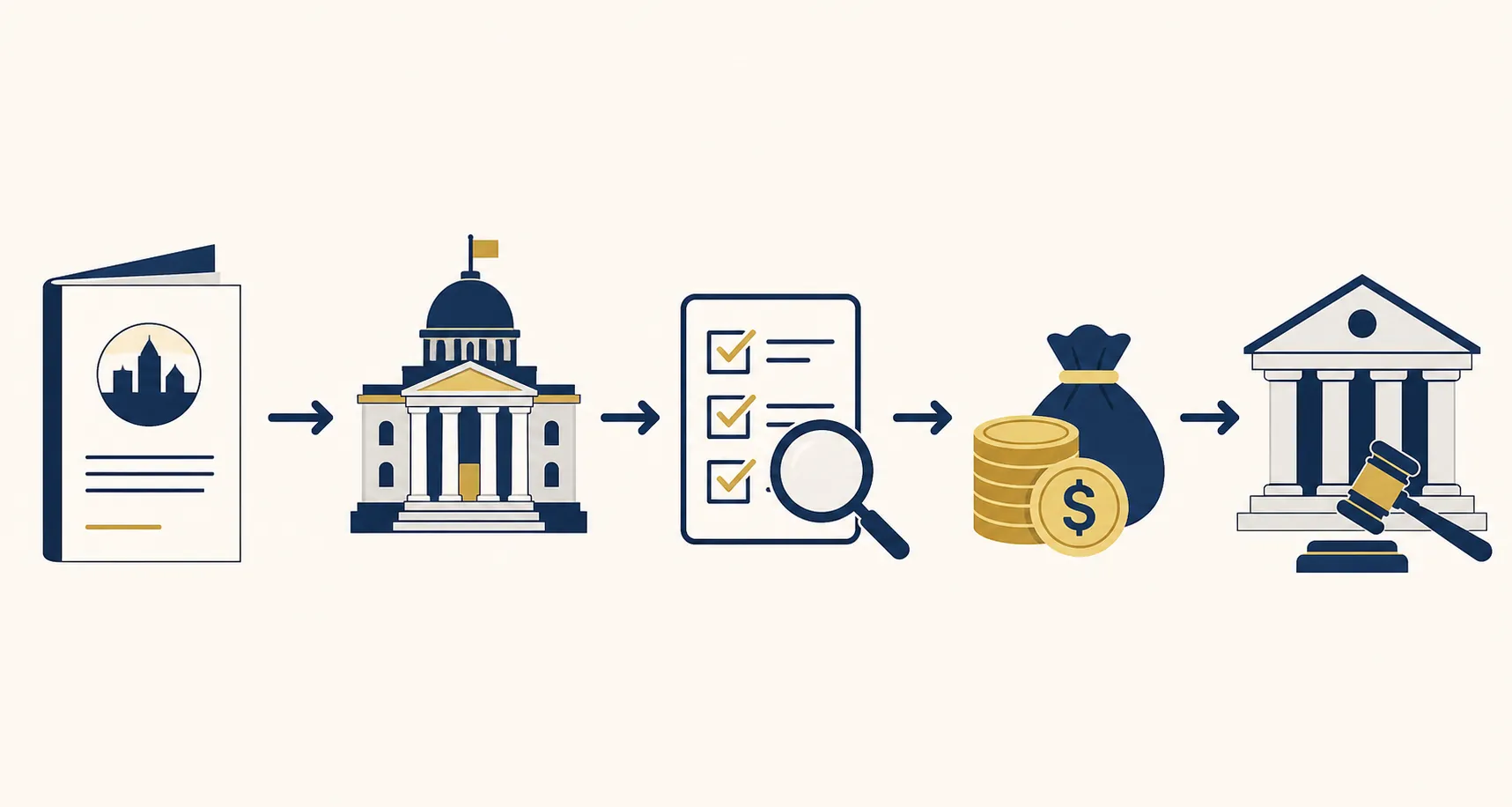
New York City is still upstream from the moment that creates the cleanest litigation target. A reparations study may be politically significant, and it may build a record the city later needs. But the constitutional exposure becomes sharper when the city chooses who gets money, who does not, and why.
| Stage | Legal consequence |
|---|---|
| Commission study | Builds a factual and political record; does not itself distribute money. |
| Findings and recommendations | May identify harms, affected communities, and possible remedies; still not a payment rule. |
| Council bill | Turns aspiration into proposed legal text and exposes the city’s chosen theory of eligibility. |
| Eligibility criteria | Creates the class of winners and losers; this is where race, ancestry, residence, injury, and documentation requirements become reviewable. |
| Funding mechanism | Shows who pays, how much is available, and whether the benefit is one-time, capped, or continuing. |
| Administrative rules | Determine proof requirements, appeals, agency discretion, and the record a court will later read. |
| Litigation | Plaintiffs challenge the fit between identified past discrimination and present-day benefit distribution. |
Cameron Beach’s Virginia Law Review article is useful here because it does not let local governments hide behind generalized history. Beach argues that city reparations are strongest when a municipality can connect the locality, the injury, and the remedy “with particularity.”[10] That phrase is doing real work. It asks whether the city can show why this government, this money, this beneficiary class, and this remedy correspond to identified discrimination rather than to a national moral account alone.
Brooke Simone’s Michigan Law Review note provides a useful counterweight because it treats municipal reparations as a serious local remedial project, not merely as litigation bait.[11] A city does not have to abandon the political and restorative work of a commission simply because a payment program would be challenged. But once the city distributes public money by a race-based rule, a court will not review the sincerity of the city’s moral language in the abstract. It will review the operative line.
A hypothetical illustrates the problem without pretending New York has adopted such a rule. If a future bill gave a housing grant to residents who can document descent from people harmed by a specific city-backed policy in a defined period, the litigation fight would focus on whether that documentation and remedy are narrow enough. If the bill instead used a broad racial category for cash payments without individualized or policy-specific proof, the Flinn pleadings become much easier to adapt.
Mamdani’s posture is political until a bill exists
Mamdani’s reported posture is best read as openness plus deferral. The Hill reported in July 2026 that he signaled he was open to slavery reparations; WFMD/Fox reported that he would not rule out cash reparations and would await the city commission’s findings.[2][3] Snopes likewise treated the claim that he had imposed cash reparations on white New Yorkers as false, while noting that he had made pro-reparations statements and had not supplied a final payment design.[1]
His reported July 2026 formulation—“I can’t give you an answer in advance of them”—is legally more important than the outrage cycle around it.[2][3] It acknowledges that the city commission process comes before a final design. It also means there is, for now, no enacted class of beneficiaries, no appropriation for cash payments, no agency rule, and no ripe municipal payout program comparable to Evanston’s Restorative Housing Program.
Harlem World reported CORE’s reparations study launch and chair Linda Tigani’s accompanying statement in July 2026.[12] That kind of launch coverage is useful for understanding the organizing and truth-healing side of the process. It should not be mistaken for a legal finding that can carry a payout rule by itself, and historical superlatives in advocacy materials should be independently verified before they are treated as adjudicative facts.
The first Council text will matter more than the next interview
For litigators, the filing-risk question is not whether reparations are good policy in the abstract. It is what the first New York City payout bill would require a person to prove, what injury the Council says it is remedying, how the city documents that injury, and whether the benefit is narrower than the moral claim that inspired it.
If a future NYC program uses race-based eligibility to distribute public money without documenting a specific and individualized remedial connection, it invites the same Equal Protection and Fair Housing Act challenge the Justice Department is already pressing in Evanston. If it ties eligibility to a more particular city record, the litigation does not disappear, but the city at least starts from a different pleading posture.
The meaningful event to watch is therefore not another campaign answer from Mamdani. It is the commission report and the first Council bill that converts reparations from study, pledge, or aspiration into an enforceable municipal benefit.
References
- Mamdani Said White New Yorkers Must Pay Cash Reparations for Slavery? — Snopes, July 31, 2026
- Mamdani signals he is open to slavery reparations — The Hill, July 29, 2026
- Mamdani won’t rule out cash reparations, says he’ll await NYC commission findings — WFMD/Fox, July 29, 2026
- Council Votes on Legislative Package to Address Legacy and Impact of Slavery and Racial Injustices in New York City — New York City Council, September 12, 2024
- Reparations, Truth, and Healing — NYC Commission on Racial Equity
- New York State Community Commission on Reparations Remedies — ny.gov
- U.S. Justice Department Moves to Intervene in Race Discrimination Lawsuit Challenging Reparations Program in Evanston, Illinois — U.S. Department of Justice, June 16, 2026
- Flinn v. City of Evanston (N.D. Ill.) — U.S. Department of Justice Civil Rights Division
- Trump administration asks judge to halt first reparations program — The Hill, June 17, 2026
- The Case for City Reparations — Virginia Law Review, 2024
- Municipal Reparations: Considerations and Constitutionality — Michigan Law Review, 2021
- NYC CORE Launches Reparations Study To Address Slavery’s Lasting Legacy — Harlem World, July 30, 2026
Operationalizing workflow
No workflow has been explicitly linked to this obligation yet. See Workflows generally.
Illustrative cases
No illustrative case is currently tracked for this obligation. See Risk Digest for documented incidents generally.
← Back to RegulationReport a correction or tip
Spotted an outdated figure, a misstated fact, or a ruling this regulation entry should reflect? Public comments are disabled for this content given the professional cost of a misreported case outcome, penalty amount, or rule text — use the structured correction channel instead.
Report a correction or tip for this record →