
Free beer post wasn't why Minocqua Brewing lost permits
- Authority
- Wisconsin Department of Revenue
- Rule type
- statute
- Jurisdiction scope
- US state
- Effective date
- Aug 4, 2026
- Source text
- Read primary rule text ↗
Alcohol permit holders must comply with Wisconsin transport, excise-tax, retail-outlet, and warehouse rules for beer brought into the state; violations can lead to permit revocation.
Status record, last verified Aug. 3, 2026 UTC
For readers arriving from the question “brewery permit revoked for free beer offer political speech,” the correction is narrow but important: in the materials reviewed, the January free-beer political post does not appear among the stated or reported grounds for Wisconsin’s July 2026 permit revocation. The grounds reported by the Milwaukee Journal Sentinel and Wisconsin Public Radio, and the violations listed in owner Kirk Bangstad’s own July 26 account, concern alcohol-permit compliance: transport or shipping rules, excise-tax treatment, retail-outlet authorization, and warehouse permitting tied to beer contract-brewed in Illinois. Speech enters through Bangstad’s retaliation allegation, not through a stated revocation ground in the available record. [1][2][3]
This Regulation & Ethics record is for legal-background and source-tracking purposes only. It is not legal advice. The administrative posture is time-sensitive because the revocation was reported as effective Aug. 4, 2026, with the business allowed to operate during appeal. [1][2]

| Record point | Current status |
|---|---|
| Permits affected | Reported revocation of brewer’s permits for two locations and one Alcohol Beverage Warehouse permit. [1][2] |
| Effective date and appeal posture | Reported effective date: Aug. 4, 2026. The business was reported as allowed to operate during appeal. [1][2] |
| Stated or reported compliance grounds | Transport or shipping violations, excise-tax issues, unauthorized retail outlet allegations, and untaxed beer in an unpermitted warehouse, all tied to Illinois-contract-brewed beer. [1][2][3] |
| Owner-sourced figures | Bangstad characterized the alleged lost tax revenue as under $500; that figure is owner-sourced and not an adjudicated finding in the materials reviewed. [3] |
| Free-beer political post | Not identified as a revocation ground in the materials reviewed. It matters here only because Bangstad alleges retaliation and readers are encountering that theory in political coverage. |
What the revocation record actually points to
The useful starting point is not Minocqua Brewing Company’s political identity. It is the permit action. The available coverage says Wisconsin’s Department of Revenue revoked brewer’s permits connected with two locations and an Alcohol Beverage Warehouse permit. Those reports place the revocation in the ordinary machinery of Chapter 125 alcohol regulation rather than in a speech-specific enforcement track. [1][2]
The compliance theory, as reconstructed from the available record, begins with beer contract-brewed in Illinois and then brought into Wisconsin. On June 11, 2026, DOR agents seized roughly 1,200 cans of beer plus wine and cider, with the seized product reported as worth about $25,000. WTMJ’s seizure coverage described the premise as beer brewed in Illinois and transported into Wisconsin without the required permits and taxes. [4]
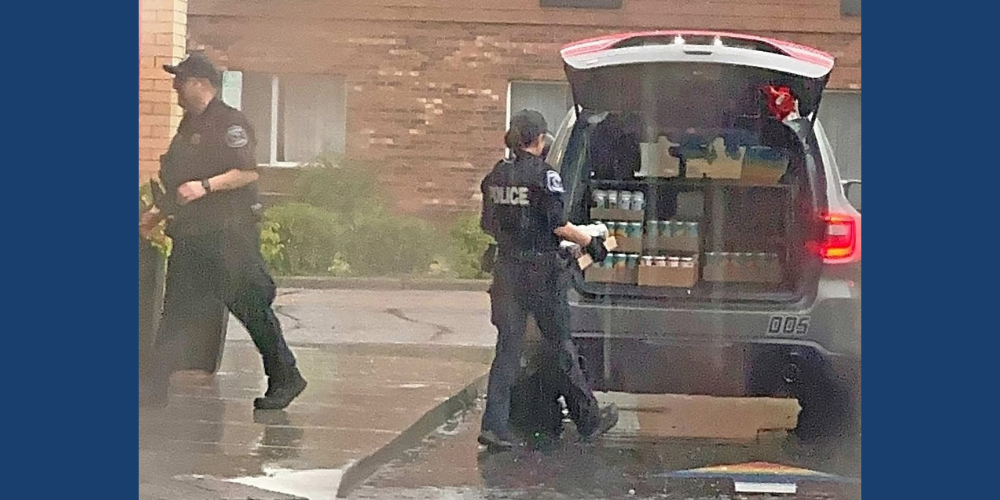
Bangstad’s own July 26 account is useful because it lists the alleged violations from his side of the dispute. He described allegations involving an unauthorized retail outlet, shipping-law violations, untaxed beer in an unpermitted warehouse, and under $500 in alleged lost tax revenue. That account should be read for what it is: the owner’s description of the notice and the dispute, not a court finding that the allegations are correct or legally sufficient. [3]
The same distinction applies to the state’s side of the record. News reports can accurately report what DOR said or what a notice was described as saying, but the materials reviewed here do not include a final adjudicated decision resolving each alleged violation. The present record supports a narrower statement: the stated and reported grounds are alcohol-permit compliance allegations connected to transport, tax, retail-outlet, and warehouse rules.
The dollars do not measure the same thing
Three numbers tend to collapse into one proportionality story, but they are measuring different things. The “under $500” figure is Bangstad’s characterization of alleged lost tax revenue. The roughly $25,000 figure is the reported value of seized product. The permit revocation is a licensing remedy, not a simple invoice for unpaid tax. [3][4]
That separation does not make the remedy modest. Revoking operating permits over a dispute that the owner frames as less than $500 in tax revenue is a severe administrative consequence for a small operator. But the legal question is not answered by comparing those two amounts alone. A permit case can turn on authorization to transport, store, sell, or warehouse alcohol, not just on whether the tax figure is large.
The brewery also filed a Dane County Circuit Court suit after the seizure, raising Commerce Clause and procedural claims tied to the path for remitting about $500 in excise tax. That lawsuit is adjacent to the revocation record and may affect the broader dispute, but it is not itself a ruling that the July 2026 revocation was unlawful. [4][5]
For direct legal verification, the official checkpoints are Wis. Stat. § 125.12(3), the Wisconsin DOR brewers-permit fact sheet, and the DOR fact sheet on selling, donating, and giving away alcohol beverages. This record does not quote their operative language beyond identifying them as official sources to re-check before relying on any statutory or agency-guidance wording. [6][7][8]
Where the free-beer post fits — and where it does not
The January free-beer political post explains why this case is being searched as a speech story. Minocqua Brewing and Bangstad have long been covered through a political lens, and later coverage of the revocation repeated that context. [9]
But political context is not the same thing as an administrative ground. In the materials reviewed, the free-beer post is not listed as the reason DOR revoked the permits. It is not part of the transport theory. It is not part of the Illinois-contract-brewed beer issue. It is not the cited tax-remittance issue, the retail-outlet issue, or the warehouse issue.
That does not mean Bangstad is barred from arguing retaliation. A regulated business can claim that a facially compliance-based action was motivated by protected speech. The point is evidentiary: the record summarized so far does not supply the bridge between the speech and the permit decision.
The missing bridge would be evidence such as an official statement tying the revocation to the post, documents showing speech-driven enforcement selection, comparator evidence showing similarly situated permit holders treated differently, or a demonstrated departure from ordinary agency practice that points toward retaliatory motive. The present materials instead show a revocation notice and seizure story centered on alcohol movement, tax, retail, and warehouse compliance.
The June 2025 federal ruling is relevant, but only in a limited way
A separate federal ruling in June 2025 illustrates the same causation problem. In the parallel Oneida County conditional-use-permit dispute, Judge James Peterson denied Minocqua Brewing’s request for a preliminary injunction, with The Lakeland Times reporting that the court found an evidence problem linking the adverse permit action to protected speech. [10]
That ruling should not be overstated. It was not a merits ruling on the July 2026 DOR revocation. It did not decide whether DOR’s later permit action was lawful. It is useful here because it shows the kind of causation hurdle a retaliation theory faces when the official record identifies permit or land-use grounds and the claimant says the real reason was speech.
The same caution applies to other online-conduct background involving the brewery. Unless a document connects that conduct to the revocation grounds, it remains background. It should not be used to thicken the state’s compliance theory or to prove Bangstad’s retaliation theory by implication.
Current posture
As last verified on Aug. 3, 2026 UTC, the reported administrative posture is this: Wisconsin DOR revoked Minocqua Brewing Company permits, the effective date was reported as Aug. 4, 2026, and the brewery was reported as allowed to keep operating during appeal. Because that effective date is imminent, the appeal status and any stay-related details should be re-checked against current filings and agency statements before this record is reused. [1][2]
On the present record, the revocation points to alcohol-permit compliance allegations tied to transport, shipping, excise tax, retail-outlet authorization, and warehouse rules for Illinois-contract-brewed beer. The political-speech theory remains Bangstad’s allegation. It may be litigated, but it requires causation evidence that is not supplied by the stated grounds summarized in the materials reviewed.
References
- Minocqua Brewing Company permit revoked by state, Bangstad says — Milwaukee Journal Sentinel — July 27, 2026
- State revokes brewing license for Kirk Bangstad — Wisconsin Public Radio
- In an absurd act of heavy-handedness — Minocqua Brewing Company Times — July 26, 2026
- Minocqua Brewing Company sues Wisconsin DOR after beer seizure — WTMJ — June 18, 2026
- Bangstad’s Minocqua Brewing Company sues over beer seizure — WisPolitics
- 125.12 Revocations, suspensions, refusals to issue or renew — Wisconsin Legislature
- Brewers Permits — Wisconsin Department of Revenue
- Selling, Donating, and Giving Away Alcohol Beverages — Wisconsin Department of Revenue
- Wisconsin’s anti-Trump brewery gets operation permit revoked — New York Post — July 28, 2026
- Bangstad again hits a judicial brick wall — The Lakeland Times — June 27, 2025
Operationalizing workflow
No workflow has been explicitly linked to this obligation yet. See Workflows generally.
Illustrative cases
No illustrative case is currently tracked for this obligation. See Risk Digest for documented incidents generally.
← Back to RegulationReport a correction or tip
Spotted an outdated figure, a misstated fact, or a ruling this regulation entry should reflect? Public comments are disabled for this content given the professional cost of a misreported case outcome, penalty amount, or rule text — use the structured correction channel instead.
Report a correction or tip for this record →