
The NCAA Agent Transportation Rule Remains a Suspension Risk in 2025
- Authority
- NCAA
- Rule type
- regulation
- Jurisdiction scope
- US federal
- Effective date
- Jul 30, 2026
- Source text
- Read primary rule text ↗
Athletes prohibited from accepting transportation from agents; agents must notify under SPARTA.
Tennessee linebacker Arion Carter’s July 2026 suspension is a compact file, which is why it is useful. The reported benefit was a $427.48 flight paid by an agent. Tennessee classified the matter as a Level III violation. Carter was initially withheld for three games, then had the penalty reduced to two games on appeal. Those facts make the case a better guide to NCAA suspension rules for athlete benefits and flight violations in 2025–26 than another generalized argument about whether NIL changed college sports for good or for worse.[1]
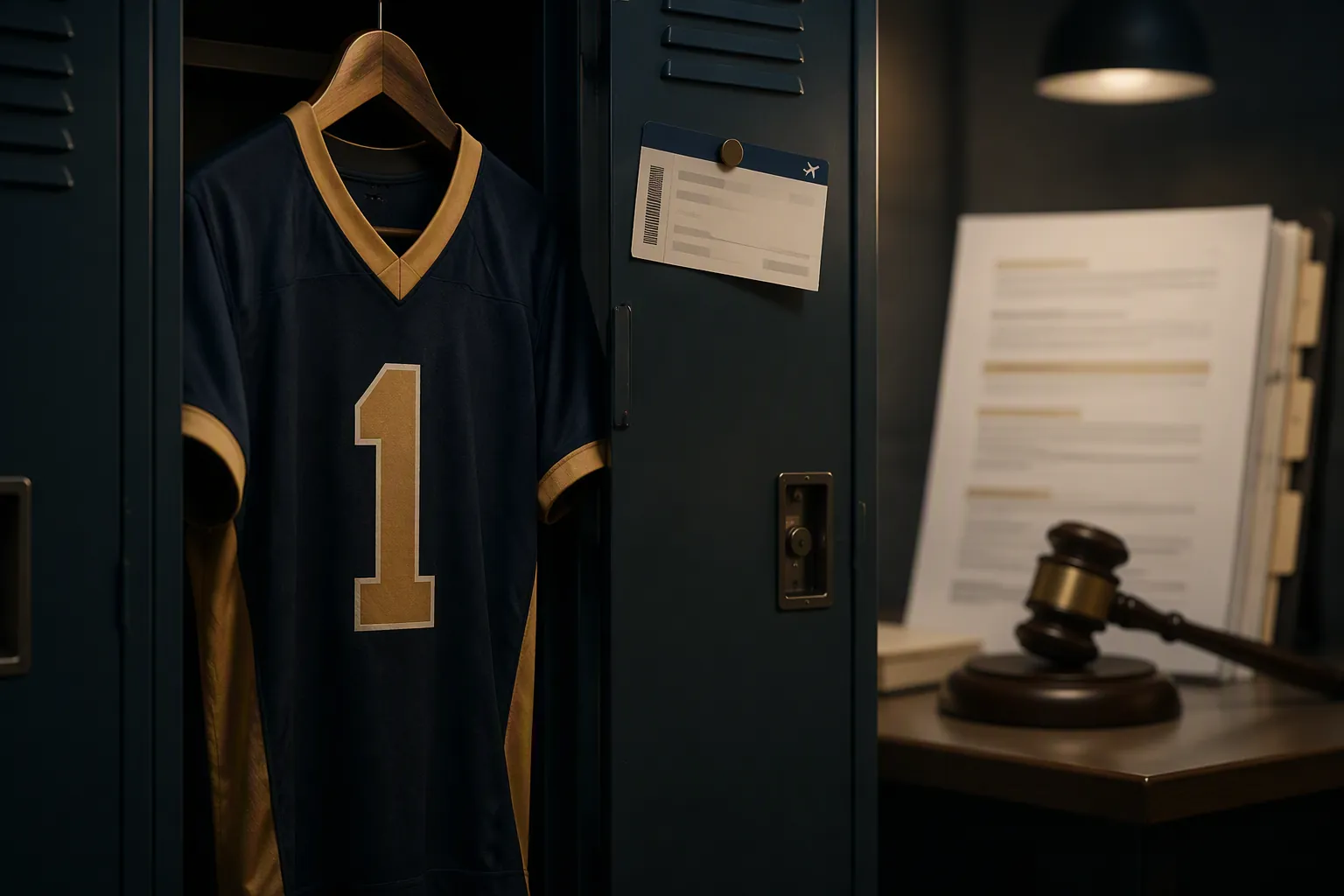
The dollar amount is not the point by itself. In ordinary institutional life, $427.48 is the sort of expense that can disappear into a travel reconciliation. In NCAA eligibility work, the first question is not whether the amount feels large enough to justify missing games. It is who provided the thing of value, why that person was in the athlete’s orbit, which rule governed the contact, and whether anyone documented the transaction before it became a reinstatement matter.
The operative rule is not obscure. NCAA Bylaw 12.3.1.2, as reproduced on the University of Georgia compliance site, provides: “An individual shall be ineligible per Bylaw 12.3.1 if he or she (or his or her relatives or friends) accepts transportation or other benefits from: (a) Any person who represents any other person in the marketing of his or her athletics ability. The receipt of such expenses constitutes compensation based on athletics skill and is an extra benefit not available to the student body in general; or (b) An agent who has indicated that he or she has no interest in representing the student-athlete and does not represent athletes in the student-athlete’s particular sport but who nevertheless provides benefits to the student-athlete.”[2]
That language matters because it treats transportation as its own eligibility problem. It does not require a lavish vacation, a signed professional contract, or a successful draft declaration. The December 2025 NCAA education memo, as quoted by Saturday Down South, reportedly warned athletes against accepting “money, transportation, dinner, clothes, cell phones, jewelry” from agents.[3] Carter’s flight therefore does not read as a legacy-rule accident that happened to survive inside NIL confusion. The warning was current, and transportation was named.
Why $427.48 still became missed games
A low-dollar benefit can still sit in a high-risk category. Transportation from an agent is not treated like a generic impermissible meal from a family friend. The compliance problem is the combination: an athlete, a person acting in or near an agency role, and a benefit that moves the athlete from one place to another. Once those facts are present, the reinstatement question becomes less about public optics and more about the guideline band, the athlete’s eligibility status, the school’s report, and whatever mitigation can be shown on appeal.
The reinstatement value bands are important to the Carter file because $427.48 does not sit below every meaningful threshold. Available secondary descriptions of NCAA reinstatement guidance identify tiers at $200, $500, and $800, with corresponding withholding percentages described as 10%, 20%, and 30%. The live NCAA PDF was not available for crawling, so these percentages should be manually checked against the current Division I reinstatement guidance before publication or legal reliance.
| Benefit value described in secondary materials | Withholding percentage described | Publication status |
|---|---|---|
| $200 or less | 10% | Requires live manual verification against NCAA reinstatement guidance |
| More than $200 and up to $500 | 20% | Requires live manual verification against NCAA reinstatement guidance |
| More than $500 and up to $800 | 30% | Requires live manual verification against NCAA reinstatement guidance |
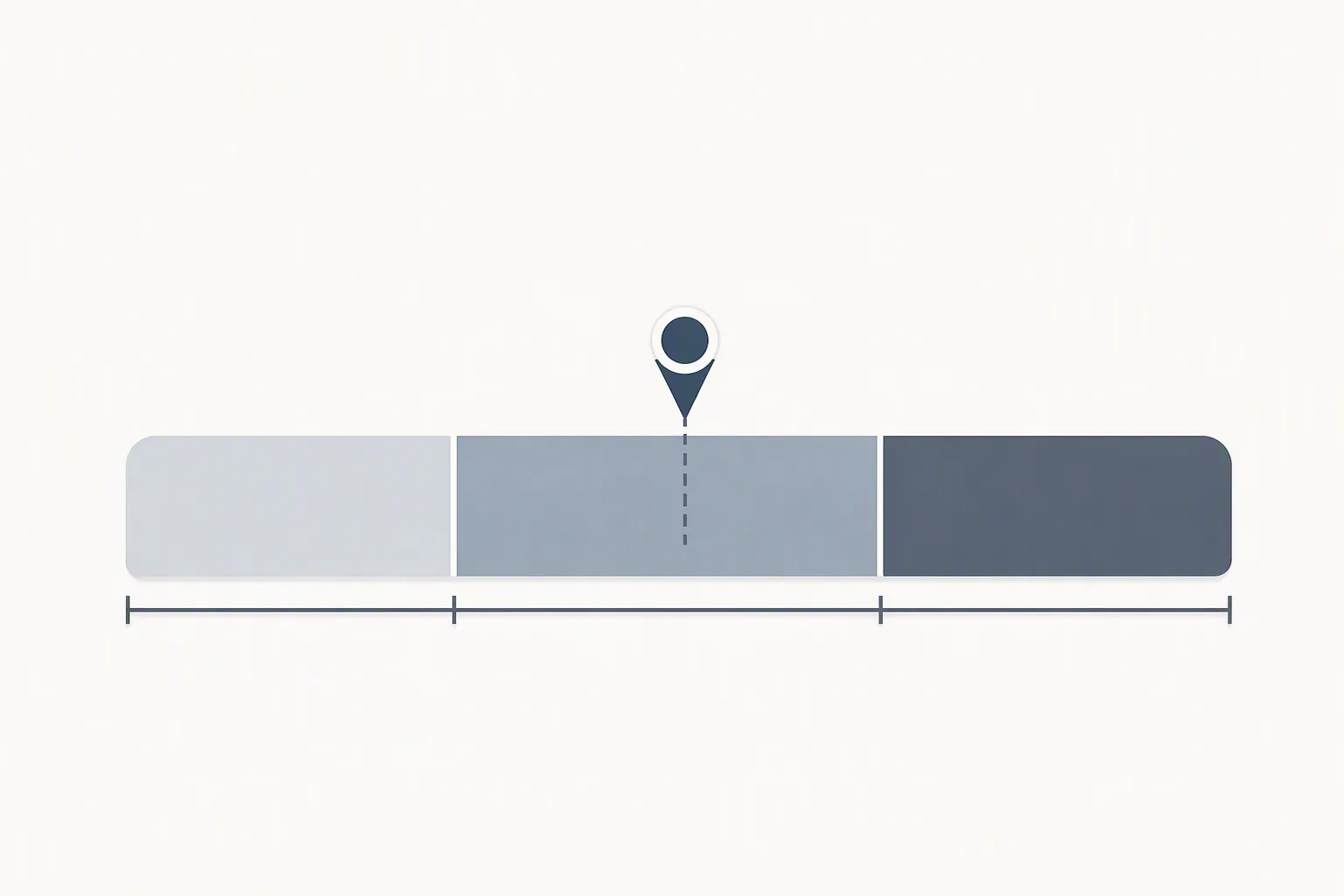
That caveat is not decorative. A school or lawyer should not cite a reconstructed table as if it were the governing NCAA document. But even with that limitation, the operational lesson is visible: Carter’s reported $427.48 benefit fell into the kind of range that can plausibly produce withholding rather than only repayment or education. Tennessee’s three-game starting point and two-game appeal result are consistent with a reinstatement process that still had teeth, even if the amount would not impress anyone outside the eligibility context.[1]
The case therefore proves something narrower, and more useful, than a broad “NCAA crackdown” narrative. It shows that Bylaw 12.3.1.2 remained administrable after NIL became ordinary commercial vocabulary. The NCAA did not need to prove that the agent bought Carter’s future professional representation, and it did not need to unwind a complicated endorsement arrangement. It needed a transportation benefit, an agent connection, and an eligibility rule that still attached consequences to that combination.
The NIL-agent label does not solve the sports-agent problem
The dangerous compliance habit in 2026 is treating “agent” as a single category because NIL contracts have made athlete representation more common. NIL marketing representation and professional sports-agency representation may involve the same conversations, the same athlete, and sometimes the same business ecosystem. They are not compliance equivalents once transportation, draft advice, inducements, or professional-contract representation enters the file.
A clean NIL file answers one set of questions: What service is being purchased? What deliverable is owed? Who is paying? Is the compensation tied to real promotional activity? Has the school received the required disclosure under its policy and applicable law? An agent-benefit file asks different questions: Did someone who represents athletes, or who is positioning to represent the athlete, provide transportation or another benefit? Was the benefit available to the student body generally? Was the athlete being assisted in relation to athletic ability, draft status, or professional opportunity?
Those questions should not be merged just because the athlete has NIL activity. A marketing agent can help negotiate an endorsement deal without buying a flight. A sports agent can discuss professional prospects without creating a transportation record. A booster-adjacent business can pay for disclosed advertising without becoming a travel sponsor. The risk appears when the file does not show which lane the person occupied at the moment the benefit was provided.
Basketball’s test-the-waters pathway sharpens the football gap

The unevenness is not simply “NCAA inconsistency” in the abstract. Men’s basketball has had a test-the-waters structure that permits certain interactions around NBA evaluation while preserving a path back to college competition, provided the athlete satisfies the applicable conditions. Sports Law Expert’s discussion of the NCAA’s 2022 best-practices memo describes the basketball pathway for Division I players seeking NBA opportunities, including the role of NCAA-certified agents in that process.[4]
That basketball comparison has to be used carefully. The specific bylaw citation for the basketball exception was not independently verified against the primary NCAA PDF. It is still useful as a comparison because it identifies the structural difference: basketball players can move through a recognized evaluation pathway with agent-related rules built around that process. Football players do not have an equivalent carveout for accepting transportation from an agent while exploring professional possibilities.
That difference changes compliance advice. A basketball player testing NBA waters may have a formalized set of permitted and prohibited contacts to review. A football player receiving travel assistance from someone in an agency posture faces a more direct Bylaw 12.3.1.2 problem. The NIL era did not harmonize those pathways across sports. If anything, NIL made the vocabulary more crowded while leaving sport-specific exceptions and prohibitions to do their old work.
SPARTA adds a second exposure layer, not a replacement rulebook
For Carter, the federal issue comes after the NCAA eligibility analysis. His missed games arose from NCAA eligibility and reinstatement rules. The Federal Trade Commission’s January 2026 SPARTA inquiry adds a different concern: agent conduct can now draw federal attention at the same time schools are managing NCAA eligibility consequences.
In January 2026, the FTC sent inquiry letters to 20 unnamed Division I universities under the Sports Agent Responsibility and Trust Act. The available reporting describes federal interest in agent practices, including SPARTA’s 72-hour notification rule, its prohibition on pre-contract inducements, and civil penalties reported at up to $53,088 per violation.[5][6] The inquiry letters went to unnamed schools, and the responses are not public in the reviewed sources. That means the inquiry should not be described as a set of findings, a completed enforcement action, or proof that particular universities violated federal law.
The timing still matters. The inquiry arrived after the House settlement had moved college athletics into a revenue-sharing environment beginning in July 2025, a background change that helps explain why athlete-benefit boundaries are being renegotiated so aggressively.[5] More money moving through permissible channels does not make every adjacent payment permissible. It usually makes documentation more important, because the same athlete may now have school revenue-share compensation, NIL endorsements, donor-connected opportunities, marketing representation, draft advice, and sports-agent contact all in the same year.
For university counsel, the SPARTA issue is not merely whether the FTC will sue someone. It is whether the school can reconstruct who knew about an agency relationship, when notification occurred, what was given before any contract, and whether a benefit was treated as NIL compensation when it was actually an inducement or transportation benefit. NCAA reinstatement and federal agent regulation ask different questions, but the same bad facts can travel between them.
Where the files need separation
The practical compliance response is not to tell athletes that agents are off limits in every setting. That is no longer the world schools operate in. The better response is to keep separate records for separate legal questions, especially when the same person or business may appear in more than one role.
- NIL marketing representation: identify the representative, the contract, the promotional deliverables, the payment source, and the school disclosure record.
- Professional sports-agent contact: document whether the person represents athletes for professional opportunities, whether any agency contract exists, and whether any SPARTA notification duty has been triggered.
- Transportation and other benefits: record who paid, who booked, who traveled, the value, the purpose of the trip, and whether the benefit was available to students generally.
- Draft or professional evaluation advice: separate permitted educational conversations from representation, inducement, travel, lodging, meals, or other things of value.
- Appeal and reinstatement materials: preserve mitigation facts early, including athlete education, timing of disclosure, repayment, cooperation, and whether the institution had previously circulated current NCAA guidance.
Carter’s case is a warning because it is ordinary enough to recur. A flight is easy to accept, easy to rationalize, and easy to misfile as part of the modern athlete marketplace. But Bylaw 12.3.1.2 still makes transportation from an agent an eligibility event. Football and basketball do not present the same agent-benefit pathway. SPARTA now gives agent conduct a federal overlay. The exact reinstatement percentages, the primary-source basketball bylaw citation, and the FTC inquiry outcomes remain verification points; the enforceability of the transportation prohibition does not.
References
- Arion Carter suspended by NCAA for Tennessee football violation before 2026 season — Knox News, July 29, 2026
- NCAA Agent Legislation — University of Georgia Athletics Compliance
- Tennessee LB Arion Carter to miss 2 games following NCAA suspension for $427 flight — Saturday Down South
- Testing The Waters: The NCAA Issues A Memo About Best Practices For DI Basketball Players Seeking A Career In The NBA — Sports Law Expert, March 10, 2022
- This is SPARTA: The FTC’s Formal Inquiry and a Sea Change in Federal Oversight of College Sports Agents — NIL Revolution, January 2026
- The FTC Blows the Whistle: First-Ever Enforcement Inquiry into College Sports Agents Under SPARTA — Stinson LLP
Operationalizing workflow
No workflow has been explicitly linked to this obligation yet. See Workflows generally.
Illustrative cases
No illustrative case is currently tracked for this obligation. See Risk Digest for documented incidents generally.
← Back to RegulationReport a correction or tip
Spotted an outdated figure, a misstated fact, or a ruling this regulation entry should reflect? Public comments are disabled for this content given the professional cost of a misreported case outcome, penalty amount, or rule text — use the structured correction channel instead.
Report a correction or tip for this record →