
No emergency exception for Ceuta's mass returns
- Authority
- EU; Spain; European Court of Human Rights
- Rule type
- regulation
- Jurisdiction scope
- Ceuta and Spain; EU; ECHR
- Effective date
- Jun 12, 2026
- Source text
- Read primary rule text ↗
Screen and individually assess each person before removal; no collective expulsion.
| Record field | Current status |
|---|---|
| Category | Regulation & Ethics |
| Last verified | 2026-08-03 00:00 UTC |
| Legal-background reviewer | Sofia Martín Vega, EU border-procedure editor |
| Jurisdiction scope | Ceuta and Spain; EU border, asylum, screening, and return law; European Convention on Human Rights |
| Non-advice notice | Legal information only. This record is not legal advice and does not assess any individual person’s claim. |
| Current status question | Did the Ceuta migrant emergency suspend individual assessment before return? |
| Answer | No. The July 2026 operation took place after the EU screening, asylum-procedure, and return border-procedure instruments became applicable on 12 June 2026; the European Parliament-approved Return Regulation was still awaiting Council adoption; and ECHR collective-expulsion limits continued to apply. [1][2][3] |
This record is filed in Regulation & Ethics because the live question is not whether Ceuta faced an exceptional operational event. It is which return route was lawfully available for each person, under the rules actually binding at the time.
The dates that controlled the July operation
| Date | Legal status | Effect for July 2026 returns |
|---|---|---|
| 12 June 2026 | The Screening Regulation, Asylum Procedures Regulation, and Return Border Procedure Regulation became applicable. [1][2] | Authorities could not treat July arrivals as falling into a pre-screening gap. Screening, routing, information, remedy, and monitoring obligations had to be addressed in the file. |
| 17 June 2026 | The European Parliament approved the proposed Return Regulation by 418 votes to 218, with 30 abstentions, but the text still awaited final Council adoption. [3] | The approved Return Regulation was not the governing return instrument for the July operation. |
| 29 June 2026 | Spain’s Supreme Court issued STS 814/2026 on the domestic rechazo en frontera route. [4] | Additional Provision Ten could not be used for open-water arrivals or detections by surveillance technology alone. |
| July 2026 | Ceuta’s emergency operation occurred after the 12 June EU instruments applied and before the new Return Regulation entered into force. [1][3] | Directive 2008/115/EC remained the ordinary-return baseline where the special border procedure did not govern. |
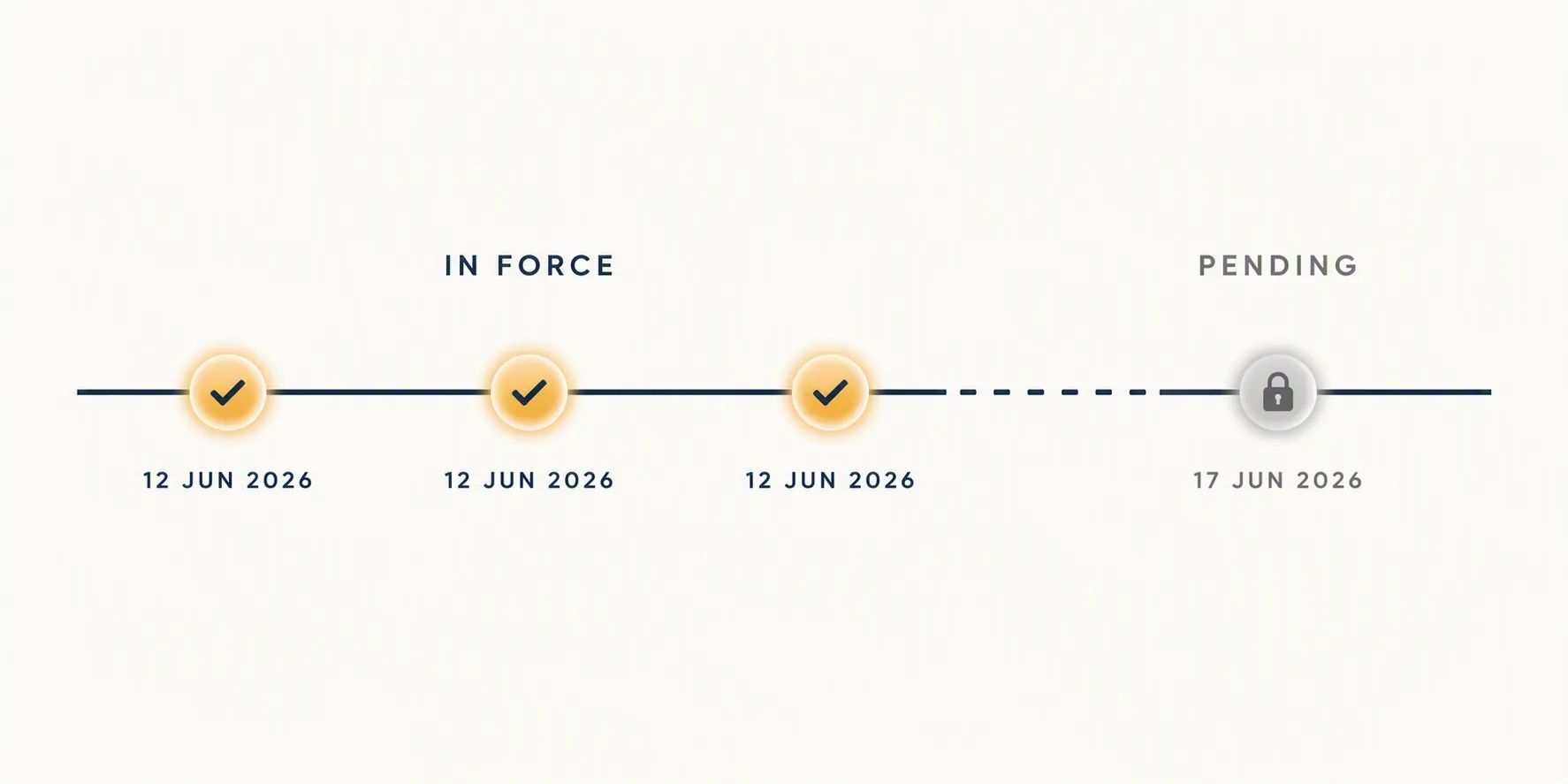
The mistake to avoid is small in wording and large in consequence: parliamentary approval is not entry into force. For July 2026, the operative question is not what the future Return Regulation may change after final adoption. It is whether each person removed from Ceuta was processed under a lawful route available under EU law, Spanish law, and the Convention system on the day of removal.
“Returned” is not a legal category
A mass-arrival record can say that thousands left Ceuta. It still does not answer the legal question. “Returned,” “devolved,” “rejected at the border,” “assisted return,” and “handover” describe different legal routes, different decision-makers, and different proof problems. If they are collapsed into one total, the number may describe movement, but it does not establish legality.
| Label used in reporting or files | Possible legal route | What the record would need to show | Why an aggregate “returned” figure is insufficient | Main exposure if the trail is missing |
|---|---|---|---|---|
| Voluntary departure | A person leaves without a coercive return decision. | Identity link, language-access record, absence of coercion, timing, and whether any protection claim or vulnerability was raised. | A departure count does not show whether departure was voluntary for each person. | A formally voluntary exit may be challenged as an unrecorded removal if pressure, custody, or lack of information drove the departure. |
| Assisted return | Organized support for a person who agrees to leave. | Consent, program basis, destination, assistance offered, and screening or protection-claim handling before departure. | Assistance does not cure a missing assessment of risk or claim to protection. | The record may fail if consent is not person-specific or if protection indicators were bypassed. |
| Devolución | A Spanish-law return route for certain unlawful-entry situations. | Individual legal basis, identity or registration link, decision trail, notification, available remedy information, and non-refoulement assessment. | The same word can be used loosely in public reporting while the legal file requires a defined domestic basis. | The measure may be attacked as a return decision without the safeguards required by EU and Convention law. |
| Rechazo en frontera | Rejection at the border under Additional Provision Ten of LO 4/2000. | Detection while attempting to overcome border containment elements, plus the EU and ECHR safeguards that still apply. | STS 814/2026 limits this domestic route to people detected while attempting to overcome border containment elements; open water and surveillance technology are not those elements. [4] | Use of rechazo for swimmers or maritime interceptions risks being outside the domestic statutory gateway before EU or ECHR questions are even reached. |
| Bilateral readmission | Transfer under a readmission arrangement or bilateral operational route. | Person-level legal basis, state receiving the person, protection-claim handling, remedy information, and monitoring trail. | A state-to-state channel does not by itself answer whether this person could lawfully be sent there. | Exposure concentrates on non-refoulement, collective-expulsion, and remedy defects. |
| Direct handover | Immediate transfer to another authority without a visible individual decision route. | The file would need to identify the officer action, legal power, person, timing, receiving authority, and safeguards applied. | If the only proof is a movement total, the route may be indistinguishable from an informal pushback. | This is the highest-risk category where there is no individualized decision record or monitoring trail. |
Wire reporting cited provisional scale figures of roughly 49,000 to 60,000 crossings and about 48,300 departures or returns by 31 July 2026. Those figures may be operationally important, but they do not identify which people left voluntarily, which were processed under an enforceable decision, which requested protection, which were children or otherwise vulnerable, and which were transferred without a traceable legal route. [5]

What the 12 June instruments required before removal
The Screening Regulation matters because it sits before the later label. It is the stage at which a person’s presence at the external border must be registered and routed rather than absorbed into an undifferentiated crowd. The ordinary screening frame is seven days from apprehension, and the regulation requires an independent fundamental-rights monitoring mechanism for substantiated allegations of violations. [1]
That does not mean every person must enter the same full asylum track. It means the authority must be able to show why a person went into one route rather than another: asylum border procedure, return border procedure, ordinary return, voluntary or assisted departure, or a lawful refusal/rejection route. The live safeguard is not the label printed at the end. It is the recorded handling of identity, information, protection indicators, vulnerability, remedy access, and monitoring.
The Return Border Procedure Regulation is also not a free-standing shortcut. The EUR-Lex summary describes the RBPR as establishing a return border procedure linked to the Asylum Procedures Regulation. It is part of the post-12 June architecture, not an emergency license to remove a group without person-level routing. [2]
The Return Regulation correction
The proposed Return Regulation should be kept in the file, but in the correct column. Parliament approved it on 17 June 2026; ECRE reported the 418–218–30 vote and the fact that final Council adoption was still pending. That makes it legally decisive in the opposite direction from some headlines: it could not be cited as the applicable return instrument for July 2026. [3]
Where ordinary return law governed, Directive 2008/115/EC remained the baseline. The newer June instruments may alter routing at the border, and the future Return Regulation may alter the framework after it enters into force, but neither point removes the need to identify the lawful route used for each person in July.
N.D. and N.T. is a narrow exception, not a crowd-control rule
The Strasbourg starting point is Article 4 of Protocol No. 4: collective expulsion is prohibited. The difficult case for Spain is N.D. and N.T. v. Spain, but it does less work than broad summaries often make it do. The Grand Chamber found no violation on 13 February 2020 in applications 8675/15 and 8697/15, in the specific setting of an unauthorized group attempt to cross the Melilla border fences, where the Court also examined whether genuine and effective access to legal entry channels existed. [6]
That second condition is not decorative. N.D. and N.T. does not say that a state may remove any group that arrives irregularly. It says that, on those facts, the applicants’ own conduct and the availability of genuine and effective legal-entry channels were central to the Grand Chamber’s no-violation finding. Remove the fence-crossing setting, remove effective access to lawful entry, add children, maritime interception, or an expressed protection claim, and the case no longer supplies the same answer.
That is why the earlier Chamber ruling of 3 October 2017 remains worth remembering even though it was later displaced in outcome by the Grand Chamber. The Chamber had treated pushback of migrants at external EU borders as unlawful; the Grand Chamber did not create a general emergency exception, but resolved the case through a narrower factual and procedural route. [7][6]
The cases outside the fence scenario point the other way. Hirsi Jamaa v. Italy concerned group return to Libya from the high seas and resulted in findings of violations of Article 3, Article 4 of Protocol No. 4, and Article 13. M.H. and Others v. Croatia concerned summary return of a family with children and produced an Article 4 of Protocol No. 4 violation. Those cases are not interchangeable with N.D. and N.T.; they mark the categories that cannot be waved through by calling the situation a mass event. [1]
Non-refoulement sharpens the point. Refugee Convention Article 33(1) operates through refugee status and has narrow Article 33(2) exceptions; ECHR Article 3 and CAT Article 3 are absolute in the relevant sense and are not displaced by irregular entry. Where an Article 3 risk is raised, administrative tidiness and border pressure do not answer it. [1]
STS 814/2026 closes the sea-return shortcut under Spanish law

Spanish domestic law adds a separate constraint. In STS 814/2026, issued on 29 June 2026, the Supreme Court confirmed that the law does not permit hot returns of migrants who try to enter Ceuta or Melilla by swimming. The court read Additional Provision Ten of Organic Law 4/2000 as covering only people detected while attempting to overcome border containment elements. Open water is not such an element; neither is detection by surveillance technology alone. [4]
That holding matters for any July file that tries to treat swimmers, maritime arrivals, or sea interceptions as rechazo en frontera. If the person was not detected while attempting to overcome a qualifying containment element, the domestic statutory door is closed before one even reaches the EU screening duties or the ECHR collective-expulsion analysis.
EJIL:Talk’s analysis of the ruling notes the court’s obiter suggestion that installing physical containment at sea could, in theory, reactivate the regime. That is not the same as saying the regime already covered the sea in June or July 2026. It also would not cancel the EU and ECHR layers if such a structure were later created. [8]
This is STS 814/2026. It should not be blurred with separate Spanish Supreme Court litigation about the 2024 Aliens Regulation and minors’ care duties. The sea-return rule comes from the June judgment on the scope of Additional Provision Ten.
Emergency facts set context, not legal authority
The July emergency context is real enough for risk analysis. Wire reporting described an exceptional arrival pattern, a government emergency response, provisional crossing estimates in the tens of thousands, and about 48,300 departures or returns by 31 July. Those facts explain pressure on reception, policing, registration, and transport systems. They do not identify a lawful route of return for any particular person. [5]
Amnesty International’s 29 July 2026 statement framed the event as an exceptional arrival of people in Ceuta and urged Spain to keep human rights, dignity, and humanity central in its response. That is an advocacy source, not a return decision record, but it marks the same operational fault line: the people affected had to remain legally visible as individuals. [9]
Death toll reporting should be handled with similar caution. As of this record’s verification date, the reviewed materials did not provide a final official registry that could be treated as settled for legal analysis. A death figure may be relevant to accountability or factual reconstruction, but it should not be inserted as if it were the legal answer to the return question.
Where the exposure sits
For an authority, the exposed file is the one that can show movement but not decision. A bus list, port transfer list, or border tally may prove that a person left Ceuta. It does not prove that screening occurred within the applicable frame, that protection indicators were handled, that a remedy was available where required, or that an independent monitoring trail existed for substantiated allegations of violations.
For migrants’ counsel, the strongest challenge is not usually the broad claim that many people were returned. It is the narrower demand for the state to identify the lawful route used for this person: voluntary departure, assisted return, devolución, rechazo en frontera, bilateral readmission, or direct handover. Once the route is identified, the file can be tested against the conditions attached to that route.
For legal journalists, the safest wording is also the most legally useful. “Returned” should be treated as an operational verb unless the article can identify the return basis. “Rejected at the border” should be reserved for the domestic rechazo route and its limits. “Devolved” should not be used as a loose synonym for any departure. A headline that erases the category may also erase the very safeguard that determines legality.
The Ceuta emergency did not suspend individual assessment before return. If authorities cannot show an individualized lawful route for each person, the emergency setting does not cure the defect; it makes the recordkeeping, screening, remedy, and fundamental-rights monitoring duties more consequential.
References
- Ceuta Migrant Crisis: EU Law, Schengen and Mass Returns — Diplomacy and Law
- Return Border Procedure Regulation (RBPR) — EUR-Lex
- European Parliament Approval of the Return Regulation — ECRE, 2 July 2026
- El Tribunal Supremo confirma que la ley no permite las “devoluciones en caliente” de los migrantes que pretenden entrar a nado en Ceuta y Melilla — CGPJ
- Ceuta migrant crossing Morocco border — Fox 5 DC
- N.D. AND N.T. v. SPAIN — European Court of Human Rights, 13 February 2020
- European Court of Human Rights rules pushback of migrants at external EU borders unlawful — EIN, 3 October 2017
- The Spanish Supreme Court on Rejection at the Borders of Ceuta and Melilla: What About Human Rights at Sea? — EJIL:Talk!, 30 July 2026
- Spain: Ensure human rights, dignity and humanity are central in response to exceptional arrival of people in Ceuta — Amnesty International, 29 July 2026
Operationalizing workflow
No workflow has been explicitly linked to this obligation yet. See Workflows generally.
Illustrative cases
No illustrative case is currently tracked for this obligation. See Risk Digest for documented incidents generally.
← Back to RegulationReport a correction or tip
Spotted an outdated figure, a misstated fact, or a ruling this regulation entry should reflect? Public comments are disabled for this content given the professional cost of a misreported case outcome, penalty amount, or rule text — use the structured correction channel instead.
Report a correction or tip for this record →