
State-by-State Impact of Permanent Daylight Saving Time Laws
- Authority
- U.S. Congress
- Rule type
- statute
- Jurisdiction scope
- US state
- Source text
- Read primary rule text ↗
Continue seasonal DST; monitor federal action on Sunshine Protection Act.
Current legal answer after the House vote
As of July 25, 2026, the state-by-state legal impact of permanent daylight saving time laws remains contingent rather than operative. H.R.139, the Sunshine Protection Act, passed the House 308–117 on July 14, 2026, but House passage did not amend the federal time statute and did not activate state trigger laws by itself.[1] Nineteen states have enacted conditional permanent-DST laws, while Hawaii and most of Arizona already remain on permanent standard time.[2][3] For the other states, the ordinary seasonal clock change remains the working compliance assumption unless Congress changes federal law.
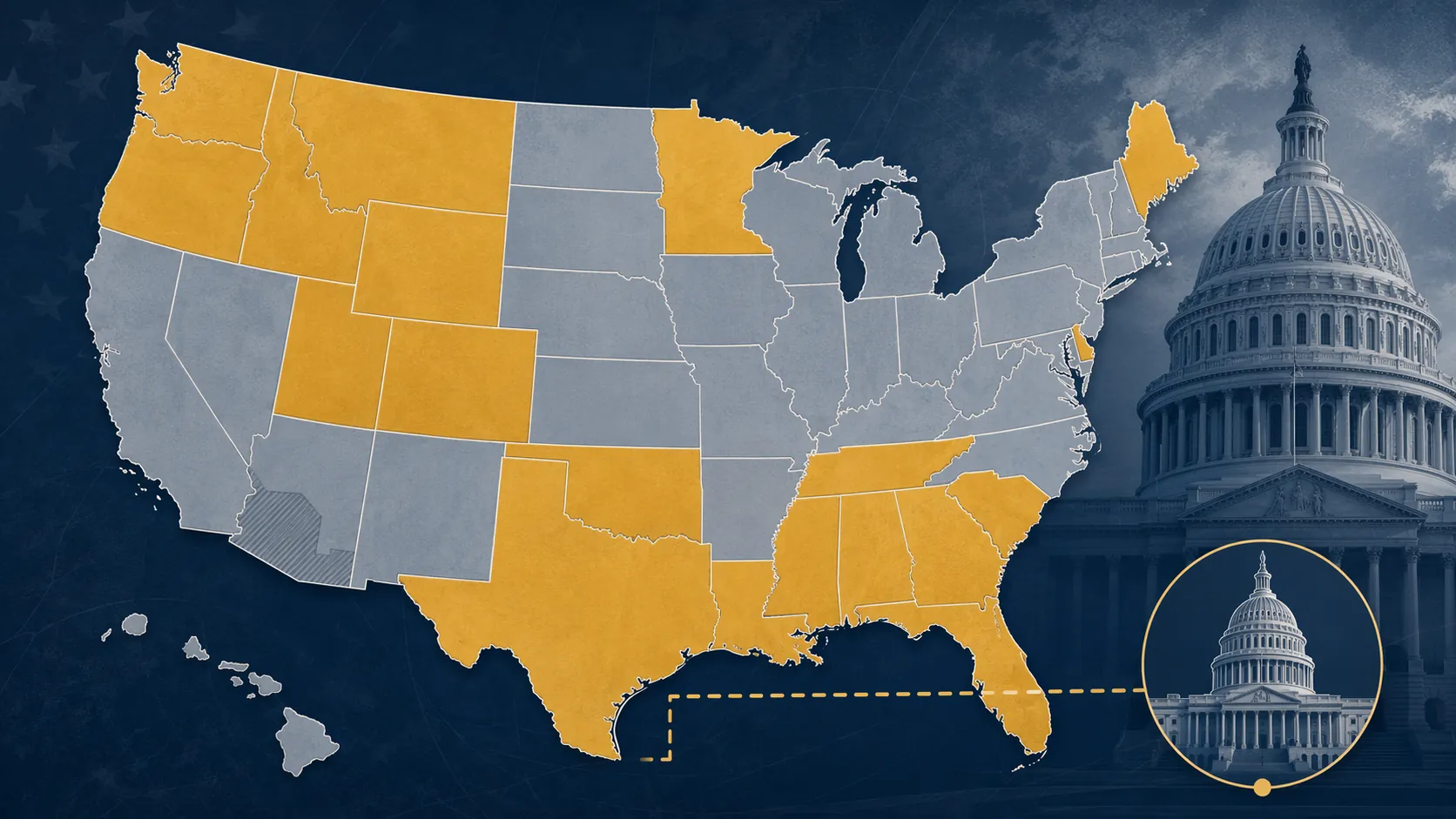
The tracker below separates enacted law from pending legislation, failed 2026 measures, and already-standard-time jurisdictions. It is last verified July 25, 2026. The nineteen-state enacted list is drawn from cross-cited reporting that identifies the National Conference of State Legislatures as the underlying source; direct NCSL verification was not available for this article, so state-specific entries should still be checked against legislative portals before a filing calendar or client alert treats them as final.[2][3][4][5]
| State | Current observance | Enacted conditional permanent-DST law | 2026 bill status supplied | Federal dependency or trigger note |
|---|---|---|---|---|
| Alabama | Seasonal DST under the federal baseline | Yes | No 2026 status supplied | Would require federal permission for permanent DST |
| Alaska | Seasonal DST under the federal baseline | No enacted conditional law identified in supplied sources | No 2026 status supplied | No supplied trigger law to activate |
| Arizona | Permanent standard time in most of the state; Navajo Nation observes DST | No | No 2026 status supplied | Already permitted because federal law allows permanent standard time |
| Arkansas | Seasonal DST under the federal baseline | No enacted conditional law identified in supplied sources | No 2026 status supplied | No supplied trigger law to activate |
| California | Seasonal DST under the federal baseline | No enacted conditional permanent-DST law identified in supplied sources | No 2026 status supplied | Relevant to Oregon because Oregon's law depends on California and Washington action |
| Colorado | Seasonal DST under the federal baseline | Yes | No 2026 status supplied | Requires federal permission and coordination with at least four Mountain-time-zone states |
| Connecticut | Seasonal DST under the federal baseline | No enacted conditional law identified in supplied sources | No 2026 status supplied | No supplied trigger law to activate |
| Delaware | Seasonal DST under the federal baseline | Yes | No 2026 status supplied | Would require federal permission for permanent DST |
| Florida | Seasonal DST under the federal baseline | Yes | No 2026 status supplied | Would require federal permission for permanent DST |
| Georgia | Seasonal DST under the federal baseline | Yes | No 2026 status supplied | Would require federal permission for permanent DST |
| Hawaii | Permanent standard time | No | No 2026 status supplied | Already permitted because federal law allows permanent standard time |
| Idaho | Seasonal DST under the federal baseline | Yes, limited to the Pacific-time-zone portion | No 2026 status supplied | Would require federal permission; supplied enacted status does not cover the whole state |
| Illinois | Seasonal DST under the federal baseline | No enacted conditional law identified in supplied sources | Pending 2026 bill | Pending legislation is not operative law |
| Indiana | Seasonal DST under the federal baseline | No enacted conditional law identified in supplied sources | No 2026 status supplied | No supplied trigger law to activate |
| Iowa | Seasonal DST under the federal baseline | No enacted conditional law identified in supplied sources | No 2026 status supplied | No supplied trigger law to activate |
| Kansas | Seasonal DST under the federal baseline | No enacted conditional law identified in supplied sources | No 2026 status supplied | No supplied trigger law to activate |
| Kentucky | Seasonal DST under the federal baseline | No enacted conditional law identified in supplied sources | No 2026 status supplied | No supplied trigger law to activate |
| Louisiana | Seasonal DST under the federal baseline | Yes | No 2026 status supplied | Would require federal permission for permanent DST |
| Maine | Seasonal DST under the federal baseline | Yes | No 2026 status supplied | Would require federal permission for permanent DST |
| Maryland | Seasonal DST under the federal baseline | No enacted conditional law identified in supplied sources | No 2026 status supplied | No supplied trigger law to activate |
| Massachusetts | Seasonal DST under the federal baseline | No enacted conditional law identified in supplied sources | No 2026 status supplied | No supplied trigger law to activate |
| Michigan | Seasonal DST under the federal baseline | No enacted conditional law identified in supplied sources | No 2026 status supplied | No supplied trigger law to activate |
| Minnesota | Seasonal DST under the federal baseline | Yes | No 2026 status supplied | Would require federal permission for permanent DST |
| Mississippi | Seasonal DST under the federal baseline | Yes | No 2026 status supplied | Would require federal permission for permanent DST |
| Missouri | Seasonal DST under the federal baseline | No enacted conditional law identified in supplied sources | No 2026 status supplied | No supplied trigger law to activate |
| Montana | Seasonal DST under the federal baseline | Yes | No 2026 status supplied | Would require federal permission for permanent DST |
| Nebraska | Seasonal DST under the federal baseline | No enacted conditional law identified in supplied sources | Failed 2026 bill | Failed 2026 bill creates no current trigger |
| Nevada | Seasonal DST under the federal baseline | No enacted conditional law identified in supplied sources | No 2026 status supplied | No supplied trigger law to activate |
| New Hampshire | Seasonal DST under the federal baseline | No enacted conditional law identified in supplied sources | No 2026 status supplied | No supplied trigger law to activate |
| New Jersey | Seasonal DST under the federal baseline | No enacted conditional law identified in supplied sources | Pending 2026 bill | Pending legislation is not operative law |
| New Mexico | Seasonal DST under the federal baseline | No enacted conditional law identified in supplied sources | Failed 2026 bill | Failed 2026 bill creates no current trigger |
| New York | Seasonal DST under the federal baseline | No enacted conditional law identified in supplied sources | Pending 2026 bill | Pending legislation is not operative law |
| North Carolina | Seasonal DST under the federal baseline | No enacted conditional law identified in supplied sources | No 2026 status supplied | No supplied trigger law to activate |
| North Dakota | Seasonal DST under the federal baseline | No enacted conditional law identified in supplied sources | No 2026 status supplied | No supplied trigger law to activate |
| Ohio | Seasonal DST under the federal baseline | No enacted conditional law identified in supplied sources | No 2026 status supplied | No supplied trigger law to activate |
| Oklahoma | Seasonal DST under the federal baseline | Yes | No 2026 status supplied | Would require federal permission for permanent DST |
| Oregon | Seasonal DST under the federal baseline | Yes, limited to the Pacific-time-zone portion | No 2026 status supplied | Requires federal permission and California and Washington action |
| Pennsylvania | Seasonal DST under the federal baseline | No enacted conditional law identified in supplied sources | Pending 2026 bill | Pending legislation is not operative law |
| Rhode Island | Seasonal DST under the federal baseline | No enacted conditional law identified in supplied sources | No 2026 status supplied | No supplied trigger law to activate |
| South Carolina | Seasonal DST under the federal baseline | Yes | No 2026 status supplied | Would require federal permission for permanent DST |
| South Dakota | Seasonal DST under the federal baseline | No enacted conditional law identified in supplied sources | No 2026 status supplied | No supplied trigger law to activate |
| Tennessee | Seasonal DST under the federal baseline | Yes | No 2026 status supplied | Would require federal permission for permanent DST |
| Texas | Seasonal DST under the federal baseline | Yes | No 2026 status supplied | Would require federal permission for permanent DST |
| Utah | Seasonal DST under the federal baseline | Yes | No 2026 status supplied | Would require federal permission for permanent DST |
| Vermont | Seasonal DST under the federal baseline | No enacted conditional law identified in supplied sources | No 2026 status supplied | No supplied trigger law to activate |
| Virginia | Seasonal DST under the federal baseline | No enacted conditional law identified in supplied sources | No 2026 status supplied | No supplied trigger law to activate |
| Washington | Seasonal DST under the federal baseline | Yes | No 2026 status supplied | Would require federal permission for permanent DST; also relevant to Oregon's coordination clause |
| West Virginia | Seasonal DST under the federal baseline | No enacted conditional law identified in supplied sources | Pending 2026 bill | Pending legislation is not operative law |
| Wisconsin | Seasonal DST under the federal baseline | No enacted conditional law identified in supplied sources | No 2026 status supplied | No supplied trigger law to activate |
| Wyoming | Seasonal DST under the federal baseline | Yes | No 2026 status supplied | Would require federal permission for permanent DST |
Why the state laws are still conditional
The operative bottleneck is not state enthusiasm. It is 15 U.S.C. § 260a, the federal daylight-saving-time provision in the Uniform Time Act framework. Under the current federal baseline, a state may stay on standard time, which is why Hawaii and most of Arizona can lawfully avoid seasonal DST. A state may not, on its own, move to permanent daylight saving time.[3][4]
That distinction is easy to lose in a headline and expensive to miss in a compliance tracker. A state statute saying that permanent DST is adopted upon federal authorization is not the same thing as a current effective-date change. The practical entry should read something closer to: enacted trigger law; no present change in civil time; monitor federal authorization; review any state-specific coordination clause.
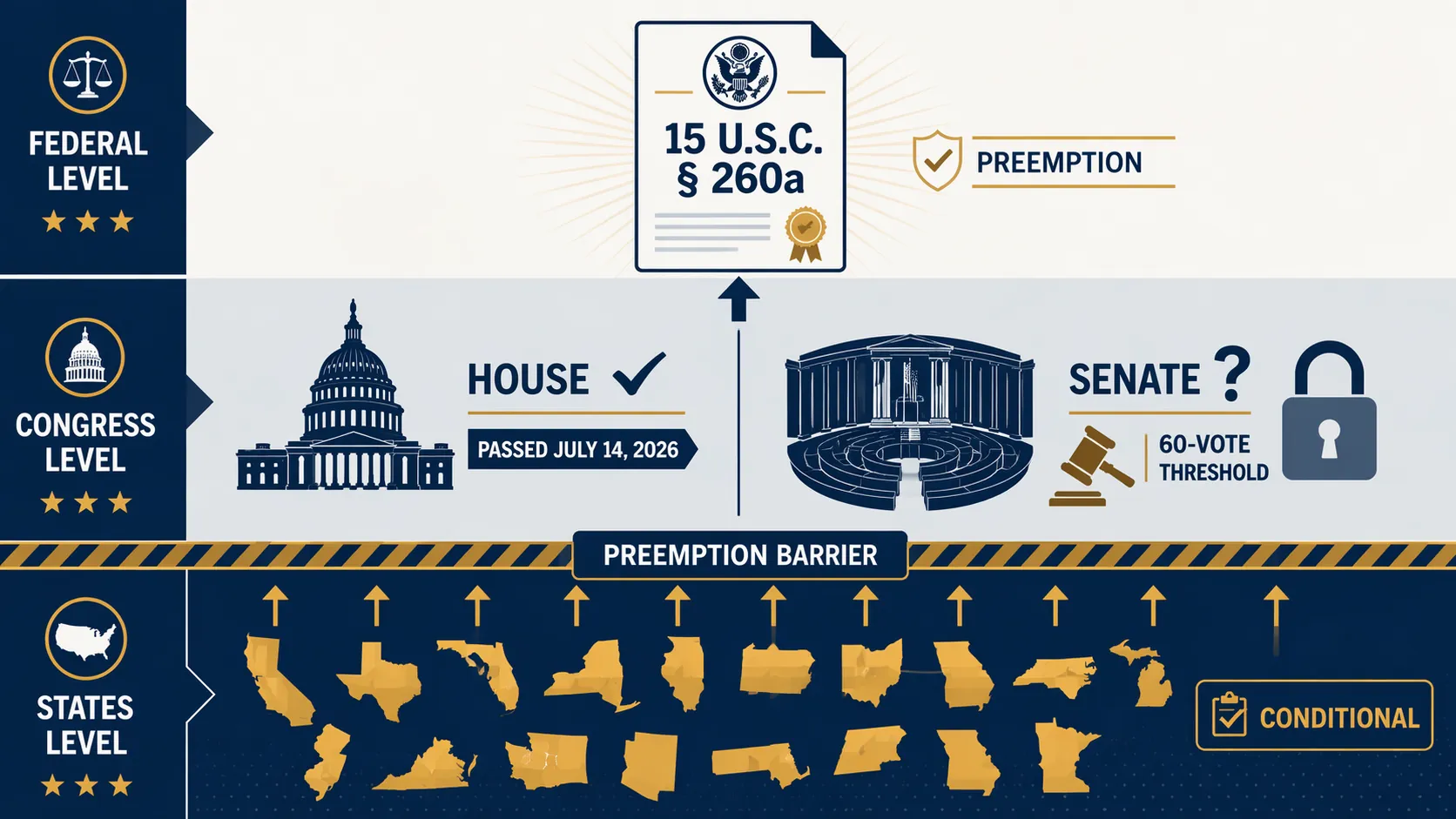
The consequence is asymmetrical. If a state wants permanent standard time, the federal framework already leaves room for that choice. If a state wants permanent DST, Congress must create the permission first. H.R.139 is the current vehicle for that change, but as of this writing it has cleared only the House.[1]
The nineteen enacted states are not one compliance category
For a national map, nineteen enacted states may be a clean count. For legal operations, it is only the first filter. Alabama, Delaware, Florida, Georgia, Louisiana, Maine, Minnesota, Mississippi, Montana, Oklahoma, South Carolina, Tennessee, Texas, Utah, Washington, and Wyoming appear in the supplied materials as enacted conditional permanent-DST states without an additional special clause identified here.[2][3][4][5] They still do not move unless federal law permits the move.
Idaho and Oregon require more careful coding. The supplied enacted status for Idaho is limited to the Pacific-time-zone portion of the state. Oregon is also listed for the Pacific-time-zone portion, and its law is contingent on California and Washington acting as well.[3] A tracker that marks each of those states simply as “permanent DST ready” loses the time-zone boundary in Idaho and the interstate condition in Oregon.
Colorado is another separate row, not just another shaded state. Its supplied trigger requires federal permission and action by at least four Mountain-time-zone states.[3] That means a federal bill alone may not answer the Colorado effective-date question unless the coordination condition is also satisfied.
The pending and failed 2026 measures should be kept out of the enacted bucket. Illinois, New Jersey, New York, Pennsylvania, and West Virginia are identified in the supplied materials as having pending 2026 bills; Nebraska and New Mexico are identified as having failed bills.[4] Pending legislation may matter for partner briefings and lobbying calendars, but it should not be treated as a dormant effective-date rule.
Where the Sunshine Protection Act stands in the Senate
The House vote is a meaningful legislative milestone because it moved H.R.139 out of one chamber by a recorded 308–117 vote on July 14, 2026.[1] It is not an effective-date event. Senate referral, floor time, and the ability to clear the chamber remain the live issues.
The Senate problem is not abstract. Reporting identifies Tom Cotton of Arkansas as a unanimous-consent blocker, Mike Rounds of South Dakota as objecting on dark-morning school-safety grounds, John Thune of South Dakota as expressing caution as Majority Leader, and Gary Peters of Michigan as another named opponent.[2][6] In a chamber where a 60-vote cloture threshold is a material barrier, those objections matter even after a large House vote.
President Trump’s endorsement supplies a political signal, but it does not cure the Senate bottleneck.[2] For docketing purposes, the useful distinction is simple: endorsement may affect momentum; enactment changes the legal baseline.
Why dark winter mornings keep procedural weight
The school-safety objection has a durable procedural memory because the country has already tried a version of year-round daylight saving time. During the 1974 experiment, public support reportedly fell from 79% to 42% after one winter, and Congress cited eight child-pedestrian fatalities in Florida.[6][7] Those figures do not prove that the same policy outcome would recur under a 2026 statute, but they explain why northern-state senators can slow a bill that looks easy on a national preference map.
The geography is also not evenly distributed. Winter sunrise concerns are sharper in northern states and in western edges of time zones, where permanent DST can push school and commute activity deeper into morning darkness. That is the policy pressure sitting behind the procedural question, and it is why Senate opposition should be tracked as a legal-risk variable rather than as ordinary political noise.
Practical tracking notes for counsel
- Do not update effective dates solely because H.R.139 passed the House; no federal authorization for unilateral state permanent DST is in force as of July 25, 2026.
- Separate enacted trigger laws from pending 2026 bills and failed 2026 bills; they carry different compliance significance.
- Code Hawaii and most of Arizona separately as permanent-standard-time jurisdictions, not as permanent-DST jurisdictions.
- Flag Idaho and Oregon for Pacific-time-zone limits, Oregon for California/Washington coordination, and Colorado for its Mountain-time-zone coordination requirement.
- Monitor Senate action and cloture risk alongside state trigger language; either one can determine whether a nominally “ready” state actually changes civil time.
The operating conclusion for Q3 2026 is narrow but important: no state can independently move to permanent daylight saving time under current federal law; nineteen states have enacted conditional permanent-DST laws; and the legal impact remains jurisdiction-specific because several triggers depend on federal action plus additional state or time-zone coordination. House passage belongs in the tracker, but it does not belong in the effective-date column.
References
- H.R.139 (119th Congress), Congress.gov, link
- As Trump touts permanent daylight saving time, 19 states are ready to lock the clocks, The Hill, link
- Permanent time observation in the United States, Wikipedia, link
- Latest Updates on Daylight Saving Time in 2026, Sleep Foundation, link
- Map Shows How Permanent Daylight Saving Would Impact Each State, Newsweek, link
- Permanent daylight saving time: 19 states are poised to 'lock the clock', Cleveland.com, link
- What permanent daylight saving time would look like in your state, The Hill, link
Operationalizing workflow
No workflow has been explicitly linked to this obligation yet. See Workflows generally.
Illustrative cases
No illustrative case is currently tracked for this obligation. See Risk Digest for documented incidents generally.
← Back to RegulationReport a correction or tip
Spotted an outdated figure, a misstated fact, or a ruling this regulation entry should reflect? Public comments are disabled for this content given the professional cost of a misreported case outcome, penalty amount, or rule text — use the structured correction channel instead.
Report a correction or tip for this record →