
What Is the Legal Framework for PJM Demand Response?
- Authority
- FERC
- Rule type
- regulation
- Jurisdiction scope
- US federal
- Effective date
- Apr 21, 2026
- Source text
- Read primary rule text ↗
Verify state opt-out status for third-party aggregation of retail customers under Order 719-A.
Current status after the April 2026 withdrawal
For the PJM demand response legal framework, the practical answer as of Q3 2026 is narrow but important: FERC did not remove the state opt-out for aggregators of retail demand response customers. In Docket No. RM21-14-000, FERC withdrew its notice of inquiry on participation of aggregators of retail demand response customers; the withdrawal was published in the Federal Register at 91 Fed. Reg. 21283 on April 21, 2026. That action left the existing Order 719-A opt-out structure in place rather than replacing it with a new federal rule. This is a legal-framework reference, not advice on whether a particular customer, curtailment service provider, or aggregation may participate in a specific PJM state. [1]
The result is that two older FERC orders still do most of the work. Order 719-A supplies the participation rule and the state opt-out at 18 CFR § 35.28(g)(1)(iii). Order 745 supplies the wholesale compensation rule for demand response accepted in organized wholesale energy markets. Those two orders operate at different points in the analysis, and collapsing them into one loose statement about what FERC “allows” is where many answers become unusable. [2][3]

The jurisdictional seam: wholesale participation and retail permission
Demand response is legally interesting because the market product is made from a customer’s choice not to consume electricity at a particular time. In PJM, that reduction can be offered into wholesale market constructs, but the customer is still a retail customer taking service under state-jurisdictional arrangements. The federal rule and the state retail rule therefore sit on top of the same act of curtailment without answering the same question.
Order 719-A does not say that every retail customer in every state must be available to a third-party aggregator for wholesale demand response. It requires each RTO and ISO to accept bids from aggregators of retail customers unless the laws or regulations of the relevant electric retail regulatory authority do not permit those customers to participate through an aggregator. That last clause is the operative gate. It is not a PJM tariff preference, and it is not merely a state policy view. It is the federally recognized opt-out mechanism now codified at 18 CFR § 35.28(g)(1)(iii). [2]
That is the first check for any PJM retail aggregation. The question is not simply whether PJM has a market product for demand response, or whether FERC has approved wholesale demand response compensation. The question is whether the relevant state retail authority has permitted, barred, or conditioned the participation of retail customers through an aggregator. A yes answer at the wholesale-market level does not cure a no answer at the retail-aggregation level.
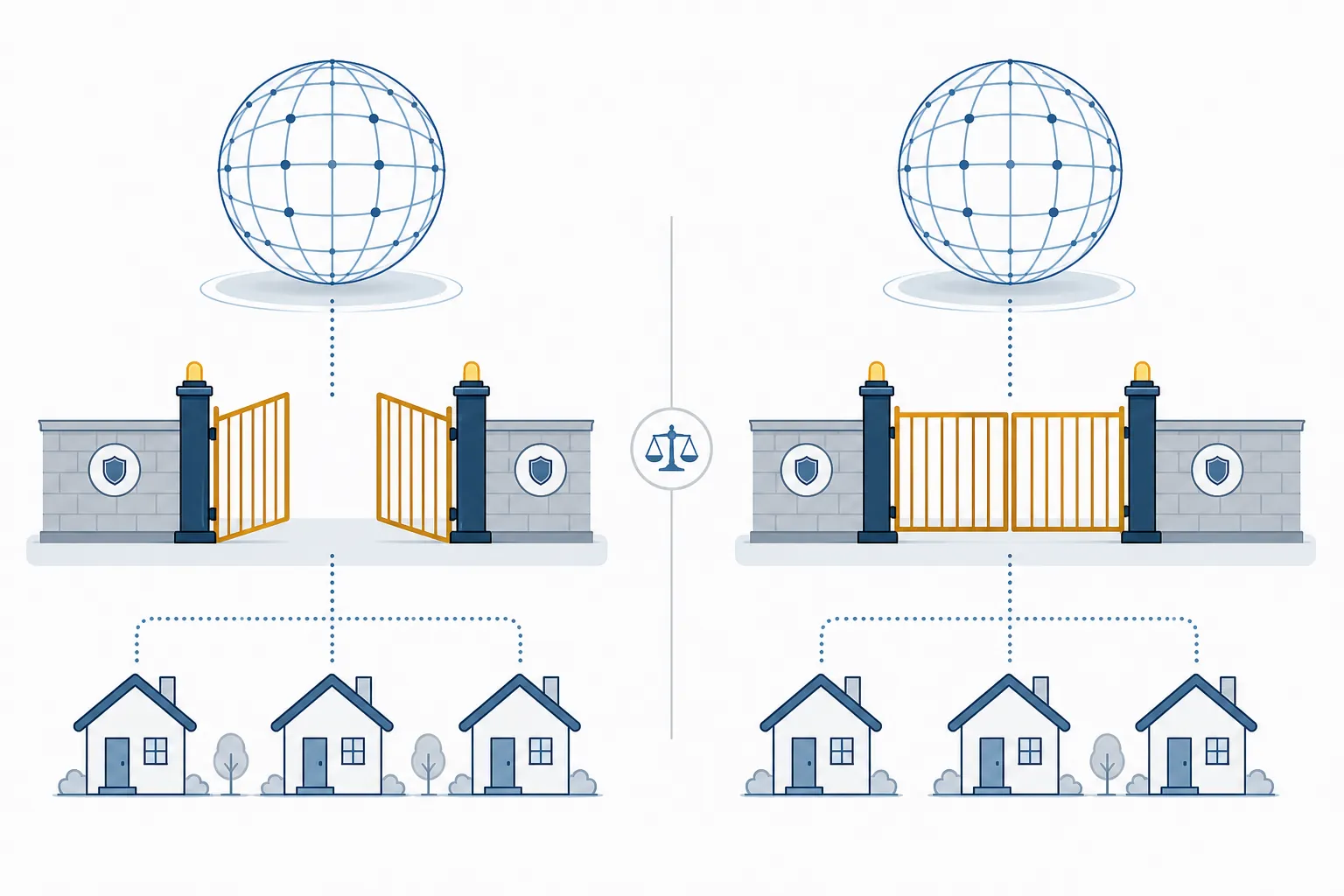
How Order 719-A functions inside a PJM participation analysis
For counsel reviewing a PJM demand response opportunity, Order 719-A turns the legal review into a sequence. PJM’s market rules matter, but they are not the first jurisdictional filter when the resource is a retail aggregation. The first filter is the customer’s retail location and the state-law status of third-party aggregation for that class of customer.
| Question | Why it matters |
|---|---|
| Where is the retail customer located? | The relevant electric retail regulatory authority is tied to the customer’s retail service location, not merely to the aggregator’s business address. |
| Is the customer participating directly or through an aggregator? | The Order 719-A opt-out is aimed at aggregator participation by retail customers; it is not a general prohibition on all demand response concepts. |
| Has the relevant state authority opted out, allowed participation, or imposed conditions? | A state opt-out can block third-party aggregation even though PJM operates wholesale demand response programs. |
| Does the proposed product fit PJM’s market and registration rules? | Once state permission is available, the resource still has to satisfy PJM participation requirements. |
| Are measurement, performance, and market-integrity obligations understood? | Permission to participate and compliance with market rules are separate legal questions. |
This sequence matters because a PJM-wide answer can be wrong even if it is accurate in the abstract. The PJM footprint crosses multiple states and retail regulatory regimes. A curtailment service provider may be able to aggregate customers in one PJM state while facing a materially different answer in another. The all-RTO figure that fourteen states have active third-party aggregator bans should not be converted into a PJM-specific state count unless the publication has been checked against a current FERC or NARUC source for the PJM footprint. [1]
PJM’s own demand response materials are useful for understanding the market setting: demand response resources reduce load in response to market or reliability signals and may participate through PJM-administered mechanisms when they meet applicable requirements. That market description does not answer the state opt-out question. It only identifies the wholesale platform into which a legally eligible resource may seek entry. [4]
The state check is not a footnote
In a transaction file, the state check should be treated as a threshold item. The customer agreement, revenue model, and PJM registration path may all assume that aggregation is available. If the relevant retail authority has used the Order 719-A opt-out to bar third-party aggregation, the assumption fails before compensation design or performance risk becomes the main problem.
The better phrasing is deliberately unglamorous: “PJM has demand response participation pathways, subject to state opt-out limits for aggregators of retail customers and to PJM’s market rules.” That sentence keeps the federal and state verbs in their own lanes.
Order 745 and EPSA: compensation survived, but it did not erase the opt-out
Order 745 answers a different question from Order 719-A. It concerns compensation for demand response resources in organized wholesale energy markets. FERC required that a demand response resource accepted in the wholesale energy market be compensated at the locational marginal price when the resource has the capability to balance supply and demand as an alternative to a generation resource and when dispatch is cost-effective under the required net-benefits test. [3]
The Supreme Court upheld FERC’s authority in FERC v. Electric Power Supply Association, 577 U.S. 260 (2016), in a 6-2 decision. The decision validated FERC’s authority over wholesale demand response compensation in the organized markets. That is a major jurisdictional holding, but it should be read for what it decided: FERC could regulate the wholesale market practice before it. The decision did not repeal the Order 719-A state opt-out for aggregators of retail customers. [5]
That distinction is the backbone of the current PJM analysis. Order 745 and EPSA make it hard to argue that wholesale demand response compensation is categorically outside FERC’s authority. Order 719-A still tells the RTO what to do when the relevant state retail authority has not permitted aggregated retail customers to participate through a third-party aggregator.
What the April 2026 withdrawal did—and did not—decide
The April 2026 withdrawal in RM21-14-000 is best read as a status-quo action. FERC did not adopt a rule eliminating the opt-out. It did not announce that states lack authority to block third-party aggregators under Order 719-A. It also did not create a PJM-specific exception for large customers, data centers, or any other load category. The existing federal-state division therefore remains the operative framework. [1]
The separate statements attached to the withdrawal matter as signals, not as rules. Commissioner Rosner’s dissent argued that the Commission should reconsider the opt-out for large-load customers, including data centers greater than 100 MW. That argument has practical force: a single very large load can look different from a small retail customer aggregation when the system is tight and new data-center load is material to planning and operations. But a dissent is not a tariff provision, a regulation, or a holding. It does not authorize an aggregator to ignore a state opt-out. [1]
Commissioner Chang’s concurrence pointed to another piece of context: PJM’s last capacity auction cleared half the demand response volume of the 2014/2015 delivery period. That is a relevant market signal, especially for participants trying to understand why the opt-out debate has returned. It is not, by itself, proof that a legal reform is required or that FERC has already changed the governing rule. [1]
The withdrawal therefore leaves counsel in a familiar but sometimes inconvenient position. If the proposed PJM demand response activity depends on third-party aggregation of retail customers, the state-law answer still has to be current, specific, and documented. A generic memo saying that FERC supports demand response participation will not carry the file.
Order 2222 leaves the harder mixed-resource question open
Order 2222 complicates the picture because it addresses distributed energy resource aggregation rather than ordinary demand response alone. Its legal pressure point is not whether FERC may set wholesale compensation for demand response under Order 745. The harder question is how the Order 719-A opt-out should interact with heterogeneous DER aggregations that may include demand response alongside other distributed resources. Order 2222 did not cleanly resolve that question. [6]
That unresolved issue should not be smoothed over by calling every aggregated resource “demand response” or by assuming that every DER aggregation is outside the old opt-out logic. The legal characterization of the resource mix matters. A portfolio composed only of load reductions presents a different opt-out problem from a heterogeneous aggregation that includes storage, generation, and controllable load. The boundary is not self-executing merely because the aggregation participates in a wholesale market.
Academic and advocacy materials have pressed this unresolved area from different directions. A law review argument for removing the state opt-out treats the opt-out as a barrier to fuller demand response participation, while advocacy commentary has urged FERC to end what it characterizes as a major barrier to demand response. Those materials are useful for understanding the policy dispute, but they do not replace the operative text of Order 719-A, Order 745, or the April 2026 withdrawal. [7][8]
Participation authority travels with market-integrity obligations
A resource that clears the jurisdictional and tariff entry questions still has to live with performance, measurement, and market-integrity rules. The enforcement context is not the same as the opt-out question, but it belongs nearby. In April 2026 reporting, Troutman described a FERC order requiring American Efficient to pay $1.1 billion for alleged capacity market fraud. That matter should not be generalized into a claim about demand response participants as a class. It does show why the legal file cannot stop at “may participate.” [9]
For aggregators and curtailment service providers, the cleaner compliance posture separates three questions: whether the state allows the customer to participate through an aggregator; whether PJM accepts the resource under its market rules; and whether the participant can substantiate performance, baselines, offers, settlements, and communications under the applicable tariff and enforcement standards. Failure on the third question can create exposure even when the first two answers are favorable.
What is settled, what must be checked, and what remains open
Several points are settled enough to anchor the analysis. Order 719-A remains the participation backbone for aggregators of retail demand response customers, including its state opt-out at 18 CFR § 35.28(g)(1)(iii). Order 745 remains the compensation backbone for accepted wholesale demand response in organized energy markets, and EPSA upheld FERC’s authority over that wholesale-market rule. The April 2026 withdrawal of RM21-14-000 did not remove the opt-out or rewrite the federal-state split. [1][2][3][5]
The item that must be checked before relying on a PJM retail aggregation is state-specific permission. The relevant question is not whether demand response is valuable, whether PJM has demand response programs, or whether FERC has wholesale jurisdiction. The relevant question is whether the retail customers in that state and customer class may participate through the proposed aggregator under the relevant electric retail regulatory authority’s law or regulation.
The legally open pressure point is the interaction between the Order 719-A opt-out and mixed DER aggregation under Order 2222. Ordinary wholesale demand response compensation is not the open question. The open question is how far the old opt-out travels when demand response is one component inside a heterogeneous distributed energy resource aggregation. Until that issue is resolved by controlling authority, it should be flagged rather than assumed away. [6]
References
- Participation of Aggregators of Retail Demand Response Customers—Withdrawal of Notice of Inquiry, Federal Register, April 21, 2026.
- Wholesale Competition in Regions with Organized Electric Markets, Order No. 719-A, FERC, 2009.
- Demand Response Compensation in Organized Wholesale Energy Markets, Order No. 745, FERC, 2011.
- Demand Response Fact Sheet, PJM.
- What the Supreme Court Decision on FERC Order 745 Means for Demand Response, Utility Dive, 2016.
- Participation of Distributed Energy Resource Aggregations in Markets Operated by Regional Transmission Organizations and Independent System Operators, Order No. 2222, FERC, 2020.
- Removing the State Opt-Out for Demand Response, Michigan Journal of Environmental & Administrative Law, Vol. 11, Iss. 2.
- Major Barrier to Demand Response Needs to End, Sustainable FERC Project.
- FERC Orders American Efficient to Pay $1.1 Billion for Alleged Capacity Market Fraud, Troutman Washington Energy Report, April 2026.
Operationalizing workflow
No workflow has been explicitly linked to this obligation yet. See Workflows generally.
Illustrative cases
No illustrative case is currently tracked for this obligation. See Risk Digest for documented incidents generally.
← Back to RegulationReport a correction or tip
Spotted an outdated figure, a misstated fact, or a ruling this regulation entry should reflect? Public comments are disabled for this content given the professional cost of a misreported case outcome, penalty amount, or rule text — use the structured correction channel instead.
Report a correction or tip for this record →