
Pope Leo XIV names first non-bishop members to Vatican court
- Authority
- Pope Leo XIV (Holy See)
- Rule type
- appointment
- Jurisdiction scope
- Holy See / universal Church
- Effective date
- Jul 25, 2026
- Source text
- Read primary rule text ↗
Five-member Signatura colleges decide appeals on legality and procedure, not merits.
Record check: the July 25 appointment slate
Category: Regulation & Ethics. This article is legal information and institutional analysis, not legal advice. Primary-source basis: the Holy See Press Office bulletin of July 25, 2026, and the Vatican’s public Institutions of Justice page for the Apostolic Signatura’s institutional role. Legal-background reviewer: not listed. Last verified: 2026-08-03 00:00 UTC. [1][2]
The July 25 bulletin named seven new members of the Supreme Tribunal of the Apostolic Signatura: Archbishop Salvatore J. Cordileone of San Francisco; Bishop Krzysztof Nitkiewicz of Sandomierz; Bishop Juan Ignacio Arrieta Ochoa de Chinchetru; Bishop Edward M. Lohse of Kalamazoo; and three priests, Eduardo Baura, Gian Paolo Montini, and Robert J. Rhode. For legal analysis of the appointment, the important word is not only “bishops.” The unusual legal fact is that three of the seven appointees are not bishops at all. [1]
| Appointee | Status in the July 25 slate | Why the appointment matters legally |
|---|---|---|
| Salvatore J. Cordileone | Archbishop of San Francisco; appointed member | Adds a U.S. diocesan archbishop to the Signatura, though the larger pattern is not primarily a U.S.-Church story. |
| Krzysztof Nitkiewicz | Bishop of Sandomierz; appointed member | Part of the new episcopal slate named in the bulletin. |
| Juan Ignacio Arrieta Ochoa de Chinchetru | Bishop; appointed member | A senior legislative-texts figure associated with the 2021 penal-law reform, making his appointment institutionally significant beyond episcopal rank. |
| Edward M. Lohse | Bishop of Kalamazoo; appointed member | Part of the new episcopal slate named in the bulletin. |
| Eduardo Baura | Priest; appointed member | One of the first non-bishop members named to the Signatura. |
| Gian Paolo Montini | Priest; appointed member | One of the first non-bishop members named to the Signatura. |
| Robert J. Rhode | Priest; appointed member | One of the first non-bishop members named to the Signatura. |
The bulletin itself is spare. It lists the appointments; it does not set out a theory of reform, does not explain term lengths, and does not give a full before-and-after membership chart. That matters because several of the details now driving the legal reading of the slate come from later reporting and press-office clarification rather than from the appointment notice alone.
On the later account reported by The Pillar, Cardinals Mario Grech and James Harvey were confirmed, while Cardinals Joseph Tobin and Gerhard Müller were not reappointed. That is the account used here because The Pillar described it as press-office-verified and it postdates Infovaticana’s earlier report, which said Grech, Harvey, Tobin, and Müller had all concluded their mandates. The discrepancy should not be inflated into a media story, but it affects the membership record and has to be stated plainly. [3][4]
Two precedents broke at once
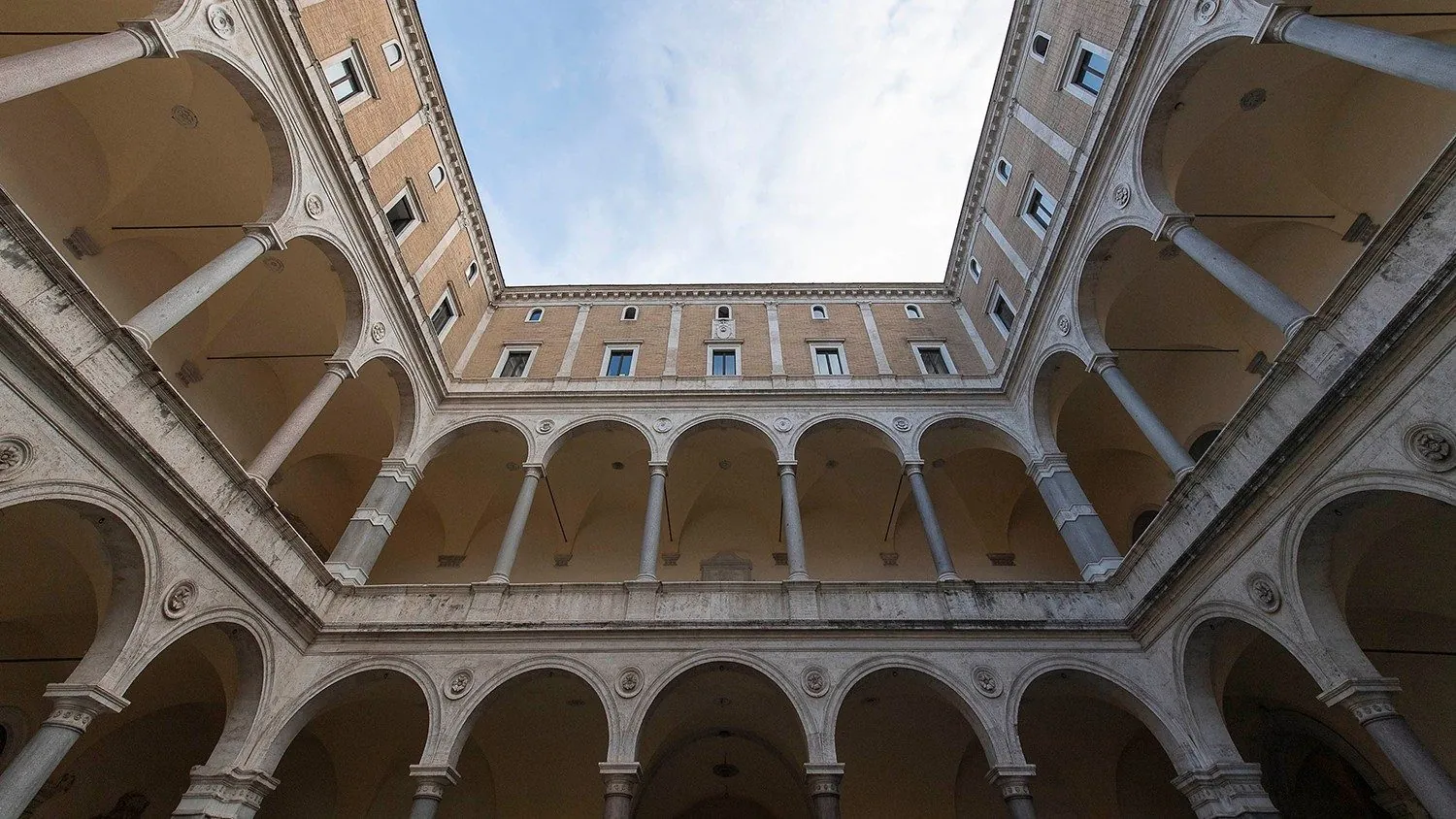
The first precedent is formal and historical. Benedict XVI created the possibility in 2008 for non-bishops to serve as members of the Apostolic Signatura, but that power had apparently not been used before Leo XIV named Baura, Montini, and Rhode in July 2026. The appointment of the three priests is therefore not a small footnote to an episcopal roster. It is the first actual use of a legal possibility that had sat on the books for nearly two decades. [3]
The second precedent concerns professional profile. The Pillar reports that the July 2026 changes ended a Francis-era practice, begun in 2017, of placing non-canonist cardinals on the Signatura. Tobin and Müller were not reappointed, while the new slate concentrated heavily on canon-law competence, including the three priest-canonists and Arrieta, a former secretary of the Dicastery for Legislative Texts and a figure tied to the 2021 penal-law reform. [3]
There is an obvious symbolic dimension to naming the first non-bishops to a tribunal long populated by bishops and cardinals. In Catholic governance, episcopal status is not merely decorative. Still, the legal significance of this slate is sharper than the symbolism. The appointments moved the membership pattern toward specialists whose work is closer to the tribunal’s actual tasks: administrative recourse, tribunal oversight, competence questions, and the legal control of ecclesiastical procedure.
Term claims require care. The Holy See bulletin names members but does not itself explain each term. The Pillar reported, based on later clarification, that Arrieta was appointed until age 80, that others received five-year terms, that Grech was renewed for five years, and that Harvey was confirmed until age 80. The same account noted that there is no mandatory retirement age in the tribunal’s proper law and that Cardinals Leonardo Sandri and Giuseppe Versaldi were serving past age 82. [1][3]
Why “Vatican highest court” can mislead
Calling the Apostolic Signatura the Vatican’s highest court is defensible shorthand only if it is immediately qualified. It is the Church’s supreme tribunal, but it is not a general-purpose supreme court in the American sense. It does not sit above every ecclesiastical dispute as a merits-review court, and it is not simply the place where an unhappy party gets one more appeal because a lower decision was unwelcome.
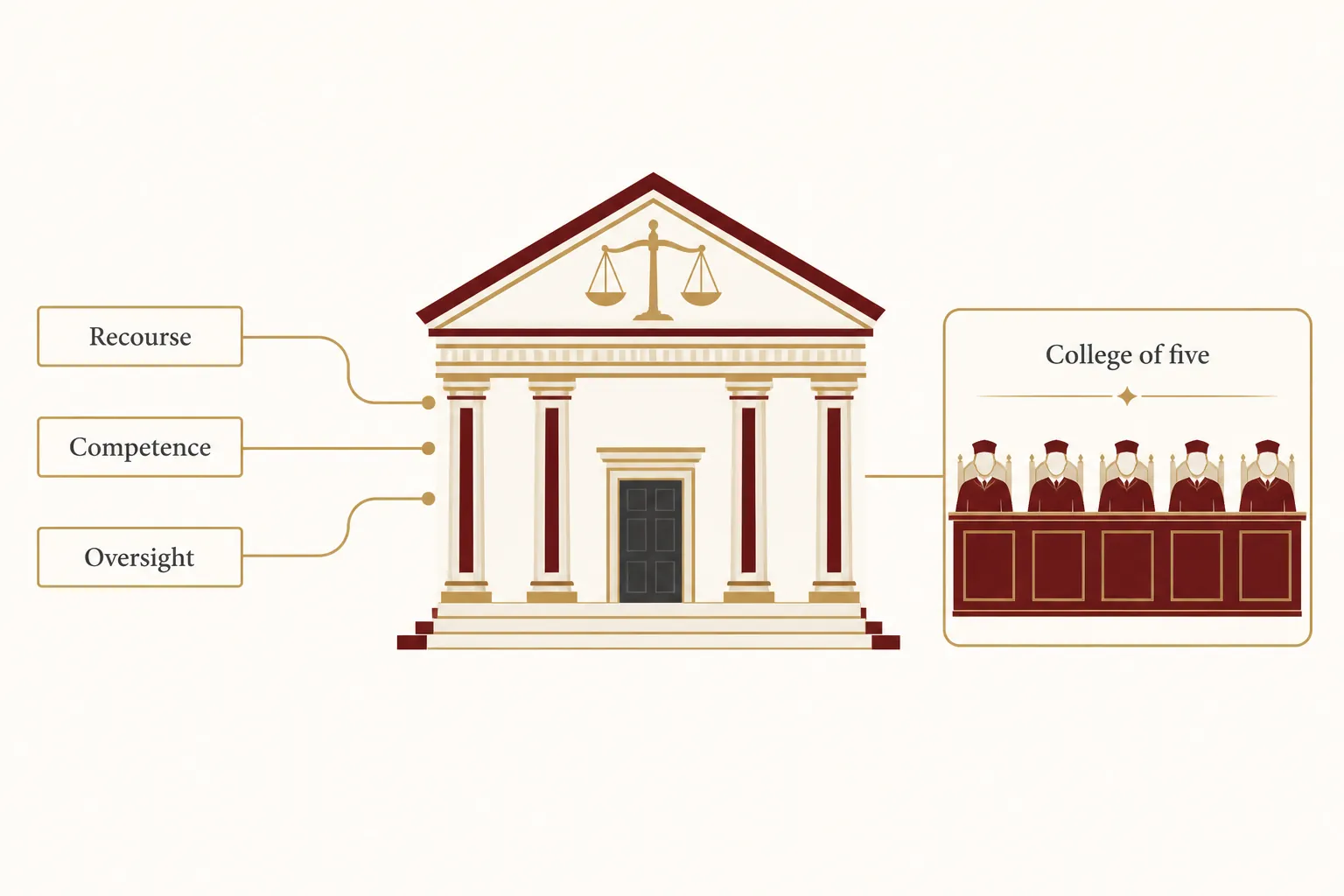
The Vatican’s public description of the Institutions of Justice places the Signatura among the Church’s tribunals and identifies its role in the administration of justice. Under the governing institutional framework, its work is commonly understood in three clusters: supreme-tribunal functions involving other ecclesiastical tribunals, contentious-administrative justice concerning certain administrative acts, and oversight of the proper administration of justice in the Church. [2]
- Judicial and tribunal-related matters: issues such as competence, complaints concerning tribunal process, and matters connected with the work of other ecclesiastical courts.
- Contentious-administrative recourse: challenges to certain singular administrative acts, especially acts issued or approved by Roman dicasteries, where the question is legality rather than a fresh merits decision.
- Oversight of ecclesiastical justice: supervision of the correct administration of justice, including institutional questions about tribunals and their competence.
The contentious-administrative jurisdiction is the part most likely to be misunderstood in secular coverage. A recourse to the Signatura does not convert the tribunal into a policy supervisor for every contested episcopal, dicasterial, or administrative judgment. The question is whether the act was legally and procedurally sound. The tribunal’s legal work therefore sits closer to judicial review of administrative legality than to a full reconsideration of the underlying pastoral or institutional choice.
There is also an important limit at the top of the system. Infovaticana’s procedural account noted that acts approved by the Pope in specific form are excluded from the Signatura’s review. That limit is not a personnel question. It is a jurisdictional boundary. Changing who sits on the bench does not make an excluded act reviewable. [4]
Composition matters because cases are decided in colleges
The appointment story becomes legally interesting only when the roster is connected to the tribunal’s decisional structure. Members of the Signatura do not matter merely because their names appear on a Vatican list. They matter because appeals are decided in colleges of five, with plenary sessions reserved for broader institutional moments. Infovaticana’s account emphasized that five-member college structure. [4]
That is the point at which the July 2026 slate becomes more than symbolism. If a tribunal’s task is to police legality and procedure, the difference between a bench weighted toward general ecclesiastical stature and one weighted toward technical canon-law formation can be consequential. The standard of review remains the same. But the rigor with which a college identifies procedural defects, construes competence, distinguishes merits from legality, and handles administrative recourse can depend on the legal habits of the members assigned to the case.
This should not be overstated. The appointments did not rewrite Praedicate Evangelium, did not create a new appellate right, and did not authorize the Signatura to substitute its judgment for every contested administrative decision. They changed the pool from which five-member colleges can be formed. In a technical tribunal, that is a real institutional change, but it is not a jurisdictional amendment.
The docket context gives the personnel change additional practical weight, though the figure should be handled cautiously. The National Catholic Register reported that the Signatura had 763 cases in 2024. That number is useful as a scale marker, not as independently verified docket analysis from a primary statistical filing. [5]
What changed, and what did not
The cleanest reading of the July 2026 appointments is juridical-technical. Leo XIV added seven members, including the first three non-bishop members in the tribunal’s history; retained Grech and Harvey on the later press-office-verified account; and did not reappoint Tobin and Müller. The result is a membership pattern more visibly centered on canon-law expertise than the immediately preceding practice.
That reading does not require pretending that Church rank is irrelevant. The first use of the 2008 non-bishop provision is historically significant precisely because episcopal status has long carried institutional meaning in central Church governance. But the more durable legal point is professionalization of a tribunal whose work turns on procedure, competence, and administrative legality.
July 2026 changed the Apostolic Signatura’s membership profile and broke two precedents at once. It did not change the tribunal’s jurisdiction, did not alter the legality-and-procedure standard of review, and did not turn the Church’s supreme tribunal into a general merits court for every disputed act of ecclesiastical administration.
References
- Resignations and Appointments, 25.07.2026 — Holy See Press Office, July 25, 2026
- Institutions of Justice — Vatican.va
- Who’s in and who’s out? Leo’s revamp of Vatican supreme court — The Pillar, July 28, 2026
- Pope Leo XIV renews the Apostolic Signatura: Cordileone joins the Church’s supreme tribunal — Infovaticana, July 26, 2026
- What Is the Apostolic Signatura? — National Catholic Register
Operationalizing workflow
No workflow has been explicitly linked to this obligation yet. See Workflows generally.
Illustrative cases
No illustrative case is currently tracked for this obligation. See Risk Digest for documented incidents generally.
← Back to RegulationReport a correction or tip
Spotted an outdated figure, a misstated fact, or a ruling this regulation entry should reflect? Public comments are disabled for this content given the professional cost of a misreported case outcome, penalty amount, or rule text — use the structured correction channel instead.
Report a correction or tip for this record →