
How RFK Jr.'s Gavi Funding Blockade Violated the Impoundment Control Act
- Authority
- U.S. Congress
- Rule type
- statute
- Jurisdiction scope
- US federal
- Source text
- Read primary rule text ↗
President must transmit special message to Congress before withholding appropriated funds.
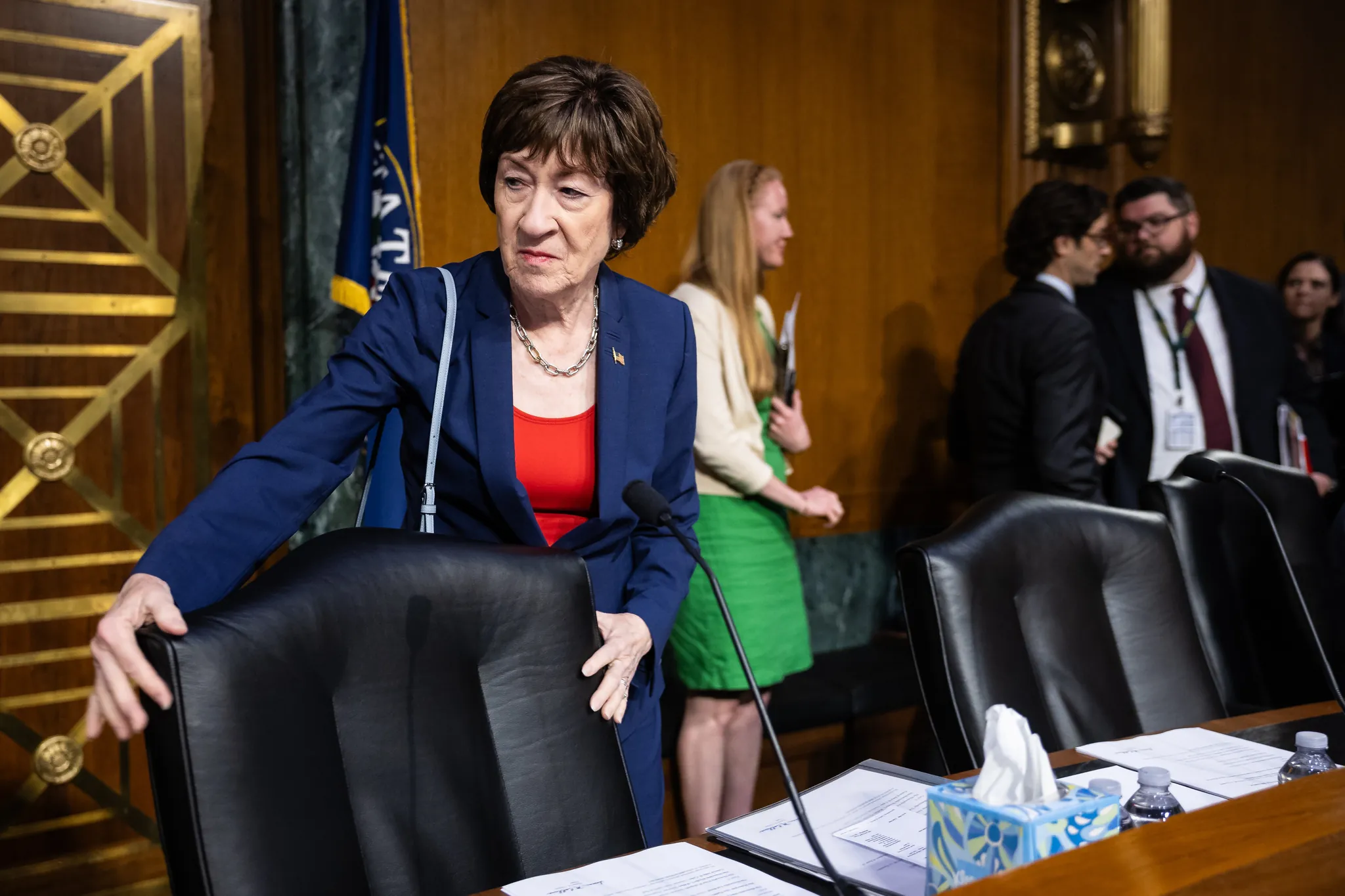
The useful fact in Tuesday’s announcement was not that the administration had changed its mind about vaccines. It was that Sen. Susan Collins said the State Department would finally dispense $600 million in Gavi funding that Robert F. Kennedy Jr. had held up for roughly 13 months, after bipartisan pressure from senators and with the money’s September 30, 2026 expiration date approaching.[1]
That is an odd route for a dispute about appropriated money. Congress had provided the funds. The accounts sat in the foreign-operations lane, not in HHS. The Impoundment Control Act supplies a formal process when a president wants to withhold budget authority. Yet the apparent resolution came not through a Gavi-specific GAO decision, not through a court order, and not through a publicly transmitted impoundment message. It came through Senate leverage.
For the legal implications of the RFK Jr. block of Gavi vaccine funding, that sequence matters more than the familiar vaccine-politics framing. The core problem is one of custody and control: who had statutory responsibility for the money, who purported to stop it, what notice Congress received, and who could force release before the fiscal clock ran out.
The Blockade Was Not in Kennedy’s Normal Funding Lane
The reported hold involved FY2025-FY2026 appropriated foreign-aid money for Gavi, the Vaccine Alliance. Politico described the resolved amount as $600 million, while Foreign Policy reported that Kennedy had managed to block the funds despite the State Department’s statutory responsibility for the relevant foreign-operations accounts.[1][2]
That jurisdictional mismatch is not a technical footnote. An HHS secretary may have policy views about vaccines, may chair or influence domestic health machinery, and may advise the president. But the legal authority to administer State Department foreign-operations appropriations does not migrate to HHS because the object of the spending is immunization. Foreign Policy’s account placed Kennedy’s role in the chain through a presidential directive mechanism, not through ordinary statutory control over the accounts.[2]
That distinction narrows the legal question. This was not simply an agency delaying its own grant program while reviewing paperwork. It was a cabinet official outside the account structure reportedly causing State-controlled appropriated money not to move. If the president wanted the money withheld, the relevant legal route ran through the Impoundment Control Act, not through an informal cross-agency veto.
What the Impoundment Control Act Required
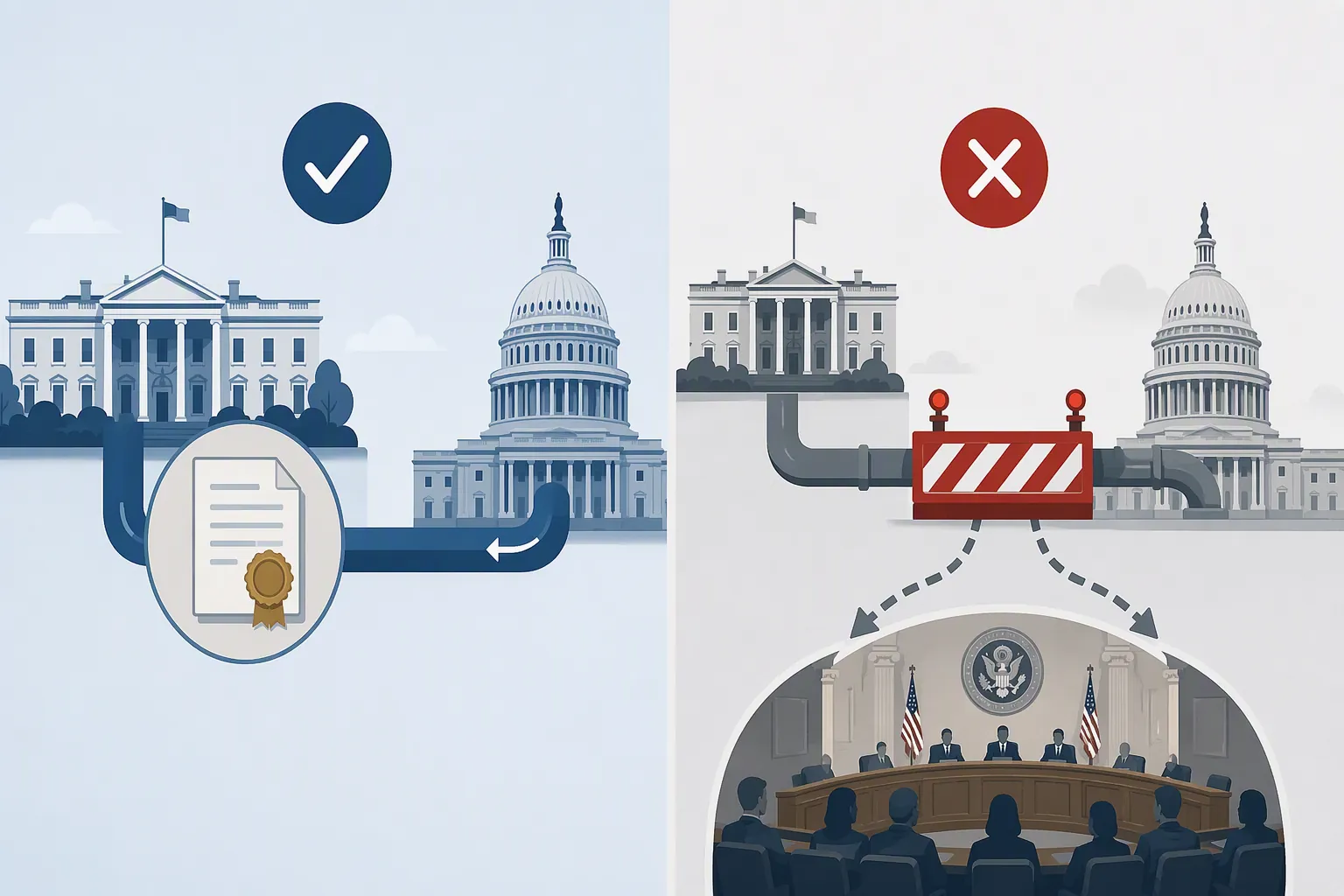
The ICA does not prohibit every delay in federal spending. It regulates presidential withholding of budget authority after Congress has enacted an appropriation. The statute separates two tools: rescissions, where the president proposes that Congress cancel budget authority, and deferrals, where the president proposes to temporarily delay obligation or expenditure.[3]
Both routes require a special message to Congress. For a proposed rescission, 2 U.S.C. § 683 requires the president to transmit a message identifying the amount, account, reasons, fiscal effects, and other required details. The money may be withheld for 45 days of continuous congressional session. If Congress does not pass a rescission bill in that window, the budget authority must be made available for obligation.[3]
Deferrals are handled under 2 U.S.C. § 684. A deferral also requires a presidential special message identifying the amount deferred, the affected account, the period of deferral, and the reasons for the delay. The statute sharply limits permissible deferrals; they cannot be used to achieve a policy cancellation that Congress has not approved.[3]
| ICA path | What it does | What Congress must receive | Consequence if Congress does not approve cancellation |
|---|---|---|---|
| Rescission | Proposes permanent cancellation of budget authority | A presidential special message under 2 U.S.C. § 683 | Funds must be made available after the 45-day congressional-session window |
| Deferral | Temporarily delays obligation or expenditure | A presidential special message under 2 U.S.C. § 684 | Delay must remain within statutory limits and cannot operate as an unauthorized cancellation |
The Gavi hold, as reported, does not fit comfortably into either compliant path. A 13-month blockade is too long to treat casually as administrative processing. If it was intended as a permanent cancellation, Congress needed a rescission message and an opportunity to accept or reject it. If it was intended as a temporary delay, Congress still needed a deferral message and enough information to assess the statutory basis for delay.
The Missing Special Message Is the Legal Pressure Point
The available reporting and public materials reviewed here do not show a presidential special message to Congress for the Gavi funds. That absence is the central ICA problem. The statute’s notice requirement is not decorative; it is the device that keeps a funding dispute inside Congress’s appropriations control rather than leaving it to executive-branch silence.
Without a special message, Congress cannot start the rescission clock, evaluate a claimed deferral, or force the administration to put its legal theory on paper. The executive branch gets the practical benefit of nonspending while avoiding the statutory procedure designed for nonspending. That is why the Gavi episode looks less like ordinary grant administration and more like an impoundment.
The 45-day rescission window is especially important. Congress gave the president a temporary holding period for proposed rescissions, not an open-ended pocket veto over enacted appropriations. A 13-month hold on funds scheduled to expire September 30, 2026 sits badly with that design unless the administration can identify a separate, lawful basis for delay.[1][3]
There may be ordinary reasons why particular payments do not move on a particular day: documentation, recipient conditions, interagency review, sanctions screening, or account mechanics. The public record described here supports a narrower and more serious conclusion: the reported blockade was driven by a high-level policy directive outside the normal State funding chain, with no located ICA message to Congress.
Why GAO Was Not a Magic Enforcement Button
A likely ICA violation does not automatically produce a quick remedy. GAO can issue legal decisions and report impoundments to Congress, but the public record reviewed here did not locate a formal GAO opinion specifically deciding the Gavi blockade. That matters. Prior GAO work can illuminate the statute; it does not adjudicate facts GAO has not decided.
There were useful analogies. In 2025, GAO found unlawful impoundment in HHS-related contexts, including NIH grant-funding withholdings, and KL Gates described that NIH decision as part of a broader pattern of HHS ICA noncompliance involving grant funds.[4]
Those examples support the legal intuition that an agency cannot simply sit on appropriated funds because leadership dislikes the program. They do not prove the Gavi case as a matter of adjudicated fact. The Gavi money involved State foreign-operations accounts, an alleged intervention by the HHS secretary, and a release secured through Senate pressure before any located GAO Gavi decision.
That is the enforcement gap practitioners have to price into federal-funding disputes. Statutory clarity and operational leverage are different things. GAO may strengthen Congress’s hand, and its ICA materials explain the formal architecture, but GAO does not itself wire the money to the recipient. For a broader discussion of that enforcement architecture, see our analysis of the legal impact of the House GOP stopgap funding bill.
Why There Was No Obvious Court-Ordered Fix
No Gavi-specific APA lawsuit has been identified in the public record reviewed here. That absence does not mean the hold was lawful. It means the familiar litigation path was not the path that resolved this dispute.
A plaintiff challenging a funding freeze would need to establish standing, identify final agency action or unlawfully withheld action, overcome any channeling or reviewability objections, and obtain relief quickly enough to matter before the appropriation expired. Those are not impossible hurdles, but they are real ones. A deadline-driven foreign-aid payment dispute can be legally strong and still poorly suited to slow-motion judicial correction.
The March 2026 Massachusetts vaccine-policy ruling against Kennedy’s domestic vaccine actions is relevant only by analogy. In that case, Judge Murphy blocked HHS actions described as arbitrary and capricious in the vaccine-policy context.[5]
The analogy is limited. A court’s willingness to review domestic vaccine-policy changes does not decide whether Gavi had a ripe, properly postured claim over foreign-aid disbursement. It does, however, show why an arbitrary-and-capricious theory would have been unsurprising if a plaintiff with the right posture had sued: unexplained departures from statutory process are vulnerable when courts can reach them.
Congress Used the Leverage It Still Had
The release appears to have come because senators made the cost of continued withholding rise. Politico reported that Collins announced State would dispense the $600 million after months of bipartisan pressure, and CIDRAP documented lawmakers seeking answers from Secretary Marco Rubio over the blocked Gavi funding.[1][6]
Collins had two forms of leverage that matter in appropriations practice. First, the September 30, 2026 expiration date made delay itself a possible defeat; if the money expired unobligated, Congress’s enacted choice would be effectively nullified. Second, appropriators control future State Department funding bills. That does not make every demand self-executing, but it gives agency leadership a reason to stop treating noncompliance as cost-free.
This is not a romantic account of congressional power. It is a blunt one. The ICA’s formal procedures are clear, but much of their practical force depends on members who notice a violation, care about the account, and can credibly make future business difficult. That is political enforcement, but it is not the same as no enforcement.
The parallel to other foreign-aid holds is direct enough to be useful. In our analysis of Cornyn’s PEPFAR hold and the Appointments Clause, the operational lesson was similar: withheld foreign-aid money often moves when a senator with relevant leverage forces the executive branch to choose between continued blockage and a broader appropriations fight.
The $600 Million Was Only One Piece of a Larger Gavi Commitment
The scale matters. The $600 million discussed in the release reporting referred to FY2025-FY2026 appropriated funds. KFF separately described the United States as accounting for about 13 percent of Gavi funding and discussed a $1.58 billion five-year pledge context.[7]
Those are different measures. The $600 million was the immediate appropriations-control problem. The larger pledge figures explain why the dispute mattered to Gavi’s financing and to U.S. foreign-aid credibility, but they should not be treated as the amount Kennedy personally blocked or as money already sitting in the same fiscal-year account.
That distinction also keeps the legal analysis from drifting. The strongest ICA claim attaches to enacted budget authority that was available for obligation and then withheld without the statutory message process. Pledges, policy commitments, and future appropriations may carry political significance, but they do not all create the same immediate impoundment question.
The Bounded Legal Conclusion
On the present public record, the Gavi blockade was likely an ICA violation. Congress appropriated the money. The funds were in State’s foreign-operations lane. Kennedy reportedly lacked statutory authority over those accounts. The hold lasted roughly 13 months. No Gavi-specific rescission or deferral special message has been identified. The release came only after bipartisan congressional pressure as the expiration deadline approached.[1][2][3]
The conclusion should not be overstated. This was not, as of July 29, 2026, a case with a located GAO decision specifically holding that the Gavi blockade violated the ICA. It was not a case with a Gavi-specific court judgment ordering disbursement. The strongest judgment is narrower and still serious: the reported facts map onto the ICA’s prohibited-withholding problem, while the remedy exposed how dependent impoundment enforcement remains on congressional pressure.
One verification point remains important after the July 28 announcement. “State will dispense” is not the same fact as completed transfer. Counsel and reporters tracking the matter should distinguish an announced release, an obligation, and an actual disbursement to the recipient. The legal injury from impoundment often turns on dates and account status, not on press statements.
That is the institutional warning from the RFK Jr. Gavi funding fight. Impoundment law can be formally clear while its enforcement remains contingent on who notices, who has jurisdiction, who can force a record, and whether Congress acts before the money expires.
References
- State Department will dispense $600M for vaccines RFK Jr. held up, Collins says, Politico, July 28, 2026.
- How RFK Jr. Managed to Block Millions in Global Vaccine Funds, Foreign Policy, June 17, 2026.
- Impoundment Control Act, U.S. Government Accountability Office.
- NIH Committed Unlawful Impoundment — GAO Decision Finds NIH's Withholding of Grant Funds Violated Impoundment Control Act, K&L Gates, August 14, 2025.
- Federal court blocks RFK Jr.'s moves to upend US vaccine policy, BioPharma Dive, March 2026.
- US lawmakers seek answers on blocked funding for Gavi, CIDRAP.
- The Trump Administration's Foreign Aid Review: Status of U.S. Support for Gavi, KFF.
Operationalizing workflow
No workflow has been explicitly linked to this obligation yet. See Workflows generally.
Illustrative cases
No illustrative case is currently tracked for this obligation. See Risk Digest for documented incidents generally.
← Back to RegulationReport a correction or tip
Spotted an outdated figure, a misstated fact, or a ruling this regulation entry should reflect? Public comments are disabled for this content given the professional cost of a misreported case outcome, penalty amount, or rule text — use the structured correction channel instead.
Report a correction or tip for this record →