
Does the Russian missile in Poland trigger NATO Article 5?
- Authority
- NATO
- Rule type
- treaty
- Jurisdiction scope
- International (NATO)
- Source text
- Read primary rule text ↗
NATO members must make a case-specific armed-attack determination before invoking Article 5.
Last verified: 3 August 2026, UTC. This is a legal information analysis, not legal advice.
The record now available is narrow, but not trivial. In the early hours of 30 July 2026, during a Russian strike on Ukraine, a Russian Kh-101 cruise missile entered Polish airspace at about 03:40 local time. Polish radar contact was lost at 03:46. The missile later detonated in an agricultural field near Tarnawa-Kolonia in eastern Poland, leaving a crater reported at about 10 meters wide and roughly 90 to 92 kilometers from the Ukrainian border. No injuries were reported in the incident record now cited by Reuters, the BBC and Al Jazeera.[1][2][3]
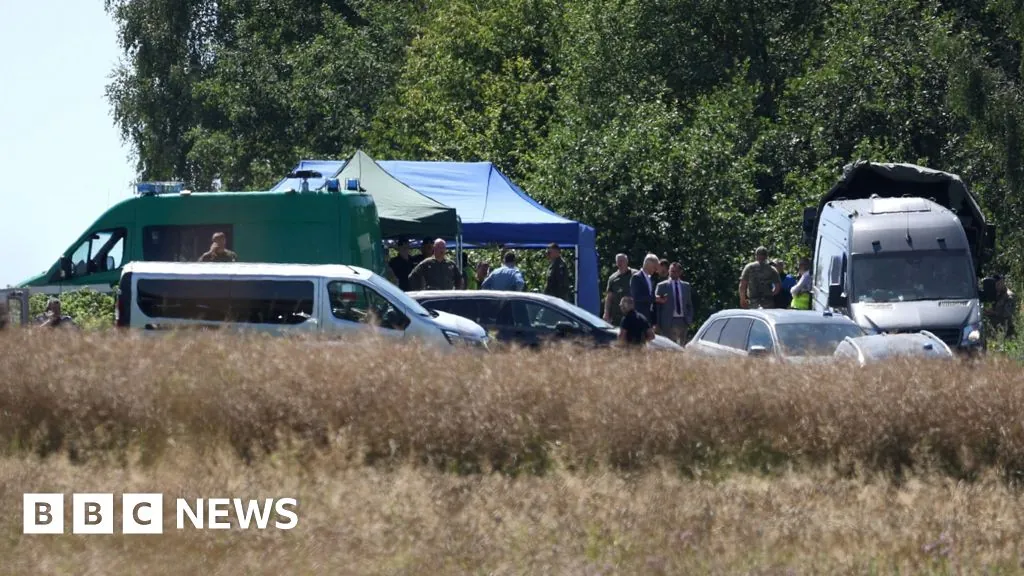
Poland identified the object as a Russian Kh-101. Ukraine also described it as a Russian missile. NATO aircraft were scrambled, including F-16s, a refuelling aircraft and an AWACS surveillance aircraft, and NATO said it would take “all necessary measures” to protect allied territory.[1][3][5]
The next day, Poland summoned Russia’s ambassador and handed over a protest note. That is the confirmed diplomatic act in the post-incident record cited here. I have not found, in the cited Polish, NATO or wire-service reporting through 3 August 2026 UTC, a confirmed Polish invocation of Article 4 for this specific 30 July incident. That matters because “no Article 4” is not the same proposition as “Poland legally could not invoke Article 4,” and it is also not the same as a verified Polish decision to waive consultation.[4]
The cleanest legal classification is a sovereignty violation
A foreign military missile crossing into Polish airspace and detonating on Polish territory is first a territorial-sovereignty problem. That conclusion does not require casualties, proof of deliberate targeting, or proof that the missile was still under Russian control at the moment of impact. Airspace is part of the territorial domain in the relevant aviation-law framework, and the Lawfare analysis of the 2022 Przewodów incident usefully explains why an unauthorized military object crossing a state’s airspace can violate sovereignty even when harder questions remain about force, intent and self-defense.[6]
That is why the word “near miss” is too soft for this record. The missile did not merely approach NATO airspace. It crossed the border, disappeared from radar inside Poland, and exploded in a Polish field. For the state on whose territory the crater sits, the legal injury is not erased because the field was uninhabited or because the damage was limited.
The ordinary consequences of a sovereignty violation are also more modest than the headlines often imply. They point first toward cessation, assurances where appropriate, investigation, explanation, and reparation for any legally cognizable injury. A protest note fits that register. It preserves Poland’s position without pretending that every territorial violation automatically unlocks the same legal response as a deliberate cross-border attack.
Use of force is a closer question than sovereignty
A sovereignty violation asks whether Poland’s territorial domain was invaded without consent. A use-of-force analysis asks a different question: whether the incident should be characterized under the legal prohibition on force between states. A cruise missile is not a weather balloon, and the fact that it detonated on Polish soil gives Poland a serious basis to treat the event as more than a technical airspace incident.
The present record, however, does not yet supply the facts that would do the most work: verified Russian intent to strike Poland, or verified knowledge that the missile would enter and detonate in Poland. The available reports tie the episode to Russian strikes on Ukraine. They identify the missile as Russian and locate its path and impact, but they do not establish, on the cited record, that Polish territory was the target.[1][2][3]
That distinction is not an apology for the violation. It is the difference between a clear breach of territorial sovereignty and a more contestable claim that Russia used force against Poland as such. Lawyers drafting Poland’s first official language after an incident like this have to deter repetition, preserve claims, and avoid conceding uncertainty; they also have to avoid overclaiming facts they may not yet have.
Neutrality adds a useful label, but not the main answer
Because the missile was apparently connected to Russia’s war against Ukraine, neutrality law may also be relevant. A belligerent’s use of, or intrusion into, the territory or airspace of a non-belligerent state raises a separate set of concerns from ordinary peacetime aviation. But on the present record, neutrality does not carry the center of the analysis. The legally decisive facts remain the same: entry into Polish airspace, detonation on Polish territory, attribution to Russia, absence of reported casualties, and no cited proof of deliberate targeting of Poland.
Neutrality may become more important if later evidence shows repeated routing, tolerated overflight, or operational use of Polish airspace in a way that changes the character of the incident. One missile impact in a field, treated by Poland through air response and diplomatic protest, is enough for a sovereignty claim. It is not enough, by itself, to settle the harder self-defense question.
Why Article 5 does not work like a tripwire
Article 5 of the North Atlantic Treaty is often described as if it converts every hostile or dangerous cross-border event into automatic collective war. NATO’s own formulation is more deliberate. Article 5 applies where an armed attack occurs against one or more allies in Europe or North America, and each ally then takes “such action as it deems necessary,” including the possible use of armed force, to restore and maintain North Atlantic security. NATO also describes Article 5 determinations as case-specific political decisions made by allies, not as a mechanical sensor reading.[7]
The armed-attack threshold is the hard part. The International Court of Justice’s Nicaragua approach distinguishes the “most grave forms” of the use of force from less grave forms. The United States has long taken a broader view, treating any illegal use of force as potentially sufficient to trigger the inherent right of self-defense. The gap between those positions matters here because the Tarnawa-Kolonia facts sit near the line that separates legally serious intrusion from an Article 5-grade armed attack.[6]
On the narrower view, several facts cut against treating the 30 July incident as a clear armed attack on Poland: no reported injuries, impact in an agricultural field, no confirmed deliberate targeting of Polish territory, and no presently cited broader pattern tied to that same day showing Russia had opened a Polish front. On the broader view, the use of an explosive military missile that crossed and detonated inside Poland is weightier than an accidental aircraft trespass. The better answer is therefore not that Article 5 is impossible. It is that the present record does not self-evidently satisfy the armed-attack threshold.
That is also why the phrase “trigger Article 5” can mislead. Article 5 is not a private-law switch pulled by the munition itself. It requires classification of facts, alliance consultation, attribution judgments, and political agreement on what action each ally deems necessary. The legal permission to respond and the alliance decision to characterize an event as an Article 5 armed attack are related, but they are not identical.

Scramble, protest, Article 4 and Article 5 are not interchangeable
The response sequence after the Tarnawa-Kolonia strike is easier to understand if the available tools are kept separate. Air-defense action addresses an immediate object in or near allied airspace. A protest note records a legal position against the responsible state. Article 4 is a consultation mechanism. Article 5 is collective defense after an armed attack has been treated as such.
| Response | What it does | What it does not prove |
|---|---|---|
| Air scramble | Positions aircraft to identify, deter or engage a threat | Does not itself classify the incident as an armed attack |
| Diplomatic protest | Preserves the injured state’s legal position and demands accountability | Does not require Article 4 or Article 5 to be invoked |
| Article 4 | Brings allies into formal consultation when a member considers its territorial integrity, political independence or security threatened | Does not mean allies have found an armed attack |
| Article 5 | Engages the collective-defense clause after an armed attack against an ally | Does not prescribe one automatic military response |
NATO’s Article 4 page is explicit about the consultation function: any ally can bring an issue to the North Atlantic Council when it considers its territorial integrity, political independence or security threatened. That threshold is lower than Article 5. It is designed for danger, pressure and uncertainty, not only for completed armed attacks.[8]
Poland therefore could have had a legally available argument for Article 4 consultation after a Russian missile detonated inside its territory. The more precise point is that Article 4 is discretionary in institutional practice. A state may choose urgent bilateral and NATO operational coordination, air-police measures, public attribution and a protest note without immediately convening formal Article 4 consultations. The choice may reflect evidence, alliance messaging, timing, or a judgment that the legal record is strong enough for protest but not yet strong enough for a higher political signal.
That calibrated response should not be confused with legal indifference. NATO aircraft were put in the air. Poland summoned the Russian ambassador. The protest note matters because it prevents the incident from being normalized as mere battlefield spillover.[3][4][5]
The September 2025 drone comparison shows calibration, not inconsistency
The closest comparator is not the 2001 invocation of Article 5. It is Poland’s September 2025 response to Russian drone incursions. In that episode, Poland invoked Article 4, NATO Secretary General Mark Rutte said allies had discussed the situation under Article 4, and allied aircraft were reported to have fired during the response.[9][10][11]
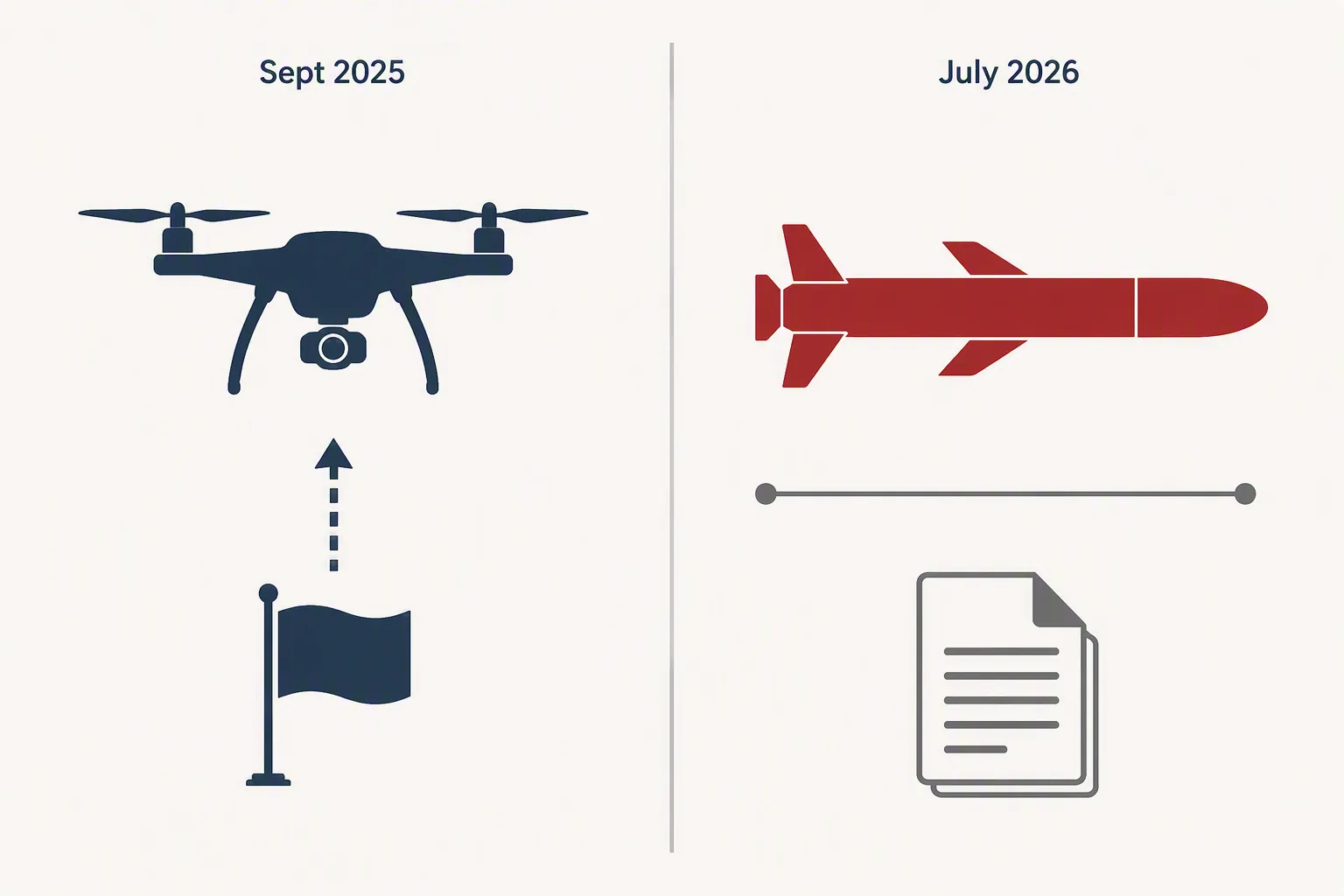
The comparison is useful because it shows that Article 4 is not reserved for a legally completed armed attack. It is a consultation tool for threats to allied security. It also shows that Poland and NATO can treat different airspace violations differently without contradicting the law. The drone-count record varies by source and should not be flattened: Security Council Report cited Poland’s UN letter referring to 19 drones, while other commentary has used higher formulations. The point for the Tarnawa-Kolonia analysis is the response calibration, not the exact drone arithmetic.[10][12]
The 2025 episode involved multiple drones and an Article 4 step that was publicly confirmed. The July 2026 record cited here involves a single Kh-101 missile impact, a NATO air response, and a Polish protest note, without a confirmed Article 4 invocation through the verification point used for this article. Those are different legal and political records.
What the current record supports
As of 3 August 2026 UTC, the 30 July Tarnawa-Kolonia strike is best classified as a clear violation of Polish territorial sovereignty attributable to Russia. It supports Polish protest, demands for explanation, preservation of claims, and defensive air measures. It may support a use-of-force argument, especially given the nature of the object and the fact of detonation, but that argument depends on how much weight is given to gravity and intent.
It does not, on the presently cited record, clearly establish an armed attack on Poland for self-defense or Article 5 purposes. The missing facts are not decorative. Deliberate targeting, casualties, repeated coordinated incursions, evidence that Polish territory was knowingly used as part of the strike path, or a later North Atlantic Council statement could change the legal analysis. So could a Polish statement after 31 July changing the response posture.
The narrow conclusion is the safest one because it preserves both halves of the record. The violation is real. The Article 5 consequence is not self-executing. Poland’s protest-note response without a confirmed Article 4 invocation is coherent on the facts now verified, but the file has to remain open because the legal answer still turns on evidence that may emerge after the first crater photographs and first diplomatic note.
References
- Polish police find crater, debris of unidentified object as Russia strikes Ukraine, Reuters, 30 July 2026.
- BBC report on the Tarnawa-Kolonia missile incident, BBC, 2026.
- NATO jets scramble as Russian missile detonates in Poland, Al Jazeera, 30 July 2026.
- Poland summons Russian ambassador after missile incident, Reuters, 31 July 2026.
- Europe Ukraine Russia Poland wildfires France Spain Greece latest news updates, The Guardian, 30 July 2026.
- What If the Przewodów Tragedy Had Been Caused by a Russian Missile?, Lawfare, 2022.
- Collective defence and Article 5, NATO.
- The consultation process and Article 4, NATO.
- Statement by NATO Secretary General Mark Rutte, NATO, 10 September 2025.
- Emergency Briefing on Drone Incursion into Poland, Security Council Report, September 2025.
- NATO responds after Russian drones enter Poland airspace, The Hill, 2025.
- Poland responds to Russian drones incursion by invoking Article 4 of the NATO treaty. What happens next?, The Conversation, 2025.
Operationalizing workflow
No workflow has been explicitly linked to this obligation yet. See Workflows generally.
Illustrative cases
No illustrative case is currently tracked for this obligation. See Risk Digest for documented incidents generally.
← Back to RegulationReport a correction or tip
Spotted an outdated figure, a misstated fact, or a ruling this regulation entry should reflect? Public comments are disabled for this content given the professional cost of a misreported case outcome, penalty amount, or rule text — use the structured correction channel instead.
Report a correction or tip for this record →