
Delta-8 Is Now a Felony in San Antonio. Who Gets Charged?
- Authority
- Texas Department of State Health Services
- Rule type
- regulation
- Jurisdiction scope
- US state
- Effective date
- Jul 31, 2026
- Source text
- Read primary rule text ↗
Treat delta-8, delta-10, and other hemp-derived cannabinoids as Schedule I controlled substances; possession exposure follows Penalty Group 2 felony tiers based on aggregate weight.
Current as of July 31, 2026: delta-8 is now felony-grade under Texas controlled-substance law, and San Antonio police have said they will enforce it that way. This is an enforcement-risk record, not legal advice. It answers a narrower question than the statewide headline: after the rule change, what has to happen locally before a delta-8 product becomes an arrest, a charge sheet, or a declined case?
The most important local fact is not theoretical. Sgt. Ariel Hernandez told the San Antonio Current that SAPD “will follow Texas law and will enforce the reclassification of Delta-8, Delta-10 and other hemp-derived cannabinoids as Scheduled I controlled substances.” The same report framed possession starting Friday as felony exposure in San Antonio.[1] That puts SAPD on the enforcement side of the line before Bexar County prosecutors have published a post-July-31 charging policy.
Austin shows why that local line matters. KUT reported that Austin police initially treated delta-8 under the city’s misdemeanor marijuana posture in May 2026, then reversed course and said possession could be handled as a state-jail felony.[2] Rice University Baker Institute drug-policy expert Katharine Harris put the same problem more plainly: “the legal concerns will vary depending on where you live.”[3] The statute is statewide. The stop, seizure, booking decision, lab request, and filing decision are not.
The legal basis is narrow but document-specific. DSHS reinstated the 2021 Schedule I definitions through the July 10, 2026 Texas Register notice, with the reclassification effective July 31, 2026, after the Texas Supreme Court’s May 1, 2026 opinion in DSHS v. Sky Marketing Corp.[4][5] Any quoted wording from the linked Texas Supreme Court and Texas Register/DSHS PDFs should be checked directly against those documents; this article does not rely on unverified quotations from them.
For the statewide legal history and product-by-product legality record, see Texas Delta-8 THC Ban Takes Effect July 31, 2026. The local question is different: who in San Antonio is likely to feel the change first, and what evidence will prosecutors need to keep the case?
The legal change is compact; the enforcement chain is not
On paper, the charging hook is short. Texas Health and Safety Code § 481.116 sets felony tiers for possession of a Penalty Group 2 controlled substance by aggregate weight, including adulterants or dilutants.[6] Texas Health and Safety Code § 481.002 supplies definitions used across the controlled-substance chapter.[7] Where local summaries compress Schedule I status and Penalty Group 2 punishment language, the statute is the safer place to check the charge tier.
| Aggregate weight alleged under HSC § 481.116 | Penalty level |
|---|---|
| Less than 1 gram | State jail felony |
| 1 gram or more, but less than 4 grams | Third-degree felony |
| 4 grams or more, but less than 400 grams | Second-degree felony |
| 400 grams or more | First-degree felony |
That table is only the filing skeleton. A San Antonio case still has to move through a practical chain: an officer encounters a product, decides whether to seize it, records what it is, weighs something, uses or skips a field test, sends or does not send a sample to a lab, and waits for a prosecutor to accept or reject the charge. Every step can change the risk profile without changing the statewide rule.
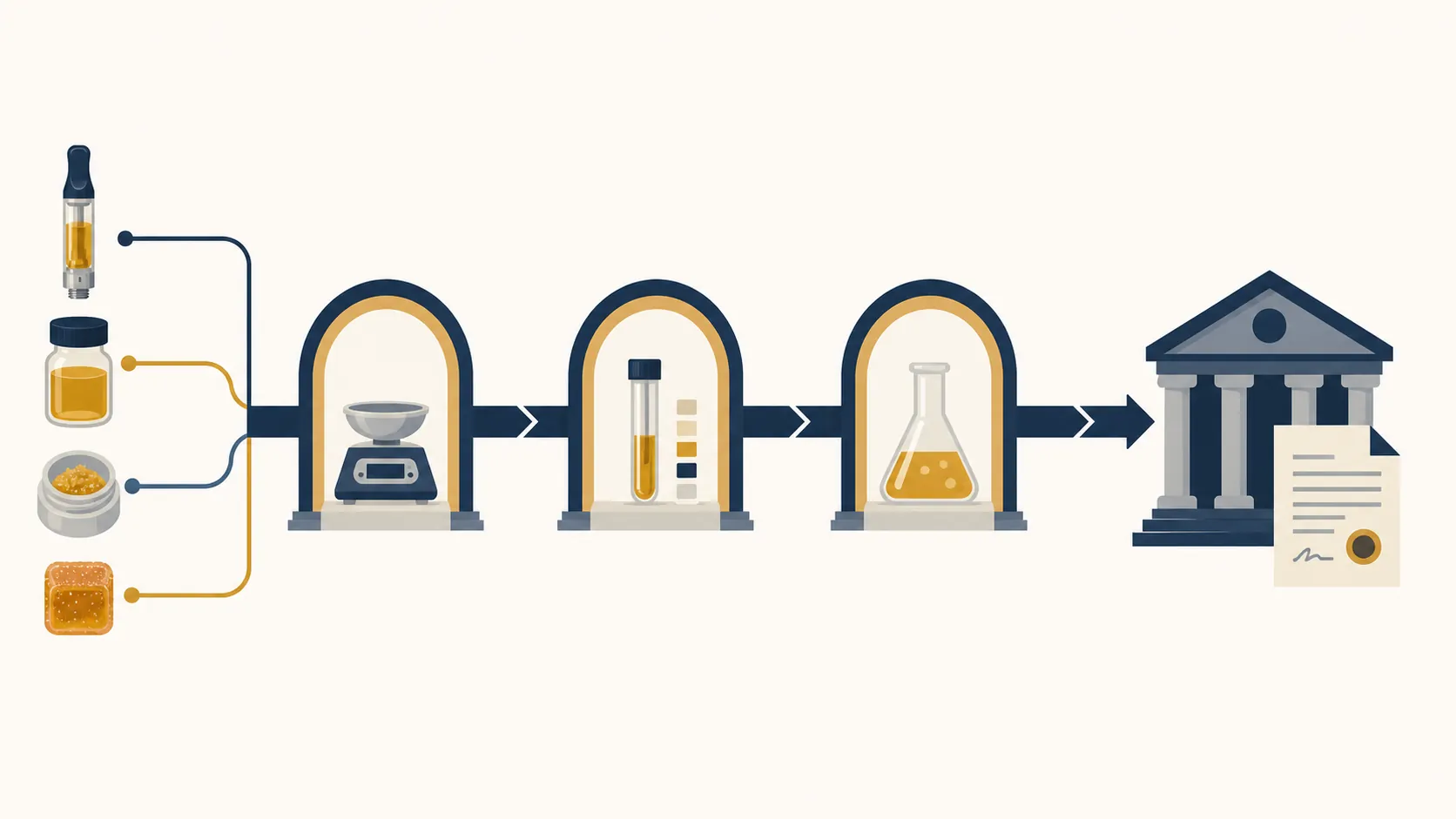
- Location: SAPD street stop, Bexar County Sheriff’s Office operation, school setting, probation search, traffic stop, store inspection, or a call for service at a retail shop.
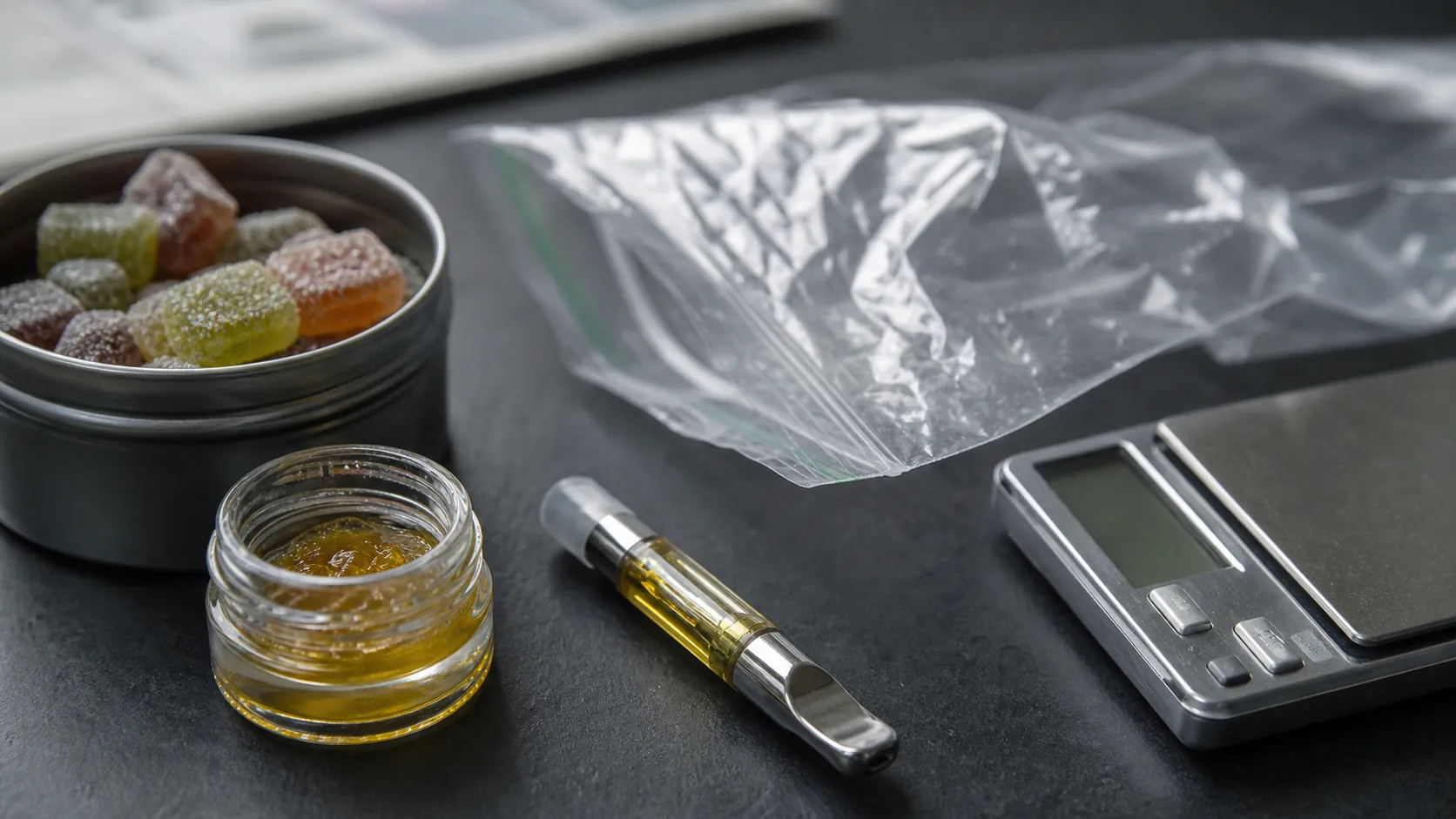
- Product form: vape cartridge, oil, wax, edible, flower, loose concentrate, or sealed retail package.
- Weight basis: oil alone, wax alone, edible serving, container contents, residue, or a gross property-sheet number that may include hardware or packaging.
- Testing route: presumptive field test, state-lab submission, private certificate of analysis, or no testable sample.
- Filing decision: police can arrest, but Bexar County prosecutors decide whether a Penalty Group 2 case is actually filed.
SAPD’s position does not answer the Bexar County filing question
SAPD’s statement answers the first operational question: San Antonio officers have public permission, and now a public expectation, to treat delta-8, delta-10, and other hemp-derived cannabinoids as controlled substances after the reclassification.[1] It does not answer the second question: whether the Bexar County District Attorney’s Office will file every low-weight case, screen out some retail-packaged products, wait for lab confirmation, or distinguish product forms.
The county’s marijuana history can mislead if it is carried over too casually. San Antonio Report, citing KSAT data, reported that misdemeanor marijuana prosecutions in Bexar County fell 99.6% since 2018 and that cite-and-release saved $2.6 million in jail costs from July 2019 through December 2020.[8] That history matters because it shows local discretion. It does not make THC concentrates a low-risk category.

The split is familiar to anyone who has seen marijuana flower handled differently from cartridges. A San Antonio defense firm’s attorney-marketing page says Bexar County prosecutors “routinely file” Penalty Group 2 felony charges for THC oil, wax, and vape cartridges, even in small amounts.[9] That is not an official DA policy and should not be treated as countywide charging data. It is still useful as a local practice signal because it describes the category of cases defense lawyers actually see: cartridges, wax, and oil do not travel through the system like loose marijuana flower.
That is the uncomfortable local posture as of July 31, 2026. SAPD has committed to enforcement. Bexar County has a record of deprioritizing low-level marijuana cases. Local defense practice reports routine Penalty Group 2 filings for concentrates. No published post-July-31 Bexar County DA policy has closed the gap between those facts.
The products most exposed are the ones already familiar to Penalty Group 2 filings
A sealed package that says “hemp-derived delta-8” may feel different to a buyer than a jar of illegal concentrate. In a police report, the difference may shrink quickly if the item is a vape cartridge, oil, or wax. Those forms already resemble the THC concentrate cases Bexar prosecutors are described as filing under Penalty Group 2.[9] They are weighable, easy to photograph, easy to inventory, and familiar enough to fit existing charge templates.
Retail setting adds another layer. In January 2026, KSAT reported that Bexar County deputies arrested a wanted fugitive after finding what BCSO described as a “narcotics operation” at a dispensary.[10] That report should not be stretched into a pattern of post-ban delta-8 enforcement; it predates the July 31 reclassification and involved its own facts. It does show the kind of commercial setting where inventory, employee knowledge, packaging, and product volume can become part of the criminal-risk record.
For a shop employee or manager, the risk question is not only whether a product was lawful when ordered. It is whether the product remained on shelves after the effective date, whether it was labeled as delta-8 or another hemp-derived cannabinoid, whether certificates of analysis were kept with the batch, whether invoices identify the supplier, and whether the item is a form local police already associate with THC concentrate enforcement. Those records may not prevent an arrest. They may decide what a defense lawyer can reconstruct later.
| Product form | What becomes important locally |
|---|---|
| Vape cartridge | Whether the recorded weight is oil, residue, cartridge contents, or a gross inventory number; whether the lab can test the oil. |
| Oil or tincture | Whether the product is treated as a concentrate; whether the sample is testable; whether the batch documents match the seized item. |
| Wax or dab product | Whether it is logged and charged like other THC concentrates; whether the weight basis is clear. |
| Gummy or edible | Whether any available lab can identify the relevant cannabinoid in that product form; whether the case stalls at testing. |
| Retail package | Whether packaging, invoice, and certificate records identify source, batch, contents, and date of possession. |
Weight can turn a cartridge into a different case
Penalty Group 2 possession is tiered by aggregate weight.[6] That makes weighing a legal event, not a clerical detail. A low-level case may look simple in a patrol narrative — “THC vape,” “oil,” “wax,” “edible” — while the eventual punishment range depends on a number written on an evidence label or lab report.
The hard questions are often smaller than the charge. Was the oil separated from the cartridge hardware before weighing? Was a jar weighed with its contents or was the concentrate weighed alone? Was residue treated as part of the controlled substance? Did the property sheet record a gross package weight because the item arrived in retail packaging? The statute’s “aggregate weight” language answers part of the question for controlled substances and adulterants or dilutants, but it does not make every police weight entry self-explanatory.[6]
For defense counsel, the first useful document is often not the lab certificate; it is the property inventory. For a pro se defendant, the same issue may appear as a confusing mismatch: the product looked like a small retail item, but the charge tier reflects a recorded weight the defendant has never seen broken down. That is where packaging and hardware stop being background and become the case.
Testing remains the gap between classification and proof
The legal category may be precise, but first-contact testing is not. The Texas Tribune reported in 2023 that police field tests are presumptive and cannot distinguish hemp-derived delta-8 from delta-9 THC. The same report said Texas state labs had been able to distinguish THC strains in vape oils only since September 2022 and still could not test edibles; it also described Comal County’s arrest-first, test-later practice, with lab results taking months or years.[11]
That Tribune report predates the July 31, 2026 reclassification, so it should not be cited as evidence of post-ban San Antonio enforcement. Its value is narrower and still important: it documents the evidentiary mechanics that did not disappear when the rule changed. If the product is an edible that the state lab cannot test, the case does not become easier merely because the schedule changed. If the product is vape oil that a lab can analyze, the risk is different.
That distinction is why “delta-8 is a felony” is too blunt for actual case review. A vape oil case and a gummy case may sit under the same statewide reclassification, but they do not present the same proof problem. One may be routed into an existing lab process. The other may expose the state’s inability to confirm the substance in the seized form.
So who gets charged in San Antonio?
The most exposed person after July 31 is someone found by SAPD with a vape cartridge, oil, wax, or other concentrate in a form officers can seize, weigh, and route into the familiar Penalty Group 2 process. That includes traffic-stop possession, probation-search discoveries, and retail-setting encounters where inventory is visible and product records are incomplete. The risk is higher when the item looks like the same THC concentrate evidence Bexar County lawyers already describe as routinely filed.
A person found with gummies or other edibles faces real arrest exposure if SAPD treats the item as covered by the reclassification. The filing risk is less mechanically clear because the testing problem is sharper. If the lab cannot test the product form, prosecutors have to decide whether to wait, decline, amend, or proceed on other evidence. That is not comfort; it is a different bottleneck.
Retail employees and owners sit in a separate lane. Their risk is not limited to personal possession. Police may read shelves, invoices, point-of-sale records, batch labels, and supplier documents as part of a commercial case. The January BCSO dispensary report is only one pre-effective-date example, but it shows how quickly a store can move from retail space to evidence scene when deputies believe narcotics are present.[10]
The least answerable category is the person holding a product that is visually ordinary, retail-packaged, hemp-labeled, and poorly testable. That person may still be arrested under SAPD’s stated posture. Whether the case survives filing and proof depends on records, lab capacity, and prosecutor screening rather than on the package’s marketing language.
The record that matters after seizure
For defense lawyers, pro se defendants, and retail counsel, the important post-seizure record is concrete: source of the product, date acquired, date possessed, packaging, batch number, certificate of analysis if any, product form, gross and net weight basis, whether hardware or packaging was included in any weight, field-test result if used, lab-submission status, and whether the lab can test that product form.
That is where San Antonio’s delta-8 felony risk sits as of July 31, 2026. The statewide classification is active, and SAPD has said it will enforce it. Actual charging risk in Bexar County remains a patchwork of agency posture, prosecutor discretion, product form, packaging, weight, and testability, with no published post-July-31 DA policy yet resolving the gaps.
References
- San Antonio police say they will treat possession of delta-8, other THC products as a felony starting Friday — San Antonio Current, July 30, 2026.
- Austin police reverse course, now say delta-8 possession could be a felony — KUT, July 28, 2026.
- Court protection for delta-8 sales in Texas expired Thursday — Texas Public Radio, May 28, 2026.
- Texas Register Notice, 51 TexReg 4597 — Texas Department of State Health Services, July 10, 2026.
- Department of State Health Services v. Sky Marketing Corp., No. 23-0887 — Supreme Court of Texas, May 1, 2026.
- Texas Health and Safety Code § 481.116 — FindLaw.
- Texas Health and Safety Code § 481.002 — Texas Constitution and Statutes.
- What to know about Texas marijuana, hemp laws — San Antonio Report.
- THC Vape Pen Lawyer San Antonio — Thornton Criminal Defense.
- Deputies arrest wanted fugitive after finding narcotics operation at dispensary, BCSO says — KSAT, January 23, 2026.
- Texas’ delta-8 boom is making it harder to enforce marijuana laws — The Texas Tribune, February 22, 2023.
Operationalizing workflow
No workflow has been explicitly linked to this obligation yet. See Workflows generally.
Illustrative cases
No illustrative case is currently tracked for this obligation. See Risk Digest for documented incidents generally.
← Back to RegulationReport a correction or tip
Spotted an outdated figure, a misstated fact, or a ruling this regulation entry should reflect? Public comments are disabled for this content given the professional cost of a misreported case outcome, penalty amount, or rule text — use the structured correction channel instead.
Report a correction or tip for this record →