
How Santa Fe's Speed and Noise Cameras Create Legal Exposure
- Authority
- City of Santa Fe
- Rule type
- regulation
- Jurisdiction scope
- US state
- Source text
- Read primary rule text ↗
Vehicle owners are civilly liable for automated speed and noise violations; penalties $50-$500.
If a Santa Fe STOP 2.0 citation is contested in 2026, the first question is not whether automated enforcement is good policy. The harder question is which part of the citation file can survive a real adversarial hearing: the statutory authority, the civil label, the owner-liability rule, the vendor record, the police review, the acoustic measurement, or the city’s assurance that the program is not revenue-driven.
This analysis is current as of Q3 2026 and is not legal advice. It also depends on primary-source confirmation of the Santa Fe ordinances, the full Titus record, and the current status of SB 91. That qualification matters because the legal implications of Santa Fe’s speed and noise camera program turn on details that often look administrative until they become the contested facts in a constitutional challenge.
Titus Is the Load-Bearing Precedent, and It Carries Less Than Cities May Want
The natural starting point is Titus v. City of Albuquerque, the 2011 New Mexico Court of Appeals decision arising from Albuquerque’s earlier automated enforcement program. The court accepted the city’s nuisance-abatement framing and treated the program as civil rather than criminal, which gave municipalities useful language for defending automated camera regimes in New Mexico.[1][2]
But Titus did not cleanly resolve the constitutional question that now matters most. The reported decision rejected the plaintiff’s Sixth Amendment confrontation claim on standing and exhaustion grounds because he paid the fine before completing the administrative process. The court therefore did not decide, on the merits, whether a person cited under an automated enforcement ordinance has a confrontation right to examine the witnesses or custodians behind the camera-generated record.[1][2]
That procedural posture is not a footnote. It is the difference between a rule that has been tested and a defense that has merely survived one imperfect vehicle. If a Santa Fe recipient preserves the issue, demands the evidentiary basis for the citation, and exhausts the municipal process, the city may not be able to use Titus as a merits answer to a confrontation challenge.
The New Mexico Supreme Court heard argument in the Albuquerque litigation on November 16, 2011, but the available sources identify no published New Mexico Supreme Court opinion resolving the constitutional issues.[2] For municipal counsel, that leaves an awkward posture: the appellate decision is helpful, but the most dangerous constitutional objection was never squarely adjudicated.
Judge Vigil’s dissent is the part a challenger will quote first. He described the scheme as contrary to New Mexico law and unconstitutional, and he attacked the structure as policing for profit.[2] Dissents do not govern, but they draft complaints. They also give later litigants a vocabulary for turning administrative details into constitutional allegations: private enforcement incentives, civil penalties functioning like punishment, and owner liability detached from actual driving conduct.
STOP 2.0 Adds a Harder Evidentiary Problem
Santa Fe’s STOP 2.0 does not simply revive speed cameras. Ordinance No. 2025-22 amended the city’s Section 24-4 framework to add sound cameras to the program, while earlier Ordinance No. 2023-2 established excessive-noise penalties.[3][4] That addition changes the litigation profile. Speed enforcement has at least a familiar evidentiary grammar: location, speed, timestamp, image, calibration, and posted limit. Noise enforcement asks the hearing officer to accept a different chain of proof.
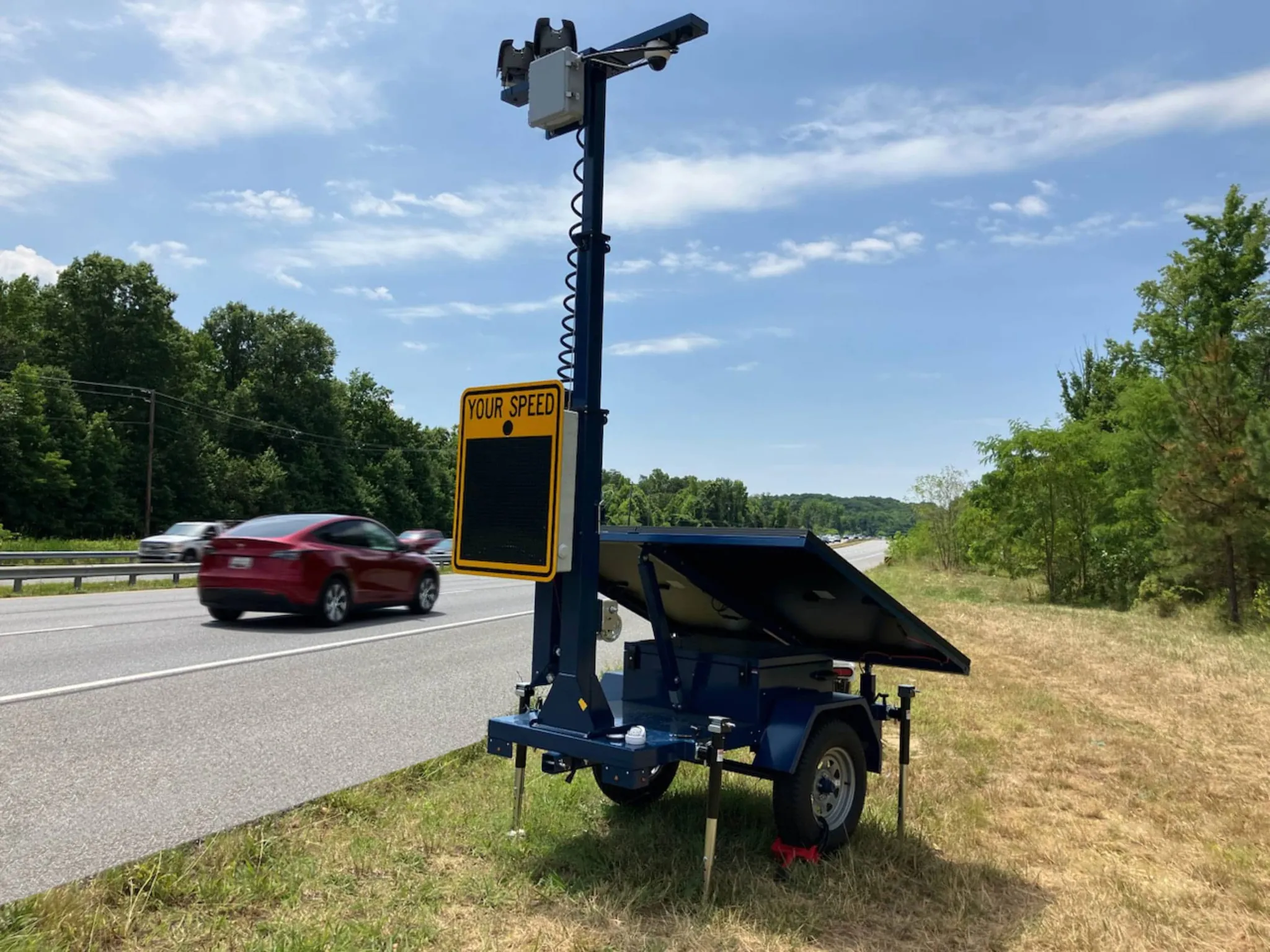
The city’s reported program uses a Jenoptik contract, six mobile trailers, law-enforcement review before citation issuance, a 30-day grace period, and civil-only classification.[5][6] Those are not irrelevant safeguards. A police review step may help the city show that the vendor is not unilaterally issuing citations. A grace period may soften claims of surprise. Civil classification matters because Titus treated that category favorably.
Still, those safeguards do not answer the acoustic question. The available sources do not identify public technical standards for the Jenoptik trailers’ decibel threshold, measurement methodology, calibration frequency, or method for attributing a particular sound to one vehicle rather than another. That absence should not be overstated as proof that no standards exist. It does mean that a contested hearing could quickly become less about whether a vehicle was loud and more about whether the city can explain, in admissible form, how the device knew which vehicle caused the recorded noise.
That is where the phrase “reviewed by law enforcement” can become thin. If an officer reviews images and a vendor-generated data packet, the officer may be competent to describe what appears in the packet. The officer may not be the witness who can explain microphone placement, background-noise filtering, calibration drift, vehicle attribution, software settings, or maintenance history. In a routine uncontested citation, that distinction may never surface. In a preserved challenge, it is the distinction between administrative review and evidentiary foundation.
California Shows a Different Safeguard Model, Not a Binding Rule
The closest operational comparison in the available sources is California’s SB 1079 pilot. That pilot involves six cities, uses reported thresholds of 95 dB for cars and 80 dB for motorcycles, provides first-offense warnings, and includes post-citation vehicle testing at state Referee Centers.[7] Those features do not prove that Santa Fe’s program is invalid. California law does not decide New Mexico municipal authority, and the source reviewed is not a judicial decision.
The comparison matters for a narrower reason: California treated automated noise enforcement as something that needed a verification backstop outside the citation pipeline. A Referee Center model gives the cited owner a place where the vehicle itself can be tested. Santa Fe’s publicly reported materials, by contrast, emphasize mobile trailers, police review, and civil enforcement; they do not identify an equivalent independent vehicle-testing mechanism.[5][6][7]
Washington’s HB 1423 points in the same direction only modestly. The bill passed the Washington House 57-40 in 2025 but had not been enacted in the available sources.[8] That is evidence of legislative experimentation, not settled doctrine. It also reinforces the basic caution: automated noise enforcement is still being designed in public, not applied under a mature body of appellate law.
Civil Classification Does Not End the Due Process Inquiry
Santa Fe’s reported civil-only framing helps the city avoid some criminal-procedure consequences, but it does not make the hearing process decorative. Civil enforcement still requires notice, a meaningful opportunity to be heard, a decisionmaker with authority to reject the citation, and a record that can be tested. The more automated and vendor-dependent the proof becomes, the more important those hearing features become.
This is where Titus gives both sides something to use. The city will cite the majority’s acceptance of nuisance-abatement classification. A challenger will answer that the majority did not decide the preserved confrontation issue and that Judge Vigil’s dissent directly attacked the enforcement structure.[1][2] The practical litigation question becomes whether the hearing is real enough to justify the civil label, especially when the penalty is substantial and the evidence is generated by specialized equipment.
For speed citations, the proof dispute may center on the usual records: calibration logs, deployment location, signage, images, timestamps, and reviewer identity. For noise citations, the city may need more: acoustic calibration, environmental conditions, competing sound sources, attribution logic, device maintenance, and the qualifications of whoever explains the system. A hearing officer who receives only a vendor packet and a conclusory police approval may have difficulty showing that the respondent had a meaningful chance to contest the evidence.
Owner Liability Is the Familiar Fairness Attack
The STOP 2.0 materials identify strict owner liability: the vehicle owner is responsible regardless of who was driving.[5][6] That structure is administratively convenient because cameras identify vehicles more reliably than drivers. It is also the feature most likely to feel unfair to a person who lent a car, owns a family vehicle, manages a small fleet, or receives a citation after someone else drove.
Owner liability is not automatically unconstitutional. Municipal codes often attach civil responsibility to owners for vehicle-related violations. The risk is sharper here because the same structure appeared in the earlier automated-enforcement fight and drew a dissent that treated the program as unlawful and punitive.[2] Santa Fe has therefore adopted a familiar administrative shortcut in an area where New Mexico’s highest court has not supplied the final constitutional answer.
Noise citations make the owner-liability problem less abstract. A speeding image may at least show the owner’s vehicle crossing a detection point at a recorded speed. A noise citation may require the city to prove that the owner’s vehicle, and not another vehicle or environmental source, produced a sound exceeding the applicable standard. If the owner was not driving and the proof depends on technical attribution, the fairness objection gains evidentiary weight.
The $500 Noise Penalty Gives Challengers a Concrete Pressure Point
Reported penalties make the noise component stand out. Santa Fe’s structure has been reported as $50 for a first speeding violation, $100 for a second, $150 for later speeding violations, and $500 for a noise violation.[5][6] The noise penalty is ten times the base speeding fine. That does not, by itself, establish an excessive fine or due process violation, but it gives a challenger a simple proportionality argument that a hearing officer, trial judge, or appellate panel can understand without technical training.
| Citation Type | Reported Penalty | Legal Significance |
|---|---|---|
| First speeding violation | $50 | Baseline civil penalty for comparison |
| Second speeding violation | $100 | Escalating schedule suggests repeat-conduct rationale |
| Subsequent speeding violations | $150 | Higher but still far below the noise penalty |
| Noise violation | $500 | Creates the most obvious proportionality and proof-pressure issue |
The penalty amount also affects the confrontation and evidentiary arguments. A city can say a civil citation is modest, administrative, and remedial. That position is easier to maintain at $50 than at $500, especially when the $500 assessment rests on a newer technology with no identified appellate guidance. The more the penalty resembles punishment in practical effect, the more pressure falls on the city to show that the respondent can meaningfully test the proof.
Revenue Structure Is Not Just Optics
Automated enforcement litigation rarely stays confined to the individual citation. Once revenue enters the record, challengers argue that the program’s design creates enforcement incentives inconsistent with neutral public safety regulation. That was the force of Judge Vigil’s policing-for-profit dissent in Titus.[2]
The 2009 version of Section 3-18-17 NMSA included a 50/50 state revenue split and mandatory independent audit requirements, which the Titus majority treated as part of the statutory environment supporting non-revenue intent.[1][2] SB 91, as reported in February 2026, would remove that revenue split and the audit requirements.[9] If that bill became law in the form reported, the change would not automatically invalidate Santa Fe’s program. It would, however, weaken one of the cleaner statutory answers municipalities have used against the revenue-motive attack.
Albuquerque’s recent automated speed enforcement numbers explain why the issue matters beyond Santa Fe. Since 2022, Albuquerque’s program has reportedly generated about 582,000 citations and roughly $40 million, using 25 cameras across about 34 locations.[10][11] Those figures do not prove improper motive in Santa Fe. They do show why courts and legislators may treat revenue safeguards as structural, not cosmetic.
For Santa Fe, the most dangerous version of the revenue argument would connect several facts rather than rely on one. A challenger could point to civil-only framing, strict owner liability, private-vendor infrastructure, a $500 noise penalty, and any weakening of revenue-sharing or audit safeguards. The point would not be that any one feature is forbidden. The point would be that the combined design looks less like nuisance abatement and more like a citation-production system.
Privacy Promises Help, but Vendor Oversight Still Has to Be Proved
Santa Fe has reportedly pledged that STOP 2.0 data will not be shared with ICE and that non-citation data will be retained for only 30 days.[5] Those promises matter. They narrow some surveillance and secondary-use concerns, and they give the city language to distinguish the program from broader monitoring systems.
But privacy pledges do not substitute for vendor oversight. Jenoptik is reported as the private vendor, and the equipment is central to the evidentiary record.[5][6] In a contested matter, counsel should expect questions about who stores the data, who can access it, how deletion is verified, how audit logs are maintained, whether vendor personnel can alter or annotate records, and who can testify to those facts.
Those questions are not limited to privacy law. They also affect authentication. A city that cannot explain the custody, retention, and integrity of the record may struggle to prove the citation even if the underlying ordinance is valid.
The Likely Challenge Vectors
The cleanest inherited constitutional opening is the unresolved confrontation issue. Titus is useful to municipalities on civil classification, but it did not decide a properly preserved Sixth Amendment challenge on the merits.[1][2] A respondent who exhausts the administrative process and demands the witnesses necessary to test the citation record presents a different case from the plaintiff who paid first and litigated later.
The most familiar fairness attack is strict owner liability. Courts have seen owner-responsibility regimes before, so the argument is not novel. Its force in Santa Fe comes from repetition: the same structural feature criticized in the earlier dissent now operates in a program with a new acoustic component and a much higher noise penalty.
The most novel and least predictable issue is the noise camera. The available sources identify no published U.S. appellate decision deciding the constitutionality of automated noise citations. That does not make Santa Fe’s program unlawful. It means the city is operating without the comfort of appellate standards on measurement methodology, calibration, vehicle attribution, and the hearing rights attached to automated acoustic proof.
The most practical pressure point is penalty proportionality. A $500 noise citation beside a $50 first speeding citation gives challengers a concrete way to argue that the civil label is doing too much work.[5][6] Even if that argument does not win alone, it can strengthen due process, excessive-fine, and evidentiary objections.
The statutory change to watch is SB 91. If the reported removal of the revenue split and audit requirements remains operative, Santa Fe and other municipalities may lose a statutory feature that previously helped answer the policing-for-profit critique.[9] That would not decide any individual citation, but it would change the background against which courts assess municipal motive and program design.
STOP 2.0 should not be described as already unlawful on the materials available. Its exposure is more specific than that. Santa Fe relaunched automated enforcement before the old constitutional questions were finally resolved, then added a harder-to-prove noise technology without identified U.S. appellate guidance and without the verification safeguards visible in the closest operational analog. That combination is what makes the program unusually vulnerable.
References
- Titus v. City of Albuquerque, FindLaw
- Titus v. Albuquerque coverage, TheNewspaper.com, January 2012
- Ordinance No. 2025-22, City of Santa Fe
- Ordinance No. 2023-2, City of Santa Fe
- Santa Fe STOP 2.0 coverage, KOAT, April 2026
- Santa Fe speed and noise camera coverage, KOB, April 2026
- California SB 1079 pilot coverage, DUB Magazine, December 2025
- Washington HB 1423 legislative recap, MultiState, February 2026
- SB 91 coverage, ABQ.news, February 2026
- Automated Speed Enforcement FAQs, City of Albuquerque
- Albuquerque automated speed enforcement revenue coverage, The Paper, ABQ.news
Operationalizing workflow
No workflow has been explicitly linked to this obligation yet. See Workflows generally.
Illustrative cases
No illustrative case is currently tracked for this obligation. See Risk Digest for documented incidents generally.
← Back to RegulationReport a correction or tip
Spotted an outdated figure, a misstated fact, or a ruling this regulation entry should reflect? Public comments are disabled for this content given the professional cost of a misreported case outcome, penalty amount, or rule text — use the structured correction channel instead.
Report a correction or tip for this record →