
Why the SAVE Act voter ID rule is constitutionally vulnerable
- Authority
- U.S. Congress
- Rule type
- statute
- Jurisdiction scope
- US federal
- Effective date
- Jul 30, 2026
- Source text
- Read primary rule text ↗
Voters must present photo ID at polling places and provide documentary proof of citizenship to register for federal elections.
The legal impact of the SAVE America Act voter ID amendment turns on a distinction that gets blurred too quickly: a photo-ID rule at the polls and a documentary-proof-of-citizenship rule for registration are not the same burden. A facial attack on the polling-place photo-ID mandate would run into Crawford v. Marion County, where the Supreme Court upheld Indiana’s photo-ID law under Anderson-Burdick balancing. The registration mandate is more exposed because it asks a different question: whether citizens can be required to produce citizenship documents before they can get onto the rolls at all.
Current as of Q3 2026, the stronger litigation risk is not that every form of voter ID is constitutionally suspect. It is that the proof-of-citizenship requirement, document costs, and narrow acceptable-ID list create burdens that Crawford did not settle. This is a litigation-risk map, not legal advice.
The precedent map starts with two different mandates
The first pleading mistake is treating the Act as one generic “voter ID” law. The polling-place rule and the registration rule invite different defenses, different plaintiffs, and different records.
| SAVE Act provision or issue | Most relevant doctrine | Litigation consequence |
|---|---|---|
| Photo ID at the polls | Crawford and Anderson-Burdick balancing | A facial challenge is difficult because Crawford upheld Indiana’s photo-ID law 6–3 after finding the burden minimal for most voters, while leaving as-applied challenges open. [1] |
| Documentary proof of citizenship to register | First and Fourteenth Amendment undue-burden analysis | The closest current analog is the May 2026 federal district-court ruling striking down New Hampshire’s SAVE-like registration law; that ruling is persuasive, not controlling, and is on appeal. [2] |
| Fees for underlying citizenship documents | Twenty-Fourth Amendment and Harper | Passport and birth-certificate costs can be pleaded as wealth-linked barriers, but no Supreme Court decision squarely decides whether third-party document fees are a modern poll tax. [3] |
| Federal amendment to registration rules | Arizona v. Inter Tribal Council and NVRA preemption | State documentary-proof laws can be preempted by the NVRA; a federal amendment to the NVRA would shift the challenge from preemption to constitutional grounds. [4] |
| Narrow acceptable-ID list | As-applied burden record under Crawford | Excluding categories such as student IDs, most tribal IDs, and public-assistance IDs may create a burden record Crawford did not test. [1] |
Crawford helps the photo-ID rule, but only at the right altitude
For the polling-place photo-ID provision, Crawford is the defense’s first exhibit. The Supreme Court upheld Indiana’s law in 2008, applying the Anderson-Burdick framework and accepting that the state’s interests in election integrity, modernization, and public confidence justified the generally modest burden imposed on most voters. That makes a broad facial challenge to a federal photo-ID requirement hard to plead around. [1]
But Crawford is not a universal solvent. The decision did not hold that every photo-ID law survives every challenge, and it expressly left room for as-applied claims. That distinction matters if the SAVE Act’s acceptable-ID list is narrower than the record the Supreme Court had before it in Crawford.

A narrow list changes the plaintiff’s evidence. A voter who has a student ID, a public-assistance ID, or a tribal ID that the statute does not accept is not making the same claim as a voter who simply objects to showing identification. The claim becomes more concrete: this citizen has an identity document that government institutions already recognize for important purposes, but the Act excludes it while requiring another document the voter may not readily possess.
That is where as-applied litigation becomes more serious than the usual facial attack. Crawford’s burden analysis was tied to the record before the Court. If a future record shows that excluded ID categories fall predictably on particular voters—students, some Native voters, low-income voters, or elderly voters without current driver’s licenses—the case no longer asks whether photo ID is permissible in the abstract. It asks whether this list, applied to these voters, imposes a burden the state or federal government has not justified.
The proof-of-citizenship mandate is the heavier target
The documentary-proof-of-citizenship requirement should not be analyzed as if it were just a stricter form of poll-site ID. It operates earlier. A voter who cannot produce the required citizenship document is not merely inconvenienced at the precinct; the voter may be blocked from registration. That timing affects both the burden and the remedy.
Undue burden: the New Hampshire ruling supplies a template, not a final answer
The most direct current template is the May 2026 federal district-court ruling striking down New Hampshire’s SAVE-like documentary-proof-of-citizenship law under the First and Fourteenth Amendments. The court treated the requirement as an undue burden on the right to vote. The state has indicated it will appeal, so the ruling should be used carefully: it is recent, on point, and useful to plead from, but it is not binding national law. [2]
For plaintiffs, the ruling’s value is its structure. The claim does not need to deny that government may verify eligibility. It can focus on the means chosen: requiring documentary proof from citizens who are already eligible but lack ready access to the approved papers. In an Anderson-Burdick-style record, that burden is not measured by how simple the rule looks on paper. It is measured by what the voter must do to comply.
The Brennan Center estimates that 21 million U.S. citizens of voting age lack ready access to documentary proof of citizenship such as a passport or birth certificate, using a methodology based on Census Bureau and State Department data. That number is an advocacy-organization estimate, not an uncontested government finding, but it is still an important litigation fact because burden analysis depends on who is affected and how. [4]
A defense lawyer will press the opposite side of the same framework: the number does not itself prove disenfranchisement; lack of ready access is not the same as inability to obtain; and Congress may argue that citizenship verification serves a sufficiently weighty interest. Those distinctions are not formalities. They decide whether a court treats the mandate as an administrable eligibility rule or as a registration barrier that falls too heavily on eligible citizens.
Poll tax: plausible, powerful, and still unresolved
The poll-tax theory is more legally volatile. The Twenty-Fourth Amendment bars poll taxes in federal elections, and Harper v. Virginia Board of Elections held that wealth-based voting qualifications violate equal protection. If a voter must pay for a passport or birth certificate to obtain the only acceptable proof needed to register, the challenger’s argument is straightforward: the law has converted a document fee into a practical price of voting.
The factual hook is concrete. The National Constitution Center identifies a U.S. passport fee of $165 and birth-certificate costs in the $10 to $50 range as the kind of expenses that could become central to a SAVE Act challenge. It also flags the key limitation: the Supreme Court has not squarely decided whether requiring payment to a third party for an underlying document is itself an unconstitutional poll tax. [3]
That unresolved status cuts both ways. Plaintiffs would argue that constitutional protection would be hollow if government could avoid the poll-tax rule by outsourcing the payment to passport agencies or vital-records offices. Defenders would answer that the Act does not impose a voting fee directly and that document costs attach to multipurpose identity records, not to the ballot itself. Harper helps the wealth-discrimination theory, but it does not by itself answer the passport-fee question.
Preemption is different when Congress writes the rule
State analogs matter, but only up to a point. Kansas’s proof-of-citizenship law was struck down by the Tenth Circuit in 2020. Arizona’s documentary-proof requirements have also met serious federal-court resistance, including the Supreme Court’s Inter Tribal Council decision and a Ninth Circuit ruling in 2025. Those cases show the recurring weakness of state-level documentary-proof regimes. They do not mechanically decide a challenge to a federal statute. [4]
Inter Tribal Council is the dividing line. There, the Supreme Court held that the National Voter Registration Act preempted Arizona’s state requirement that voters provide documentary proof of citizenship for federal elections. If Congress itself amends the NVRA through the SAVE Act, the new federal rule cannot be preempted by the old federal rule. The fight then moves to the Constitution: First Amendment burden, Fourteenth Amendment equality and due process theories, and the Twenty-Fourth Amendment poll-tax argument. [4]
That shift matters for remedies. A state administrator defending a state documentary-proof law may lose on federal preemption before a court reaches the heavier constitutional questions. A federal SAVE Act challenge would more likely force those questions to the surface.
The narrow ID list is where Crawford’s safe harbor may thin out
The acceptable-ID list deserves separate treatment because it links the photo-ID and proof-of-citizenship sides of the statute. A broad list lets the government argue that nearly all voters have a practical route to compliance. A narrow list creates record-building opportunities: which common documents are excluded, which voters rely on them, what replacement document is available, what it costs, and how long it takes to obtain.
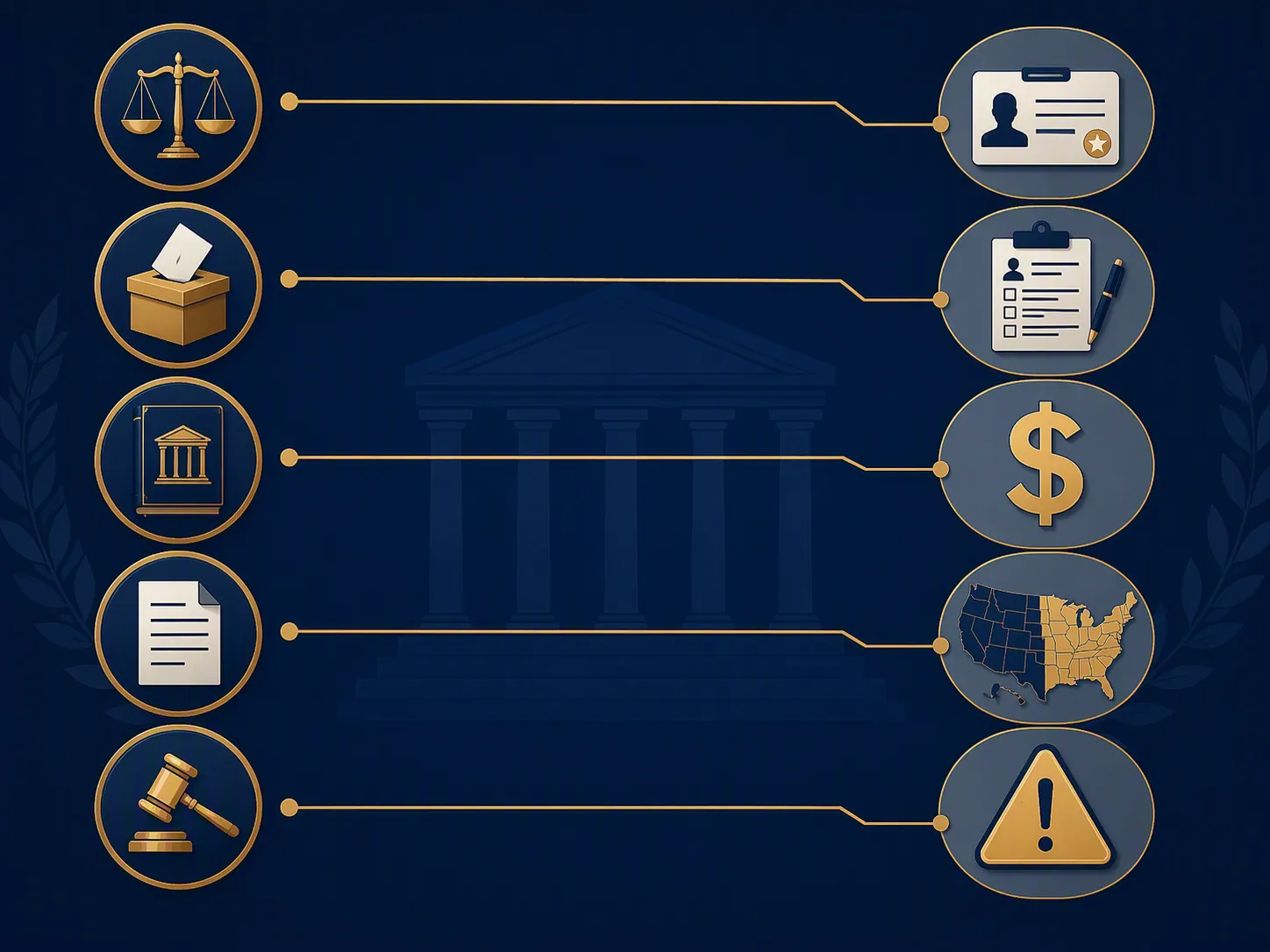
Crawford did not bless a rule that rejects every alternative identity document a voter is likely to possess. If the SAVE Act excludes student IDs, most tribal IDs, and public-assistance IDs, a plaintiff can frame the claim around the statutory exclusions rather than the general idea of identification. The evidence would not be “some voters dislike voter ID.” It would be “these voters have recognized forms of identification, but the statute refuses them and demands a narrower set they do not have.” [1]
That kind of record also affects standing and remedy. A facial plaintiff must carry a broad burden. An as-applied plaintiff can be more precise: an eligible citizen, a rejected document, a required replacement, a cost or delay, and a missed or threatened registration deadline. For readers tracking standing and remedial posture, the site’s related SAVE Act records on proof-of-citizenship challenges, voter-ID review, constitutional challenge theories, live litigation tracking, and the Act’s standing paradox are the better next layer of detail.
Procedural uncertainty will shape the first lawsuits
As of July 2026, the SAVE America Act had appeared through more than one procedural vehicle, including as a standalone bill, an NDAA rider, and a budget-reconciliation path. That matters because effective date, scope, agency guidance, and implementation deadlines may depend on the enacted vehicle. A constitutional challenge filed before election administrators know the final compliance calendar will look different from one filed after voters begin being rejected. [2]
The timing problem is practical, not just doctrinal. State officials may have to redesign registration processes while litigation is pending. Vendors may need to change intake systems, document-verification fields, provisional-ballot processes, and rejection notices without knowing whether the proof requirement will survive. Plaintiffs, meanwhile, must decide whether to sue before implementation based on predictable burdens or wait for a cleaner record of actual denials.
Those choices affect the standard of review and the remedy. A pre-enforcement facial challenge may preserve election-calendar stability but faces a higher burden. An as-applied challenge may be stronger on facts but may arrive after registration deadlines have already done their work. A mixed complaint can plead both theories, but courts may separate the claims if the facial attack overreaches.
Where the risk assessment stops
The polling-place photo-ID mandate is probably facially defensible under Crawford, especially if a court views it as a conventional election-integrity rule with manageable voter burdens. The proof-of-citizenship registration mandate is the more vulnerable part of the Act because it operates before the voter reaches the ballot and because its burdens can be tied to missing documents and document fees. The narrow acceptable-ID list adds a separate as-applied risk for voters whose existing student, tribal, or public-assistance IDs are excluded.
The unresolved questions are the ones likely to matter most: whether document costs become a modern poll-tax problem; how much weight appellate courts give the New Hampshire ruling; whether the Brennan Center’s 21-million estimate is credited, narrowed, or displaced by a different record; and whether the SAVE Act’s narrower ID list produces the as-applied case Crawford left open.
References
- The Supreme Court and voting identification, SCOTUSblog, March 25, 2026.
- What You Need to Know About the SAVE Act, Campaign Legal Center, July 23, 2026.
- The Constitution and the SAVE America Act, National Constitution Center, March 19, 2026.
- New SAVE Act Bills Would Still Block Millions of Americans From Voting, Brennan Center for Justice, February 2026.
Operationalizing workflow
No workflow has been explicitly linked to this obligation yet. See Workflows generally.
Illustrative cases
No illustrative case is currently tracked for this obligation. See Risk Digest for documented incidents generally.
← Back to RegulationReport a correction or tip
Spotted an outdated figure, a misstated fact, or a ruling this regulation entry should reflect? Public comments are disabled for this content given the professional cost of a misreported case outcome, penalty amount, or rule text — use the structured correction channel instead.
Report a correction or tip for this record →