
What Rules and Conditions Govern Schengen Suspension?
- Authority
- European Union
- Rule type
- regulation
- Jurisdiction scope
- EU
- Source text
- Read primary rule text ↗
Internal border controls require a recognized serious threat, a stated legal route, duration-limit compliance, notification, and escalating risk and proportionality review after 6 and 12 months.
Regulation & Ethics note: this is a legal-information reference, not legal advice. It is current to 2 August 2026, UTC. The legal anchor is the Schengen Borders Code as amended by Regulation (EU) 2024/1717; live country status depends on the European Commission’s notification registry and should be checked at record level before anyone advises on a crossing date, deployment, or routing decision. [1][2]

A Schengen state does not, in the ordinary legal sense, “suspend the Schengen Agreement.” What it may do is temporarily reintroduce controls at internal borders through specified routes, for specified threats, under specified time limits. That distinction matters because the legal question is not whether free movement has become politically inconvenient. It is which article is being used, which ground is asserted, how long the measure has already run, and what new material justifies keeping it in place.
The amended Code treats internal border controls as a last-resort exception. The permission is real, but it is not open-ended. A state must identify a serious threat to public policy or internal security, use one of the recognized grounds, notify and consult through the EU machinery, and re-justify the measure as the clock advances. The longer the control runs, the more the file must contain something better than an old threat label.
The three legal routes
There are three main routes to internal border controls under the reformed Schengen Borders Code. One is national: Articles 25 and 25a allow a member state to reintroduce controls where there is a serious threat to public policy or internal security. Two are Union-level routes: Article 28 deals with large-scale public health emergencies, and Article 29 deals with persistent serious deficiencies at the external border that put the overall functioning of the area at risk. [1]
| Route | Trigger | Who acts | Basic duration frame |
|---|---|---|---|
| Articles 25 and 25a | Serious threat to public policy or internal security based on one of the Article 25 grounds | Member state | Immediate unforeseeable controls may run for up to 1 month and be prolonged up to 3 months total; foreseeable controls may run in periods of up to 6 months, ordinarily capped at 2 years, with a narrow exceptional path up to 3 years for the same threat. [1] |
| Article 28 | Large-scale public health emergency affecting several member states and putting the overall functioning of the area at risk | Council authorization | Council-authorized internal border controls may be introduced for periods of up to 6 months and renewed under the Article 28 route. [1] |
| Article 29 | Persistent serious deficiencies in external border control that threaten the overall functioning of the area without sufficient remedial action | Council recommendation | Recommended controls may run for up to 6 months, with no more than 3 prolongations and a total maximum of 2 years. [1] |
For most advisory work, the first route is the one that needs the closest reading. It is the route used when a state says that a domestic security, migration-pressure, health, or event-related threat requires temporary controls at an internal Schengen border. The Union-level routes matter, but they are not a general substitute for a national extension that has simply become administratively convenient.
The four Article 25 grounds
Article 25 is now more explicit about the kinds of serious threats that may justify national reintroduction of internal border controls. The provision identifies four qualifying grounds: terrorist incidents or threats and threats posed by serious organized crime; large-scale public health emergencies; exceptional situations involving sudden large-scale unauthorized movements of third-country nationals between member states that put substantial pressure on public authorities; and large-scale or high-profile international events. [1]
- Terrorism or serious organized crime: the ground is framed around incidents, threats, or activity serious enough to affect public policy or internal security, not ordinary policing inconvenience.
- Large-scale public health emergency: this may support a national Article 25 measure, and a separate Article 28 Union-level route exists where the emergency is large-scale and affects the functioning of the Schengen area more broadly.
- Sudden large-scale unauthorized movements of third-country nationals: the Code ties this ground to exceptional sudden movements between member states and substantial pressure on public authorities. It is not a free-standing permission to run internal controls because migration is politically salient.
- Large-scale or high-profile international events: this ground is usually easier to understand on timing. A major summit, tournament, or comparable event has a beginning and an end, which also makes stale prolongations harder to defend.
The legal file should connect the selected ground to the actual border-control measure. If the stated problem is mobile cross-border criminality, the state still has to explain why internal border controls are necessary and proportionate rather than relying on police checks, targeted operations, or cross-border cooperation. If the problem is an event, the dates and locations matter. If the problem is a public-health emergency, the measure should be tied to current epidemiological risk rather than to the memory of an earlier crisis.
The duration matrix is the part to keep on hand
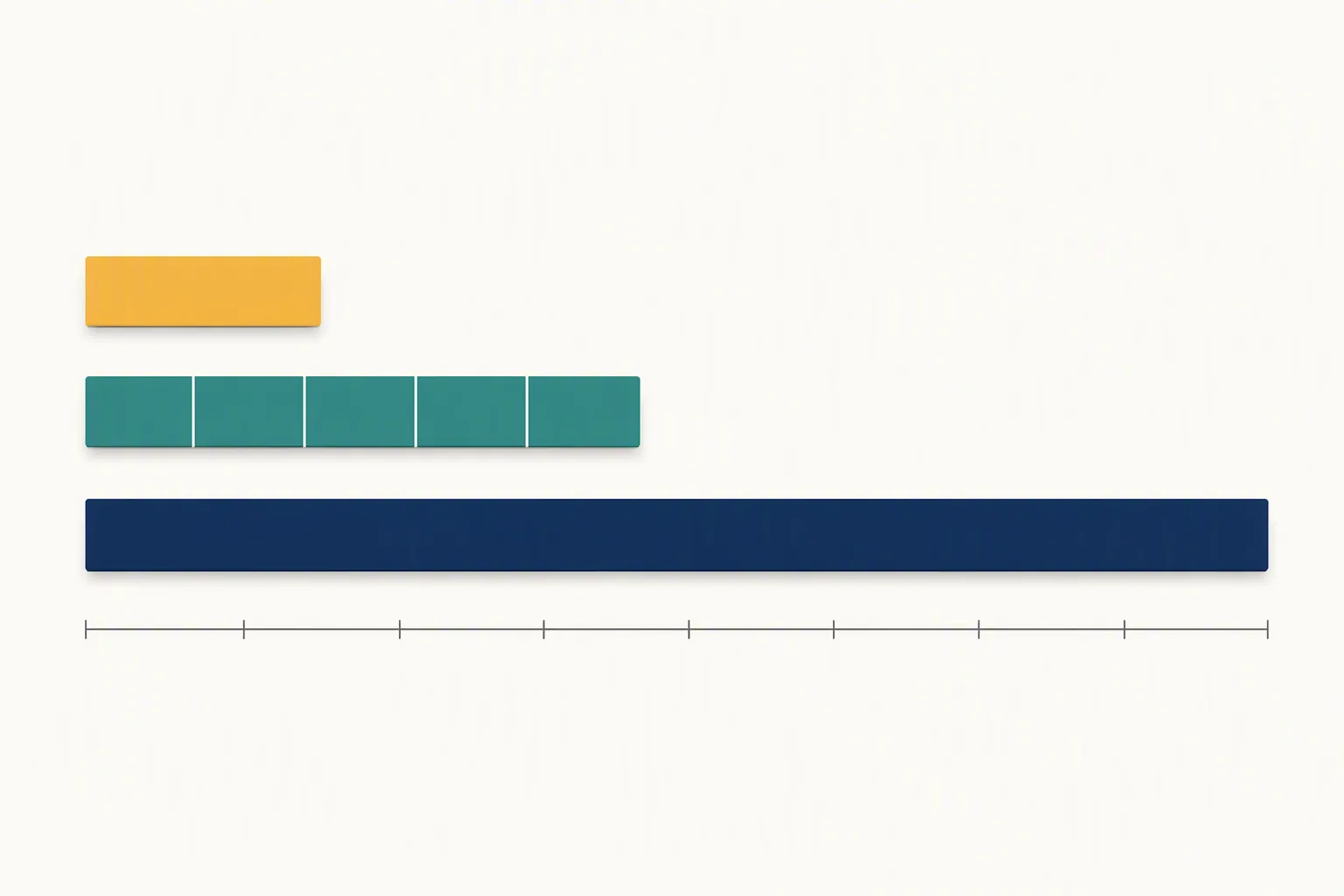
Most bad advice about Schengen “suspension” starts with a true observation and then loses the clock. A member state may reintroduce controls, but the available period depends on whether the threat was unforeseeable and required immediate action, whether it was foreseeable, whether the same threat has already run close to the ordinary ceiling, and whether one of the Union-level mechanisms is being used.
| Situation | Initial period | Extension rule | Outer limit |
|---|---|---|---|
| National measure for an unforeseeable serious threat requiring immediate action | Immediate reintroduction for up to 1 month | May be prolonged where the serious threat persists | 3 months total under the immediate-action route. [1] |
| National measure for a foreseeable serious threat | Notification generally at least 4 weeks in advance; control period may be up to 6 months | May be renewed in periods of up to 6 months if the serious threat persists and the conditions remain met | Ordinarily 2 years for the same threat. [1] |
| Major exceptional situation involving the same threat after the ordinary national ceiling | Available only after the Article 25a framework has already brought the measure to the 2-year limit | Further extension is possible only under the exceptional Article 25a(6) path | Up to 3 years total for the same threat. [1] |
| Union-level public-health route | Council authorization for controls for up to 6 months | Renewal is handled under Article 28 | The relevant period is set by the Council authorization and renewal framework. [1] |
| Systemic external-border deficiencies | Council recommendation for up to 6 months | No more than 3 prolongations | 2 years total. [1] |
The two-year and three-year figures introduced by the 2024 reform are easy to misuse. They are not a normal planning horizon for internal border controls. They are ceilings. A state still has to show that the threat persists, that the measure remains necessary and proportionate, and that less restrictive alternatives are insufficient. The ceiling answers the question “how long can the legal route possibly last?” It does not answer “has this particular control been justified?”
Notification is not a courtesy filing
For foreseeable threats, the state must notify the Commission, the European Parliament, the Council, and the other member states generally at least 4 weeks before the planned reintroduction. The notification must identify the reasons, scope, affected border sections, planned dates, and the measures expected to be taken by other member states where relevant. [1]
That filing starts the discipline of the system. Article 26 requires the state to assess necessity and proportionality, including whether the temporary control is likely to adequately remedy the threat and what impact it will have on free movement. Article 27 and Article 27a then move the measure into a consultation and oversight sequence. [1]
- Before introduction: identify the legal basis, the threat, the border sections, the dates, and why internal border controls are needed rather than ordinary police or cooperation tools.
- At prolongation: update the justification. A prolongation notice cannot safely read like a copy of the first notice with new dates.
- After 6 months: include a risk assessment with every prolongation notification.
- At 12 months: expect a Commission opinion assessing necessity and proportionality.
- After the measure ends: report on implementation, effectiveness, and proportionality under the reporting duties in the Code.
Six months changes the paperwork; twelve months changes the scrutiny

Article 27a is the reformed Code’s answer to administrative drift. Once internal border controls have been in place for 6 months, any prolongation notification must include a risk assessment. Once controls reach 12 months, the Commission must issue an opinion on necessity and proportionality and may consult with the member state and other affected states. [1]
The practical consequence is simple enough to operationalize. A first notification may be built around the emergence of a serious threat. A later notification has to explain why the threat still exists, why the same or adjusted border-control response remains necessary, and why alternatives do not sufficiently address the risk. At the 12-month mark, that explanation is no longer only a national assertion; it is put before the Commission for a formal assessment.
The Code also requires reporting. Member states must report on the reintroduction of border controls, and the Commission’s annual State of Schengen reporting gives the broader institutional setting in which repeated national controls are assessed. [1]
Current 2026 status: use the registry, not a copied country count
Country status is date-sensitive. As of a 2 August 2026 check, the Commission’s notification registry was the source to consult for active notified controls and end dates; examples in the registry included Germany and Austria notified to 15 September 2026, and France notified to 31 October 2026. Those examples should not be treated as a permanent list, and any client-facing note should link the Commission registry rather than freeze a country count that may already be stale. [2]
The most important 2026 development is not the number of states in a headline. It is that the Article 27a twelve-month machinery is operating in public. On 2 June 2026, the Commission issued opinions concerning temporary internal border controls by nine Schengen states: Austria, Denmark, France, Germany, Italy, the Netherlands, Norway, Slovenia, and Sweden. [3]
Those opinions do not themselves terminate national measures. They are non-binding assessments, and the available materials do not show infringement proceedings opened against the long-running controls. Their significance is different: they map the Commission’s necessity-and-proportionality review onto controls that have crossed the twelve-month trigger, and they recommend gradual lifting through alternative measures rather than treating internal border controls as the default long-term tool. [3]
Why the Commission keeps pressing alternatives
The alternatives point is built into the reformed Code. Articles 23 and 23a preserve room for police checks and cooperation measures that do not amount to border checks, including non-systematic risk-based checks and tools such as mobile biometric identification or vehicle-tracking technology when used within the legal limits of those provisions. [1]
That is also the setting for the Commission’s 2026 State of Schengen reporting. The Commission reported on 18 May 2026 that illegal border crossings had dropped by 26% in 2025, that the return rate was 28%, and that the Entry/Exit System had been operational since 10 April 2026. Those figures do not decide whether any one state’s border control is lawful. They do help explain why the Commission pushes member states to use targeted, intelligence-led, and interoperable tools where those can address the stated threat with less disruption to free movement. [4]
Do not apply the old six-month rule as current law
Older commentary can mislead if it is not dated. In the NW litigation, the Court of Justice of the European Union addressed the pre-reform Schengen Borders Code and held that the then-applicable rules imposed an absolute six-month ceiling for the same threat; the Court also rejected Article 72 TFEU as a general escape hatch from those limits. The judgment was delivered on 26 April 2022 in Cases C-368/20 and C-369/20. [5]
That matters because the 2024 reform changed the statutory architecture. The current Code now contains the ordinary 2-year ceiling and the exceptional 3-year path for the same threat under Article 25a, together with the 6-month risk-assessment trigger and the 12-month Commission-opinion trigger. The NW judgment remains useful for the underlying discipline: time limits in the Code are legal limits, not suggestions. It should not be cited as if its pre-reform six-month ceiling were still the operative duration rule.
A usable test for a proposed or prolonged control
For a live matter, the clean way to read a Schengen internal border-control notice is to put the state’s filing against four questions.
- Which route is being used? A national Article 25/25a measure, a Council-authorized Article 28 public-health measure, or an Article 29 systemic-deficiency recommendation?
- Which ground is asserted? Terrorism or serious organized crime, large-scale public health emergency, sudden large-scale unauthorized movements putting substantial pressure on public authorities, or a large-scale or high-profile international event?
- Where is the measure on the clock? Immediate controls have a short 1-month starting point and a 3-month maximum; foreseeable national controls run in 6-month periods, ordinarily no longer than 2 years for the same threat, with the exceptional 3-year path requiring more than routine continuation.
- What has changed since the last notice? After 6 months, the prolongation file needs a risk assessment; after 12 months, the Commission must assess necessity and proportionality. A notice that does not update the threat, alternatives, and proportionality analysis is legally thin even if the original emergency was real.
That is the practical answer to the loose question about “suspending Schengen.” The rules allow temporary internal border controls, but only inside a documented legal channel. The conditions tighten over time. After 6 months, the file must carry a risk assessment. After 12 months, the Commission must give its view on necessity and proportionality. Beyond that point, inertia is not one of the recognized grounds.
References
- Regulation (EU) 2024/1717 in-force text — EUR-Lex, 2024, https://eur-lex.europa.eu/eli/reg/2024/1717/oj
- Temporary Reintroduction of Border Control — European Commission DG HOME, https://home-affairs.ec.europa.eu/policies/schengen/schengen-area/temporary-reintroduction-border-control_en
- Commission opinions on temporary internal border controls in the Schengen area — European Commission DG HOME, https://home-affairs.ec.europa.eu/commission-opinions-temporary-internal-border-controls-schengen-area_en
- Commission report shows the Schengen area continues to be resilient and ready for future challenges — European Commission DG HOME, 18 May 2026, https://home-affairs.ec.europa.eu/news/commission-report-shows-schengen-area-continues-be-resilient-and-ready-future-challenges-2026-05-18_en
- Schengen Restored — Verfassungsblog, 5 May 2022, https://verfassungsblog.de/schengen-restored/
Operationalizing workflow
No workflow has been explicitly linked to this obligation yet. See Workflows generally.
Illustrative cases
No illustrative case is currently tracked for this obligation. See Risk Digest for documented incidents generally.
← Back to RegulationReport a correction or tip
Spotted an outdated figure, a misstated fact, or a ruling this regulation entry should reflect? Public comments are disabled for this content given the professional cost of a misreported case outcome, penalty amount, or rule text — use the structured correction channel instead.
Report a correction or tip for this record →