
Is the Screwworm Ban on US-Mexico Cattle Imports Lifted?
- Authority
- USDA APHIS
- Rule type
- regulation
- Jurisdiction scope
- US federal
- Effective date
- Aug 24, 2026
- Source text
- Read primary rule text ↗
Southern border ports remain closed as of July 30, 2026; Douglas, AZ scheduled to reopen Aug 24, 2026; full USDA NWS inspection and 9 CFR Part 93 requirements continue to apply.
Current status: not fully lifted
No. As of APHIS’s current-status page last modified July 30, 2026, southern border livestock ports are still listed as currently closed to livestock trade. Douglas, Arizona is scheduled to reopen on August 24, 2026; Santa Teresa, New Mexico and Columbus, New Mexico are conditional next steps; and every imported animal must still receive a full USDA New World screwworm inspection at the port of entry [1].
That is the operative answer for anyone checking US-Mexico border cattle import regulations after the screwworm ban: USDA has announced a phased reopening, but the Douglas reopening is not yet effective as of July 31, 2026. The July 24, 2026 USDA announcement describes the first reopening date as August 24, 2026, not July 24 or July 30 [2].
| Record field | Status |
|---|---|
| Last verified | July 31, 2026, UTC |
| Regulatory lane | Regulation & Ethics status tracker |
| Scope | Live livestock imports from Mexico through southern border ports; cattle/bison product notes included where APHIS separately states them |
| Current operative position | Ports remain closed as of APHIS’s July 30, 2026 status page; Douglas, AZ is scheduled for August 24, 2026 |
| Legal-background reviewer | Not provided |
| Non-advice notice | Editorial regulatory information only, not legal advice. Confirm port status, permits, certificates, and shipment timing with APHIS, the port, and qualified counsel before moving animals. |
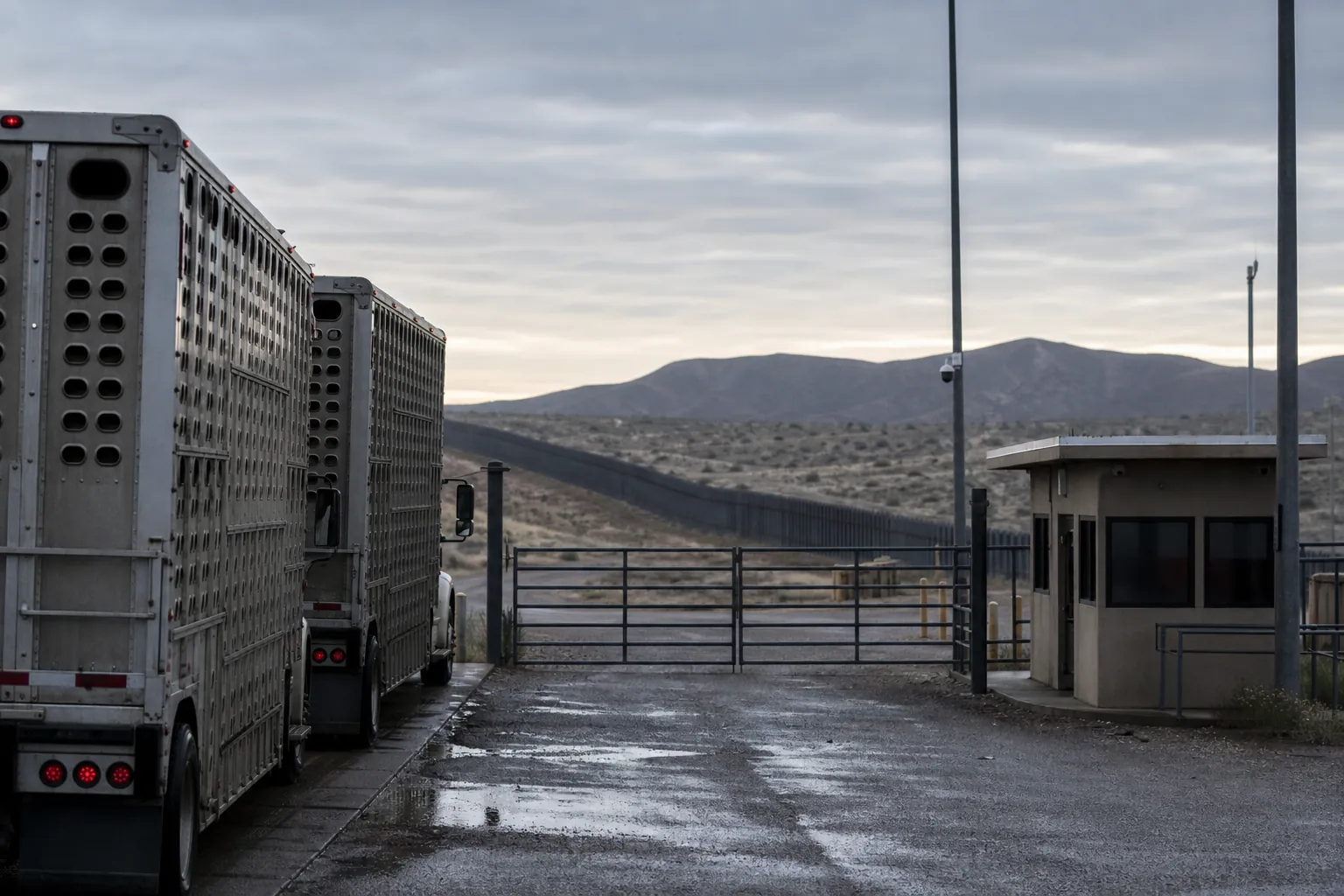
The reason this answer has to be so date-specific is that the screwworm restriction is not one switch labeled “ban.” It is a sequence of port-access decisions layered on top of the standing import rules in 9 CFR Part 93. Those baseline rules still require inspection, treatment, certification, and quarantine obligations where applicable; a reopening announcement does not erase them [3].
The compliance question is port, date, animal, and condition
A useful regulatory summary has to say who issued the action, when it took effect, what animals or products it covered, which ports it changed, and what duty remained. “US to lift ban” is not enough for an importer whose cattle would arrive at a named port before August 24. Nor is “border reopened” enough if the port is Santa Teresa or Columbus and APHIS has tied those ports to later audits and Mexico’s Joint Action Plan milestones [1][2].
APHIS’s current page also uses flexible language. The phased timeline is not presented as irreversible. It can be paused if conditions change, and each animal remains subject to USDA inspection at the port. In practice, the shipment question is narrower than the headline: can this animal or product move through this port on this date under the APHIS conditions then in force?
Dated federal-action chronology
The chronology matters because each step changed the practical answer without replacing the underlying Part 93 machinery. The February 2025 restriction-reduction detail should be verified against the APHIS import-alert PDF before quoting that PDF directly; the facts below rely on the accessible USDA and APHIS materials identified in the record.
| Date | Federal action or source | What changed | Compliance effect that remained |
|---|---|---|---|
| November 2024 | Initial suspension described in later USDA background materials [4] | USDA suspended live animal imports from Mexico after New World screwworm detections were reported in Mexico. | Imports did not become unrestricted; APHIS disease controls and Part 93 import duties remained the framework. |
| February 1, 2025 | Reopening under APHIS-SENASICA pre-clearance protocol, described in later USDA background materials [4] | Restrictions were reduced and imports resumed under a pre-clearance structure involving APHIS and Mexico’s SENASICA. | Movement depended on compliance with the protocol and existing APHIS import requirements, not on free border-wide entry. |
| May 11, 2025 | Secretary Rollins suspended live animal imports through southern border ports [4] | Live cattle, horses, and bison imports through all southern border ports were suspended on a month-by-month basis after NWS detections in Oaxaca and Veracruz, described by USDA as roughly 700 miles from the U.S. border [4]. | Animals already in holding were to be processed through APHIS port veterinary medical officer inspection and treatment [4]. |
| June 30, 2025 | APHIS announced a risk-based phased reopening of southern ports [5] | APHIS announced a five-port reopening schedule running from July 7 through September 15, 2025 [5]. | The reopening was phased and risk-based; port access still depended on APHIS conditions and inspection. |
| July 9, 2025 | USDA immediately closed southern border ports to livestock trade [6] | USDA paused the June 30 reopening schedule after SENASICA reported NWS in Ixhuatlan de Madero, Veracruz, about 160 miles north of the sterile-fly grid and about 370 miles from the U.S. border [6]. | The practical answer reverted to closure, with APHIS retaining emergency disease-control authority. |
| July 24, 2026 | USDA announced another phased reopening [2] | USDA announced Douglas, AZ would reopen on August 24, 2026, with Santa Teresa and Columbus to follow only if post-opening audits and Mexico Joint Action Plan milestones held [2]. | The announcement did not itself open Douglas on July 24. APHIS continued to require full USDA NWS inspection of every imported animal [1]. |
| July 30, 2026 | APHIS current-status page [1] | APHIS still listed southern border livestock ports as currently closed while showing Douglas, AZ scheduled for August 24, 2026 [1]. | As of the last verified status page, the compliance position remained closed until the scheduled reopening actually takes effect and APHIS conditions are met. |
| Continuing baseline | 9 CFR Part 93 interim rule and APHIS import regulations [3] | The standing import framework requires inspection, treatment, veterinary certification, and quarantine measures where applicable for animals from screwworm-affected regions [3]. | A port reopening changes access; it does not cancel the underlying import duties. |
Part 93 is not background; it is the machinery
For a shipment file, the standing rule is not decorative history. The Federal Register interim rule on screwworm-related import controls requires veterinary certificates and species-specific procedures for horses, ruminants, swine, and dogs from affected regions. The rule includes pre-export ivermectin treatment 3 to 5 days before shipment, examination within 24 hours before shipment, and treatment of wounds with 5 percent coumaphos dust where applicable [3].
The same interim rule also sets quarantine and inspection requirements by animal category: horses are subject to a 7-day quarantine with an anesthetized examination on day 7; ruminants are subject to a 30-day quarantine; swine are subject to a 15-day quarantine; and dogs must be inspected within 5 days before shipment under the rule’s terms [3]. Those numbers are not optional compliance color. They are the difference between a shipment that can be documented and a shipment that arrives with an unresolved disease-control problem.
| Question for the shipment file | Why it matters now |
|---|---|
| Is the port actually open on the date of arrival? | Douglas is scheduled for August 24, 2026; APHIS still listed southern ports as closed on July 30, 2026 [1]. |
| Is the animal covered by the reopening? | The APHIS current-status page speaks to livestock trade and requires full USDA NWS inspection of every imported animal [1]. |
| Does Part 93 impose treatment, certification, or quarantine duties? | The screwworm import framework continues even when a port is reopened [3]. |
| Is the item live cattle/bison, or germplasm? | APHIS’s cattle and bison import page states that bovine embryos and semen from Mexico remain prohibited [7]. |
| Is the plan relying on a future Santa Teresa or Columbus opening? | Those ports are conditional next steps, not currently effective openings on the July 30 APHIS status page [1]. |
Live cattle and bison are not the same question as embryos and semen
The reopening discussion is mostly about live-animal traffic through southern ports. It should not be carried over casually to bovine germplasm. APHIS’s “Import Live Cattle & Bison From Mexico to the United States” page, last modified June 10, 2026, states that bovine embryos and semen from Mexico remain prohibited [7].
That distinction matters because a file may use the same country name, the same disease concern, and the same client, while falling under a different operational answer. Live cattle scheduled for Douglas after the effective reopening date raise one set of port, inspection, and Part 93 questions. Embryos or semen from Mexico raise a separate prohibition question under the APHIS page as currently posted.
What the July 24 announcement does, and does not, decide
The July 24, 2026 announcement is a real federal action. It identifies Douglas, Arizona as the first southern port scheduled to reopen and gives August 24, 2026 as the date. It also ties later openings at Santa Teresa and Columbus to post-opening audits and Mexico’s Joint Action Plan milestones [2].
It does not mean that cattle were legally moving through Douglas on July 24. It does not make Santa Teresa or Columbus open. It does not remove the full USDA inspection requirement on each imported animal. It does not answer whether a particular animal, carrier, certificate, treatment record, or quarantine plan satisfies Part 93.
Adjacent measures and market context
The United States is not the only jurisdiction treating New World screwworm as a cross-border animal-health risk. The Canadian Food Inspection Agency announced disease-control measures on June 5, 2026 to help prevent the spread of New World screwworm [8]. That is useful context, but it does not decide whether a U.S. southern livestock port is open on a particular date.
Economic frustration is also real context. Reuters reported on June 6, 2026 that the border closure was affecting beef markets on both sides of the border, describing a “beef boom” in Mexico and “gloom” in Texas [9]. Those effects explain why reopening announcements attract attention. They still do not convert a scheduled reopening into an effective port status.
Practical compliance position as of July 31, 2026
A conservative shipment review as of this verification date should start from closure, then test the exception. If the plan depends on Douglas, the relevant date is August 24, 2026, not the July 24 announcement date. If the plan depends on Santa Teresa or Columbus, the file should treat those ports as conditional unless APHIS later posts an effective opening. If the shipment involves bovine embryos or semen from Mexico, APHIS currently states those remain prohibited.
For live animals that eventually move under a reopened port, the record still needs to satisfy APHIS port inspection and the applicable Part 93 treatment, certificate, and quarantine requirements. The controlling question remains the same throughout the chronology: which port, which date, which animal or product, which APHIS condition, and which Part 93 duty.
References
- Current Status of New World Screwworm — APHIS, last modified July 30, 2026.
- USDA Announces Phased Reopening of Southern Ports for Livestock Trade — APHIS, July 24, 2026.
- Importation of Horses, Ruminants, Swine, and Dogs; Inspection and Treatment for Screwworm — Federal Register, November 13, 2000.
- Secretary Rollins Suspends Live Animal Imports Through Ports of Entry Along Southern Border Effective Immediately — USDA, May 11, 2025.
- USDA Announces Phased Reopening of Southern Ports for Livestock Trade — APHIS, June 30, 2025.
- Secretary Rollins Takes Decisive Action and Shuts Down U.S. Southern Border Ports to Livestock Trade Due to New World Screwworm — USDA, July 9, 2025.
- Import Live Cattle & Bison From Mexico to the United States — APHIS, last modified June 10, 2026.
- The Canadian Food Inspection Agency implements disease-control measures to prevent spread of New World screwworm — Canadian Food Inspection Agency, June 5, 2026.
- Screwworm border closure fuels beef boom in Mexico, gloom in Texas — Reuters, June 6, 2026.
Operationalizing workflow
No workflow has been explicitly linked to this obligation yet. See Workflows generally.
Illustrative cases
No illustrative case is currently tracked for this obligation. See Risk Digest for documented incidents generally.
← Back to RegulationReport a correction or tip
Spotted an outdated figure, a misstated fact, or a ruling this regulation entry should reflect? Public comments are disabled for this content given the professional cost of a misreported case outcome, penalty amount, or rule text — use the structured correction channel instead.
Report a correction or tip for this record →