
Silver Alert criteria differ across state laws
- Authority
- State governments (CA, TX, WI, WA)
- Rule type
- statute
- Jurisdiction scope
- US state
- Source text
- Read primary rule text ↗
Verify the applicable state's Silver Alert eligibility and activation criteria before relying on an alert.
The practical answer to Silver Alert criteria for elderly missing persons under state law is that there is no single U.S. legal test. Congress never supplied one: the National Silver Alert Act was not enacted. Eligibility therefore turns on the state where the report is handled, the person’s age, the type of impairment or diagnosis the statute recognizes, the finding of danger or suspicious circumstances, and the agency authorized to request or activate the alert.
This is legal information, not legal advice. It is written for statute-and-policy verification, not for emergency intake. If a person is missing, the first operational step remains contacting the appropriate law-enforcement agency. Last verified: August 3, 2026.
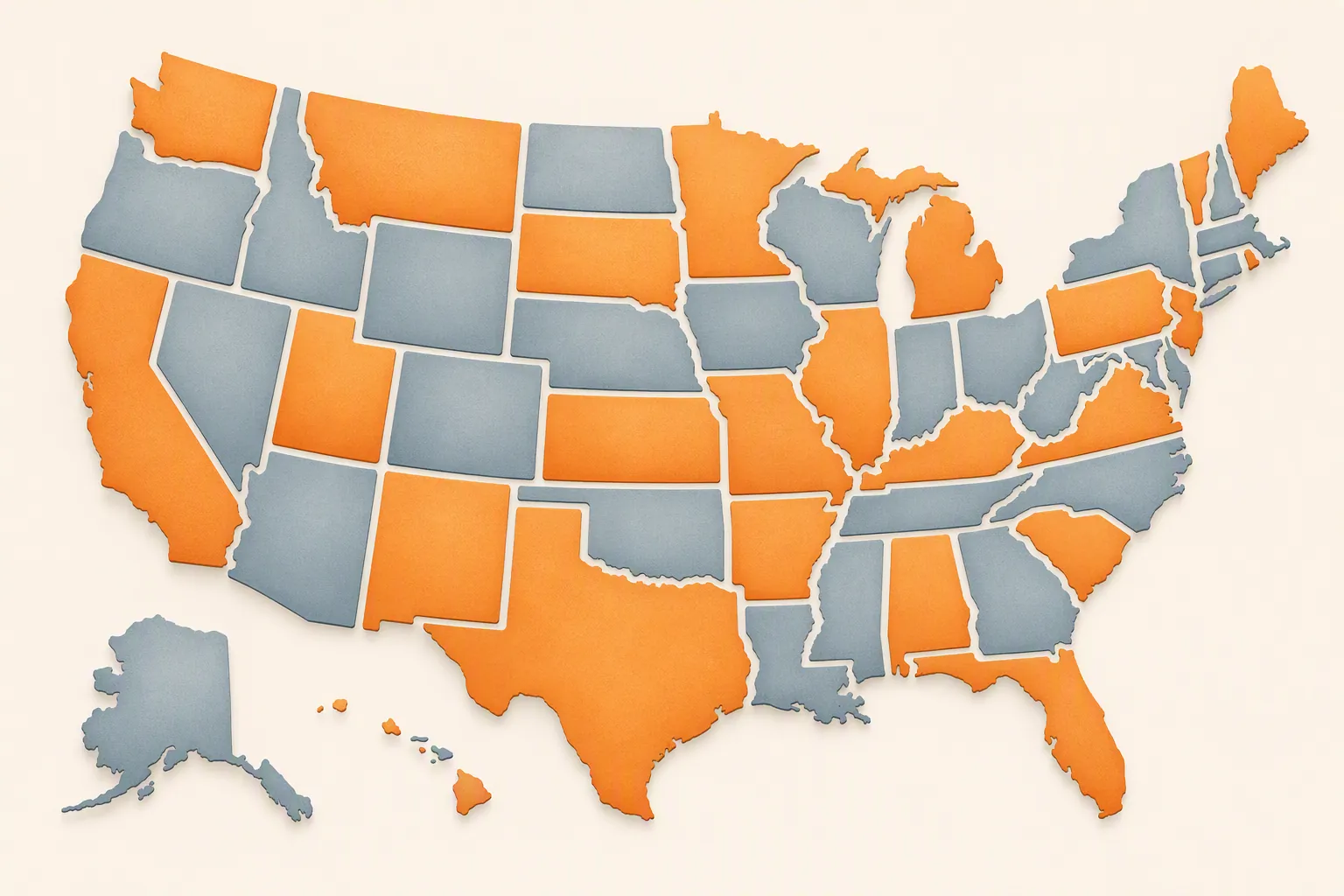
The alert question is a routing question
A Silver Alert is often described as an alert for a missing older adult. That shorthand is unsafe. In one jurisdiction, age may be the central gate. In another, age matters only if paired with a diagnosed impaired mental condition. In another, the person may qualify as an adult with cognitive impairment even before reaching the age commonly associated with “senior” programs.
The Journal of the American Academy of Psychiatry and the Law identified three broad statutory models: nine states limited coverage to seniors aged 60 or 65 and older, with variation inside that group; ten states covered adults 18 and older with a specified mental-health condition; and eighteen states covered adults 18 and older with cognitive impairment without requiring a specified condition. That taxonomy is useful because it stops the conversation from pretending that all Silver Alerts are built on the same eligibility premise. It is not a substitute for checking current state law. [1]
| Eligibility field | Why it matters | What to verify before relying on an alert pathway |
|---|---|---|
| Age threshold | Some laws are limited to people 60 or 65 and older; other models cover adults beginning at 18. | The person’s exact age and the state’s operative age language. |
| Impairment or diagnosis | A statute may require cognitive impairment, a documented impaired mental condition, Alzheimer’s disease, dementia, developmental disability, or another defined condition. | Whether the record must show a diagnosis, suspected impairment, permanent impairment, or professional documentation. |
| Threat, danger, or suspicious circumstances | Many programs are not triggered by absence alone. | Whether law enforcement must find credible threat, danger, unexplained disappearance, suspicious circumstances, environmental risk, or health risk. |
| Timing window | Some official programs impose a request window. | Whether the alert request must be made within a stated number of hours after the person was reported missing. |
| Requesting party | Family, facilities, and counsel may report facts, but they usually do not activate the alert themselves. | Which local law-enforcement agency receives the report and who may submit the formal request. |
| Activating authority | The deciding office may be state police, highway patrol, the department of public safety, the department of justice, or another state-designated entity. | The official activation protocol, not just the statute’s eligibility language. |
| Dissemination method | Some programs specify highway signs, wireless emergency alerts, media broadcast channels, lottery terminals, or state alert networks. | Which channels are available and whether they apply automatically or only after agency approval. |
Primary-source tracker: jurisdictions verified here
The table below does not silently fill gaps. It states only the jurisdictions for which a statute, regulation, or official implementation source is available here. For any other state, the defensible answer is not “probably similar”; it is “verify the governing state statute and activation policy.”
| Jurisdiction | Covered person | Impairment or diagnosis requirement | Threat, danger, or circumstances requirement | Who decides or activates | Dissemination detail available here | Primary or official source |
|---|---|---|---|---|---|---|
| California | Person 65 or older; or a person who is developmentally disabled; or a person who is cognitively impaired. | Developmental disability or cognitive impairment is independently recognized; a person 65 or older is also within the statutory class. | The disappearance must be unexplained or suspicious, and law enforcement must believe the person is in danger because of age, health, mental or physical disability, environment, weather, or companionship circumstances. | The California Highway Patrol page identifies the Silver Alert program and cites the governing statute; the statutory framework depends on law-enforcement findings before activation. | CHP Silver Alert program page. | Cal. Gov. Code § 8594.10 / California Highway Patrol. [2] |
| Texas | A missing senior citizen 65 or older, or a person diagnosed with Alzheimer’s disease. | For a missing senior citizen, the person must have a diagnosed impaired mental condition documented by a medical or mental-health professional; Alzheimer’s disease is a separate route identified in the regulation. | The investigation must conclude that the person’s disappearance poses a credible threat to the person’s health and safety. | Texas’s administrative rule governs the Silver Alert Network criteria and activation process. | State Silver Alert Network process under regulation. | 37 Tex. Admin. Code § 9.31. [3] |
| Wisconsin | Person 60 or older. | The person must have Alzheimer’s disease, dementia, or another permanent cognitive impairment. | The official program requires that the request be made within 72 hours of the individual’s disappearance. | Wisconsin’s official Silver Alert Program is administered through the Wisconsin Crime Alert Network / Wisconsin Department of Justice process. | Wireless Emergency Alerts, Wisconsin Department of Transportation dynamic message boards, and Wisconsin Lottery terminals are identified dissemination channels. | Wisconsin Silver Alert Program. [4] |
| Washington | Person 60 or older under the statutory Silver Alert framework. | The source available here is RCW 13.60.010; this article emphasizes the statutory framework and legislative findings rather than a separate diagnostic checklist. | The statute includes legislative findings concerning wandering and the risk of injury when a vulnerable adult is missing for 24 hours. | Washington’s Silver Alert plan is statutory; operational activation must be checked against current state alert procedures. | Not specified in the available source beyond the statutory plan framework. | RCW 13.60.010. [5] |
Jurisdictions not verified from primary sources here
For Alabama, Alaska, Arizona, Arkansas, Colorado, Connecticut, Delaware, the District of Columbia, Florida, Georgia, Hawaii, Idaho, Illinois, Indiana, Iowa, Kansas, Kentucky, Louisiana, Maine, Maryland, Massachusetts, Michigan, Minnesota, Mississippi, Missouri, Montana, Nebraska, Nevada, New Hampshire, New Jersey, New Mexico, New York, North Carolina, North Dakota, Ohio, Oklahoma, Oregon, Pennsylvania, Rhode Island, South Carolina, South Dakota, Tennessee, Utah, Vermont, Virginia, West Virginia, and Wyoming, this article does not include a current primary or official state source. Those jurisdictions may have Silver Alert, endangered-person, missing-vulnerable-adult, or related alert provisions, but their criteria should not be inferred from the four verified examples above.
The three models explain why the same person can be routed differently

The JAAPL taxonomy is a map, not a filing rule. Its value is that it separates states by the legal fact each system treats as decisive. The first model is senior-limited: age places the person inside or outside the program. Even within that model, some states require impairment and credible threat while others are closer to age-only coverage. The second model is condition-specific and adult-inclusive: a person 18 or older may qualify, but only if the recognized mental-health condition is present. The third model is broader on age and more functional on condition: adults 18 and older may qualify based on cognitive impairment without a named diagnosis. [1]
That distinction matters in intake. A 63-year-old with suspected dementia is not a universal Silver Alert candidate. A 66-year-old with no impairment is not universally excluded. A facility administrator who reports elopement, a family member who supplies medical history, and an officer who prepares the alert request are all working inside a state-specific gate.
California: age, disability, cognitive impairment, and a danger finding
California’s framework is not simply “missing elderly person.” The CHP’s Silver Alert page cites Cal. Gov. Code § 8594.10 and identifies coverage for a person 65 years of age or older, a developmentally disabled person, or a cognitively impaired person. The law also requires more than disappearance: the circumstances must be unexplained or suspicious, and law enforcement must believe the person is in danger because of age, health, mental or physical disability, environment, weather conditions, or the person’s companionship situation. [2]
The hinge is visible. A 65-year-old may satisfy the age class, but the file still needs the required law-enforcement danger analysis. A younger adult may enter through developmental disability or cognitive impairment rather than age. In California, the alert question is therefore not answered by age alone; it is answered by the statutory class plus the suspicious-or-unexplained circumstances and danger finding.
Texas: a documented impaired condition, Alzheimer’s route, and credible threat
Texas uses a more diagnosis-and-threat-oriented route. Under 37 Tex. Admin. Code § 9.31, the Silver Alert Network criteria include a missing senior citizen who is 65 or older and has a diagnosed impaired mental condition documented by a medical or mental-health professional. The rule also identifies a route for any person diagnosed with Alzheimer’s disease. In either framing, the disappearance must pose a credible threat to the person’s health and safety. [3]
That documentation requirement is not cosmetic. “Possible confusion,” “forgetful,” or “acting unlike himself” may be operationally important facts, but the Texas rule described here turns on a diagnosed impaired mental condition documented by a professional for the senior-citizen route, or a diagnosis of Alzheimer’s disease for the separate route. Counsel reviewing a long-term-care incident file would want to know exactly what medical or mental-health documentation was available when staff or family contacted law enforcement.
Wisconsin: 60-plus, permanent cognitive impairment, and a 72-hour request window
Wisconsin’s official Silver Alert Program covers a person 60 or older who has Alzheimer’s disease, dementia, or another permanent cognitive impairment. The official source also states that the request must be made within 72 hours of the individual’s disappearance. That timing rule is the kind of intake fact that can be lost if the question is reduced to “does the person have dementia?” [4]
Wisconsin also gives unusually concrete dissemination detail in the source available here. The program identifies Wireless Emergency Alerts, Wisconsin Department of Transportation dynamic message boards, and Wisconsin Lottery terminals as dissemination channels. [4]
For intake review, the Wisconsin sequence is compact: confirm age 60 or older, confirm Alzheimer’s disease, dementia, or another permanent cognitive impairment, and check whether the request is inside the 72-hour window. The alert mechanism is not merely a label attached to a missing-person report; it is a program with a defined eligibility and timing gate.
Washington: a 60-plus statutory plan and legislative findings on wandering risk
Washington’s Silver Alert framework is tied to RCW 13.60.010 and a 60-plus statutory structure. The statute includes legislative findings on wandering and the risk of injury when a vulnerable adult is missing for 24 hours. Those findings help explain the alert policy, but they are not a reason to skip the operative activation rules. [5]
The Washington example is useful because it shows the difference between a statute’s policy findings and the decision rule used in the field. Findings can matter for interpretation and legislative purpose. The alert request still has to be matched to the current state plan and the agency procedure in force when the person is reported missing.
Activation authority is separate from eligibility
A person can appear to satisfy the eligibility class and still not have an alert issued until the authorized agency makes the required findings. That distinction matters in after-the-fact review. A family member may supply diagnosis records. A long-term-care facility may report that a resident left without supervision. Local law enforcement may investigate the disappearance. The statewide alert authority may control the actual activation and dissemination.
California’s source turns on law-enforcement determinations about unexplained or suspicious circumstances and danger. Texas’s rule turns on regulatory criteria including documented impaired mental condition or Alzheimer’s diagnosis and credible threat. Wisconsin’s program adds a 72-hour request window and identifies the channels through which an approved alert may move. These are different control points, and they leave different paper trails. [2][3][4]
| Question | Why the answer changes the legal review |
|---|---|
| Who first received the missing-person report? | The first report may start the investigation, but it may not be the formal Silver Alert request. |
| What facts supported age, diagnosis, impairment, or disability? | Some states require a professional diagnosis or permanent impairment; others use broader cognitive-impairment language. |
| Who made the danger, credible-threat, or suspicious-circumstances finding? | The person who supplies facts is not always the person legally authorized to make the alert finding. |
| Was the request made within any program deadline? | In Wisconsin, the official program identifies a 72-hour request requirement. |
| Which agency activated the alert and through which channels? | Activation and dissemination may be controlled by a state-level program even when the disappearance is investigated locally. |
Cross-state movement exposes the gaps

The cleanest way to see the patchwork is to test a hypothetical against more than one statute. A missing 63-year-old with dementia may fit Wisconsin’s 60-plus cognitive-impairment model if the other program requirements are met. The same person would not qualify in California merely by being 63 and cognitively impaired unless the California developmental-disability or cognitive-impairment route and the unexplained-or-suspicious-circumstances and danger findings are satisfied. [2][4]
A different hypothetical points in the other direction. A 66-year-old with no documented impairment might seem like a classic “elderly missing person” in ordinary speech. But in a state that requires impairment, diagnosis, or credible threat, age alone will not answer the alert question. In an age-only state of the kind identified in the JAAPL taxonomy, the same age fact may carry much more legal weight. [1]
Cross-state travel makes the problem sharper. If a person disappears near a border, the relevant report may move through one jurisdiction while search information points into another. The public phrase “Silver Alert” suggests continuity. The legal machinery does not guarantee it. The age threshold, impairment language, danger finding, timing window, and authorized activating agency may change at the border.
What can be concluded safely
Silver Alert systems matter because a missing vulnerable adult can face fast-moving risk. The legal conclusion is narrower and more demanding: there is no national Silver Alert criterion. The National Silver Alert Act was not enacted, and state schemes follow different models. Some are senior-limited. Some are age-plus-impairment systems. Some reach adults more broadly through cognitive-impairment or specified-condition language.
The defensible first call is therefore state-specific. Verify the governing statute, the official activation rule, the person’s age, the diagnosis or impairment evidence, the danger or credible-threat finding, the timing window, and the agency authorized to activate the alert. A missing person who qualifies in one jurisdiction may fall outside another’s criteria, and cross-state movement can reveal gaps that a generic “Silver Alert” search will not show.
References
- Silver Alert Laws for Missing Adults With Dementia, Journal of the American Academy of Psychiatry and the Law
- Silver Alert, California Highway Patrol
- 37 Tex. Admin. Code § 9.31 - Silver Alert Network, Legal Information Institute
- Silver Alert Program, Wisconsin Crime Alert Network
- RCW 13.60.010: Silver alert plan—Purpose, Washington State Legislature
Operationalizing workflow
No workflow has been explicitly linked to this obligation yet. See Workflows generally.
Illustrative cases
No illustrative case is currently tracked for this obligation. See Risk Digest for documented incidents generally.
← Back to RegulationReport a correction or tip
Spotted an outdated figure, a misstated fact, or a ruling this regulation entry should reflect? Public comments are disabled for this content given the professional cost of a misreported case outcome, penalty amount, or rule text — use the structured correction channel instead.
Report a correction or tip for this record →