
What Are the Legal Aspects of Tribal Whitefish Pond-Rearing?
- Authority
- United States District Court
- Rule type
- consent decree
- Jurisdiction scope
- US federal
- Effective date
- Aug 24, 2023
- Source text
- Read primary rule text ↗
Treat pond-reared whitefish as treaty fishery implementation under the Great Lakes Fishing Decree and account for stocked fish in allocation.
For a Great Lakes treaty tribe, pond-rearing lake whitefish is easy to misfile. The ponds look like a production facility. The release looks like stocking. The paperwork may sit beside agency forms that use the language of licenses, permits, and approvals. But the first legal question is not whether Michigan treats the site like an ordinary fish farm. It is whether the activity is an exercise of treaty fishing authority carried out through the Great Lakes consent-decree system.
That distinction controls the real legal question behind tribal whitefish pond-rearing: who has authority to approve, account for, or challenge the program? This article is a reference on authority, allocation, and regulatory limits. It is not a legal opinion on a particular stocking event, site, or agency objection.
The legal lane is treaty fishing
The starting point is the reserved fishing right under the 1836 Treaty of Washington. The United States Department of Justice describes that treaty framework as preserving tribal hunting and fishing rights in the ceded territory, and it identifies Judge Noel Fox’s 1979 United States v. Michigan ruling as affirming the tribes’ right to fish in 1836 treaty waters without state limitation as to species or method.[1]
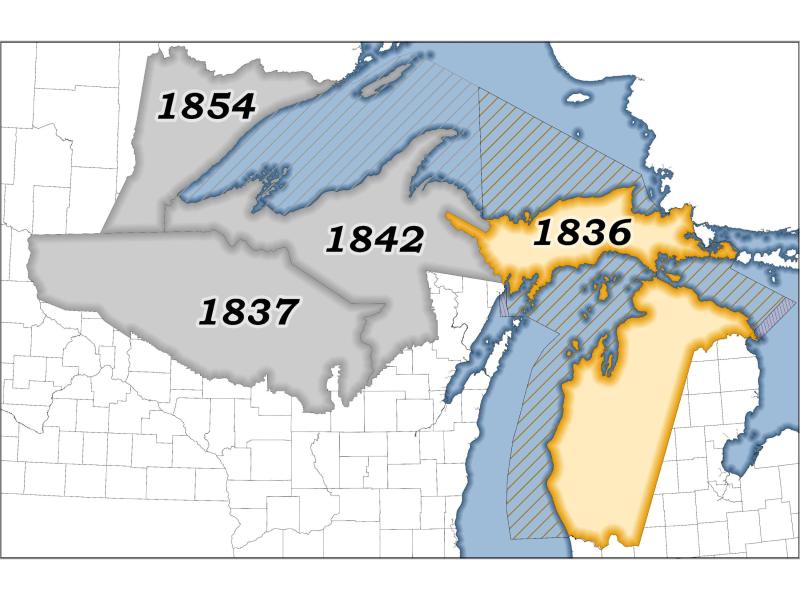
That matters because a pond-rearing program does not lose its treaty character merely because fish spend part of their early life in a controlled setting. If the program is designed to propagate lake whitefish for release into treaty waters as part of a treaty fishery, the legal analysis runs through treaty rights and the decree record before it reaches ordinary state aquaculture vocabulary.
The current operating framework is the 2023 Great Lakes Fishing Decree. Judge Paul Maloney approved that decree on August 24, 2023. Michigan describes it as a 24-year agreement among the State of Michigan, the United States, and five 1836 Treaty tribes, with allocation provisions focused heavily on lake trout and lake whitefish.[2] Michigan’s tribal coordination materials also place Great Lakes fisheries management in an intergovernmental setting involving the state, the federal government, and the 1836 Treaty tribes rather than in a simple state-license relationship.[3]
So the cleanest formulation is this: the Sault Ste. Marie Tribe’s whitefish pond-rearing and stocking work should be analyzed as treaty fishing implementation under the decree framework. A state fish-farming license, if someone invokes that category, does not by itself answer the harder questions: whether the tribe has authority to rear and stock fish, how the fish are treated for allocation purposes, and whether the asserted state or federal constraint is legally permissible when applied to a treaty fishery.
Why the Sault Tribe program raises the issue
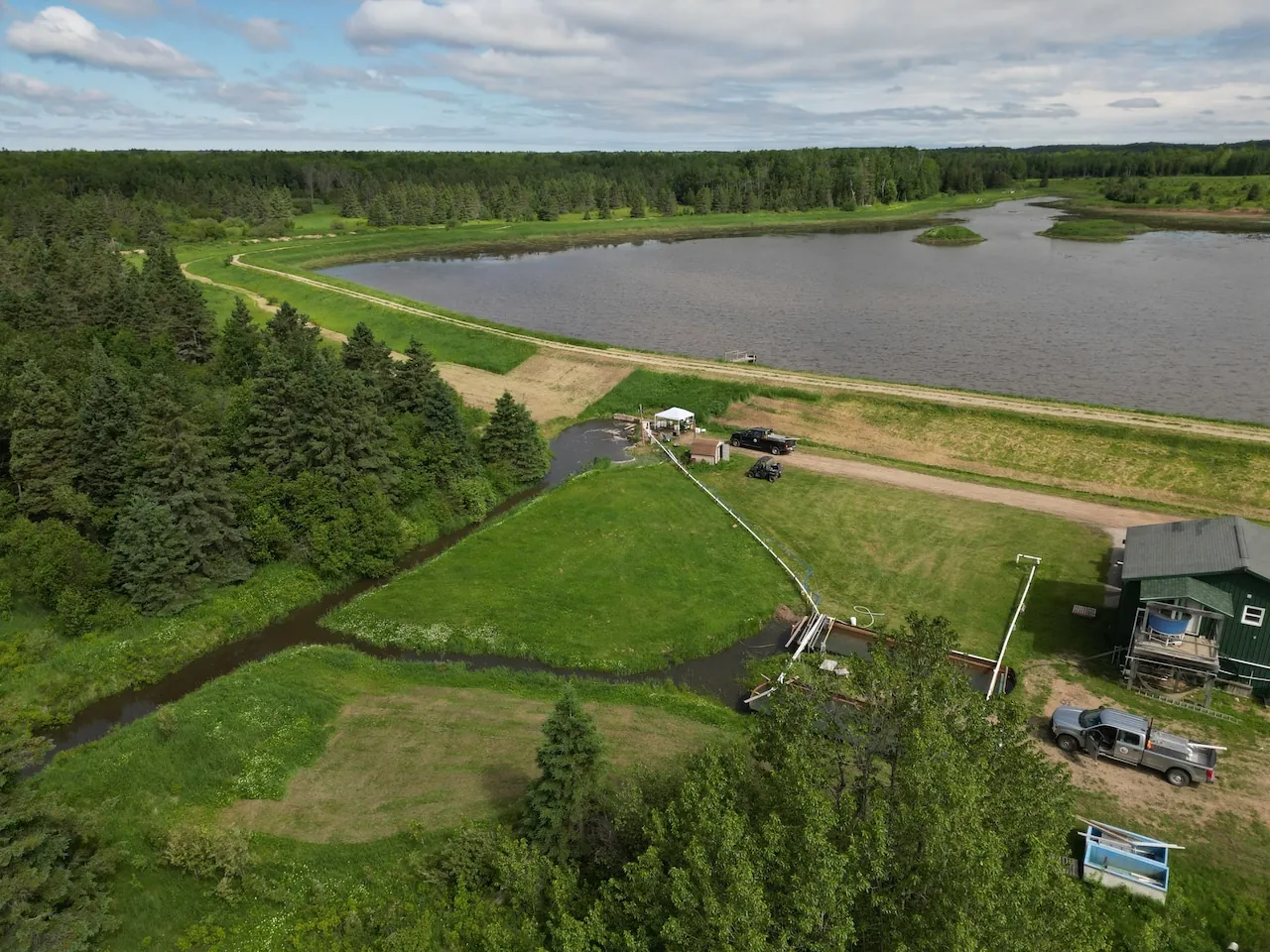
The Sault Tribe’s program is a useful worked example because it does not fit the casual mental picture of either commercial aquaculture or traditional capture fishing. WLUC reported that the Tribe began pond-based lake whitefish rearing in 2020 and described the work as a pilot effort to restore whitefish in the Great Lakes region.[4]
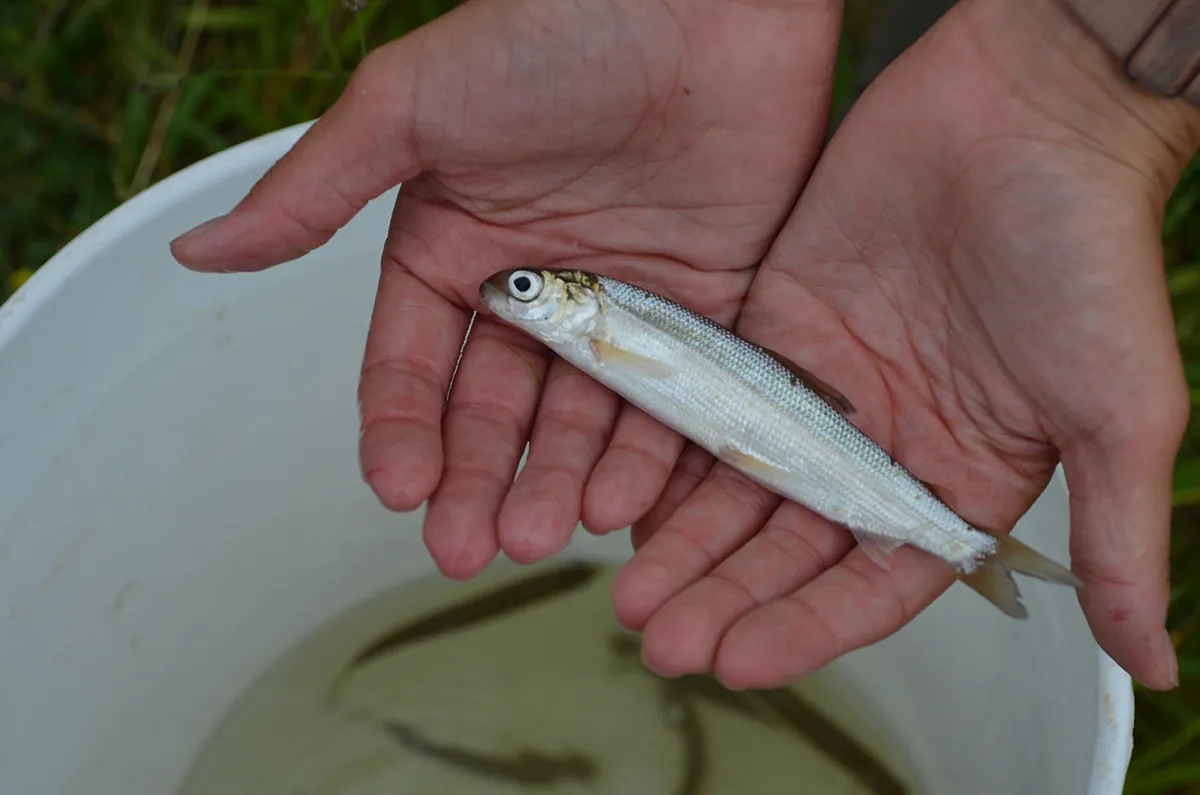
The 2021 earthen-pond trial is often the fact that makes lawyers and regulators pause. In WLUC’s account, the Tribe stocked about 28,000 one-inch lake whitefish into an earthen pond and later recovered 7,747 fish averaging nearly 6.5 inches and more than one ounce.[4] Those numbers are useful for understanding what the program did, but they should stay in their lane. They are a single-trial account, not a legally reliable success rate for all whitefish pond-rearing efforts, and the available materials note that another presentation reported the inputs differently.
By July 2026, MLive covered a Sault Tribe release of more than 1 million fish into the Great Lakes as part of the effort to support a culturally sacred species.[5] Scale makes the allocation issue harder to ignore, but it does not change the legal category. The relevant question is not whether a large number of fish makes the work look more like a hatchery business. It is whether the propagation and release are documented and approved within the treaty-management structure that governs lake whitefish in those waters.
The approval environment narrows the question
Once the activity is placed in the treaty lane, the approval environment becomes more precise. The 1836 Treaty right supplies the reserved authority. United States v. Michigan confirms that the right is not subject to ordinary state limitation by species or method. The Great Lakes Fishing Decree supplies the modern allocation and co-management framework. That is the chain a challenger, tribal counsel, or agency lawyer has to deal with.
| Question | Wrong starting frame | Treaty-decree frame |
|---|---|---|
| May the tribe rear whitefish for release into treaty waters? | Does the state issue a fish-farming license? | Does the activity implement the reserved treaty fishery as administered through the decree? |
| Who reviews the stocking decision? | A state aquaculture office alone | The decree-based co-management process and any documented stocking approvals |
| Do pond-reared fish affect allocation? | They are outside the fishery until harvested | Their treatment depends on the decree record, population accounting, harvest accounting, and any agreed treatment of hatchery-origin fish |
| Can the state stop the program? | Yes, if a state licensing category applies | Only if the asserted authority is valid against the treaty right and the decree framework |
This is where vocabulary can quietly do damage. If the fish are called “farm fish,” the state looks like the primary sovereign and the treaty right becomes background. If the fish are treated as part of a treaty fishery restoration and harvest-management program, the state still has a seat at the decree table, but it is not the source of the tribe’s authority.
Allocation is the hard legal question, not pond construction
For lake whitefish, the decisive legal exposure is likely to sit in allocation and accounting. The 2023 decree is expressly an allocation agreement for key Great Lakes species, including lake whitefish.[2] A program that produces and releases whitefish into treaty waters therefore needs a record showing how those fish fit into the decree’s management assumptions.
That does not mean the pond-reared fish are automatically outside the treaty share, automatically added to a tribal quota, or automatically available only to the stocking tribe. The materials provided do not support any of those broad answers. The better legal question is narrower: when hatchery-origin or pond-reared whitefish are stocked into waters governed by the decree, how are they treated in population estimates, harvest limits, intertribal allocation, state-tribal allocation, and any future enforcement dispute?
That record matters even if everyone involved supports restoration. A stocking decision can later become evidence in a harvest dispute, a conservation objection, or a challenge to whether a release changed the basis for allocation. Tribal fisheries staff are not just growing fish; they are building an administrative record for a co-managed fishery.
Pacific Northwest treaty-fishing cases are a useful comparison point because hatchery-origin fish have been treated as part of the treaty-share problem rather than as a separate aquaculture category. Michael C. Blumm’s law-review treatment of Pacific Northwest treaty fishing describes hatchery fish within the broader treaty-allocation and habitat-restoration framework.[6] That is not a controlling Great Lakes rule. It is a warning against assuming that artificial propagation removes fish from treaty accounting.
State regulation can matter without becoming the source of authority
The point is not that Michigan is irrelevant. Michigan is a party to the 2023 decree, and the state’s fisheries agencies participate in Great Lakes tribal coordination.[2][3] The point is that Michigan’s role is not the same as its role over an ordinary private aquaculture operation.
Judge Fox’s 1979 ruling, as summarized by DOJ, is blunt on the state-limitation problem: the treaty right includes fishing in the treaty waters without state limitation as to species or method.[1] A state objection to pond-reared whitefish therefore has to be framed in a way that survives the treaty right and the decree. A licensing label cannot do the work that treaty doctrine requires.
For a lawyer reviewing a state demand, the first sorting question is whether the state is regulating a non-treaty activity at the pond site, participating in co-management of the treaty fishery, or trying to control the exercise of the treaty fishing right itself. Those are different legal claims. They should not be collapsed just because the same fish pass through a pond before they enter the lake.
Federal regulation has to be sorted just as carefully. The United States is not a stranger to this structure; it is a party to the decree and has trust responsibilities in the treaty setting. A federal constraint may still apply if it is otherwise triggered, but the analysis remains treaty-aware. The question is not whether a federal form exists in the abstract. It is whether applying that constraint to the tribal stocking or fishing activity is consistent with the reserved right, the decree, and the federal government’s role in protecting treaty rights.
What a defensible record would have to show
The documents that matter most are not promotional materials about restoration and not generic fish-farm paperwork. A defensible legal record would show the treaty authority being exercised, the decree process used for review, the stocking waters, the species and origin of the fish, the approval or consultation record, and the allocation treatment. If the fish are later harvested, the record should make clear how that harvest is counted under the applicable decree framework.
The biological details matter legally only when they affect classification, approval, or accounting. Survival, growth, disease controls, and release methods can become important if the co-management process uses them to evaluate a stocking proposal or if a regulator claims a conservation basis for intervention. But a good growth result in a pond does not itself establish legal authority, and a state licensing concern does not itself defeat reserved treaty authority.
That is why the 2021 Sault Tribe trial figures should be used carefully. They help explain why pond-rearing became operationally attractive. They do not prove that all future releases are legally authorized, nor do they prove how those fish must be allocated. The legal work is still done by the treaty, the decree, and the co-management record.
The legal exposure
The principal legal exposure in tribal whitefish pond rearing is not whether the tribe has been neatly slotted into a state fish-farming category. It is whether the program fits within the reserved 1836 Treaty fishery as implemented by the Great Lakes Fishing Decree; whether pond-reared whitefish are properly handled in allocation and harvest accounting; and whether any state or federal constraint asserted against the program is valid in light of treaty and trust doctrine.
For the Sault Tribe example, the available materials support the treaty-decree frame, not an ordinary aquaculture frame. The final answer for any specific release depends on the decree record, stocking approvals, allocation treatment, and the particular regulatory claim being asserted.
References
- Treaty Fishing Rights for Tribal Members in Michigan Affirmed, U.S. Department of Justice
- Great Lakes Consent Decree, Michigan Department of Natural Resources
- Tribal Coordination, Michigan Department of Natural Resources
- Sault Tribe pilots effort to restore whitefish to Great Lakes region, Upper Michigan's Source, July 26, 2022
- This Michigan tribe just released more than 1 million fish into the Great Lakes to save culturally sacred species, MLive, July 2026
- Indian Treaty Fishing Rights and the Environment: Affirming the Right to Habitat Protection and Restoration, Washington Law Review
Operationalizing workflow
No workflow has been explicitly linked to this obligation yet. See Workflows generally.
Illustrative cases
No illustrative case is currently tracked for this obligation. See Risk Digest for documented incidents generally.
← Back to RegulationReport a correction or tip
Spotted an outdated figure, a misstated fact, or a ruling this regulation entry should reflect? Public comments are disabled for this content given the professional cost of a misreported case outcome, penalty amount, or rule text — use the structured correction channel instead.
Report a correction or tip for this record →