
How Trump Asylum Rule Changes Affect Pending Applications
- Authority
- U.S. Citizenship and Immigration Services (USCIS)
- Rule type
- regulation
- Jurisdiction scope
- US federal
- Source text
- Read primary rule text ↗
Verify the current enforceability status of each Trump-era asylum rule action independently.
Current as of July 29, 2026, this is a status map, not legal advice. The phrase Trump administration asylum rule change for pending applications now covers several different regulatory actions, and they do not share the same legal status. Some are effective. Some have been vacated but remain operationally unsettled. One major work-authorization proposal is not final. Treating them as one “asylum rule” is how pending applicants miss fee notices, overstate work-permit expectations, or fail to prepare for referral to immigration court.
The scale justifies the caution. The pending population includes about 1.53 million affirmative asylum applications before USCIS at the end of FY2025 and about 2.31 million defensive applications pending in immigration court as of June 2026, a combined figure above 3.8 million across two systems that count cases differently.[1][2]

The Five-Action Status Map
| Regulatory action | Affected pending cases | Current status as of July 29, 2026 | Source basis | What to do now |
|---|---|---|---|---|
| Late-November 2025 asylum adjudication hold and country-based processing limits | Primarily affirmative cases before USCIS, especially those routed through country-related processing restrictions | Country-specific component vacated nationwide in Dorcas on June 5, 2026; government appeal pending; processing resumption reported as limited | Dorcas ruling and practitioner updates[3][4][5] | Do not assume normal scheduling has resumed. Preserve proof of filing and pending status, monitor USCIS notices, and document case-specific delay history. |
| 40-country immigration benefits pause | Applicants and other benefit seekers connected to the listed countries | Vacated by Dorcas on June 5, 2026; appeal pending | Dorcas ruling and follow-on guidance[3][4] | Check whether a delayed or paused benefit request has actually moved. A vacatur does not itself create a new appointment notice or adjudication. |
| Proposed elimination or severe restriction of asylum-pending (c)(8) EADs | Initial and renewal EAD applicants with pending asylum cases, including applicants affected by proposed filing-deadline, criminal, or entry-related bars | Proposed only. Comment period closed April 24, 2026; no final rule published as of July 29, 2026 | Federal Register proposed rule and TRAC analysis[1][6] | Do not treat the proposal as current law. Continue to evaluate EAD eligibility under rules now in effect, including separate fee and validity changes. |
| Interview-skip interim final rule allowing direct referral to immigration court | Pending affirmative asylum applicants before USCIS | Immediately effective as announced July 27, 2026 | USCIS news release[7] | Prepare for possible referral without an asylum officer interview or request for evidence. Re-check the Federal Register and litigation status before each filing or hearing decision. |
| $102 annual asylum fee and pretermission risk under Matter of H-A-A-V- | Cases pending more than one year, including already-pending cases when fee obligations are triggered | In effect; nonpayment after notice can lead to rejection or dismissal | Practice advisory and applicant guidance[4][8] | Track fee notices, payment deadlines, address changes, EOIR filings, and proof of response. Do not wait for final EAD-rule action to handle fee compliance. |
Vacated Does Not Mean Back to Normal
The Dorcas ruling is the easiest place to overread the status. On June 5, 2026, the district court vacated the country-based component of the asylum adjudication hold and the 40-country benefits pause, describing the challenged policy as unlawful and discriminatory.[3] That matters. A vacatur is not a press-release disagreement; it removes the legal basis for the challenged action unless a higher court changes the result or a stay alters its effect.
But a vacatur does not tell a pending applicant that the next interview notice is coming, that a stalled benefit request has been reopened, or that every office has returned to pre-hold scheduling. The government has appealed, and practitioner-facing updates report that actual processing resumption has been minimal as of late July 2026.[4][5] That is the operational gap counsel has to manage: the legal label changed faster than the docket did.
For pending affirmative cases, the immediate work is evidence preservation. Keep the receipt notice, biometrics notice, address-change proof, prior interview notices, expedition requests, congressional inquiry records if any, and any agency message showing the case was delayed or paused. If a client is from a country that was affected by the benefits pause, separate the asylum file from any other pending benefit request; Dorcas may matter to both, but the next notice, deadline, and remedy will not necessarily be the same.
Defensive asylum applicants in EOIR have a different first question. Dorcas addressed USCIS-linked processing actions, while defensive applicants are already in immigration court. Their present risk is less about waiting for an asylum office interview and more about court notices, fee compliance, pretermission arguments, and work-authorization timing. The same family can have both kinds of exposure if different members are in different procedural tracks.
The Fee Rule Is Already a Deadline Problem
The annual asylum fee deserves more practical attention than it often receives because it is already in effect. The fee is $102, applies retroactively to cases pending more than one year, and can lead to rejection or dismissal if unpaid 30 days after notice.[8][4] The key event is not the applicant’s general awareness that a fee exists. It is the notice, the address where the notice is sent, the deadline calculation, the payment record, and the court or agency file showing compliance.
That creates a mundane but serious failure point. A pending applicant who moved during a processing hold may be current with a lawyer but not current with USCIS or EOIR. A represented applicant may assume the lawyer received the notice; the lawyer may assume the client updated the address. A defensive applicant may be tracking hearing dates but not a separate fee-triggering communication. None of those assumptions is a legal defense to a missed deadline unless the record supports it.
Matter of H-A-A-V- adds another compliance layer because pending cases can face pretermission risk. The available practice guidance treats this as a live retroactivity problem for cases already in the pipeline, not merely a rule for future filings.[8] Counsel should therefore review whether the application is complete, whether all required fees or responses have been handled, and whether any government notice has introduced a deadline that was not present when the asylum application was first filed.
- Confirm the applicant’s current mailing address in the USCIS and EOIR systems that actually control the case.
- Calendar the 30-day response period from any annual-fee notice and retain proof of payment or response.
- For defensive cases, check the immigration-court record separately from the USCIS receipt file.
- For represented cases, assign one person to verify that counsel, client, and agency records match.
- Do not postpone fee review because a separate work-authorization proposal remains nonfinal.
The Interview-Skip Rule Is Effective Now
USCIS announced on July 27, 2026, that it may refer affirmative asylum cases directly to immigration judges without first conducting an asylum officer interview and without issuing a request for evidence.[7] For pending affirmative applicants, that is a present procedural risk, not a draft proposal. The agency announcement is recent, and litigation is likely, but the compliance posture as of July 29 is that counsel should prepare for the possibility of direct referral.
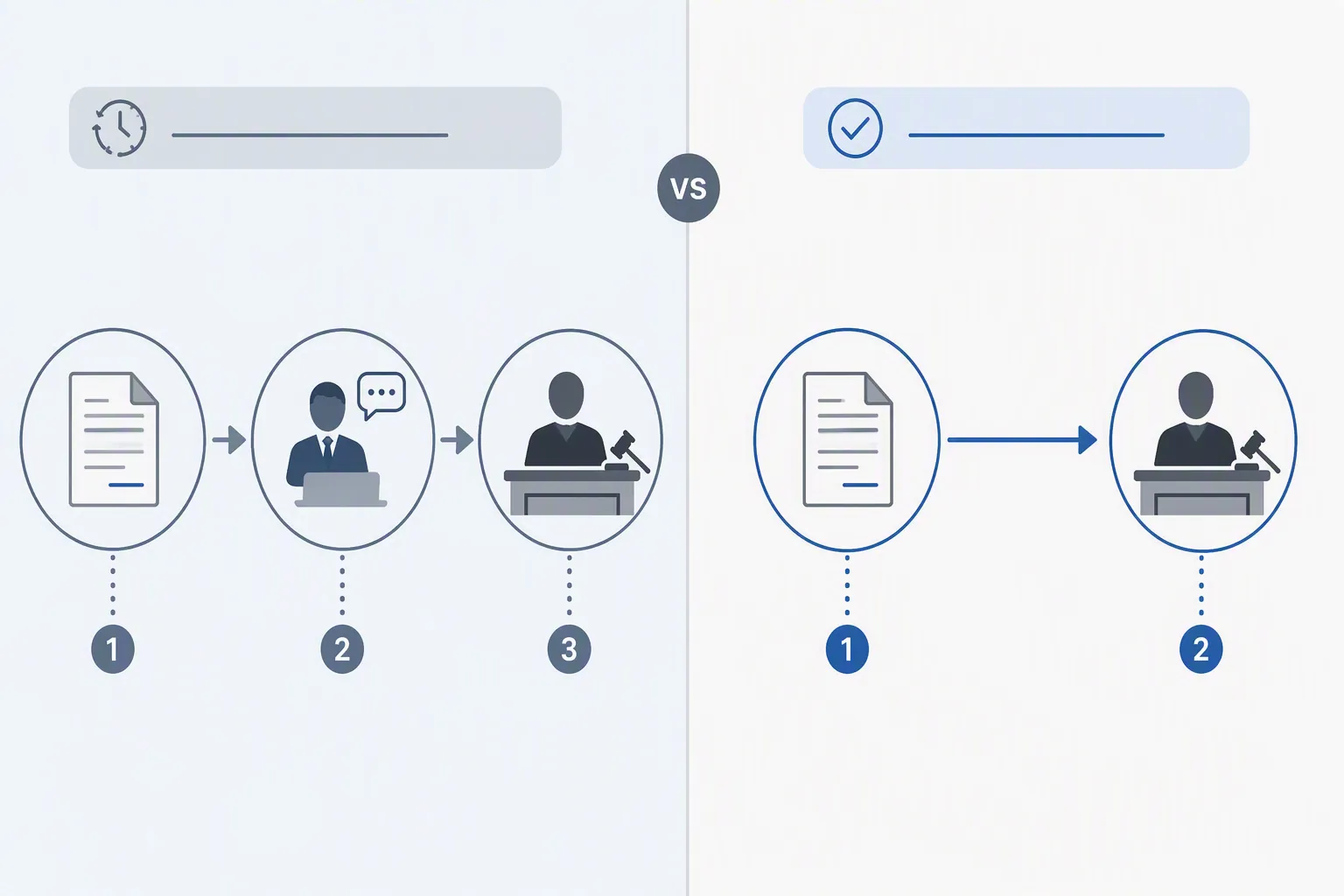
The immediate consequence is file posture. An applicant who expected the asylum office interview to be the first merits-testing event may instead need a court-ready theory of the case sooner. That affects declarations, corroboration, country-conditions packets, interpreter planning, trauma-sensitive preparation, and the client’s understanding of who will hear the case next.
This article does not re-litigate the due-process and direct-removal implications of that rule in full. Readers needing a single-rule analysis should consult the existing direct-deportation and interview-skip analysis. For status-tracking purposes, the important distinction is simpler: unlike the EAD proposal, the interview-skip rule has been announced as immediately effective.
The EAD Proposal Is Severe, Concrete, and Still Not Law
The proposed asylum-pending EAD rule is the most mechanically detailed action in this group, and it is also the one most likely to be misstated. As of July 29, 2026, no final rule has been published. The proposal appeared at 91 FR 8616 on February 23, 2026, and the comment period closed April 24, 2026.[1] That means applicants and employers should not treat the proposed bars or the proposed self-executing pause as current eligibility law.
If finalized in its proposed form, the rule would create a self-executing pause on initial (c)(8) EAD applications whenever average affirmative asylum processing exceeds 180 days for 90 consecutive days. USCIS reported a current average affirmative asylum processing time of 22.8 months, and the Regulatory Impact Analysis projected that the pause could last between 14 and 173 years, with projected lost compensation of $34.6 billion to $126.6 billion annually.[1][6] Those figures describe the proposal’s projected effect, not present legal disqualification.
The proposed rule would also add three major bars: a one-year asylum-filing-deadline bar that the agency estimated could affect about 520,000 late-filing applicants, expanded criminal bars covering particularly serious crime and serious non-political crime grounds beyond aggravated felonies, and an illegal-entry bar with a 48-hour presentment exception.[1] The proposal would apply those bars to renewals as well as initial EAD requests.[1] Again, those are proposed mechanics, not final law as of this date.
That nonfinal status does not make work authorization stable. Separate changes are already being felt. The EAD validity period was reduced from five years to 18 months on December 4, 2025, and filing-fee obligations for Form I-765 have changed under separate authority.[4][8] A pending applicant may therefore face a shorter renewal cycle and higher current filing costs even though the broader proposed EAD elimination rule has not become final.
For renewals, the safer approach is to separate three questions. First, is the applicant eligible under rules that are actually in force today? Second, when does the current EAD expire under the shortened validity period? Third, would the proposed rule, if finalized later, change renewal eligibility or timing? Only the first two questions control current filing behavior. The third belongs in monitoring and client counseling, not in a denial prediction stated as if it has already happened.
Why Source Hierarchy Matters Here
The current landscape rewards close reading of source hierarchy. A Federal Register proposal is not a final rule. A USCIS press release announcing immediate effect deserves different treatment from advocacy guidance describing observed implementation. A district-court vacatur is not the same thing as a voluntary agency pause, and an appeal is not the same thing as a stay unless a court grants one.
The distinction matters because the next step depends on posture. An affirmative applicant waiting at USCIS may need to prepare for direct referral and also preserve evidence of delay after Dorcas. A defensive applicant may need to prioritize EOIR notices, annual-fee compliance, and pretermission defenses. An EAD renewal applicant may need to file under current rules while tracking a proposal that could later affect renewals. A country-affected applicant may need to identify whether the old benefits pause touched asylum, another benefit request, or both.
| Legal label | What it means | What it does not mean |
|---|---|---|
| Effective | The agency is treating the rule or requirement as operative now. | Every applicant has the same next step or the same deadline. |
| Vacated | A court has set aside the challenged action, subject to further appellate developments. | The agency has already restored ordinary processing in every affected file. |
| Enjoined | A court has barred enforcement of the challenged action within the order’s scope. | The underlying policy dispute has disappeared. |
| Proposed | The agency has published a possible rule and invited or completed comments. | The proposal currently controls eligibility or filing behavior. |
Present-Tense Obligations Checkpoint
For pending asylum applications, the working discipline is to verify each action independently before advising, filing, or delaying. Do not collapse the Dorcas vacatur, the benefits pause, the interview-skip interim final rule, the annual fee, Matter of H-A-A-V-, and the EAD proposal into a single “Trump asylum rule” status.
- Identify whether the case is affirmative, defensive, or both through related family members or companion filings.
- Preserve proof of pending status, agency delay, address updates, and every notice received from USCIS or EOIR.
- Treat annual asylum-fee notices and pretermission risks as active compliance issues.
- Prepare affirmative applicants for possible referral to immigration court without an asylum officer interview.
- Continue EAD strategy under rules currently in effect while monitoring, but not applying, the nonfinal EAD proposal.
- Re-check primary sources before each consequential action because several key materials are newly issued, appealed, or likely to be litigated.
References
- Proposed Rule, 91 FR 8616, Federal Register, February 23, 2026
- EOIR Quick Facts June 2026, TRAC Immigration, June 2026
- Dorcas International Institute v. USCIS Press Release, Democracy Forward, June 5, 2026
- Law Changes Guide, Asylum Seeker Advocacy Project, updated July 21, 2026
- Guide Updated March 30, 2026, Asian Law Caucus, updated March 30, 2026
- TRAC Analysis of Proposed EAD Rule, TRAC Immigration, April 22, 2026
- USCIS News Release on Affirmative Asylum Referrals, USCIS, July 27, 2026
- Practice Advisory, National Immigration Project, July 2025
Operationalizing workflow
No workflow has been explicitly linked to this obligation yet. See Workflows generally.
Illustrative cases
No illustrative case is currently tracked for this obligation. See Risk Digest for documented incidents generally.
← Back to RegulationReport a correction or tip
Spotted an outdated figure, a misstated fact, or a ruling this regulation entry should reflect? Public comments are disabled for this content given the professional cost of a misreported case outcome, penalty amount, or rule text — use the structured correction channel instead.
Report a correction or tip for this record →