
Why Trump's Smithsonian Executive Orders Lack Binding Legal Force
- Authority
- President of the United States
- Rule type
- standing order
- Jurisdiction scope
- US federal
- Effective date
- Jul 24, 2026
- Source text
- Read primary rule text ↗
The legal question is narrower than the public fight around the museums suggests. EO 14253, issued in March 2025, and the July 24, 2026 follow-on order may carry political force, budgetary signals, and reputational pressure. They do not, by themselves, answer whether the Smithsonian Institution has a legal duty to comply. As of July 25, 2026, no lawsuit has been filed testing that question, so the analysis remains predictive and turns on the Institution's charter, its Board of Regents, and the limited case law describing what the Smithsonian is.
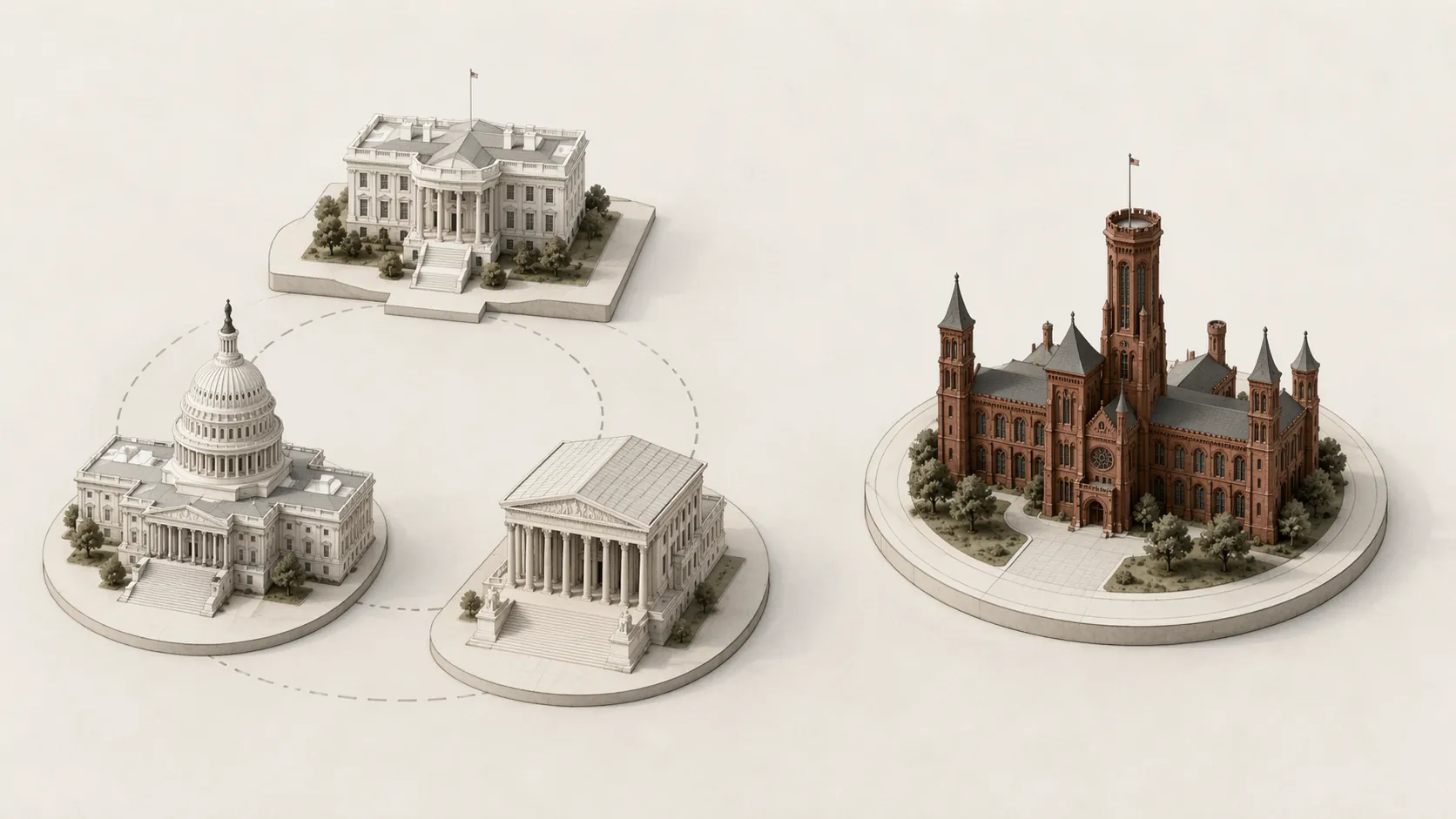
The short answer is that presidential direction alone is not enough. The Smithsonian is not an ordinary executive agency awaiting instruction from the White House. Congress created it in 1846 as a trust instrumentality, and CRS describes it as "organizationally separate and distinct" from all three branches of the federal government; the Smithsonian's own legal-history materials describe the Institution as a "historical and legal anomaly."[1][2] That classification problem is the legal center of the dispute.
Start With the Charter, Not the Order
Executive orders often appear to settle an institutional question because they are written in the imperative. They direct, instruct, review, prohibit, and require. But an order can bind only where the President has legal authority over the actor being addressed. For the Smithsonian, the first relevant document is not the presidential order. It is the 1846 charter.
Under that charter, the Smithsonian is administered through a Board of Regents rather than through a cabinet department. CRS identifies the Board as the operative body for Smithsonian governance and reads the governing statute to leave the Institution's internal operations, curatorial judgments, and personnel decisions to that Board, subject to restrictions Congress enacts in law.[1] That makes the remedial question unusually concrete: if the Smithsonian is to change course, who has authority to make the Institution act?
The answer matters because the phrase "federally connected" does too much work in ordinary coverage. The Smithsonian receives public funding, occupies a national cultural role, and is intertwined with federal governance. None of that automatically makes it an executive-branch agency. CRS's phrasing — "organizationally separate and distinct" — is doing legal work. It separates institutional connection from presidential command.
Why Dong Carries More Weight Than the Museum Fight
The strongest appellate anchor is Dong v. Smithsonian Institution. In 1997, the D.C. Circuit held that the Smithsonian was not an "establishment in the executive branch" for purposes of the Privacy Act, which meant the Act did not apply to the Institution.[3] The holding was statute-specific, but the reasoning matters beyond privacy law because the court had to decide where the Smithsonian sits in the federal structure.
Dong does not say that the Smithsonian is private in the ordinary sense, nor does it make the Institution immune from every federal constraint. It says something more useful for the present question: the Smithsonian cannot be assumed into the executive branch merely because it is national, federally chartered, or publicly funded. If a statute or directive depends on executive-branch status, the Smithsonian's separate legal character has to be confronted rather than waved away.
That is why the Privacy Act holding has force in an executive-order analysis. EO 14253 can direct executive officials. It can tell cabinet officers how to use authorities they already possess. It can state presidential policy. But Dong makes it difficult to treat the Smithsonian itself as a subordinate executive establishment simply because the President has spoken.
What EO 14253 Actually Adds
EO 14253, titled "Restoring Truth and Sanity to American History," was issued in March 2025 and targeted, among other things, Smithsonian programming and museum presentation.[4] The July 24, 2026 order, titled "Restoring Trust in the Smithsonian Institution," followed with a more direct Smithsonian focus and included a separate instruction involving National Park Service signage near Smithsonian facilities.[5]
Those orders explain the dispute. They do not supply the missing chain of command. CRS, addressing EO 14253 in April 2025, concluded that efforts to revise Smithsonian operations "would appear to be exclusively subject to the decisions of the entire Board of Regents" and that the order's funding direction would require "separate congressional consideration."[1] That is a restrained formulation, but it is not an equivocal one.
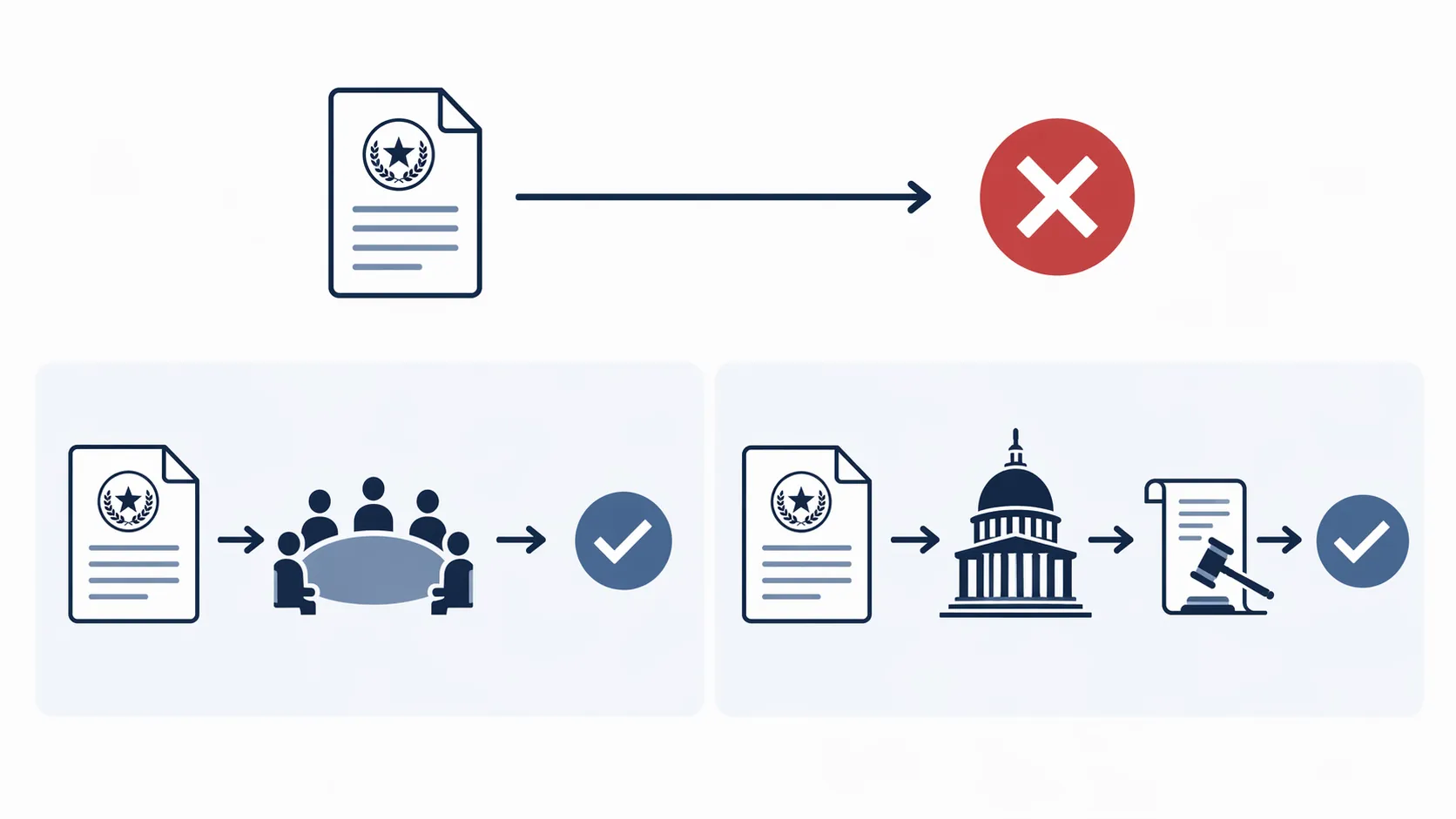
The point is not that executive orders are symbolic. They can trigger reviews, redirect agency priorities, and change the conduct of executive officials. The point is that their binding effect depends on the legal status of the target. For the Smithsonian, the relevant actor is the Board of Regents unless Congress has imposed a statutory rule that changes the Board's room to maneuver.
| Route | Legal Effect on the Smithsonian |
|---|---|
| Presidential order alone | Creates political pressure, but does not itself bind the Institution if the Smithsonian is outside the executive branch. |
| Board of Regents adoption | Can make the directive operative as an internal Smithsonian decision, assuming the Board acts within its statutory authority. |
| Congressional legislation or appropriations condition | Can alter the legal environment because Congress created the governing framework and may impose lawful statutory limits. |
The Board of Regents Is the Legal Hinge
The Board of Regents matters because it turns a culture-war dispute into an authority question. The President can state an expectation. The White House can demand a review. Executive agencies can examine funding streams within their lawful control. But if the requested change is a Smithsonian curatorial, personnel, or institutional-governance change, CRS locates the relevant decision with the Board rather than the President.[1]
That does not make the Board politically insulated in any absolute sense. Public officials sit on it, Congress funds much of the Institution's work, and national museums are never free from political attention. The narrower legal point is that pressure and command are different categories. A Board that voluntarily adopts the substance of a presidential directive has acted through the Smithsonian's governance mechanism. A Board that refuses has not necessarily defied a legally binding presidential order.
This is also where funding language can mislead. A President may direct executive officials to examine grants, agreements, or agency-administered funds. But where the proposed result is a change in the Smithsonian's own operations, CRS's April 2025 analysis treated the funding issue as requiring separate congressional consideration.[1] In practice, that means the legally meaningful path runs through legislation or appropriations conditions, not through a standalone White House instruction to the Institution.
Raven Helps, But It Should Not Be Overread
Raven v. United States supplies useful but limited support. In 2018, the U.S. District Court for the District of Columbia described the Smithsonian as "no typical federal agency" and distinguished it from "typical federal agenc[ies]" while treating art selection as government speech made at the Institution's "sole discretion."[3] That language fits the broader picture: the Smithsonian is not readily governed by assumptions built for cabinet departments.
Still, Raven is a district-court decision. It is not the D.C. Circuit, and it is not a Supreme Court rule for every dispute over Smithsonian governance. Its best use here is confirmatory. It reinforces the unusual status already visible in the charter, CRS analysis, Smithsonian legal-history materials, and Dong. It should not be made to carry more than that.
The July 2026 Signage Directive Is a Different Problem
The July 2026 order adds an inter-agency wrinkle by directing the National Park Service to install sidewalk signage warning visitors about "ideological capture."[5] That instruction should be analyzed separately from direct Smithsonian control. The National Park Service operates under the Department of the Interior, and Interior is an executive department. A presidential instruction to Interior-connected personnel raises one set of authority questions; a command to the Smithsonian's museums raises another.
The signage provision may affect the visitor experience and may intensify political pressure on the Institution. It does not solve the Smithsonian-control problem. A sign placed by another federal actor does not amend the Smithsonian charter, replace the Board of Regents, or convert the Institution into an executive agency for curatorial purposes.
The Kennedy Center Analogy Shows Why Structure Decides the Case
The Kennedy Center comparison is tempting because both institutions sit at the intersection of culture, federal law, and presidential politics. It is also dangerous if used too quickly. The Atlantic's July 2026 account emphasized that the Kennedy Center has a different statutory structure, including a board of presidential appointees removable at will, while the Smithsonian has a 17-member cross-branch Board of Regents made up of the Chief Justice, the Vice President, members of Congress, and citizen regents.[6]
That contrast does not prove the Smithsonian is politically untouchable. It proves the more lawyerly point: statutory design changes the legal vulnerability. A governance structure built around removable presidential appointees presents a different capture path from a trust instrumentality governed by a mixed Board whose authority traces to the 1846 charter.
What Scholarship Adds, and What It Cannot Decide
The Yale Law Journal student note published in April 2026 is useful because it treats the Smithsonian orders as a legal-structure problem rather than only a museum-policy fight. It characterizes the executive action as "unconstitutional executive overreach" and proposes reclassifying the Smithsonian as a Title 36 chartered corporation as a longer-term safeguard.[7]
Its status matters. A student note is not binding authority, and it does not displace CRS, the charter, or Dong. Its value is in surfacing the stakes and offering a reform path. The immediate enforceability analysis still depends on whether the President currently has authority to command the Institution. On the materials now available, that authority is missing.
Removal-Power Doctrine Does Not Collapse the Distinction
Recent disputes over presidential removal power can create a false sense that all federally connected entities are moving toward ordinary executive control. That is the wrong starting assumption for the Smithsonian. Removal-power doctrine concerning executive agencies may become relevant by analogy if litigation eventually tests the Institution's status, but analogy is not classification.
The unresolved tension is real. A court strongly committed to unitary-executive reasoning might view hybrid arrangements with suspicion. But the Smithsonian's trust-instrumentality structure, Dong's executive-branch holding, and the Board-centered charter framework would still have to be confronted. They cannot be bypassed by describing the Institution as federal in a general way.
The Enforceability Line
For counsel assessing governance risk, the clean rule is entity-specific. An executive order aimed at a hybrid or quasi-public body requires an authority check before anyone treats the order as binding. The question is not whether the President has announced a policy. The question is whether the target entity is legally subject to presidential direction on the matter at issue.
For the Smithsonian, the available authorities point in the same direction. The Institution is a trust instrumentality rather than an executive agency; Dong rejects executive-branch treatment in a closely related structural context; CRS places operational change with the full Board of Regents and funding alteration with Congress. EO 14253 and the July 2026 follow-on order therefore lack binding legal force against the Smithsonian unless the Board voluntarily adopts their directions or Congress changes the law.
The next legally meaningful move would not be another White House instruction saying the same thing more emphatically. It would be Board action, or legislation.
References
- Potential Effects of Executive Order 14253, Congressional Research Service, Apr. 2025
- Legal History, Smithsonian Office of General Counsel
- Control of Smithsonian Institution Exhibits, First Amendment Encyclopedia
- Restoring Truth and Sanity to American History, The White House, Mar. 2025
- Restoring Trust in the Smithsonian Institution, The White House, July 24, 2026
- How the Smithsonian Could Fall, The Atlantic, July 2026
- Fight at the Museum: Executive Overreach and the Future of the Smithsonian Institution, Yale Law Journal, Apr. 2026
Operationalizing workflow
No workflow has been explicitly linked to this obligation yet. See Workflows generally.
Illustrative cases
No illustrative case is currently tracked for this obligation. See Risk Digest for documented incidents generally.
← Back to RegulationReport a correction or tip
Spotted an outdated figure, a misstated fact, or a ruling this regulation entry should reflect? Public comments are disabled for this content given the professional cost of a misreported case outcome, penalty amount, or rule text — use the structured correction channel instead.
Report a correction or tip for this record →