
Did Trump's SpaceX shares violate federal disclosure rules?
- Authority
- U.S. Office of Government Ethics
- Rule type
- regulation
- Jurisdiction scope
- US federal
- Source text
- Read primary rule text ↗
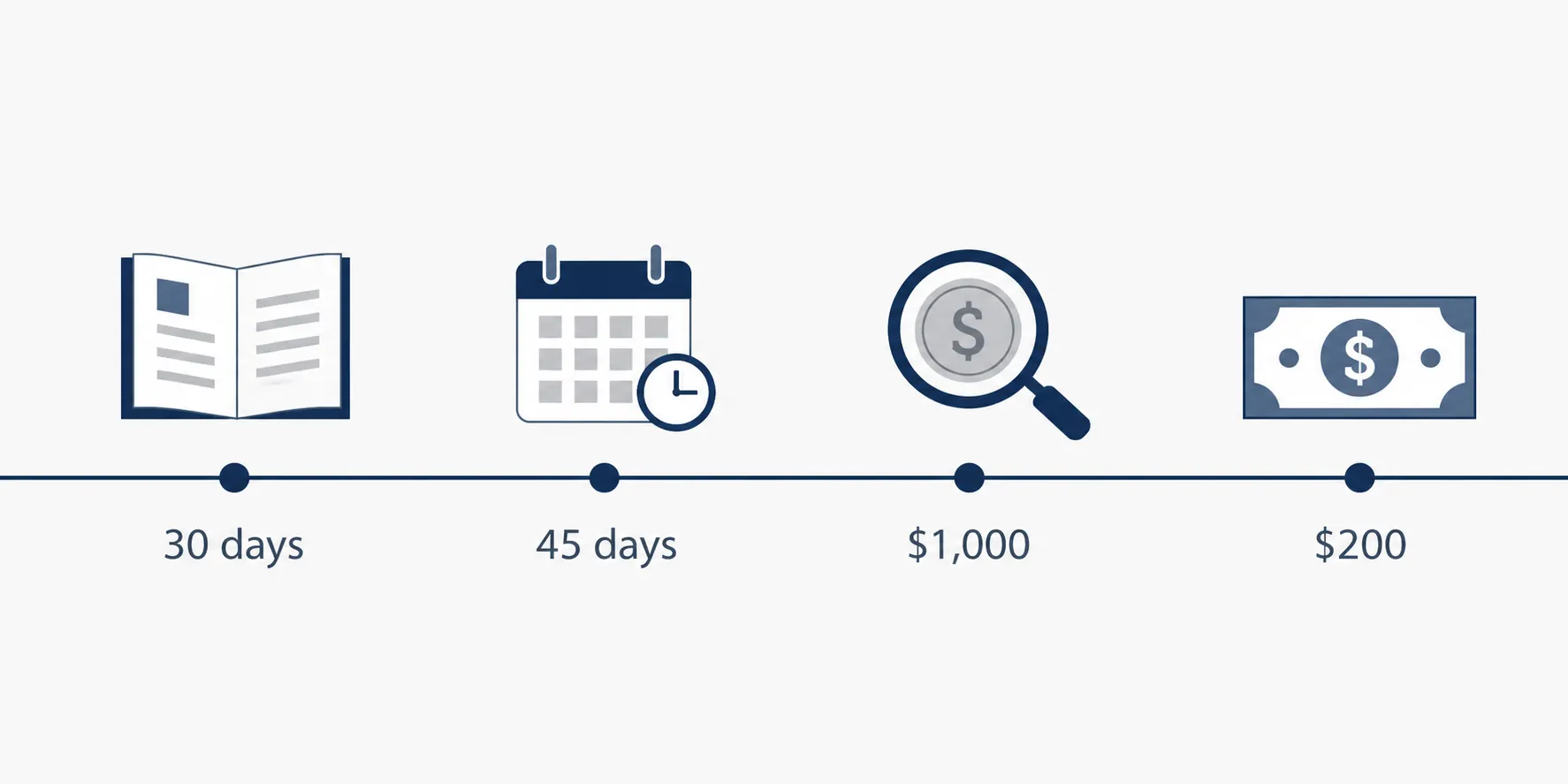
File Form 278-T for reportable transactions over $1,000 within 30 days of notice, no later than 45 days after the transaction; $200 late fee applies per report.
President Trump's August 12, 2026 Form 278-T reports a June 23 purchase of SpaceX shares valued between $15,001 and $50,000. The purchase appears among more than 1,000 June transactions, including trades involving Palantir, Berkshire Hathaway, Visa, Mastercard, Cintas, and a Vanguard ETF sale. The SpaceX purchase occurred about 11 days after the company's June 12 initial public offering. [1]
Investing.com, in a report carried by Yahoo Finance, said the filing was publicly released on August 21. Forbes reported on the disclosure on August 22. [2][3] Those dates matter because the record is still moving: Senator Elizabeth Warren and Representative Daniel Garcia requested answers by August 28, 2026. [8]

What the Form 278-T Shows
The filing reports a transaction and an estimated value range. It does not establish that the President directed SpaceX policy, received nonpublic information, or held the shares through a particular kind of trust. A Form 278-T is a financial disclosure record, not a trust instrument or a finding that a conflict occurred.
That distinction should control the briefing. The SpaceX line is notable because of its timing and the company's public profile, but the filing places it within a broader set of reported trades. The document, standing alone, does not turn the purchase into evidence of wrongdoing.
The primary record should be verified directly before publication. Download the OGE PDF, confirm the signature date and transaction entry at page level, and record the last-verified date in any internal research note. The Office of Government Ethics' Officials' Individual Disclosures Search Collection is the appropriate path for checking the public record. OGE also identifies a civil penalty of up to $25,132 for misuse of disclosure information under 5 U.S.C. Section 13107(c). [5]
What the Disclosure Rules Require
The relevant framework is a reporting regime. The Department of the Interior's financial-disclosure guidance states that a periodic transaction report on Form 278-T is due within 30 days after the filer receives notice of the transaction, and no later than 45 days after the transaction itself. Reportable transactions generally use a $1,000 threshold. A late report carries a $200 fee. [4]
Nothing in that framework, as described in the cited materials, requires the filer to sell the SpaceX shares merely because the purchase is reportable. The value is disclosed as a range rather than an exact amount by design. The legal question is therefore whether the transaction was properly reported and whether some separate conflict-of-interest rule applies, not whether ownership itself was forbidden.
The fee also needs precise handling. The $200 amount applies to a late report, not automatically to every transaction listed in that report. Under OGE's aggregation position, multiple late transactions in one report can therefore produce one fee rather than a separate fee for each line. On that approach, annual exposure from the ordinary per-report charge is generally capped near $2,400.
A prior filing supplies enforcement context, not proof that the June filing was late. The Las Vegas Sun reported that the first-quarter 2026 Form 278-T ran to 113 pages and covered more than 3,600 transactions, with a handwritten notation that the filer paid late fees and a reported $200 fine. [6] The relevant point is the unit of the fee: the reported episode is consistent with a per-report charge even where a filing contains a large number of transactions.
The Counts Are Not One Number
Transaction totals in the surrounding coverage should not be blended. Warren and Garcia's letter described 3,555 first-quarter transactions, while the Las Vegas Sun reported more than 3,600 and separately cited a Digital Today count of 3,642. For 2025, the letter's body referred to more than 14,000 transactions, its headline used more than 17,000, and a Democracy Defenders Fund analysis counted 21,235 transactions in the annual filing. [7][8]
Those differences may reflect different documents, counting methods, or publication updates. They do not support a single consolidated figure. A client briefing should preserve each number with its source and date rather than manufacture precision that the record does not provide.
Where the Structure Creates Exposure
The more consequential questions concern what disclosure does not resolve. A fee assessed once per report can reduce the marginal cost of submitting a filing that contains many late transactions. That may be an intentional feature of the enforcement design, but it is different from a fee calibrated to the number or value of missed disclosures.

The trust arrangement raises a separate verification problem. Warren and Garcia asked how the assets were managed and whether the family trust operates independently. Reporting identified the trust as revocable, with Donald Trump Jr. as sole trustee. [8] A disclosure form can identify ownership or management information, but it cannot establish the full terms of the trust, the trustee's independence, investment instructions, or the existence of a genuine blind-trust arrangement.
Eric Trump was reported as asserting that the assets were in a blind trust, while the White House response described a model portfolio based on replication of a Schwab 1000-style index. [9] Those statements describe positions about management; neither one supplies the trust instrument needed to resolve the question. The Form 278-T cannot do that work.
The other gap is participation. Section 208's criminal conflict-of-interest restriction applies differently to the President and vice president than it does to many other executive-branch officials. The cited framework supports the conclusion that the President is exempt from that participation bar. The Brennan Center has characterized this presidential exemption as a "presidential loophole," but that is an advocacy description, not the name of a statutory violation.
That exemption does not erase disclosure obligations, and it does not answer whether a particular decision was ethically troubling or politically unwise. It does mean that a briefing cannot simply apply the ordinary Section 208 analysis used for a covered employee and assume the same legal result for the President.
The Briefing Answer
On the materials reviewed, the June 23 SpaceX purchase is consistent on its face with the federal disclosure regime. The STOCK Act framework requires reporting rather than divestiture, permits range-based valuation, and uses a $200 late fee per report. The filing itself does not show a supported violation of the disclosure or conflict-of-interest rules.
That answer should remain qualified. The fee aggregation position, the revocable family trust, and the presidential exemption address different questions: how a late filing is penalized, who controls the assets, and whether Section 208 restricts participation. Disclosure cannot substitute for trust verification, and the presidential carve-out leaves a different form of exposure than the one presented by an ordinary executive-branch recusal analysis.
The August 28 Warren-Garcia response deadline is the next live verification point. Pending proposals, including the Stop Insider Trading Act, which passed the House in July 2026, and the Restore Trust in Congress Act's proposed presidential and vice-presidential carve-out, should be identified as proposed reforms rather than present law. Until the record develops, the defensible conclusion is narrow: this trade and filing do not establish a supported violation, while the surrounding rules warrant continued tracking.
References
- Donald J. Trump 08.12.2026 278-T
- Trump Bought SpaceX Shares in June - Investing.com via Yahoo Finance, August 21, 2026
- Trump Made Big Stock Trades in SpaceX, Palantir and Tech Companies in June - Forbes, August 22, 2026
- Financial Disclosure - U.S. Department of the Interior
- Officials' Individual Disclosures Search Collection - U.S. Office of Government Ethics
- Trump Draws Ethics Scrutiny Over Aggressive Big-Tech Stock Trading - Las Vegas Sun, May 16, 2026
- Seven Critical Revelations from President Trump's Financial Disclosure Report - Democracy Defenders Fund, 2026
- Warren-Garcia Press Trump on Thousands of Stock Trades, Question Him on Self-Enrichment from Government Actions - U.S. Senator Elizabeth Warren, August 2026
- Trump Stock Trades: Warren, Garcia Question Disclosure and Blind Trust Claims - CNBC, August 13, 2026
Operationalizing workflow
No workflow has been explicitly linked to this obligation yet. See Workflows generally.
Illustrative cases
No illustrative case is currently tracked for this obligation. See Risk Digest for documented incidents generally.
← Back to RegulationReport a correction or tip
Spotted an outdated figure, a misstated fact, or a ruling this regulation entry should reflect? Public comments are disabled for this content given the professional cost of a misreported case outcome, penalty amount, or rule text — use the structured correction channel instead.
Report a correction or tip for this record →