
How reliable are AI tools for Trump tariff legal analysis?
- Effective date
- Feb 20, 2026
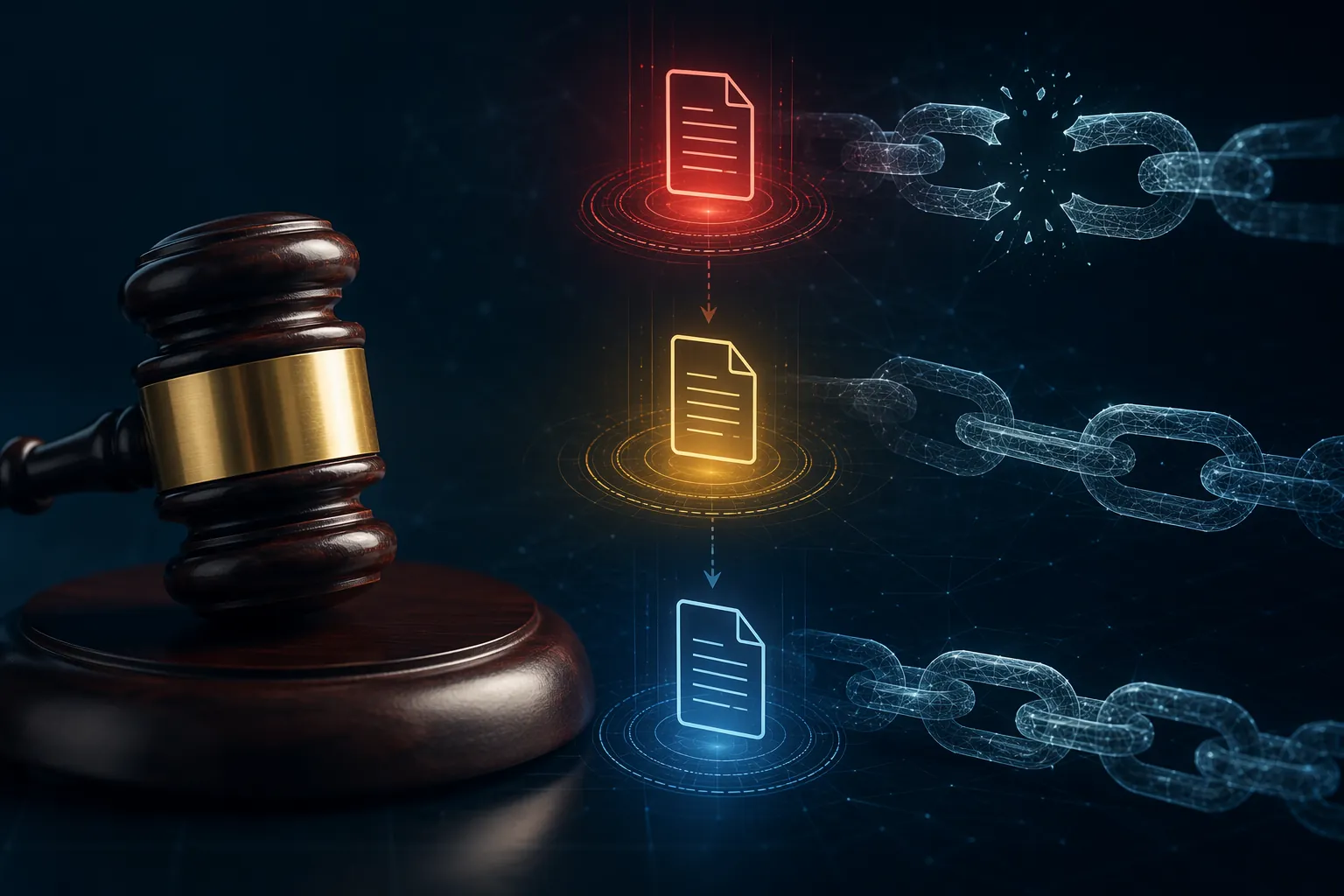
The first legal question in any analysis of the new Trump tariff list carrying 10% to 12.5% rates is not whether the tariff theory sounds familiar. It is whether the authority is current. As of July 24, 2026, the February IEEPA tariff authority has been struck down by the Supreme Court, the Section 122 global tariff has been ruled illegal by the Court of International Trade and faces an expiration problem today, and the 10% to 12.5% forced-labor tariffs are a Section 301 proposal, not an imposed duty schedule.[1][2][3][4][5]
That sequence is where AI-assisted tariff research can become dangerous. A tool may retrieve a real proclamation, a real alert, or a real docket reference and still deliver the wrong legal answer if it does not track the authority chain from valid, to invalidated, to expired, to proposed. For a trade lawyer, that is not a stylistic problem. It can change landed-cost modeling, protest strategy, broker instructions, entry summaries, and the advice an importer gives its commercial team.
The July 2026 Search Starts With Section 301, Not IEEPA
The July 2026 tariff item most likely to send counsel back into research mode is the USTR forced-labor proposal: additional duties in the 10% to 12.5% range, a product list in Annex A, exceptions, USMCA carve-outs, and rules for goods already subject to Section 232 measures. The public comment period closed July 6, 2026, and hearings began July 7, 2026. As of July 24, no final rule has been published in the materials provided here.[3][4][5]
That status matters more than the headline rate. A proposed Section 301 action is not the same thing as an entered duty. It may be important enough to model, reserve for, and brief internally. It is not yet the same thing as a tariff line an importer can assume CBP will collect on an entry filed today.
Section 301 also should not be collapsed into the earlier Trump tariff authorities. It is a familiar trade statute with its own investigation process, administrative record, remedy structure, and litigation history. The June 15, 2026 denial of certiorari in the China Section 301 litigation suggests a different litigation posture from the IEEPA and Section 122 regimes, but it does not answer whether this new forced-labor theory is adequately supported, how Annex A exceptions will operate, or how overlaps with Section 232 will be administered.[6]
| Tariff authority | Status on July 24, 2026 | What an AI answer must not do |
|---|---|---|
| IEEPA tariffs | Struck down by the Supreme Court in Learning Resources v. Trump | Treat IEEPA as still valid tariff authority for the 2026 program |
| Section 122 global 10% tariff | Ruled illegal by the CIT and facing expiration on July 24, 2026 | Describe the global tariff as live without the CIT ruling and expiration caveat |
| Section 301 forced-labor tariffs | Proposed 10% to 12.5% action; no final rule in the provided materials as of July 24 | Treat the Annex A list as an imposed duty schedule |
The Authority Chain That Has To Be Reconciled
The February 2026 IEEPA ruling is the cleanest example of a source-status trap. In Learning Resources v. Trump, the Supreme Court held, 6-3, that IEEPA did not authorize the challenged tariff measures.[1] A research answer that still cites IEEPA as operative tariff authority after that decision is not merely missing a later development; it is relying on a statutory basis the Court rejected for the challenged use.
The Section 122 episode is more awkward for automated systems because its status depends on both litigation and time. The Court of International Trade ruled the global 10% tariff illegal on May 7, 2026, and the authority also has a July 24, 2026 expiration problem in the materials reviewed here.[2] A tariff summary generated this morning and a tariff summary generated tomorrow could require different caveats, even if both quote the same statutory language accurately.
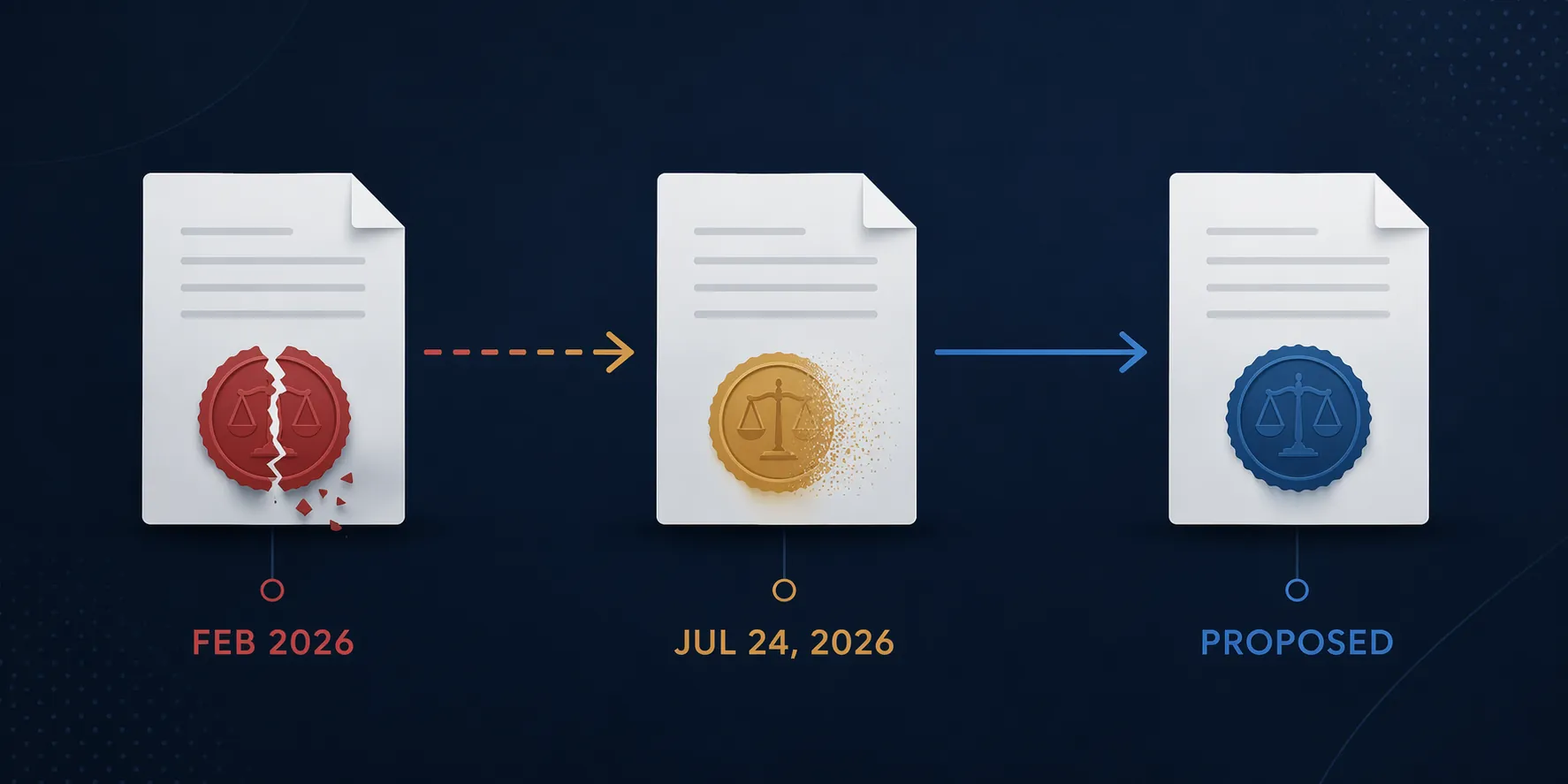
The Section 301 proposal is different again. It may be the strongest of the three platforms in the ordinary trade-law sense, because Section 301 is built for unfair trade practices and remedial duties. But that only gets the analysis started. The forced-labor rationale still has to survive scrutiny of the administrative record, product selection, exceptions, carve-outs, overlap with existing trade remedies, and any final modifications after comment and hearing.
A competent answer therefore has to separate three verbs: struck down, expiring, and proposed. If an AI tool blends them into one “Trump tariff authority” narrative, the answer may sound sophisticated while failing at the point where legal reliance begins.
How AI Gets This Wrong Without Inventing a Case
The familiar hallucination story is a fake case citation in a brief. Trade-law research has a subtler version: the tool finds real legal materials but assigns them the wrong present-tense status. A real Federal Register notice can become stale. A real proclamation can be overtaken by a court ruling. A real proposal can be described as an effective measure because the summary was trained, indexed, or cached before the next authority check.
That is why tariff analysis is a poor fit for tools that only retrieve semantically similar authorities. The key issue is not whether the tool can find IEEPA, Section 122, or Section 301. The issue is whether it can show which source controlled at the time of the answer, what later authority changed it, and whether the current item is a proposed rule, final rule, injunction, stayed judgment, expired authority, or live collection instruction.
The documented legal-AI error record is already large enough to treat this as an operational risk, even if the available counts come with caveats. The AI Hallucination Cases Database reported 1,348 cases worldwide by late April 2026, including 915 from U.S. courts, and described administrative law and rapidly changing regulatory regimes as high-risk domains. That database is vendor-published rather than an independent audit, so the count should be used as a warning signal, not as a definitive measure of incidence.[7]
Court sanctions give the problem a harder edge. EDRM reported $145,000 in U.S. court sanctions in Q1 2026 tied to AI-generated fake citations.[8] Those sanctions do not prove that every AI tariff answer is unreliable, and fake citations are not identical to stale tariff-status analysis. They do show that courts are already attaching consequences to lawyers who fail to verify machine-generated legal authority.
Importer Liability Does Not Move To The Software Vendor
CBP has already given trade practitioners a useful anchor outside the courtroom-sanctions context. In HQ H350722, issued January 16, 2026, CBP held that AI-generated classification outputs were not, by themselves, reasonable care. The importer of record remained responsible regardless of the AI tool’s confidence scores.[9]
That ruling concerned classification, not the July 2026 forced-labor tariff proposal. The lesson still travels. If an importer relies on an AI output that misstates whether a tariff is effective, invalidated, or merely proposed, the existence of a confident machine answer is unlikely to answer the reasonable-care question. Counsel needs a verifiable path back to primary authority.
A vendor benchmark can be useful, but it does not replace that path. Thomson Reuters reported a Global Trade Research AI benchmark with an 84% mean score on six CBLE exams; the result is vendor-published and, in the materials provided here, not peer-reviewed.[10] Even taken at face value, an exam benchmark does not establish that the tool will correctly update a July 24 tariff-status answer after a Supreme Court decision, CIT ruling, comment-period deadline, hearing date, or final-rule publication.
What A Reliable AI-Assisted Tariff Answer Has To Show
For the July 2026 forced-labor proposal, a usable AI-assisted answer should look less like a polished memorandum and more like a controlled authority map. The prose can come later. First, the tool has to expose the legal chain well enough for a lawyer to test it.
- Identify the operative statute separately: IEEPA, Section 122, or Section 301.
- State the status as of the answer date: struck down, enjoined, expired, proposed, final, stayed, or in effect.
- Link the status to primary authority or a clearly labeled secondary source that identifies the docket, notice, or agency action.
- Separate the proposed Annex A product list from any final duty collection instruction.
- Flag USMCA carve-outs and Section 232 overlap as implementation questions, not background color.
- Show the source date and the answer date, because tariff authority can change inside a normal client reporting cycle.
The difference between a helpful tool and a hazardous one often appears in the follow-up questions. If asked whether the 10% to 12.5% forced-labor duties apply today, the tool should not answer only with a product-list summary. It should say that the action is proposed in the materials available as of July 24, 2026, identify the comment and hearing posture, and distinguish it from the invalidated IEEPA and Section 122 measures.[1][2][3][4][5]
If asked whether Section 301 is legally safer than IEEPA, the tool should avoid turning relative strength into final validity. A better answer would say that Section 301 has a more familiar trade-law structure and a different litigation posture, while the specific forced-labor action remains proposed and may raise unresolved administrative-record and remedy-design questions.
The Practical Reliance Line
There is nothing wrong with using AI to surface tariff materials quickly. In this area, speed is useful only if it is paired with date control and authority control. A lawyer who receives a clean answer with no chain of authority still has to do the work the tool did not show: check the statute, the latest court ruling, the agency notice, the effective date, the exclusions, and the implementation instructions.
On the current record, Section 301 may be a firmer platform than IEEPA or Section 122. The July 2026 forced-labor tariffs, however, are not final in the materials reviewed here. Any AI output that cannot show the statutory authority chain, effective status, source date, and primary-source path is not reliable enough for trade-law reliance.
References
- Learning Resources v. Trump, Supreme Court of the United States, Feb. 20, 2026.
- CIT ruling striking down Section 122 tariffs, Skadden, May 2026.
- USTR Section 301 forced-labor tariff proposal, White & Case, July 2026.
- USTR Section 301 forced-labor tariff proposal, Norton Rose Fulbright, July 2026.
- USTR Section 301 forced-labor tariff proposal, Brookings, July 2026.
- China Section 301 certiorari denial, Supreme Court of the United States, June 15, 2026.
- AI Hallucination Cases Database, Haqq AI, late April 2026.
- $145K in Q1 2026 US court sanctions for AI-generated fake citations, EDRM, 2026.
- HQ H350722, CBP CROSS database, Jan. 16, 2026.
- Global Trade Research AI benchmark, Thomson Reuters, 2026.
Operationalizing workflow
No workflow has been explicitly linked to this obligation yet. See Workflows generally.
Illustrative cases
No illustrative case is currently tracked for this obligation. See Risk Digest for documented incidents generally.
← Back to RegulationReport a correction or tip
Spotted an outdated figure, a misstated fact, or a ruling this regulation entry should reflect? Public comments are disabled for this content given the professional cost of a misreported case outcome, penalty amount, or rule text — use the structured correction channel instead.
Report a correction or tip for this record →