
What Is Turkey's Legal Rent Increase Rate in 2026?
- Authority
- Turkish Code of Obligations No. 6098 (Arts. 344-345)
- Rule type
- statute
- Jurisdiction scope
- Turkey (national)
- Effective date
- Jul 1, 2024
- Source text
- Read primary rule text ↗
Renewal rent increases in residential and roofed-workplace commercial leases may not exceed the TÜİK 12-month average CPI for the renewal month.
| Record field | Current answer |
|---|---|
| Current rule | For an ordinary renewal in 2026, the lawful rent-increase ceiling is the 12-month average CPI published monthly by TÜİK, not a fixed annual percentage. |
| Jurisdiction | Turkey / Türkiye. |
| Legal authority | Turkish Code of Obligations No. 6098, Arts. 344-345, as described in the consolidated statute source and corroborating legal analyses. The official consolidated text should be checked before filing or serving a formal notice. [1][2] |
| Lease scope | Residential leases and commercial roofed-workplace leases use the CPI ceiling for renewal increases; separate rules apply to initial rent and five-year rent-determination cases. |
| Last verified | August 3, 2026 (UTC), against the sources listed below. |
| August 2026 figure | 31.90% is treated here as a working August ceiling reported from the July CPI release dated August 3, 2026. It should be re-checked directly against the official TÜİK release before being quoted as final. |
| Non-advice note | This is a regulation-record summary, not legal advice for a specific lease, dispute, notice, or lawsuit. |

The short answer to “turkey rent increase rate 2026 legal limit” is this: use the TÜİK 12-month average CPI for the month in which the renewal increase is applied. In January 2026, that ceiling was 34.88%. By August 2026, the working ceiling was 31.90%, subject to the direct TÜİK cross-check noted above. Those are not competing rules. They are different monthly outputs of the same rule.
The obsolete answer is “25%.” That temporary residential cap was introduced by Law No. 7409, published in the Official Gazette on June 11, 2022, and extended by Law No. 7456, published on July 15, 2023. It applied to residential leases and lapsed on July 1, 2024. It is not the 2026 ceiling. [3]
The Rule After the 25% Cap
Article 344 of the Turkish Code of Obligations is the operative provision for renewal increases: the agreed increase cannot exceed the 12-month average change in the consumer price index. Article 345 deals with rent-determination proceedings and timing. Because the official consolidated statute page returned only a search stub when checked, this record treats the Mevzuat page as the primary place to verify the text and relies on mutually consistent law-firm analyses for the working statement of the rule. [1][2]
The practical consequence is simple enough to write into a notice: a landlord may demand a renewal increase up to the applicable monthly CPI ceiling, but the ceiling changes each month. A February renewal does not borrow January’s number. An August renewal does not use a “2026 rate” published earlier in the year.
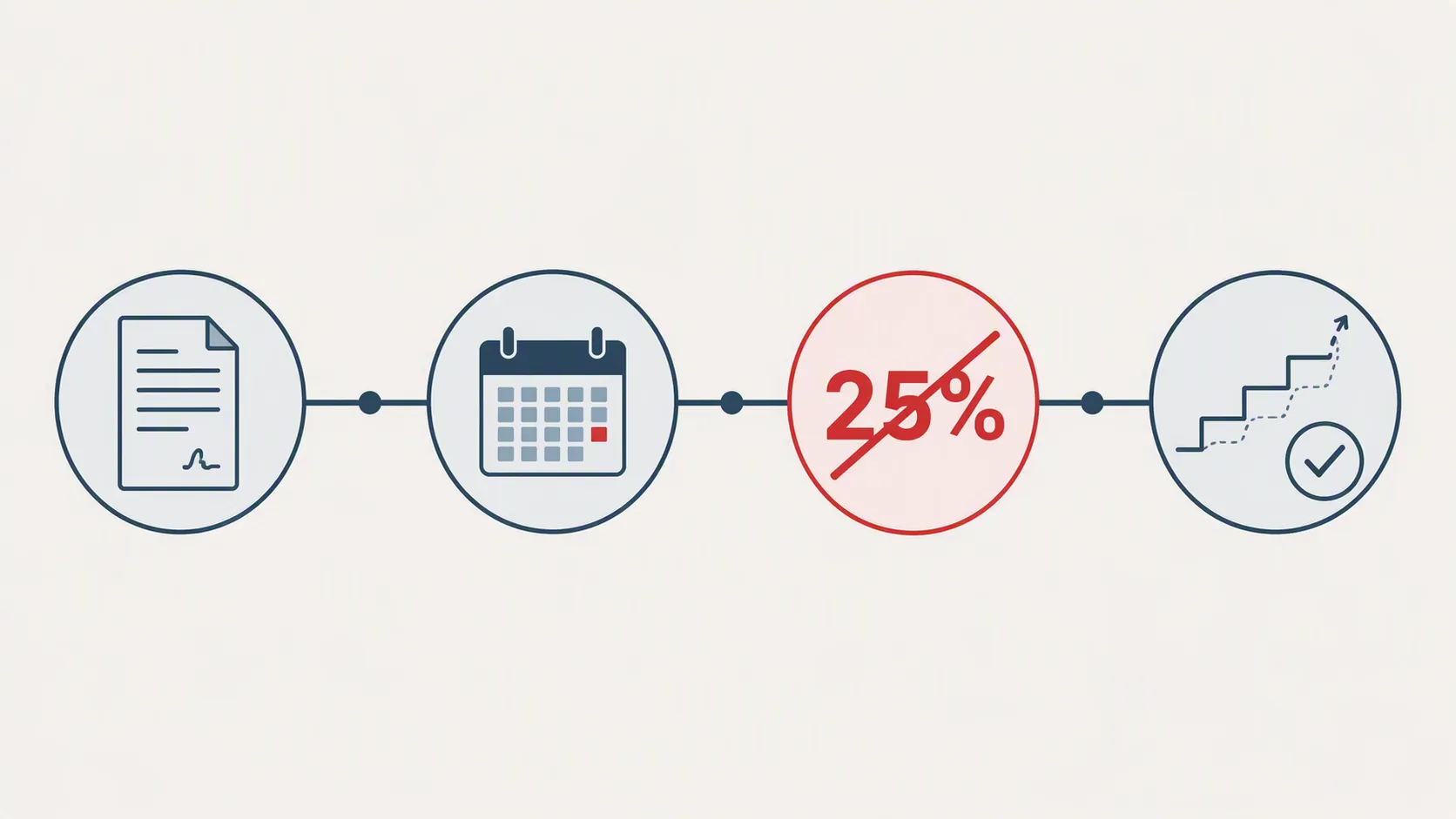
Turkey Rent-Increase Ceiling by Month in 2026
The table is the record. If a rent demand, client memo, tenant reply, or investment note uses only one unsourced percentage, it is missing the part that makes the figure legally usable: the publication month and the release basis.
| Renewal month in 2026 | Maximum renewal increase | Release basis | Record status |
|---|---|---|---|
| January | 34.88% | 12-month average CPI figure used for January 2026 rent increases; current series corroborated in 2026 roadmap reporting. [4] | Aggregator / secondary-source confirmed; direct TÜİK release check recommended before formal use. |
| February | 33.98% | 12-month average CPI figure reported for February 2026 rent increases. [5] | Secondary-source confirmed; direct TÜİK release check recommended before formal use. |
| March | 33.39% | 12-month average CPI figure used for March 2026 rent increases; current series corroborated in 2026 roadmap reporting. [4] | Aggregator / secondary-source confirmed; direct TÜİK release check recommended before formal use. |
| April | 32.82% | 12-month average CPI figure reported for April 2026 rent increases. [6] | Secondary-source confirmed; direct TÜİK release check recommended before formal use. |
| May | 32.43% | 12-month average CPI figure used for May 2026 rent increases; current series corroborated in 2026 roadmap reporting. [4] | Aggregator / secondary-source confirmed; direct TÜİK release check recommended before formal use. |
| June | 32.24% | 12-month average CPI figure reported for June 2026 residential and commercial contract updates. [7] | Secondary-source confirmed; direct TÜİK release check recommended before formal use. |
| July | 32.03% | 12-month average CPI figure reported in the July 2026 update. [8] | Secondary-source confirmed; direct TÜİK release check recommended before formal use. |
| August | 31.90% | Working August ceiling based on the July CPI release dated August 3, 2026; this figure must be verified directly against TÜİK before publication or reliance. | Pending final TÜİK cross-check in this record. |
The direction of the series is visible, but the direction is not the rule. The rule is still the month-specific 12-month average CPI ceiling. A lower August figure does not retroactively alter a July renewal, and a higher older figure does not survive into a later renewal merely because it was quoted in an earlier contract discussion.
How to Verify the Month Before You Rely on It
TÜİK publishes the CPI release on the 3rd of each month for the prior month. The rent-increase ceiling then follows the 12-month average CPI figure in that release. For August 2026, the relevant source event is not an August rent-market article; it is the July CPI release issued on August 3, 2026.

- Identify the renewal month in the lease or notice. Do not start with a rate.
- Find the TÜİK CPI release published on the 3rd of that month, covering the prior month’s CPI data.
- Use the 12-month average CPI figure, not the monthly CPI change and not the year-on-year CPI figure.
- Preserve the release date, screenshot or PDF, and exact percentage in the rent file.
- If using a news page or aggregator first, treat it as a lead and cross-check the official release before sending a legal notice or payment instruction.
That last step is not clerical fussing. Source review for this record flagged one 2026 table that appeared offset by one month against the consensus series. A table can be close enough to look plausible and still be wrong for the lease in front of you.
For the same reason, this record links the verification discipline to the site’s prior primary-source checks, including the ICE detention-center legal-status record. The subject matter is different; the obligation is the same: do not forward a compliance number until the underlying release has been identified.
If the Demand Exceeds the Ceiling
A demand above the CPI ceiling is not made lawful because it appears in a message, invoice, payment link, or proposed amendment. The legal analyses reviewed for this record state that the excess portion is invalid, the tenant may refuse the unlawful excess, overpaid amounts may be recoverable under unjust enrichment principles, and refusal to pay an unlawful increase is not itself a ground for eviction. Those propositions should still be checked against the facts of the lease and any litigation posture. [2][9]
The safer reply is usually not a broad accusation. It is a calculation: identify the renewal month, state the applicable 12-month average CPI ceiling, accept or pay the lawful portion if otherwise due, and contest the excess. That keeps the dispute on the enforceable number rather than on general inflation, fairness, or neighborhood market claims.
Residential and Commercial Leases
The 25% temporary cap was a residential measure. The current CPI ceiling, by contrast, is described in the reviewed legal materials as applying to renewal increases for both residential leases and commercial roofed-workplace leases. That statement should not be stretched into a full commercial leasing answer; commercial lease files can carry their own notice, tax, security, currency, and litigation issues. [7][9]
What the Simple CPI Formula Does Not Cover
The CPI ceiling is the ordinary renewal rule. It is not a complete rent-law code.
- Initial rent: the first agreed rent is generally treated differently from a renewal increase; the CPI ceiling is aimed at later increases, not every first rent bargain. [2]
- Five-year cases: after five years, a court may determine rent with reference to statutory factors and market value through a rent-determination suit, rather than mechanically applying only the annual CPI ceiling. [2][9]
- Mediation: rent disputes have been subject to mandatory mediation before litigation since September 1, 2023, according to the reviewed law-firm materials. [9]
- Court: rent-determination disputes are described in the reviewed materials as falling within the Civil Court of Peace jurisdiction. [9]
Those exceptions matter because they are often where a correct monthly CPI number is misused. A landlord in a five-year proceeding may be arguing about judicial rent determination, not merely the annual renewal cap. A tenant answering an ordinary annual increase should not concede that broader frame unless the lease timing actually supports it.
The 2026 Number to Use Today
For an August 2026 ordinary renewal, the working legal ceiling in this record is 31.90%, because the August cap depends on the July CPI release issued on August 3, 2026. Before relying on that figure in a notice, article, board memo, rent demand, or payment refusal, check the official TÜİK release and save the record. For earlier 2026 renewals, use the month-specific percentage in the table, not the August figure.
References
- Mevzuat Bilgi Sistemi official consolidated TBK No. 6098 text, Mevzuat Bilgi Sistemi
- Rent Increase Rules in Türkiye: TBK 344-345, Lex Lata
- The Rent Increase Rate Cap of 25% for Housing Rentals is Extended until July 1st, 2024, Meteoğlu & Özkan
- Has the CPI Increase Cap Been Removed from Lease Agreements? A Roadmap for Tenants and Landlords for 2026, Golden Partner
- Rent Cap Turkey 2026: 33.98% Maximum Increase Rate, RestProperty
- April rent increase rate in Türkiye confirmed: Guide for tenants and expats, Türkiye Today
- June 2026 Rent Increase Rate (32.24%) Announced, ACC Homes Antalya
- Rent Increase Rate Calculation in Turkey (July 2026 Update), CB Hukuk
- Rent Increase Cap in Turkey: TBK Art. 344 and the CPI Rule, MONA HUKUK
Operationalizing workflow
No workflow has been explicitly linked to this obligation yet. See Workflows generally.
Illustrative cases
No illustrative case is currently tracked for this obligation. See Risk Digest for documented incidents generally.
← Back to RegulationReport a correction or tip
Spotted an outdated figure, a misstated fact, or a ruling this regulation entry should reflect? Public comments are disabled for this content given the professional cost of a misreported case outcome, penalty amount, or rule text — use the structured correction channel instead.
Report a correction or tip for this record →