
Grounds for a 12-Person Jury Motion in Six-Person States
- Authority
- U.S. Supreme Court
- Rule type
- judicial opinion
- Jurisdiction scope
- US federal, US state
- Source text
- Read primary rule text ↗
Expressly request a 12-person jury and preserve the objection on state-law and Sixth Amendment grounds if the court proceeds with six.
In a state that permits a six-person criminal jury, defense counsel can ask for a twelve-person panel now. The motion should rest on every available state-law ground and on the Sixth Amendment, and it should expressly preserve the objection if the court denies the request or proceeds with six jurors. This is a preservation decision as much as a jury-size argument: the record needs to show precisely what panel the defense sought, why it sought that panel, and what legal question the trial court rejected.
This article is general information, not legal advice, and it does not identify which jurisdictions authorize six-person criminal juries or prescribe local motion practice. The current account of Kian v. Florida is limited to SCOTUSblog’s report that the Supreme Court will confront the six-person question this fall; the available materials do not establish a verified docket number or procedural posture. Before publication or filing, counsel should check Williams v. Florida, Ballew v. Georgia, and Burch v. Louisiana against the U.S. Reports and confirm the authority relied on in the governing jurisdiction.
The doctrinal opening is Williams, but Williams is not the whole answer
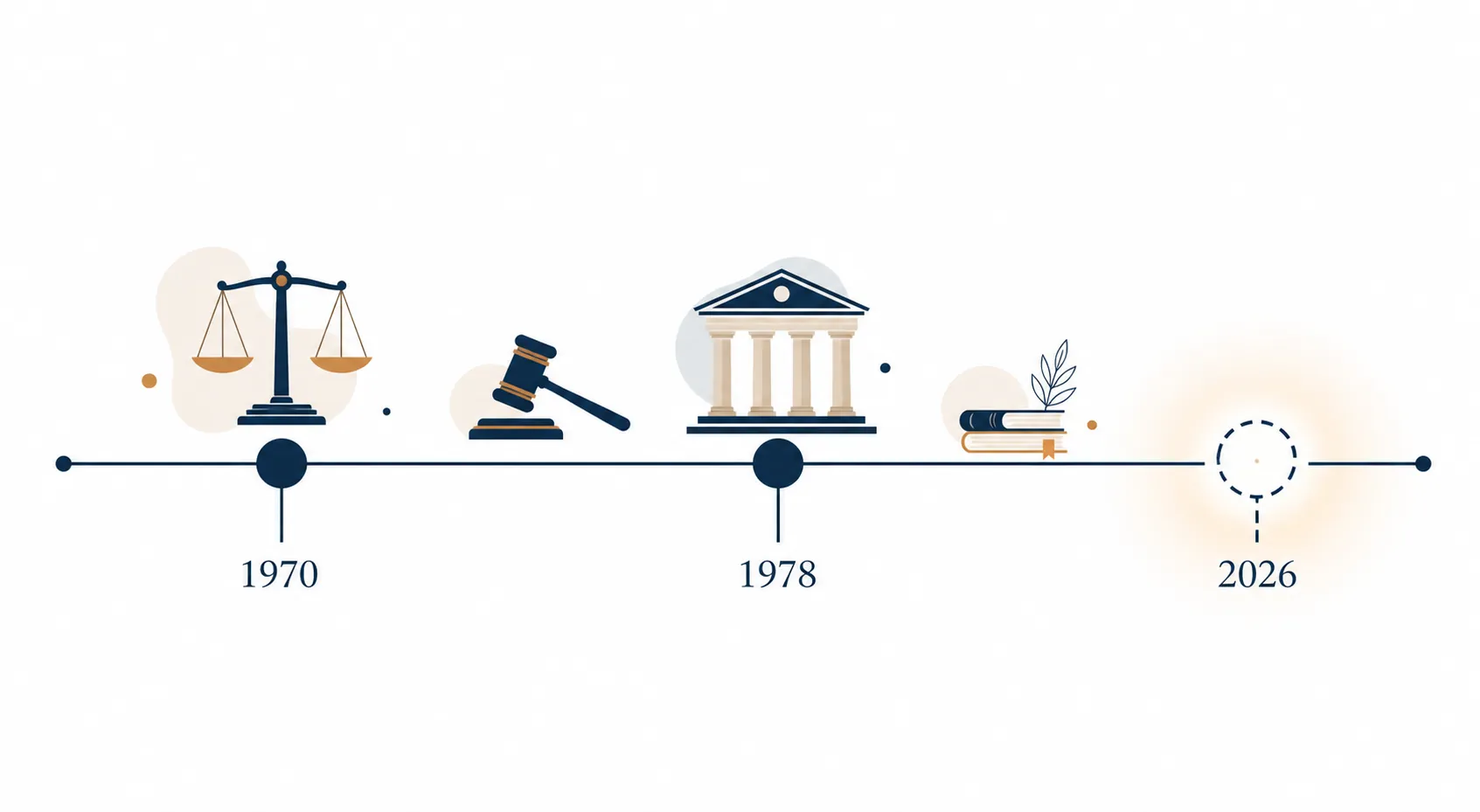
The starting point is Williams (1970). The Court upheld a six-person jury and described the twelve-person jury as a “historical accident,” not a “necessary ingredient” of the Sixth Amendment jury trial. The reasoning treated jury size functionally: if six could perform the essential deliberative and representative functions of a jury, the Constitution did not require twelve. The account of the decision and its language is summarized by SCOTUSblog.[1]
That holding gives the prosecution a substantial response to a twelve-person request. It does not, however, answer every smaller-jury question. Williams upheld six while purposefully declining to decide whether the Constitution permits a jury of fewer than six. That boundary matters. A court considering a request for twelve cannot accurately treat Williams as a holding that any number above the constitutional minimum is interchangeable, because the decision did not establish the lower boundary now at issue.
The later decision in Ballew arose from a denied request for a twelve-person panel in a misdemeanor case that proceeded with five jurors. The Court established a five-person floor, but the significance for a twelve-person motion is not merely the number five. The analysis relied on concerns about jury size, deliberation, representation, and the reliability of the process that Williams had treated more permissively. The factual setting and the unresolved relationship between the two decisions are described in the available jury-size background materials.[2]
Smith and Saks characterize Ballew as having implicitly abandoned Williams’ functional analysis. Their criticism is useful as advocacy, but it is not itself a new Supreme Court holding requiring twelve jurors. It gives counsel a way to explain why a court should not mechanically extend Williams from six to every larger or smaller configuration: Ballew shows that the Court later treated jury size as constitutionally consequential when the panel became smaller.[3]
What Kian changes for the filing decision
SCOTUSblog reports that the Court will confront this fall whether Florida may convict a person of a serious crime with six jurors.[1] That report supplies urgency without resolving the merits. Until the Court speaks, counsel in a six-person state should assume that an omitted objection is harder to repair than an objection the court has squarely rejected.
The motion therefore should ask for a full twelve-person panel rather than merely objecting to six in the abstract. “The defense requests a twelve-person jury” is a concrete form of relief. It allows the court to grant or deny a defined request and creates a cleaner appellate question than a record showing only generalized concern about jury size.
Build the motion on two legal tracks
Where state law provides a basis for a larger criminal jury, lead with that authority. State constitutions, statutes, rules, and local decisions may define the available entitlement or discretion, but the research materials do not provide a state-by-state survey. Counsel should not assume that a motion format, deadline, or remedy used in one six-person jurisdiction transfers to another.
The Sixth Amendment argument should appear alongside the state-law argument, not as an afterthought. Williams is the adverse authority on six, but its deliberate reservation of the sub-six question limits how confidently its functional language can be used to dispose of a demand for twelve. Ballew’s treatment of the five-person floor gives counsel a doctrinal reason to argue that jury size cannot be evaluated as a constitutionally irrelevant headcount. The request remains contested; the point is to present the issue in a form that preserves both the legal theory and the relief sought.
- Identify the state-law provision, rule, or decision that supports requesting twelve jurors, if one exists.
- Invoke the Sixth Amendment and explain why Williams does not resolve the question beyond the six-person holding it actually made.
- Request a twelve-person panel expressly, rather than asking only for “a larger jury.”
- State the objection to a denial, to the use of six jurors, and to the resulting composition of the jury.
- Ask the court to rule on each ground and make the ruling part of the record.
The same discipline that matters in other jury-practice disputes matters here: the record should identify who requested what, when the request was made, and what the court did with it. A practical discussion of jury practice and preservation appears in Tupac murder trial jury seated — AI exposure is the new test. The motion’s architecture can also be considered alongside Inside the Clancy trial’s concession strategy, without treating either article as authority on the constitutional question.
Use the empirical record as support, not as a verdict
The strongest empirical point in the materials is also one that is easy to overstate. If a group represents 10% of a population, sampling theory produces a 53.1% figure for the chance that the group will be absent from a six-person sample while present in a twelve-person sample. That is an illustration of minority exclusion in sampling. It is not a study showing that a defendant is more likely to be convicted, or acquitted, with one jury size rather than another.[2]

The empirical literature associated with Williams is contested. Zeisel and Diamond wrote that the four Williams-era studies “do not support” the proposition that six-person and twelve-person juries produce no differences, while Saks assessed those studies as contributing “nothing” to the question. Those criticisms appear in a civil-jury discussion and should be identified as such; they are not direct criminal-case outcome evidence.[4]
Justice Powell likewise warned in his Ballew concurrence that the cited studies had not been adversary-tested.[4] That observation gives counsel a measured response when an opponent presents old research as settled proof. It does not establish that twelve jurors produce a particular result in a particular criminal trial. It supports a narrower proposition: the empirical foundation for treating six and twelve as functionally identical is not as conclusive as a brief may imply.
For that reason, empirical material belongs in the motion as directional support for caution, representation, and deliberative reliability. It should not be presented as a prediction of the verdict or as a substitute for the legal argument. Counsel who needs to audit quotations, case citations, or research trails can consult AI Verification Is the Career Skill Gen Z Lawyers Need Most and How RAG Actually Works in Legal Research. Neither is a replacement for checking the opinions themselves.
Preservation is the part that survives an adverse ruling
A court’s denial does not make the motion pointless. It makes the record decisive. The filing and hearing should make unmistakable:
- The exact relief requested: twelve jurors for the criminal trial.
- The state-law provisions and authorities invoked.
- The Sixth Amendment theory and the distinction between Williams’ six-person holding and its unresolved sub-six boundary.
- Any empirical or representational material offered, with its limited purpose and civil or sampling-theory scope accurately described.
- The court’s ruling, including whether it rejected the state-law ground, the constitutional ground, or both.
- The defense objection to proceeding with the smaller panel and to the jury as ultimately constituted.
Counsel should also avoid converting a dissent into precedent. Justice Gorsuch’s dissent from the denial of certiorari in Khorrami v. Arizona described Williams as having been wrong from the day it was decided, but a dissent does not control the trial court. A certiorari denial likewise does not resolve the merits. Those materials can sharpen the disagreement and show that the issue remains live; they cannot carry the motion by themselves.[1]
References
- 12 angry men – or six? — SCOTUSblog, 2026. https://www.scotusblog.com/2026/08/twelve-angry-men-or-six
- Jury Size: Less is not More — Cornell University, publication date unavailable. https://courses2.cit.cornell.edu/sociallaw/student_projects/JurySize_lessisnotmore.html
- The Case for Overturning Williams v. Florida and the Six-Person Jury — Florida Law Review, publication date unavailable. https://scholarship.law.ufl.edu/flr/vol60/iss2/4
- Better by the Dozen — Judicature, publication date unavailable. https://judicature.duke.edu/articles/better-by-the-dozen-bringing-back-the-twelve-person-civil-jury
Operationalizing workflow
No workflow has been explicitly linked to this obligation yet. See Workflows generally.
Illustrative cases
No illustrative case is currently tracked for this obligation. See Risk Digest for documented incidents generally.
← Back to RegulationReport a correction or tip
Spotted an outdated figure, a misstated fact, or a ruling this regulation entry should reflect? Public comments are disabled for this content given the professional cost of a misreported case outcome, penalty amount, or rule text — use the structured correction channel instead.
Report a correction or tip for this record →