
What Happened to University of Valley Forge's Accreditation?
- Authority
- Middle States Commission on Higher Education
- Rule type
- regulation
- Jurisdiction scope
- US federal
- Effective date
- Jun 25, 2026
- Source text
- Read primary rule text ↗
Provide evidence of financial resources, audited FY2023-2025 statements, multi-year financial models, Title IV/HCM1 compliance, board oversight, and signed teach-out agreements by Sept 1, 2026.
Current status, last verified
Last verified: August 3, 2026, UTC. Category: regulation-ethics. This is a source-linked status record, not legal advice.
The short answer is that University of Valley Forge was not shown in the verified Middle States record as having lost accreditation before its board announced that the university would suspend operations. MSCHE’s Statement of Accreditation Status listed UVF as accredited while under a June 25, 2026 show-cause action, with a September 1, 2026 response deadline and anticipated Commission consideration in November 2026; UVF’s board announced on July 29, 2026 that it would suspend operations before that response deadline arrived.[1][2]
That timing matters. A school can be on probation, under monitoring, or on show cause without the accreditor having entered a final order withdrawing accreditation. The record here is an enforcement chronology and a closure decision; it is not, as of this verification date, a record of a 2026 UVF lawsuit against Middle States or a Middle States revocation order that closed the university.
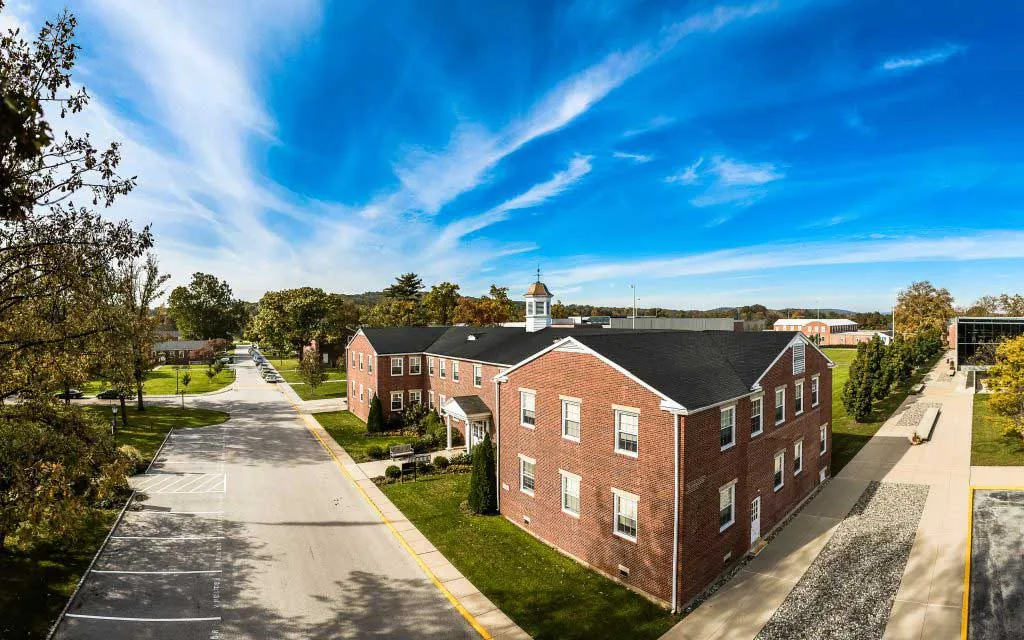
The accreditation record in sequence
| Date or period | Record action | What the action proves |
|---|---|---|
| 2013–2017 | MSCHE public status record shows monitoring and reporting actions during the earlier part of the enforcement arc.[1] | The 2026 outcome did not begin with one sudden June notice. The public accreditation record had already been carrying oversight history for years. |
| June 21, 2018 | MSCHE placed UVF on probation for insufficient evidence of compliance with Standard V, Standard VI, and Requirements of Affiliation 8, 9, 10, and 11.[1] | Probation was a serious non-compliance status, but it was not a loss of accreditation. |
| March 14, 2019 | MSCHE continued probation.[1] | The Commission did not treat the 2018 deficiencies as resolved at that point. |
| March 5, 2020 | MSCHE reaffirmed accreditation.[1] | Reaffirmation interrupts any shorthand claim that UVF had simply been on an unbroken slide from probation to closure. |
| 2023–2025 | MSCHE required supplemental information and financial reporting tied to planning, resources, institutional improvement, and related evidence.[1] | The later show-cause action grew out of financial and governance evidence demands, not a free-floating reputation problem. |
| June 25, 2026 | MSCHE required UVF to show cause why its accreditation should not be withdrawn. The response was due September 1, 2026, and the Commission anticipated considering the institution’s status in November 2026.[1] | Show cause placed the burden on the institution to produce evidence. It did not itself end accreditation. |
| June 30, 2026 | MSCHE publicly announced that UVF was among the institutions required to show cause at the June 2026 Commission meeting.[3] | The public notice confirms the Commission action, but the operative record remains the dated status action and its required evidence package. |
| July 29, 2026 | UVF’s Board of Trustees announced that the university would suspend operations and proceed through closure and teach-out steps.[2] | The board acted before the September 1, 2026 show-cause response deadline. |
What the June 2026 show-cause order demanded
The June 25, 2026 order centered on insufficient evidence of compliance with Standard VI, Planning, Resources, and Institutional Improvement, and Standard VII, Governance, Leadership, and Administration.[1] Those standards are not decorative labels in this record. They point to the evidentiary problem Middle States was pressing: whether the university could document financial capacity, realistic planning, board oversight, and administrative control.
By September 1, 2026, UVF was required to provide evidence addressing financial resources and plans; multi-year long-range financial models with realistic enrollment projections; completed audited financial statements for fiscal years 2023, 2024, and 2025; follow-up on audit findings; compliance with Title IV and state-law requirements, including updated Heightened Cash Monitoring 1 information; and board oversight of financial affairs.[1]
The same September 1 deadline also required a comprehensive teach-out plan with signed teach-out agreements.[1] That detail should not be buried. In accreditation administration, a teach-out requirement is a concrete student-protection mechanism: it asks where students can finish, under what approvals, and with what written commitments if the institution cannot continue.
MSCHE’s June 30 public notice confirmed that the Commission required UVF to show cause at its June 2026 meeting.[3] The notice is useful as a public marker, but it does not add a separate judicial event. It is an accreditor action within the Commission process.
Show cause, adverse action, final action
A show-cause status is a non-compliance status. It tells the institution to demonstrate why accreditation should not be withdrawn, but it is not the same thing as a final withdrawal of accreditation. MSCHE’s non-compliance framework distinguishes non-compliance statuses from adverse accrediting actions, and federal regulations separately define “adverse accrediting action” and “final accrediting action.”[4][5]
Under 34 CFR Part 602, the distinction matters because an adverse accrediting action is not necessarily the terminal procedural event. The federal definitions account for agency appeal processes before an action becomes final.[5] MSCHE’s own framework likewise treats appeal rights as part of the process and states that an institution remains accredited pending appeal of an adverse action.[4]
For UVF, the verified record as of August 3, 2026 shows show cause, a future response deadline, anticipated Commission consideration, and then the board’s closure decision before the response deadline. It does not show a completed withdrawal proceeding, an appeal from a withdrawal, or a final accrediting action terminating UVF’s accreditation before the board acted.
What the financial record can and cannot bear
The financial condition evidence should be read with source labels attached. Different records answer different questions: enrollment trend, operating loss, debt, endowment liquidity, federal cash monitoring, and audited-statement ratios are not interchangeable measures.
Inside Higher Ed reported that UVF’s enrollment had fallen from just under 900 in fall 2016 to 589, and that the university had a $2.8 million endowment with $1.7 million borrowed against it.[6] Those figures describe enrollment contraction and restricted financial cushion, not by themselves an accreditor finding.
PennWatch reported a $1.9 million operating loss on $20.2 million in expenses for fiscal year 2021, more than $30 million in long-term debt, and U.S. Department of Education Heightened Cash Monitoring since early 2021, including a $635,014 federal account requirement.[7] Those numbers help explain why Middle States asked for audited statements, long-range financial models, updated HCM1 information, and board-level financial oversight evidence in 2026.
The record supports a narrower conclusion than “financial stress closed the school” if that phrase is left untethered. Middle States demanded evidence of financial resources, planning assumptions, audit follow-up, Title IV compliance, and governance. The board then announced suspension of operations before the show-cause submission date. That is the sequence the documents support.
Teach-out consequences
UVF’s closure announcement identified Messiah University, Eastern University, and Southeastern University as teach-out partners, with streamlined admission, waived fees, and discounted tuition arrangements.[2] These are not soft assurances; they are the operational facts students and transfer reviewers need first.
For anyone checking student impact, the useful questions are administrative: which program is covered, whether the receiving institution accepts the credits, what deadline applies, and whether the fee or tuition term is written into the teach-out arrangement. The accreditation status question and the transfer-pathway question are related, but they are not the same question.
The “legal challenges” attached to the name
The major reported legal case attached to the institution’s former name is not a 2026 lawsuit against MSCHE. It is Valley Forge Christian College v. Americans United for Separation of Church and State, Inc., 454 U.S. 464, decided by the U.S. Supreme Court in 1982.[8]
In that case, the federal government had conveyed a 77-acre Phoenixville tract to Valley Forge Christian College in August 1976, subject to a 30-year educational-use deed condition. The Rehnquist majority described the property as appraised at $577,500; Justice Stevens’s dissent used a $1.3 million valuation.[8]
The Court divided 5–4. The majority held that federal taxpayer standing was confined to challenges under Congress’s Taxing and Spending Clause power and that ideological disagreement with government conduct was not injury in fact. Justices Brennan and Stevens dissented.[8]
That case matters for legal research because it put the institution’s former name in the federal reporter and remains a standing decision. It should not be treated as evidence of a present dispute between UVF and its accreditor.
Two names not to collapse
This record concerns University of Valley Forge, formerly Valley Forge Christian College, in Phoenixville, Pennsylvania. It should not be used as a chronology for Valley Forge Military College or Valley Forge Military Academy. The similar wording is a diligence trap; the institutions are not interchangeable.
What can be said as of August 3, 2026
The supported formulation is precise: University of Valley Forge remained accredited during the Middle States show-cause process; MSCHE had required a substantial evidence package by September 1, 2026; the Commission expected to consider the matter in November 2026; and the board announced suspension of operations on July 29, 2026, before the response deadline.
The unsupported formulation is the one that says UVF had already lost accreditation or that current litigation with MSCHE explains the closure. The cited record does not show either proposition.
References
- University of Valley Forge – Statement of Accreditation Status — Middle States Commission on Higher Education
- UVF Board of Trustees announcement — University of Valley Forge — July 29, 2026
- MSCHE Requires Institutions to Show Cause at June 2026 Commission Meeting — Middle States Commission on Higher Education — June 30, 2026
- Non-Compliance and Adverse Actions by Status — Middle States Commission on Higher Education
- 34 CFR Part 602 Subpart A — eCFR
- University of Valley Forge to Close — Inside Higher Ed — July 30, 2026
- University of Valley Forge to permanently shut down following decades of financial strain — PennWatch
- VALLEY FORGE CHRISTIAN COLLEGE v. AMERICANS UNITED..., 454 U.S. 464 — Cornell Legal Information Institute
Operationalizing workflow
No workflow has been explicitly linked to this obligation yet. See Workflows generally.
Illustrative cases
No illustrative case is currently tracked for this obligation. See Risk Digest for documented incidents generally.
← Back to RegulationReport a correction or tip
Spotted an outdated figure, a misstated fact, or a ruling this regulation entry should reflect? Public comments are disabled for this content given the professional cost of a misreported case outcome, penalty amount, or rule text — use the structured correction channel instead.
Report a correction or tip for this record →