
The US–Saudi strikes test legal AI on international law
- Authority
- United Nations
- Rule type
- treaty
- Jurisdiction scope
- International
- Source text
- Read primary rule text ↗
Verify any AI-generated lawfulness conclusion against primary instruments and the official factual record before reliance.
“Were the US–Saudi strikes on Iraq’s Popular Mobilization Forces lawful under international law?” is exactly the sort of question that can turn a neat AI answer into a legal-risk problem. For anyone searching around international law, US–Saudi strikes, Iraq, and the Popular Mobilization Forces, the responsible answer is narrower than the question: an AI tool may help identify issues and sources, but any conclusion on lawfulness is unverified until a lawyer checks the primary instruments, official statements, Article 51 communications, Iraqi legal materials, and current state-practice record.
This is not a ruling on the strikes. It is not legal advice. It is also not a benchmark result for any named legal-AI product on this exact July 2026 event. The point is simpler and more operational: this question combines a live military incident, disputed attribution, contested sovereignty claims, unsettled self-defense doctrine, and multiple legal systems. That is a poor place to accept a confident paragraph merely because it has citations attached.

Put the event record in tiers before asking the legal question
The July 28–29, 2026 record is already enough to make a yes-or-no AI answer suspect. The basic public account is that the United States and Saudi Arabia announced joint strikes on PMF-linked sites across seven Iraqi provinces, with the operation framed as a response to more than 30 reported IRGC-directed aerial drone attacks in the prior 72 hours.[1] Saudi Arabia also asserted a self-defense posture under international law, with the official Saudi Press Agency record cited for that position.[2]
Iraq’s public position points the other way. Iraq’s National Security Council, chaired by Prime Minister Ali al-Zaidi, called the strikes “a flagrant violation of Iraq’s sovereignty and the sanctity of its lands” and “an aggression in contravention of the principles of international law and the United Nations Charter.”[3] Iraq’s armed-forces spokesman also said no party had provided evidence that the drones were launched from Iraqi territory.[4]
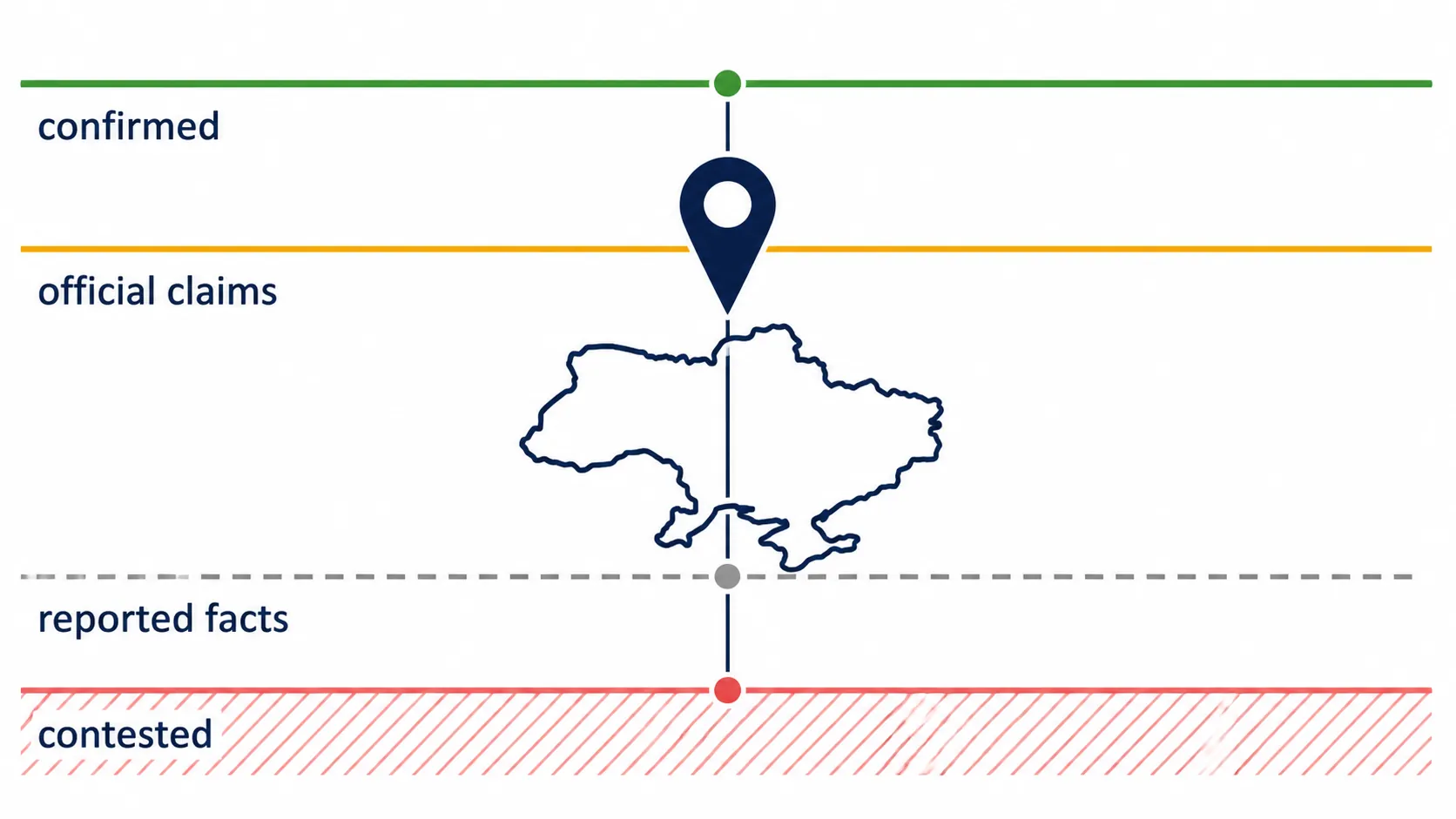
| Status | What belongs in that tier | Why it matters for AI review |
|---|---|---|
| Publicly announced operation | US and Saudi authorities announced joint precision strikes on PMF sites across seven Iraqi provinces on July 28–29, 2026.[1] | A tool may safely begin here only if it preserves the date, actors, and source attribution. |
| Official self-defense claim | Saudi and US accounts tied the strikes to reported IRGC-directed drone attacks, with Saudi Arabia asserting a right of self-defense under international law.[1][2] | This is a claim by participating states, not a neutral finding that the legal threshold was met. |
| Official sovereignty objection | Iraq rejected the strikes as a violation of sovereignty and international law, and said evidence of launches from Iraqi territory had not been provided.[3][4] | A tool that omits this position is not summarizing the dispute; it is selecting one side’s legal frame. |
| Reported and contested facts | Casualty reporting, attribution, launch-location evidence, and militia responsibility remain disputed in public accounts.[1][3][4] | These facts are not decoration. They feed directly into necessity, attribution, consent, and sovereignty analysis. |
That table is not pedantry. It is the work that prevents an AI-generated answer from treating a press statement, a reported fact, a legal conclusion, and a disputed allegation as if they had the same evidentiary weight. In a domestic contract dispute, that mistake is irritating. In a jus ad bellum memo, it can change the answer.
Why this is a worst-case legal-AI query
The first problem is date discipline. A July 28–29, 2026 event will postdate the training data of many models. A retrieval-augmented legal research product may still find fresh material, but then the question becomes whether it retrieved the right official records, recognized what was missing, and labeled source status correctly. A model that learned the structure of Article 51 arguments from older examples can still sound fluent while being blind to the actual communications, objections, or evidentiary disputes in this incident.
The second problem is that the legal issue does not sit in one doctrinal box. Article 51 has been invoked frequently in recent years; Security Council Report recorded at least 78 invocations since 2021 and noted inconsistent Council reporting practice and divergent member-state positions on anticipatory self-defense and the “unwilling or unable” theory.[5] Those divergences matter here because the stated rationale is defensive, but the location is Iraq, the alleged direction is Iranian, the targets are PMF-linked, and Iraq objects.
A short AI answer can easily compress those differences into one familiar formula: armed attack, self-defense, proportionality, lawful. Or it can go the other way: no Iraqi consent, sovereignty violation, unlawful. Both may be plausible as issue positions. Neither is a verified legal conclusion unless it identifies the facts it assumes, the doctrine it applies, and the authority it is relying on.
The anticipatory self-defense debate is itself not settled in the tidy way many AI summaries imply. Contemporary discussions distinguish the text of Article 51, historical claims about customary international law, necessity, imminence, and evidence available to the acting state.[6] Third-state sovereignty adds another layer: even if one state claims self-defense against an armed attack, the use of force on another state’s territory raises a separate sovereignty problem unless consent, attribution, Security Council authorization, or a contested theory such as unwilling-or-unable supplies the bridge.[7]
The PMF label does not simplify the analysis. It can make it more dangerous. PMF groups have militia identities, political roles, and varying degrees of alignment, but Iraqi legal materials also matter. Crispin Smith’s Just Security analysis describes Iraq’s Law No. 40 of 2016 as recognizing the Popular Mobilization Forces as part of Iraq’s security apparatus for purposes relevant to state responsibility.[8] A legal-AI tool that treats the PMF only as “Iran-backed militias,” without checking Iraqi law and the specific units allegedly targeted, may skip the part of the analysis that determines whose conduct is being attributed to whom.
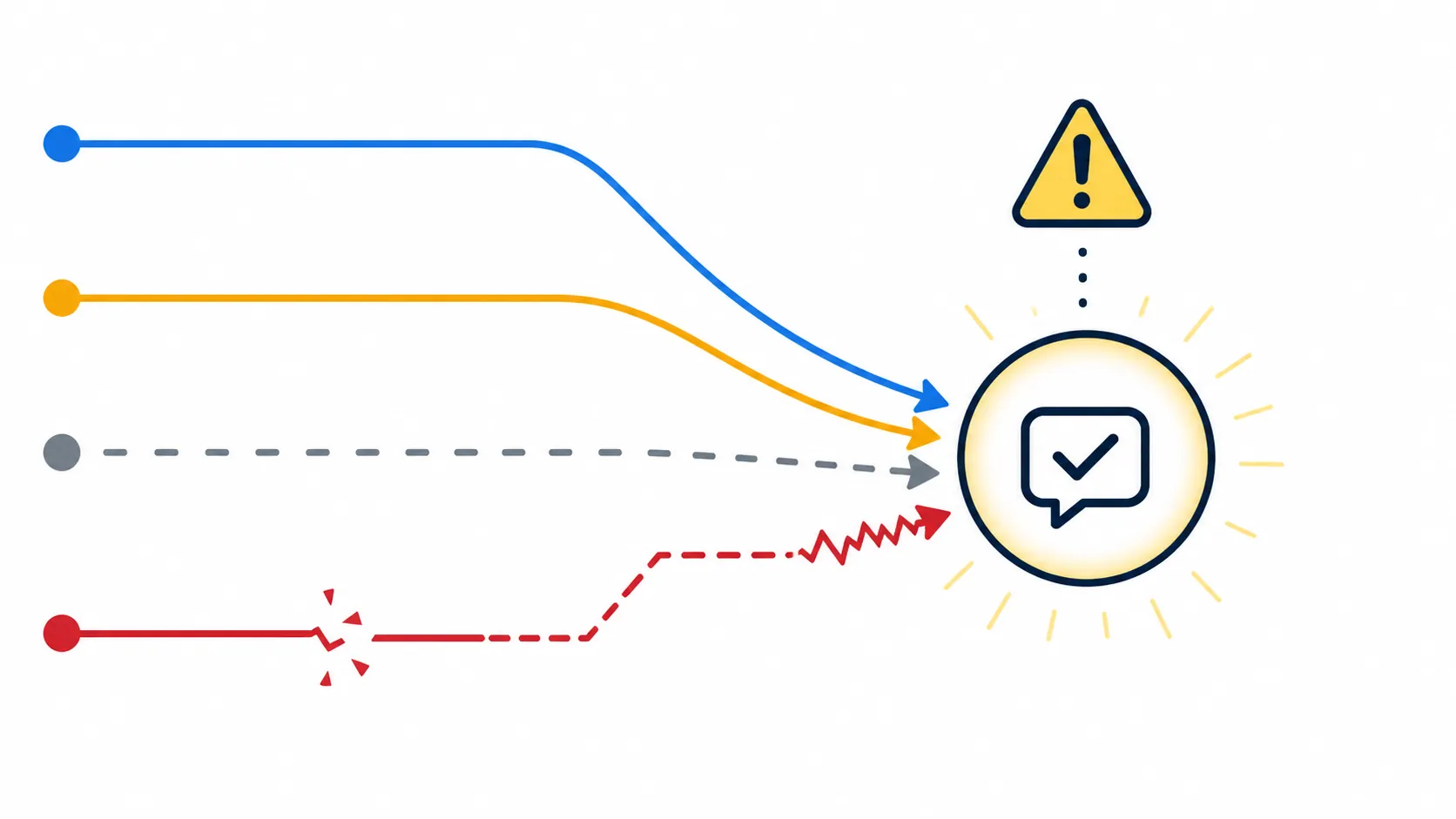
The benchmark evidence supports distrust without verification
No public benchmark has tested this exact strike question. That limitation matters. It would be sloppy to say that Lexis+ AI, Westlaw AI-Assisted Research, Ask Practical Law AI, ChatGPT, or any other tool “failed” this question unless someone actually ran and audited it under controlled conditions.
What the existing benchmark evidence does show is that the failure modes are not imaginary. Stanford RegLab and Stanford HAI tested leading commercial legal-AI products on a preregistered benchmark of more than 200 legal queries and found hallucination rates ranging from 17% to 33%.[9][10] The important part for this query is not only the percentage. It is the kind of failure: “misgrounded citation,” where a citation exists but does not support the proposition asserted.[9]
Misgrounding is precisely the risk in an international-law strike memo. A tool can cite Article 51 and still fail to show that the asserted facts meet the legal standard. It can cite an official Saudi statement and overstate what the statement proves. It can cite Iraq’s objection and treat it as dispositive. It can cite commentary on anticipatory self-defense while applying it to facts that remain unconfirmed. The citation may be real; the proposition may still be unsupported.
The VLAIR legal-research reporting points to the same problem from another angle. LawNext reported Vals AI’s finding of an average 11-point drop on multi-jurisdictional questions, and reported authoritativeness of 70% for generalist ChatGPT compared with a 76% legal-AI average.[11] Those figures should not be overread. They are not about the July 2026 strikes. But the direction of the result is relevant because this question cannot stay in one jurisdictional lane: it crosses the UN Charter, state practice, Iraqi sovereignty, Iraqi PMF law, US and Saudi official positions, Iranian attribution claims, and Security Council practice.
What an unverified AI answer will usually hide
The dangerous answer is not always the obviously fabricated one. Sometimes it is the polished answer that looks like a serviceable associate memo. It states the rule, names Article 51, mentions necessity and proportionality, cites a government statement, and lands on a confident conclusion. The problem is what disappeared on the way there.
- It may treat “reported IRGC-directed drone attacks” as established attribution rather than an official claim requiring support.
- It may treat the location of drone launches as settled even though Iraq says evidence of launches from Iraqi territory was not provided.
- It may collapse Saudi Arabia’s self-defense claim and the United States’ operational position into a single legal theory without checking whether each state made the same Article 51 argument.
- It may describe the PMF as a non-state armed group without checking Iraqi law on PMF status.
- It may omit Iraq’s objection, or mention it only as a diplomatic reaction rather than a legal position about sovereignty and the UN Charter.
- It may cite a real source for a proposition that the source does not actually support.
Those are not exotic hallucinations. They are ordinary research failures made faster. In this setting, faster is not better if the output reaches a partner, a client, or a procurement file before anyone has separated official claims from verified facts.
The downstream cost is no longer theoretical
Court sanctions involving AI hallucinations do not prove that a tool will mishandle this strike query. They do show what happens when legal professionals rely on unverified AI output in high-trust settings. Damien Charlotin’s AI Hallucination Cases Database listed 1,811 court decisions as of its “last updated 29 July 2026” line, and it includes monetary sanctions such as $29,877 in In re Rosslyn2016 and $3,000 in Ledoux v. Outliers.[12]
The better lesson is not “never use AI.” It is that a professional cannot outsource the verification step. Sanctions cases tend to look obvious after the fact: fake cases, bad citations, nonexistent propositions. The harder internal-risk scenario is a tool answer that cites real material but gets the hierarchy wrong. In an international-law memo, that may mean elevating a party’s legal characterization over a primary instrument, or overlooking the state whose territory was struck.
What a responsible user can do with the AI answer
A legal-AI answer to this question can still be useful. It can produce an issue list. It can identify likely bodies of law. It can suggest search terms for Article 51 practice, sovereignty objections, PMF status, state responsibility, and anticipatory self-defense. It can help a reviewer notice that the question is not only “did the states invoke self-defense?” but also “what facts would have to be true for that invocation to matter?”
That is lead-generation work. It is not reliance work. Before an answer is used in advice, litigation analysis, a sanctions-adjacent risk memo, or a partner briefing, the reviewer should verify at least the following:
- the UN Charter text, especially Article 51, and any Security Council record or Article 51 communication made by the states involved;
- the official Saudi, US, and Iraqi statements, kept separate from press summaries of those statements;
- the factual record for alleged drone attacks, including attribution, launch location, timing, and whether the evidence is public, official, reported, or contested;
- Iraqi legal materials relevant to PMF status, including whether the targeted entities are treated as state organs, security forces, militias, or some other category for the issue being analyzed;
- current Security Council practice and state reactions, not only older summaries of self-defense doctrine;
- the exact proposition supported by each citation, not merely whether the cited source exists.
The operational conclusion is therefore limited but firm. An AI-generated answer on the lawfulness of the July 28–29, 2026 US–Saudi strikes on Iraq’s Popular Mobilization Forces should be treated as unverified until it is checked against primary-source-linked materials. The tool can help open the file. It should not be allowed to close it.
References
- Saudi Arabia, US carry out strikes on Iran-backed groups in Iraq, Al Jazeera, 2026-07-29.
- Saudi Press Agency statement N2643572, Saudi Press Agency.
- Iraq calls Saudi, US attacks ‘flagrant violation’ of sovereignty, Al Jazeera, 2026-07-29.
- Iraq presidency condemns US-Saudi strikes on Popular Mobilization Forces, Anadolu Agency.
- In Hindsight: The Increasing Use of Article 51 of the UN Charter and the Security Council, Security Council Report, 2025-10.
- Interpreting the Law of Self-Defense, Lieber Institute.
- Iran Unlawfully Retaliates Against the United States, Violating Iraqi Sovereignty in the Process, EJIL: Talk!.
- Iraq’s Legal Responsibility for Militia Attacks on U.S. Forces: Paths Forward, Just Security.
- Hallucination-Free? Assessing the Reliability of Leading AI Legal Research Tools, Stanford RegLab.
- AI on Trial: Legal Models Hallucinate in 1 out of 6 (or More) Benchmarking Queries, Stanford HAI.
- Vals AI’s Latest Benchmark Finds Legal and General AI Now Outperform Lawyers in Legal Research Accuracy, LawNext, 2025-10.
- AI Hallucination Cases Database, Damien Charlotin.
Operationalizing workflow
No workflow has been explicitly linked to this obligation yet. See Workflows generally.
Illustrative cases
No illustrative case is currently tracked for this obligation. See Risk Digest for documented incidents generally.
← Back to RegulationReport a correction or tip
Spotted an outdated figure, a misstated fact, or a ruling this regulation entry should reflect? Public comments are disabled for this content given the professional cost of a misreported case outcome, penalty amount, or rule text — use the structured correction channel instead.
Report a correction or tip for this record →