
USCIS can deny your application without an RFE
- Authority
- USCIS
- Rule type
- regulation
- Jurisdiction scope
- US federal
- Effective date
- Aug 5, 2026
- Source text
- Read primary rule text ↗
USCIS may deny a benefit request without first issuing an RFE when eligibility is not established at filing.

USCIS can deny an application without first issuing a Request for Evidence (RFE). The absence of an RFE, by itself, does not establish that the denial was unlawful. The starting point is 8 CFR 103.2(b)(8), read together with the filing-time eligibility rule in 8 CFR 103.2(b)(1): “An applicant or petitioner must establish that he or she is eligible for the requested benefit at the time of filing.” [1]
This article addresses the legal framework and the procedural response available after an outright denial. It does not determine whether a particular application was eligible, whether the officer correctly applied the regulation, or whether a specific denial can be reversed. Those questions require the denial notice, the filing record, the governing category-specific rules, and the evidence that was actually available when the request was filed.
The rule has long allowed a denial without another request for documents
The important word in 8 CFR 103.2(b)(8) is “may.” The regulation has historically given USCIS discretion to request additional evidence or other information, rather than creating a universal requirement that the agency issue an RFE before denying every deficient benefit request. The framework dates to the 1994 rulemaking, published at 59 FR 1455 on January 11, 1994. [2]
That distinction matters because a policy that encourages officers to issue RFEs is not the same as a regulation that requires an RFE in every case. An applicant may reasonably feel that an opportunity to correct or explain the record would have changed the result. That feeling does not itself create a legal entitlement to the opportunity.
The regulation also separates the question of procedure from the question of eligibility. USCIS evaluates whether the applicant or petitioner established eligibility at filing. Additional evidence may clarify that original record, but it does not ordinarily convert a later-created qualification into eligibility that existed on the filing date. The agency’s Policy Manual describes initial evidence and additional evidence within this same adjudicative structure. [6]
What changed between 2021 and August 2026
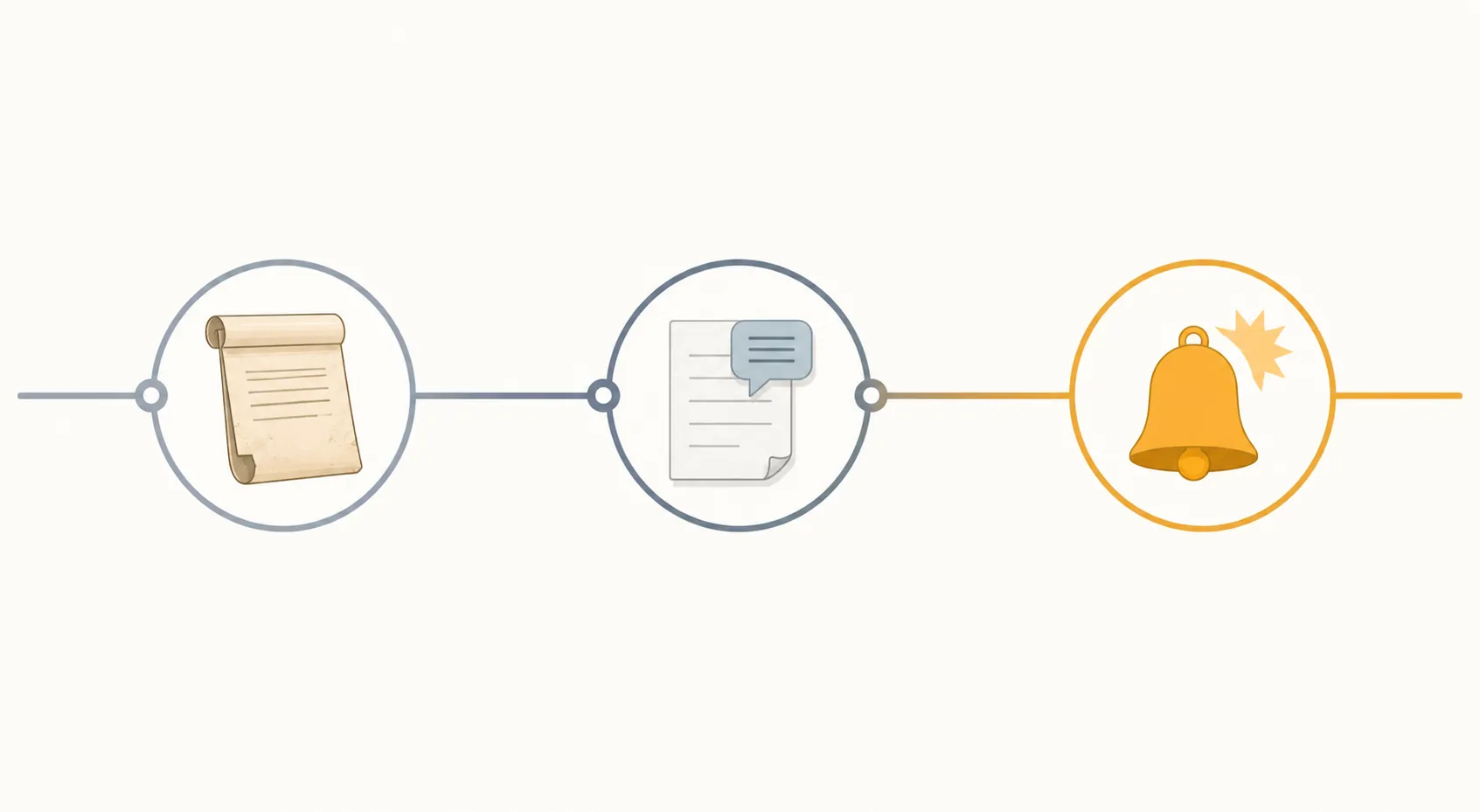
The 2026 change is best understood as a policy reversal, not as the creation of a new denial power. In 2021, USCIS issued guidance that generally encouraged officers to provide an RFE before denying a request when additional evidence might resolve the deficiency. That guidance made an RFE-first approach more likely in the cases it covered, but it did not replace the underlying discretionary regulatory framework.[3]
Policy Alert PA-2026-05, dated August 5, 2026, rescinded the 2021 guidance. The supplied secondary reporting describes the alert as restoring officer discretion effective immediately for pending and later-filed benefit requests. [3][4]
“Restored” therefore refers to the agency’s willingness to deny without first requesting more evidence. It does not change the basic requirement that eligibility must exist at the time of filing. It does not automatically validate every denial issued without an RFE. And it does not mean that every benefit category necessarily follows the same procedure.
PA-2026-05 reportedly preserves an exception where “regulations or other controlling authority provide otherwise.” The available materials do not identify the complete scope of that carve-out or establish a list of benefit categories for which an RFE or Notice of Intent to Deny remains mandatory. A reader should therefore avoid turning the alert into a universal rule that USCIS may always deny without notice.
The change also should not be confused with the 2007 removal of a standardized RFE processing timeframe. That Federal Register action shows that RFE procedures have been adjusted over time around an older discretionary framework; it is not evidence that the 2026 alert changed the filing-time eligibility standard. [5]
Read the denial notice as an evidence problem, not only an RFE problem
After a denial arrives, the useful review follows the record in the notice rather than beginning with the assumption that USCIS owed another chance. The first task is to identify exactly what was denied: the benefit request, the eligibility classification, and the regulatory or statutory elements the officer says were not established.
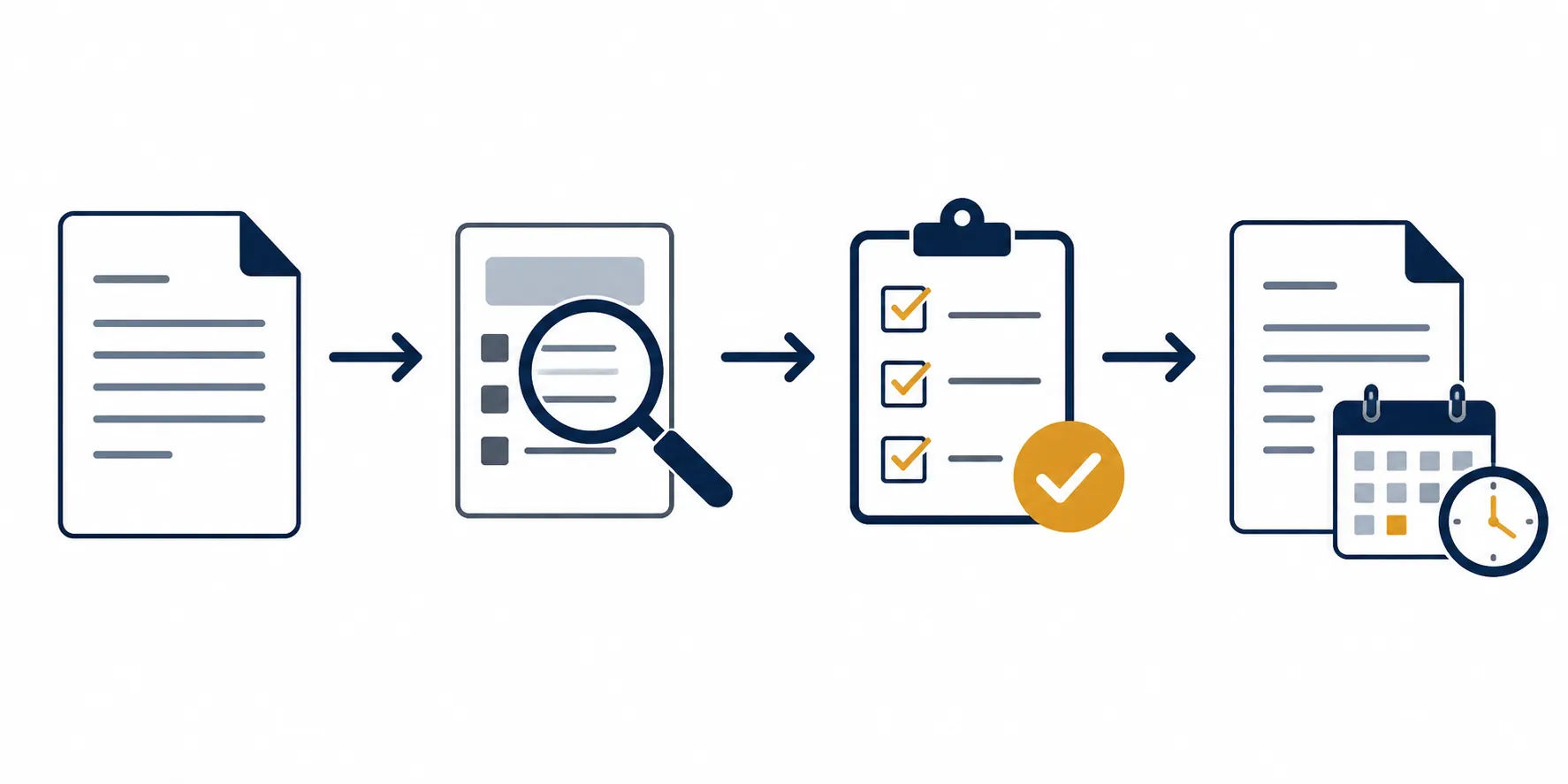
- Identify the benefit request and the specific eligibility requirement cited in the denial.
- Determine what had to be true at the time of filing, including the relevant category-specific authority.
- Compare that requirement with the forms, documents, and explanations actually submitted at filing.
- Assess whether a timely Form I-290B motion can show that USCIS overlooked an existing fact, misapplied the law, or made a decision that the filing record does not support.
This review also explains why a missing RFE may be less important than the denial’s stated reason. If the filing record could not establish a required element on the filing date, an RFE would not necessarily have cured the problem. If the necessary evidence was already in the record but the officer failed to consider it, or if the denial applied the wrong legal test, the motion argument is stronger—but the argument must be built from the notice and the original submission.
Under 8 CFR 103.2(b)(12), USCIS may deny where evidence submitted in response to an RFE still “does not establish eligibility at the time of filing.” The provision is useful even in a no-RFE dispute because it reinforces the central point: more evidence is not automatically the same as proof that the applicant qualified when the request was filed. Section 103.2(b)(11) also addresses situations involving a partial response, allowing the agency to act on the record in circumstances where the response does not provide everything requested. [1]
When a Form I-290B motion may be the practical response
A denial without an RFE is not itself the motion theory. A motion to reopen or reconsider must address the decision that USCIS made. Depending on the case, that may mean presenting previously submitted evidence the officer overlooked, explaining why the decision misread the governing rule, or submitting new evidence that demonstrates facts existing at the time of filing. The motion should connect each point to the denial notice instead of treating the absence of an RFE as the entire claim.
The timing and fee details require particular care. One secondary source in the supplied materials states that Form I-290B generally must be filed within 30 days, or 33 days when the decision is served by mail, and identifies a $675 filing fee. Those figures should be checked against current USCIS instructions and primary authority before filing; they should not be treated as a substitute for reviewing the current form and fee schedule. [7]
A motion and an appeal are also not automatically two independent opportunities to pursue at once. Under 8 CFR 103.2(a)(4)(iv), a motion to reopen or reconsider and an appeal concerning the same decision may be treated as duplicate requests, and one may be rejected. The procedural choice should therefore be made after reviewing the form instructions, the applicable authority, and the nature of the error alleged. [1]
The materials supplied here do not establish a federal court-review deadline or timeline, so no prediction about judicial review should be inferred from this article. They also do not support treating PM-602-0151 as controlling authority. The governing source for a particular benefit may contain additional procedural requirements that are not resolved by the general framework discussed above.
The narrow answer is that USCIS may deny an application without an RFE under the cited framework, and PA-2026-05 restored that discretion after rescinding the 2021 pro-RFE guidance. That conclusion does not decide whether the application was approvable or whether the denial can be challenged. Verify the denial notice, the eligibility-at-filing record, any controlling category-specific authority, and the motion deadline with an immigration professional before taking action.
References
- 8 CFR § 103.2 — Applications, petitions, and other requests
- USCIS RFE/NOID Evidence Standards in 2026
- USCIS Restores Discretion to Deny Incomplete Benefit Requests
- USCIS Can Again Deny Cases Without an RFE: What the New 2026 Policy Means for Employers and Foreign Nationals
- Removal of the Standardized Request for Evidence Processing Timeframe
- Volume 1, Part E, Chapter 6 — Evidence
- Motions to Reopen and Reconsider a USCIS Decision
Operationalizing workflow
No workflow has been explicitly linked to this obligation yet. See Workflows generally.
Illustrative cases
No illustrative case is currently tracked for this obligation. See Risk Digest for documented incidents generally.
← Back to RegulationReport a correction or tip
Spotted an outdated figure, a misstated fact, or a ruling this regulation entry should reflect? Public comments are disabled for this content given the professional cost of a misreported case outcome, penalty amount, or rule text — use the structured correction channel instead.
Report a correction or tip for this record →