
How Do Strike Unemployment Benefits Work in Washington?
- Authority
- Washington State Legislature; Employment Security Department
- Rule type
- statute
- Jurisdiction scope
- US state
- Effective date
- Jan 1, 2026
- Source text
- Read primary rule text ↗
Strikers can receive up to 6 weeks of UI benefits after the second-Sunday rule; locked-out workers up to 26 weeks; weekly filing and work-search required.
As of Q3 2026, Washington law no longer treats every unemployment claim tied to a labor dispute the same way. SB 5041, effective Jan. 1, 2026, amended RCW 50.20.090 so that striking workers may move out of the labor-dispute disqualification after a short statutory waiting window, while locked-out workers are handled on a separate track with a longer potential benefit period.[1][2] The Employment Security Department’s Aug. 21, 2026 emergency rule also matters now: for the claim week beginning Aug. 23, 2026, striking claimants must meet the restored weekly work-search requirement, including three approved job-search activities and ESD verification.[3]
That is the practical answer to “striking workers unemployment benefits Washington law” in 2026: the statute created a bounded path to unemployment benefits, not an unconditional strike fund. A claimant still has to classify the dispute correctly, count the weeks correctly, keep filing weekly claims, satisfy ordinary unemployment-insurance conditions, and preserve eligibility week by week.

The operative split: strike claims and lockout claims
Before the 2026 change, RCW 50.20.090 disqualified claimants whose unemployment was due to a labor dispute, including both strike and lockout situations as described in the amended statute’s treatment of the former rule.[1][2] SB 5041 changed that flat approach. It did not erase the labor-dispute issue; it made the result depend on the type of dispute and the timing of the claim.
| Issue | Striking worker | Locked-out worker |
|---|---|---|
| Initial labor-dispute treatment | The strike still matters; the disqualification ends only after the statutory strike window. | Handled separately from the strike-window rule. |
| Key timing rule | Disqualification ends the second Sunday after the strike begins. | No six-week strike-window calculation applies. |
| Potential duration described in the amended scheme | Up to six calendar weeks of benefits, subject to other UI conditions. | Up to 26 weeks, subject to other UI conditions. |
| Weekly claim survival | Weekly filing and work-search compliance are central after Aug. 23, 2026. | Ordinary UI obligations still apply. |
| Cost and recovery consequences | Repayment, overpayment recovery, and employer experience-rating consequences can affect the practical result. | The same categories of consequences must be accounted for. |
The distinction is not cosmetic. A striker’s path is built around a short disqualification period, the standard waiting week, and a six-calendar-week cap. A locked-out worker’s path is not governed by that six-week strike cap and instead can run up to 26 weeks under the amended framework.[1][2]
Why “six weeks” does not mean six immediate checks
For a striker, the first timing rule is the “second Sunday” rule. The amended RCW 50.20.090 provides that the strike-related disqualification ends on the second Sunday after the strike begins.[1] That language should be read in calendar terms, not as a promise that the claimant receives payment for every week that appears on a labor calendar.
The next timing rule is the ordinary one-week waiting period. The combined timing rules support the practical estimate that, because of the second-Sunday rule plus the waiting week, first payments may land roughly 15 to 21 days into the strike rather than immediately after the walkout begins.[1][2] The exact result depends on where the strike start date falls in relation to Washington’s claim-week calendar and whether the claimant files correctly.
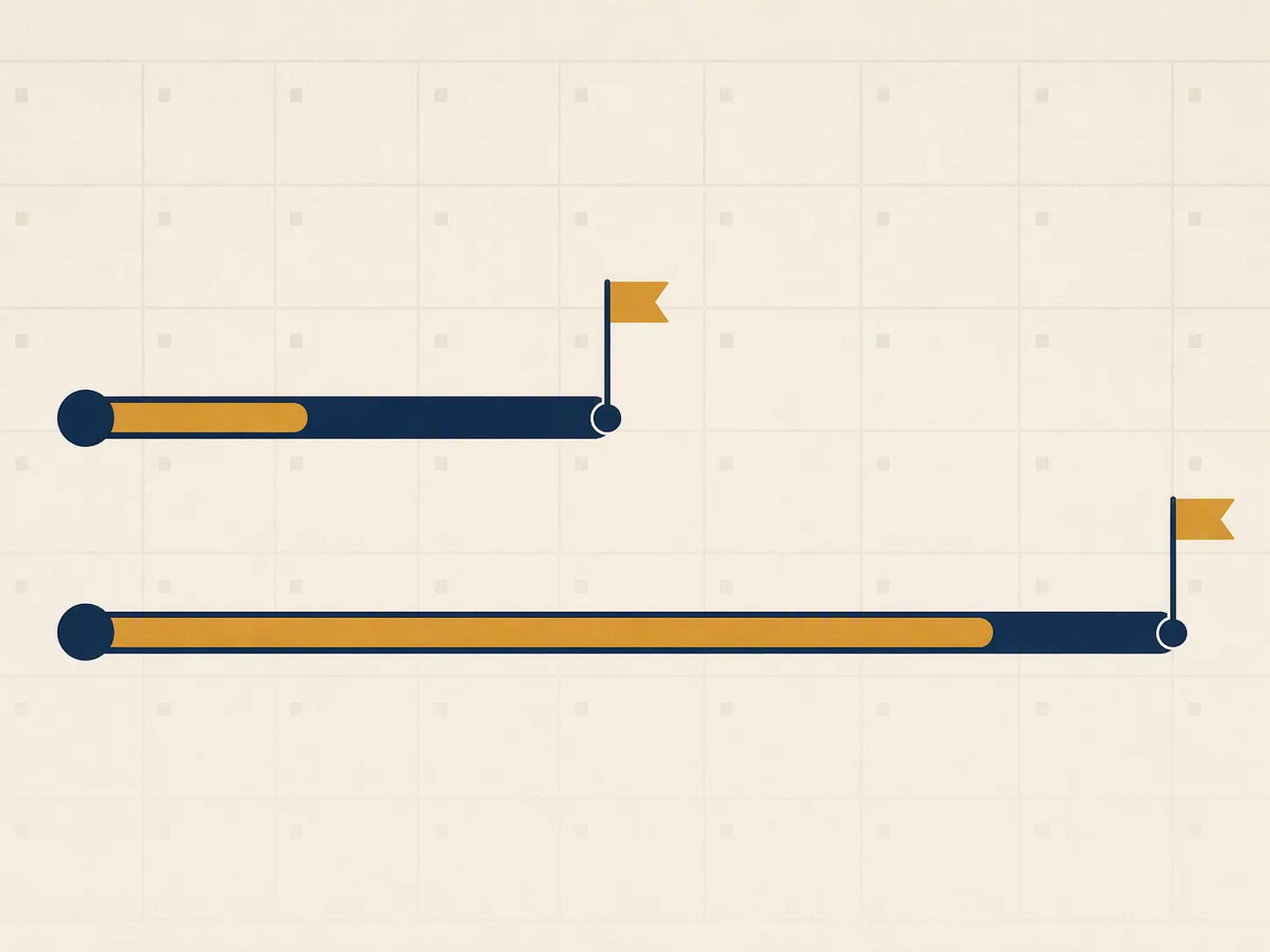
A simple hypothetical shows the mechanics without pretending to decide a real claim. If a strike begins early in a claim week, the worker still must wait until the second Sunday after the strike begins for the strike disqualification to end. The claimant then must account for the waiting week before a payable week can arise. If the worker skips filing during that period because no payment is expected yet, the filing record may be worse than the eligibility rule itself.
That is where many broad descriptions of the law become misleading. The statute allows up to six calendar weeks for strikers, but those weeks sit inside the unemployment-insurance system. A claimant has to file, remain otherwise eligible, and comply with weekly requirements. The statute changed the disqualification; it did not suspend the claims process.
The lockout track is longer, but not condition-free
Locked-out workers are treated differently. Under the amended scheme, they are not limited by the striker’s six-calendar-week benefit cap and may receive up to 26 weeks, assuming the claim otherwise satisfies Washington UI requirements.[1][2] The point is not that a lockout claim is automatic. The point is that the statutory time box is different.
That distinction makes classification work important at the front end. A union-side advocate, employer representative, or claimant should not treat “labor dispute” as the final label. The operative question is whether the unemployment is being treated as strike unemployment or lockout unemployment under RCW 50.20.090 as amended. The answer controls the calendar.
The Aug. 23, 2026 work-search rule belongs inside the weekly claim analysis
The most important Q3 2026 update is not in the legislative backstory. It is in the weekly claim requirements. ESD’s emergency rule, WSR 26-18-011, was filed Aug. 21, 2026 and applies for the claim week beginning Aug. 23, 2026.[3] From that week forward, a striking claimant must perform three approved job-search activities per week and satisfy ESD’s verification requirements.[3]
This matters because a striker can clear the statutory timing window and still lose a week on continuing eligibility. The claim is not preserved by being legally interesting. It is preserved by weekly compliance: filing the weekly claim, reporting as required, doing the required work-search activities, and having a record ESD can verify.
- For the claimant, the safest working assumption is that each week stands on its own. A prior eligible week does not excuse a missing work-search record in the next week.
- For union representatives, the strike-benefit message should include filing mechanics, not just the existence of the statutory benefit.
- For employers and HR teams, the weekly-claim layer affects notices, protests, chargeability analysis, and records that may later matter in experience-rating or recovery disputes.
A claimant who believes the six-week cap is the whole rule may discover the problem only after a weekly claim is denied. The Aug. 23 work-search restoration makes that risk concrete: three approved activities per week is not a suggestion once the rule applies; it is part of the weekly eligibility record.[3]
Repayment and overpayment risk change the value of the entitlement
Washington’s amended labor-dispute rule also has to be read with repayment and overpayment consequences in mind. Those consequences are part of the practical scheme created by SB 5041 and RCW 50.20.090 as amended.[1][2] That means the question for a worker is not only, “Can I receive a payment this week?” It is also, “Can I keep it if the underlying facts, classification, or weekly eligibility record changes?”
That distinction is especially important during a labor dispute because facts can move while claims are being filed. The parties may dispute whether the unemployment is due to a strike or a lockout. The strike may end before a claimant expected it to. A worker may return to work, refuse work, fail to document search activities, or file incomplete weekly information. Each of those events can affect a week that looked payable when the claimant first entered the portal.
The practical advice is therefore more conservative than the headline version of the law. Treat every payment as conditional until the claim record is stable. Keep weekly documentation. Preserve notices from ESD. Do not assume that a union communication, employer memo, or news account controls the unemployment determination.
Employer experience rating is part of the legal effect
The amended Washington scheme also carries employer-cost consequences. Employer experience-rating exposure is part of the SB 5041 framework.[1][2] That is why this law is not only a claimant-facing benefit rule. It also belongs on the desk of the employer’s unemployment-tax staff.
For an employer, the first notice may not look like a labor-policy question. It may look like an unemployment claim, a request for separation information, a charge statement, or a tax-rate consequence that arrives after the dispute itself has cooled. If the employer treats the claim as impossible because older Washington law disqualified labor-dispute unemployment, the response may miss the post-2026 rule.
For claimants and advocates, the same cost structure matters because employer participation can affect the factual record. An employer may contest the classification, timing, return-to-work facts, or weekly eligibility information. None of that makes the benefit unavailable by itself. It does mean the claim should be prepared as an administrative record, not as a slogan.
What to verify before advising a worker, union, or employer
The shortest useful checklist starts with classification and ends with continuing eligibility. Skipping the middle is where bad advice usually enters.
- Classify the dispute. Decide whether the unemployment is being treated as a strike or a lockout under RCW 50.20.090 as amended.
- Use the correct track. For a striker, apply the second-Sunday rule and the six-calendar-week cap. For a locked-out worker, do not import the six-week strike cap; analyze the separate 26-week track.
- Count the waiting week. A striker should not expect six immediate payable checks merely because the statute refers to up to six calendar weeks.
- File weekly claims. Eligibility is administered through the UI claim process, not through the existence of the labor dispute alone.
- Meet the restored work-search duty. For claim weeks beginning Aug. 23, 2026, striking claimants must complete three approved job-search activities per week and satisfy ESD verification.
- Plan for later adjustments. Repayment, overpayment recovery, employer objections, and experience-rating consequences can alter the practical value of the claim.
- Check the sunset. The statutory experiment currently ends Dec. 31, 2035, unless Washington law changes again.
The sunset date should stay in the file. SB 5041’s labor-dispute benefit scheme is not permanent on its own terms; it sunsets Dec. 31, 2035.[2] Until then, the current Washington answer is narrow but real: strikers and locked-out workers may have access to unemployment benefits under different statutory tracks, but the benefit survives only if the claimant keeps meeting the weekly conditions that the UI system still enforces.
References
- RCW 50.20.090, Washington State Legislature.
- SB 5041 (2025 c 352), Washington State Legislature, 2025.
- WSR 26-18-011, Washington State Register, Aug. 21, 2026.
Operationalizing workflow
No workflow has been explicitly linked to this obligation yet. See Workflows generally.
Illustrative cases
No illustrative case is currently tracked for this obligation. See Risk Digest for documented incidents generally.
← Back to RegulationReport a correction or tip
Spotted an outdated figure, a misstated fact, or a ruling this regulation entry should reflect? Public comments are disabled for this content given the professional cost of a misreported case outcome, penalty amount, or rule text — use the structured correction channel instead.
Report a correction or tip for this record →