
What WestJet's Strike Notice Triggers Under Canadian Law
- Authority
- Parliament of Canada
- Rule type
- statute
- Jurisdiction scope
- Canada federal
- Effective date
- Jun 20, 2025
- Source text
- Read primary rule text ↗
Serve 72-hour written notice stating the stoppage date; complete maintenance-of-activities before notice; comply with the replacement-worker ban; serve fresh notice if no stoppage occurs on stated date.
Last verified for this draft: Aug. 2, 2026 UTC, against the sources cited below. No later outcome source was provided with the article materials. This article tracks statutory obligations and public-source status; it is not legal advice.
CUPE served WestJet with a 72-hour strike notice on July 30, 2026, and WestJet served a lockout notice in response. The earliest lawful work stoppage identified in the cited reports was 12:01 a.m. MT on Aug. 2, 2026.[1][2] The legal implications of the WestJet strike notice start there, but they do not end there—and they do not begin with the assumption that a strike has already happened.

A strike notice is a legal trigger, not the strike itself. The same is true of a lockout notice. It is the statutory warning that a party may be moving toward a stoppage after a minimum interval and after other preconditions have been met. Treating the notice as if it were already a lawful stoppage skips the very checks that counsel, union representatives, operations teams, and knowledge-management staff have to make before anyone acts on the notice.
The 72-hour notice rule is only the visible switch
Section 87.2 of the Canada Labour Code is the load-bearing provision for the notice mechanics. It requires written notice before a strike or lockout and fixes the notice period at at least 72 hours. The notice must also identify the date on which the strike or lockout is to occur; if the stoppage does not occur on that date, a fresh notice is required before a later strike or lockout can lawfully proceed.[3]
That last point is the one most easily lost in fast reporting. A notice is not a reusable permission slip. If the stated date passes without the strike or lockout occurring, the legal question changes from “Was 72 hours given?” to “Has a new notice been served for the later date?” Section 87.2 makes the date in the notice matter; it is not merely a public-relations timestamp.[3]
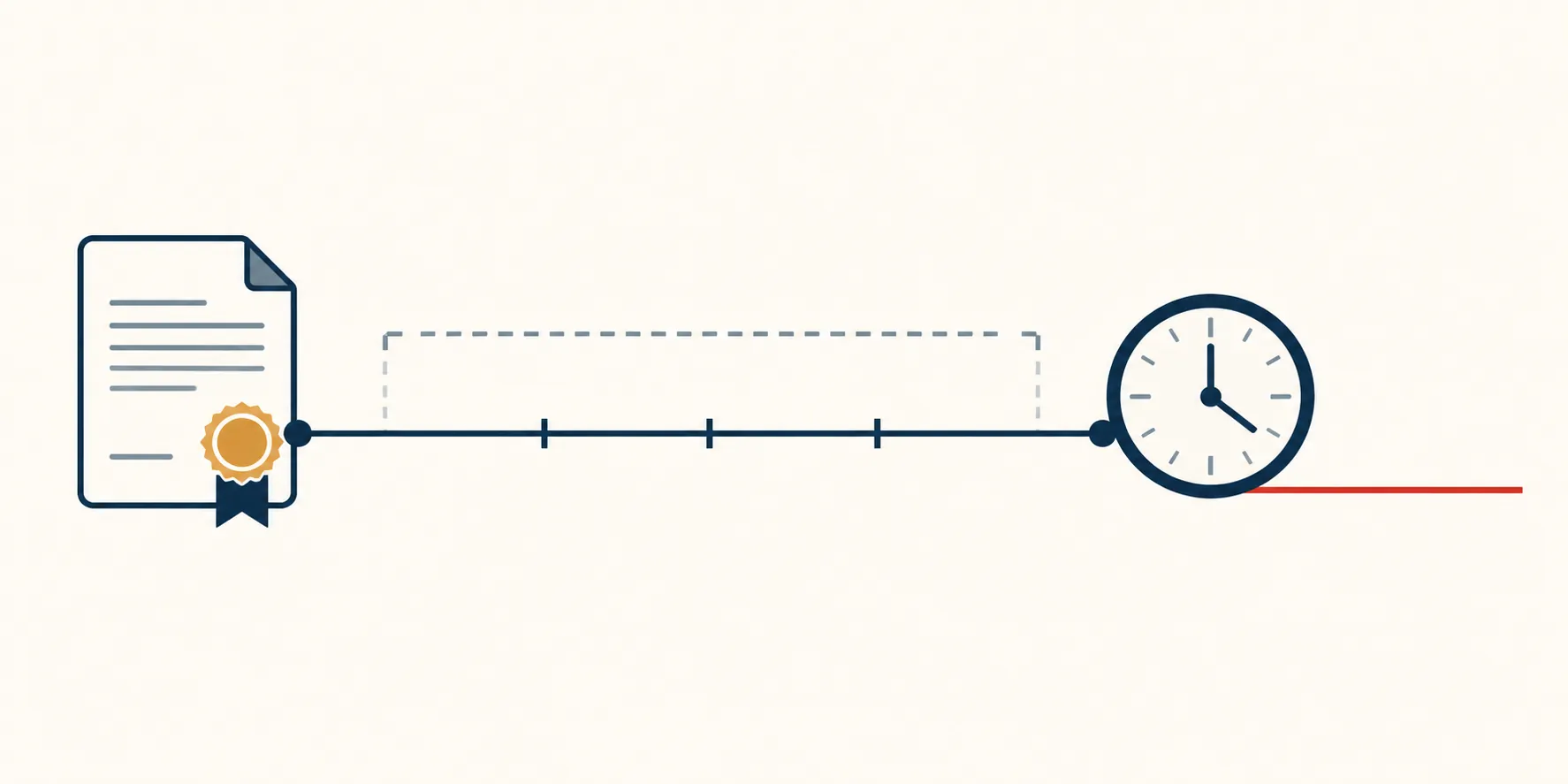
The Canadian Industrial Relations Board’s own process page puts the 72-hour notice in a longer chain. For a strike or lockout to be legal in the federal sector, the listed prerequisites include a notice to bargain, a notice of dispute, the required waiting periods, conciliation steps, a majority strike vote valid for 60 days, and the 72-hour notice requirement.[4] The notice period is therefore not a standalone safe harbour. It is one item on a legality checklist.
| Question for the notice period | Why it matters |
|---|---|
| Was the notice given at least 72 hours before the stated stoppage time? | Section 87.2 requires advance written notice before a strike or lockout.[3] |
| Does the notice state the date on which the strike or lockout is to occur? | The stated date controls whether a later fresh notice is needed if no stoppage occurs on that date.[3] |
| Have the other legality prerequisites been satisfied? | The CIRB lists the 72-hour notice rule as only one part of the legal strike or lockout sequence.[4] |
| Was the maintenance-of-activities process completed before the 72-hour notice? | The Government of Canada’s Bill C-58 backgrounder says a maintenance-of-activities agreement is required before 72-hour notice is given.[5] |
How the WestJet–CUPE notices fit
The public reports establish the live posture, not the full statutory record. Reuters reported that WestJet flight attendants represented by CUPE had given 72-hour strike notice on July 30, 2026, with a possible strike as early as 12:01 a.m. MT on Aug. 2.[1] Global News reported the dual posture: the union’s strike notice and WestJet’s lockout notice.[2]
Those reports are useful for timing and for confirming that both sides had placed stoppage machinery in motion. They are not, by themselves, determinations that every Canada Labour Code prerequisite had been satisfied. That distinction matters because the legal consequences do not follow from public awareness of a possible stoppage; they follow from statutory conditions being met in the correct order.
For this dispute, the hard edge was the 12:01 a.m. MT Aug. 2 threshold reported in the notices. Before that time, the key legal work was not to predict whether flights would be cancelled. It was to confirm whether the strike or lockout could lawfully begin at all, and whether any contingency plans would breach the obligations that attach around a federal work stoppage.
The notice period activates more than a countdown
Bill C-58 changed the practical risk map for federally regulated employers and unions. The Government of Canada backgrounder says the amendments came into force on June 20, 2025; they prohibit the use of replacement workers, require a maintenance-of-activities agreement before 72-hour strike or lockout notice, and expose violations to fines of up to $100,000 per day.[5]
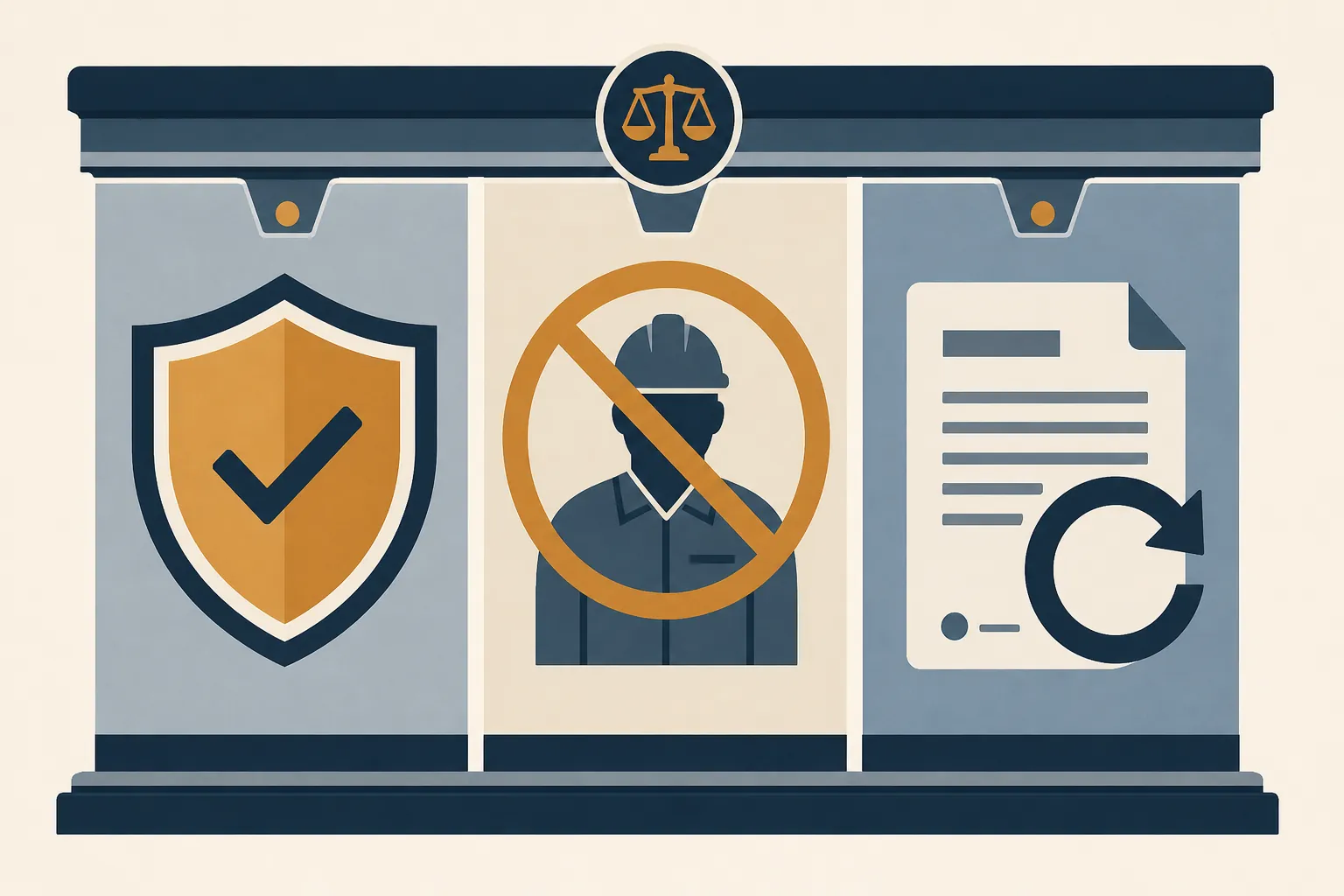
Those obligations are often discussed as background features of labour reform. In a live airline dispute, they become operational questions. Who may perform struck work? What activities must continue? Has the statutory maintenance process been completed before notice? Has the legal team separated work that may continue under a maintenance arrangement from work that would amount to impermissible replacement staffing?
Maintenance of activities comes before the notice, not after the headlines
The maintenance-of-activities point is not a public-service courtesy layered onto the dispute after the parties announce their positions. The Government of Canada backgrounder states that a maintenance-of-activities agreement must be in place before the parties can provide 72-hour strike or lockout notice.[5] In practice, that turns the notice into a test of what has already been done.
That is a different legal question from whether passengers may be inconvenienced. CBC reported on potential travel impacts, cancellations, and passenger obligations in connection with the WestJet dispute.[6] Those impacts explain why the dispute was public-facing. They do not answer whether the maintenance-of-activities requirement was satisfied before the notice was served.
For counsel monitoring the notice period, the maintenance file should not be treated as a side document. It is part of the pre-stoppage legality chain. If it is missing, incomplete, or still in dispute, the 72-hour clock does not cure that problem simply by expiring.
The replacement-worker ban turns staffing plans into legal evidence
The Bill C-58 replacement-worker prohibition is another reason a notice is not just an announcement. Once a lawful strike or lockout is in view, staffing assumptions need to be tested against the statutory ban. The Government of Canada backgrounder describes the prohibition and ties noncompliance to potential daily fines of up to $100,000.[5]
The notice period is therefore where documents should become specific. A vague instruction to “maintain operations” may be operationally understandable, but it is legally insufficient if no one has mapped who is doing which work, under what authority, and whether that work falls within a permitted maintenance-of-activities arrangement or outside the replacement-worker prohibition.
This is also where employer-side and union-side records diverge. The employer needs a lawful staffing and continuity plan. The union needs to know whether the employer’s plan crosses into prohibited replacement work. Both sides need a clean chronology, because a later dispute will not be decided by the fact that travel disruption was expected; it will turn on what each party did after the notice and before or during the stoppage.
Unlawful strike or lockout analysis still depends on the full sequence
The CIRB’s process page is a useful corrective to the common shorthand that “72-hour notice” equals legality. The Board lists the notice requirement alongside other conditions, including bargaining notice, dispute notice, waiting periods, conciliation, and a strike vote supported by a majority and valid for 60 days.[4] If one required step is absent, the fact that a 72-hour notice was served does not supply it.
The same discipline applies to a lockout notice. An employer’s notice is not a lawful lockout merely because it mirrors the union’s 72-hour timeline. The employer still has to be inside the statutory framework for a legal lockout. In the WestJet–CUPE posture, the dual notices increase the number of calendars to monitor; they do not simplify the underlying legal test.
If the stated stoppage date passes
Section 87.2’s fresh-notice requirement is especially important at the edge of a live deadline. If no strike or lockout occurs on the date stated in the notice, the party cannot simply keep the old notice in reserve for a later stoppage. A new notice is required for the later date.[3]
That rule prevents the notice from becoming an indefinite threat. It also gives the other side, regulators, employees, and operational teams a specific date to test. If the WestJet–CUPE notices identified Aug. 2 as the earliest possible stoppage date and no stoppage occurred on the stated date, the next legal question would be whether a fresh notice had been served before any later strike or lockout.
That is the proper stopping point for the legal analysis on the provided record. As of the last verified check, the risk created by the July 30 notices turned on whether each Canada Labour Code condition was satisfied before any stoppage, whether maintenance-of-activities and replacement-worker obligations were managed within the Bill C-58 framework, and whether a fresh notice became necessary if the stated stoppage did not occur.
References
- WestJet Airlines flight attendants give 72-hour strike notice, Reuters, July 30, 2026
- WestJet flight attendants strike notice, Global News
- Canada Labour Code, Section 87.2, Justice Laws Website
- Labour Relations - Unlawful Strike or Lockout, Canada Industrial Relations Board
- Amendments to the Canada Labour Code related to replacement workers and the maintenance of activities process, Government of Canada, June 2025
- WestJet strike concerns, CBC News
Operationalizing workflow
No workflow has been explicitly linked to this obligation yet. See Workflows generally.
Illustrative cases
No illustrative case is currently tracked for this obligation. See Risk Digest for documented incidents generally.
← Back to RegulationReport a correction or tip
Spotted an outdated figure, a misstated fact, or a ruling this regulation entry should reflect? Public comments are disabled for this content given the professional cost of a misreported case outcome, penalty amount, or rule text — use the structured correction channel instead.
Report a correction or tip for this record →