
What WestJet Strike Passengers Are Legally Owed
- Authority
- Canadian Transportation Agency
- Rule type
- regulation
- Jurisdiction scope
- Canada; EU/EEA/UK; international (Montreal Convention)
- Effective date
- Jul 29, 2026
- Source text
- Read primary rule text ↗
Rebooking within 48 hours or refund to original payment within 30 days when WestJet cancels; no APPR cash compensation for domestic strike cancellations.
Last verified: Aug. 2, 2026 (UTC). This is legal information, not legal advice. The strike status, cancellation totals, and any government or labour-board intervention should be rechecked before relying on this page.
If WestJet cancels your flight during the July 30–Aug. 4, 2026 flight-attendant strike window, the domestic Canadian answer is narrow but important: under the Air Passenger Protection Regulations, a labour disruption by the airline’s own employees is treated as outside the airline’s control, so the usual APPR cash compensation for inconvenience is not owed. The airline still owes rebooking, and if it cannot rebook you within the required 48-hour window, you can choose a refund in the original form of payment, due within 30 days.[1][2]
That right is easy to damage. If WestJet cancels, you are in the APPR cancellation lane. If you cancel first because the app offers a button, a credit, or a “flexible” strike policy, you may have moved yourself into WestJet’s voluntary fare rules instead. The legal difference between those two clicks is the difference between a statutory refund claim and a much weaker argument about what your ticket allowed.
The rule that matters first: strike cancellations are outside WestJet’s control, but refunds do not disappear
The Canadian Transportation Agency’s July 29, 2026 labour-disruption guidance puts airline labour disputes in the “outside the airline’s control” category when they affect operations. That classification matters because APPR cash compensation for inconvenience is attached to disruptions within the carrier’s control, not to disruptions outside it.[1]
But “outside the airline’s control” is not the same as “the passenger gets nothing.” For a cancellation or long delay outside the carrier’s control, the APPR still requires the airline to complete the rebooking/refund sequence. The carrier must provide an alternate itinerary on its next available flight, or on a partner airline if available. If it cannot provide a confirmed reservation that departs within 48 hours of the original departure time, the passenger can choose either alternate travel arrangements or a refund. The refund must be made to the original form of payment within 30 days.[2]
| Your situation | Domestic APPR result |
|---|---|
| WestJet cancels your flight because of the strike | Rebooking obligation applies; cash compensation for inconvenience generally does not |
| WestJet cannot rebook you within 48 hours of the original departure time | You can choose a refund in the original form of payment, due within 30 days |
| You cancel before WestJet cancels | You may fall back to WestJet’s fare rules or goodwill policy instead of the APPR cancellation remedy |
| You accept a travel credit when you wanted cash back | You may have made the refund dispute harder, because the record now shows acceptance of a different remedy |
The cancellation count and operational facts are moving. CBC reported that WestJet had cancelled about 198 flights as of Aug. 1 at 3 p.m. MT and corrected its coverage to make clear that affected passengers are entitled to rebooking or a refund regardless of fare class.[3] That correction is not a small consumer-service footnote. It is the legal center of the problem: WestJet’s own voluntary strike policy and the APPR cancellation remedy are not the same thing.
Why WestJet’s fare-based policy is not the whole refund answer
WestJet’s public-facing strike policy may tell passengers what the airline is voluntarily allowing before a cancellation occurs: a one-time change, a cancellation option, a credit, or a refund for certain fare families. That can be useful for someone who truly wants to abandon the trip early and accepts the fare-rule consequences. It is not the full legal answer after WestJet cancels the flight.
Once the carrier cancels and cannot rebook within the APPR window, the refund right is not limited to PremiumFlex, BusinessFlex, or premium/business Canada–Asia fares. The APPR remedy attaches to the cancellation sequence, not to whether the passenger bought a flexible fare.[2][3]
This is where many passengers lose the cleanest claim. The app may present a cancellation or credit option before the airline has formally cancelled the itinerary. A passenger who clicks through may later say, accurately, that the trip was obviously doomed. WestJet may answer, also accurately in a procedural sense, that the passenger voluntarily cancelled under the ticket’s conditions before the statutory cancellation remedy was triggered.
- If the flight still shows as operating, take screenshots, but do not cancel merely because a strike seems likely.
- If WestJet cancels, save the cancellation notice, original itinerary, receipts, and every rebooking offer.
- If WestJet offers a credit and you want money back, do not accept the credit as a substitute unless you are prepared to argue later about whether you waived the refund.
- If you buy a replacement ticket yourself, keep the record separate: the APPR refund claim and any expense claim are not the same legal theory.
The strike timeline is context, not the refund test
The live chronology explains why flights are being cancelled, but it does not change the APPR mechanics. Reuters reported that CUPE Local 8125, representing about 4,400 WestJet flight attendants, gave 72-hour strike notice on July 30, 2026, with a planned strike start of Aug. 2 at 12:01 a.m. MT.[4] WestJet then issued a lockout notice in response to the union’s notice.[5]
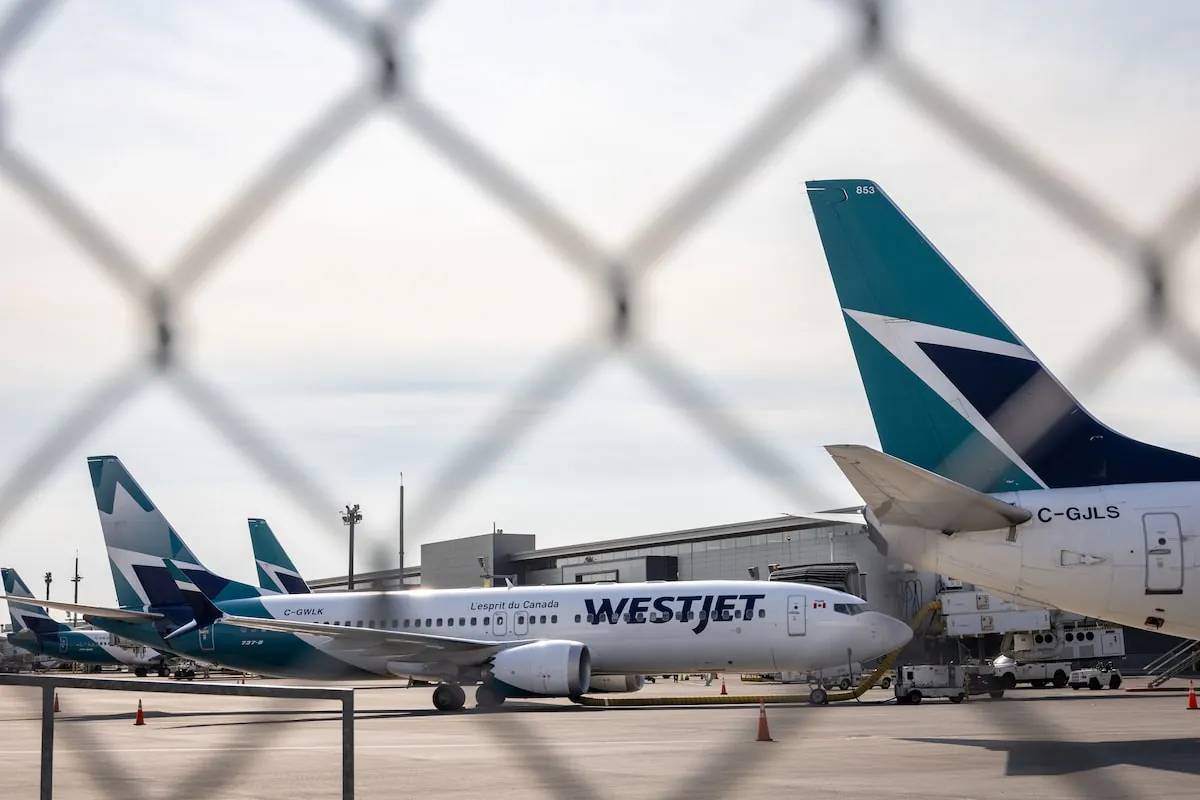
For passengers, the immediate question is not whether the union or airline had the better bargaining position. It is whether WestJet cancelled the flight, whether it offered a confirmed replacement within the APPR period, and whether the passenger accepted something less than the statutory remedy.
If your trip is domestic Canada only
For a domestic WestJet itinerary governed only by the APPR, the strongest enforceable claim during the strike is usually not inconvenience compensation. It is the rebooking-or-refund remedy. If WestJet cancels and gets you onto a suitable replacement within the APPR window, the refund claim may not arise. If WestJet cannot do that, you can choose the refund instead of continuing to wait.[2]
The refund is not a voucher if the passenger chooses cash back. The CTA’s APPR materials describe refund to the original form of payment, and the timeline is 30 days, not whatever date the airline prefers for processing credits.[2]
That does not make every hotel night, missed cruise, prepaid tour, or lost workday automatically recoverable under the domestic APPR. The APPR’s cash-compensation schedule is unavailable where the disruption is outside the carrier’s control. A passenger may still have another claim route, but the domestic APPR compensation table is not it.[1][2]
If you are flying to or from the United States
A U.S. endpoint does not, by itself, create a general cash-compensation right for delay. For WestJet flights to, from, or within Canada, the Canadian APPR framework remains central. The useful distinction is still refund versus compensation: cancellation can trigger a refund/rebooking right even when inconvenience cash compensation is unavailable.
For readers comparing this with U.S.-carrier disruption rules, the same trap appears in a different form: a refund right can exist without a cash-compensation right. That distinction also drove this site’s prior United outage analysis, including United Airlines System Failure: No Right to Cash Compensation and its companion United Airlines outage compensation playbook.
If your itinerary has an international segment
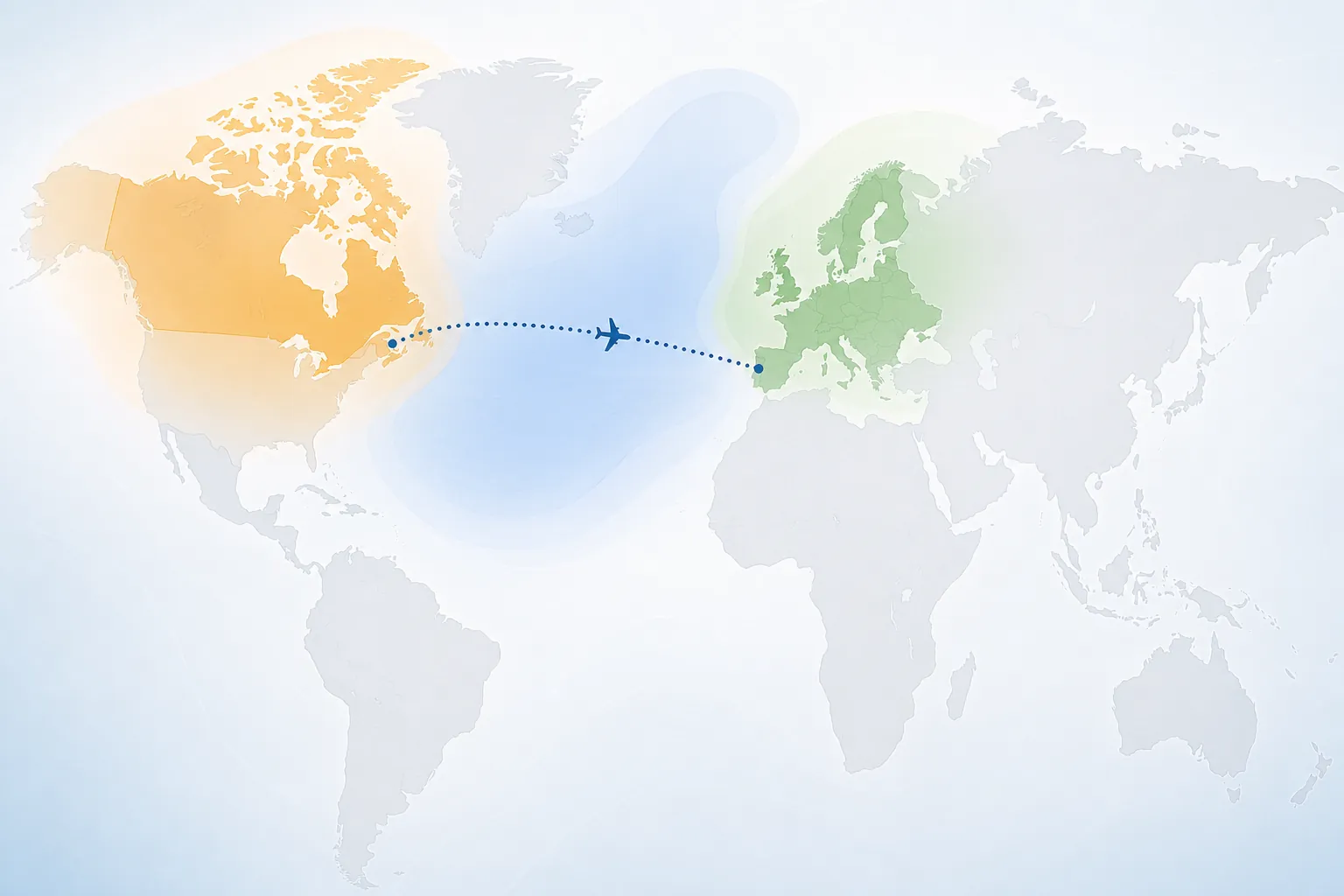
International itineraries need a separate look because the APPR strike classification does not erase every other legal regime. Air Passenger Rights argues that passengers on itineraries with an international segment may still claim delay damages under Article 19 of the Montreal Convention, subject to proof of actual loss and the Convention’s limits.[6]
That is not the same as APPR cash compensation. Montreal Convention damages are not paid because a flight was late in the abstract. They are tied to provable expenses or losses caused by delay, and the carrier can raise Convention defenses. The current cap is usually discussed in Canadian passenger-rights materials as roughly in the CAD$10,000–CAD$12,000 range per passenger because it depends on Special Drawing Rights conversion, so a precise Canadian-dollar number should be checked at the time of claim.[6]
One useful WestJet-specific point is already on the record. In Air Passenger Rights v. WestJet, the British Columbia Supreme Court barred WestJet from using fixed per-night hotel caps that could mislead passengers about their potential Montreal Convention rights.[7] That does not mean every passenger gets hotel reimbursement. It means the airline cannot safely treat a rigid internal cap as the legal ceiling where the Convention governs.
If your WestJet flight starts in the EU, EEA, or UK
EU/EEA/UK-originating flights sit at another edge of the map. Air Passenger Rights’ strike guidance points to EU261 cash compensation of €300–€600 for covered EU/EEA/UK-originating flights and relies on European case law treating a strike by an airline’s own staff as not automatically an “extraordinary circumstance.”[6]
That is a route-specific answer. A Canadian domestic passenger should not borrow EU261 because it sounds more generous. A passenger whose itinerary begins in Europe or the UK should not let the APPR’s domestic strike exemption end the analysis. The first question is where the regulated flight begins and which regime attaches to that segment.
The awkward category: WestJet cancelled before the strike actually began
The cleanest APPR answer applies once a cancellation is tied to the labour disruption. The harder category is WestJet’s pre-strike cancellations. CBC’s Aug. 1 report placed the cancellation count at about 198 before the planned Aug. 2 strike start.[3] Passenger-rights advocates argue that some preemptive cancellations should be treated as within the carrier’s control, potentially opening the APPR cash-compensation schedule, including amounts up to $1,000 in the APPR framework.[6]
That argument should be preserved if the facts fit, not sold as a guaranteed payout. Boyd v. WestJet, a non-binding British Columbia Civil Resolution Tribunal result, treated strike notices as labour disruptions outside the carrier’s control. That cuts against a simple “pre-strike equals compensable” rule.[6]
For a claim file, the practical move is to separate the theories. First demand the refund or rebooking remedy if WestJet cancelled and failed to rebook within the APPR window. Then, if the cancellation occurred before any strike began and the record supports it, decide whether to make a separate APPR compensation claim while acknowledging the unsettled status.
What not to do while waiting
The worst passenger-rights mistakes usually happen before anyone files a complaint. They happen in the app, at a counter, or in a rushed call with an agent.
- Do not voluntarily cancel first if your goal is an APPR refund after WestJet cancels. Passenger-rights advocate Gabor Lukács warned that passengers who cancel before the airline does can lose APPR protections.[8]
- Do not accept a travel credit if the remedy you want is a refund to the original form of payment.
- Do not confuse a goodwill waiver with a statutory cancellation remedy. The first may be fare-dependent; the second is triggered by the carrier’s cancellation and failure to rebook within the APPR period.
- Do not assume a domestic APPR strike exemption defeats Montreal Convention or EU261 claims on routes where those regimes apply.
- Do not throw away receipts because the APPR cash-compensation schedule is unavailable. Receipts may still matter for insurance, credit-card coverage, or an international delay-damages theory.
Travel insurance: check the known-event date before assuming coverage
Insurance may help some passengers, but a late purchase is not a cure for a known strike risk. CBC reported in its July 18, 2026 travel-insurance coverage that strike-related coverage may be unavailable once the labour disruption is a known event, with the relevant cutoff discussed around July 14–15, 2026.[9]
That makes the purchase date and policy wording more important than the passenger’s current frustration. A policy bought after the strike risk became known may exclude exactly the problem the passenger is trying to claim. A policy bought earlier may still require proof that WestJet cancelled, proof of expenses, and proof that the airline did not already owe or pay the same amount.
Which bucket are you in?
| Bucket | Likely governing path | Careful next move |
|---|---|---|
| Domestic Canada itinerary; WestJet cancelled during the strike disruption | APPR outside-carrier-control rebooking/refund rules | Wait for cancellation record, request rebooking or refund if 48-hour rebooking is not provided |
| Domestic Canada itinerary; you cancelled first | Fare rules, WestJet policy, and any goodwill waiver | Do not describe it as a WestJet cancellation unless the record supports that |
| WestJet cancelled before the strike began | APPR refund/rebooking plus possible contested compensation claim | Preserve the timing evidence and treat compensation as uncertain |
| Itinerary includes an international segment | APPR plus possible Montreal Convention delay-damages analysis | Keep receipts and document actual losses; do not rely on APPR cash compensation alone |
| Flight originates in EU/EEA/UK | EU261/UK261 route analysis may apply | Check the origin, operating carrier, cancellation timing, and notice period |
| You accepted a travel credit | Waiver/acceptance dispute may arise | Save the offer screen and terms; the refund argument may now be harder |
| You plan to claim insurance | Policy wording and known-event cutoff | Check purchase date, exclusion language, and duplicate-recovery rules |
For most domestic WestJet strike passengers, the enforceable right is refund or rebooking, not cash compensation. The stronger money claims live at the edges: international delay damages, EU/EEA/UK-originating flights, insurance that predates the known event, and the still-contested category of pre-strike cancellations.
References
- Airline labour disruptions – what passengers should know — Canadian Transportation Agency, July 29, 2026
- Flight delays and cancellations: Rebooking, refunds and compensation — Canadian Transportation Agency
- WestJet cancels flights ahead of possible flight attendant strike — CBC News, Aug. 1, 2026
- WestJet Airlines flight attendants give 72-hour strike notice — Reuters, July 30, 2026
- WestJet responds to union’s 72-hour strike notification and issues lockout notice — WestJet Newsroom, 2026
- WestJet Strike 2026: What Are My Rights? — Air Passenger Rights
- Air Passenger Rights v. WestJet, 2025 BCSC 155 — CanLII, 2025
- WestJet strike: What are passengers’ rights? — Global News
- Travel insurance and airline strike coverage — CBC News, July 18, 2026
Operationalizing workflow
No workflow has been explicitly linked to this obligation yet. See Workflows generally.
Illustrative cases
No illustrative case is currently tracked for this obligation. See Risk Digest for documented incidents generally.
← Back to RegulationReport a correction or tip
Spotted an outdated figure, a misstated fact, or a ruling this regulation entry should reflect? Public comments are disabled for this content given the professional cost of a misreported case outcome, penalty amount, or rule text — use the structured correction channel instead.
Report a correction or tip for this record →