
How the 2026 Bacon Recall Tests Product Liability Law
Analyzes whether a Class I recall based solely on a missing import-reinspection document—with zero confirmed illnesses or contamination—creates product liability exposure for the manufacturer and retailer. Covers economic-loss claims under state consumer protection statutes and the unsettled theory that a procedural failure alone may establish defect.
- Jurisdiction
- US Federal
- Court
- FSIS (USDA Food Safety and Inspection Service)
- AI tool named
- None
- Ruling date
- Jul 24, 2026
- Source document
- View primary court order ↗
- Last verified
- Jul 30, 2026
Lex Machina Review is an independent risk-tracking and reference resource. Nothing on this site is legal advice, and using it does not create an attorney-client relationship. Every record is reviewed against primary sources but may not reflect the most current status of a matter — always verify directly against the cited court order, rule text, or a licensed attorney before relying on it.
Companion explanation — secondary to the source document above
This Risk Digest analysis starts with the primary record: the FSIS recall notice. It is editorial analysis, not legal advice, and it does not include internal cross-links because there is no existing food-recall coverage on this site to link. For product-liability analysis of the 2026 bacon recall, the important fact is not that bacon was recalled. It is that FSIS assigned a serious recall classification to a product for an import-reinspection failure while reporting no confirmed illnesses and identifying no contaminant.
On July 24, 2026, FSIS announced that Maple Leaf Foods Inc. recalled 12,036 pounds of not-ready-to-eat bacon product imported without the benefit of import reinspection. The product was produced from June 9 through June 15, 2026, and distributed in Idaho, Oregon, and Washington. FSIS classified the recall as Class I and stated that there had been no confirmed reports of adverse reactions due to consumption of the product as of the notice date.[1]
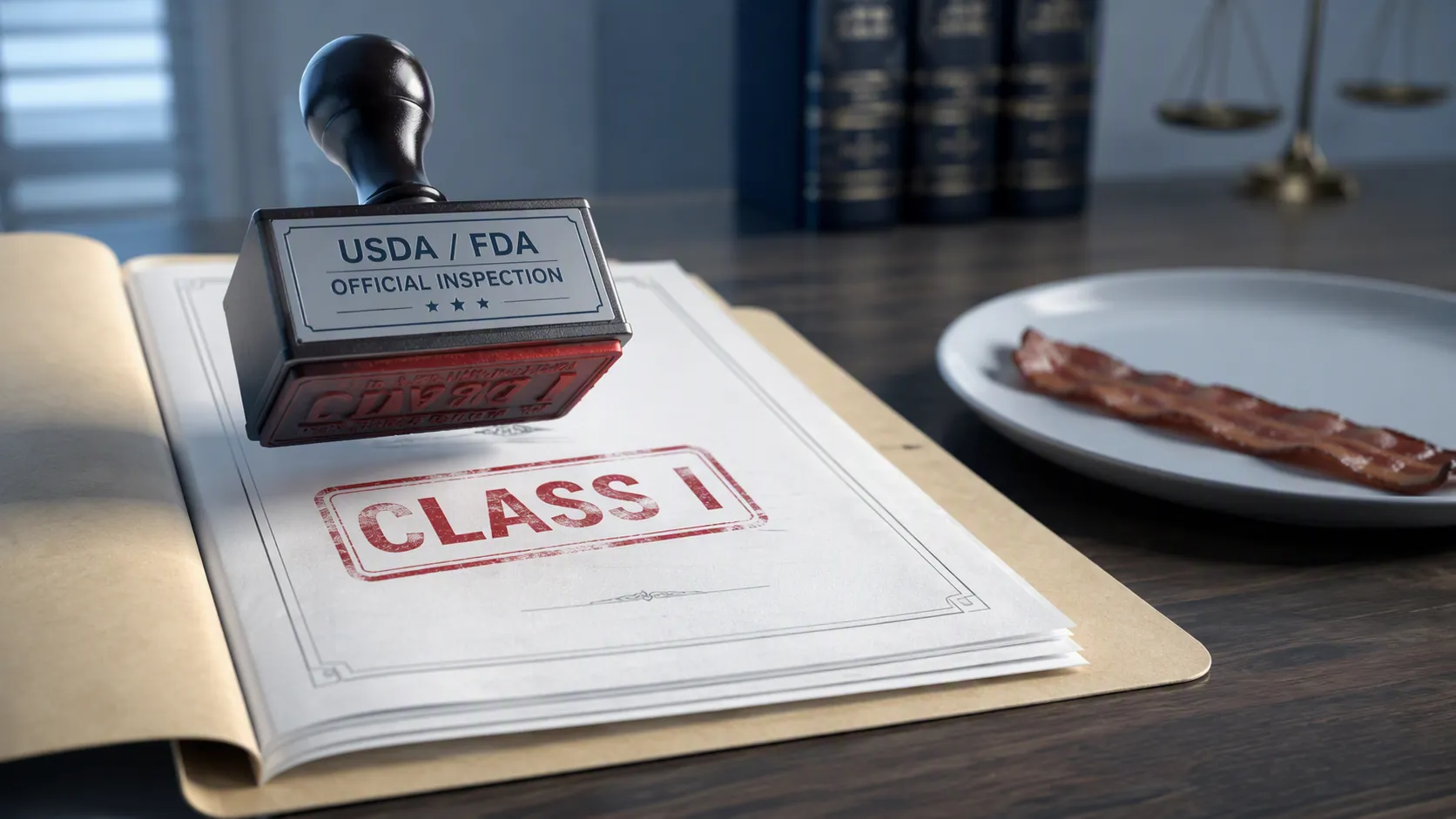
The mismatch that drives the legal risk
A Class I recall is not a quiet paperwork correction. FSIS recall guidance describes Class I as the category used where there is a reasonable probability that use of the product will cause serious, adverse health consequences or death.[2] That does not mean a private plaintiff can treat the notice as proof that the bacon was contaminated. The FSIS notice does not say that a pathogen, chemical, foreign material, or other contaminant was found. It says the product was imported without required reinspection.[1]
That distinction matters because product liability claims do not all ask the same question. A personal-injury case asks whether a claimant was hurt by the product and can prove causation. An economic-loss or consumer-protection case may ask whether purchasers received what they paid for: lawful, inspected food that could be sold in the ordinary stream of commerce. The same recall notice can be weak evidence for the first theory and useful evidence for the second.
Practitioner materials on recalls make the same basic point from different angles: a recall does not automatically establish civil liability, but it can become a central exhibit in later litigation, especially when plaintiffs use the recall to frame notice, defect, causation, damages, or the adequacy of a company’s response.[3][4][5]
Personal-injury claims have the thinnest record
On the facts publicly available as of July 30, 2026, illness-based claims look weak. FSIS reported no confirmed adverse reactions in the recall notice.[1] Without a reported illness, a diagnosed injury, and some causal path from the recalled bacon to that injury, a conventional personal-injury theory has little to work with.
That does not make the recall legally harmless. It only narrows the plausible litigation field. Plaintiffs’ lawyers do not need to prove food poisoning to bring every food-recall case. If the challenged conduct is the sale of food that allegedly should not have entered U.S. commerce in the first place, the injury theory can shift from bodily harm to overpayment, loss of benefit of the bargain, refund entitlement, or statutory consumer-protection remedies.
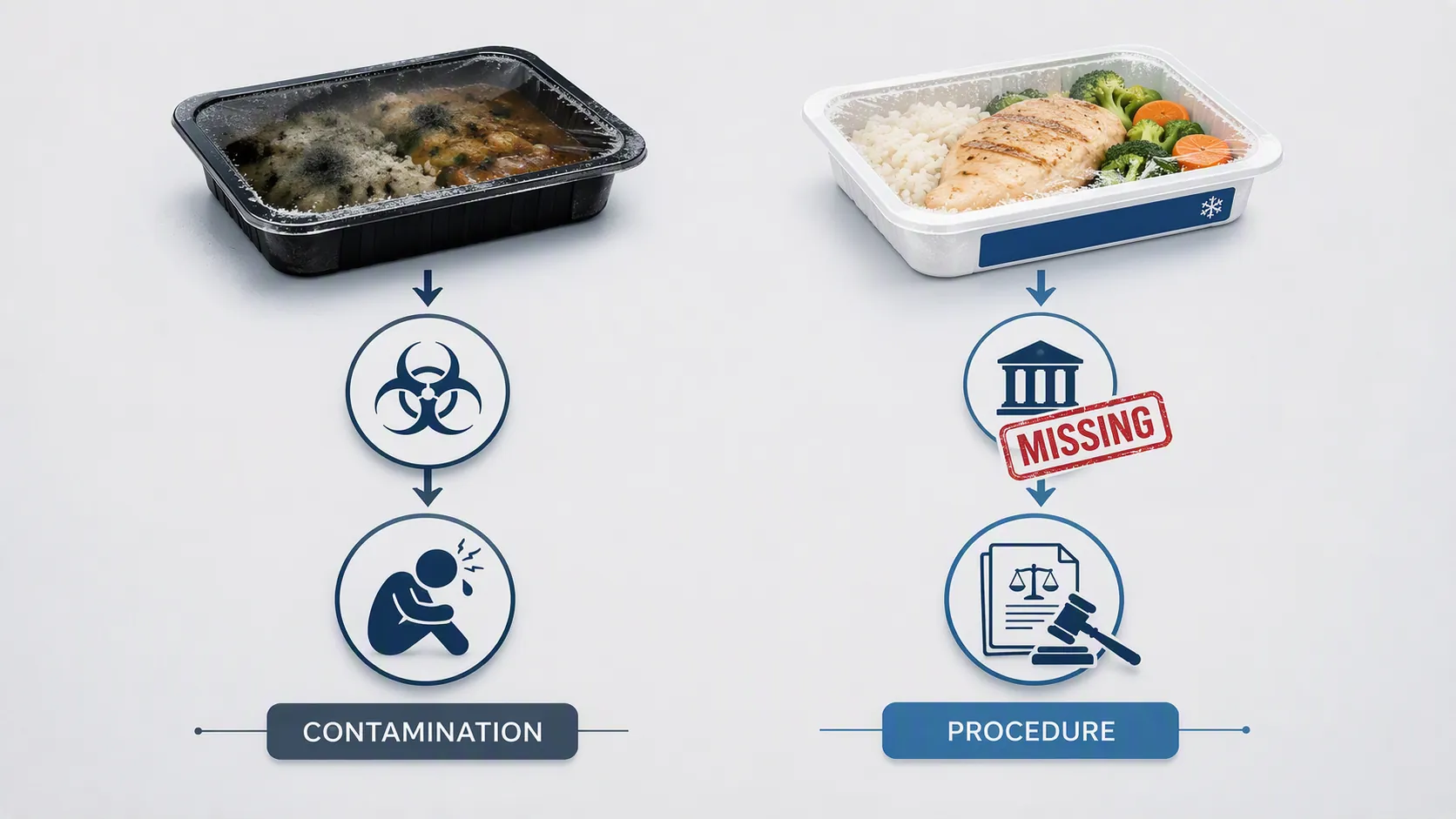
The stronger lawsuit is an economic-loss case
The plausible class-action theory is straightforward: purchasers paid for bacon that was lawfully imported, properly reinspected, and eligible for sale. If the product entered commerce without import reinspection, plaintiffs can argue they received something materially different from what the law and the label environment led them to expect. That is an economic-loss theory, not a contamination theory.
The statutory hook is why the reinspection failure cannot be dismissed as housekeeping. Plaintiffs would likely argue that 21 U.S.C. § 601(m)(4) supports treating the product as adulterated because the inspection failure placed the product outside the conditions Congress uses to separate lawful meat products from adulterated ones. On that view, the defect is procedural but still substantive: the product is legally defective because it missed a required safety gate, even if later testing never identifies a contaminant.
That argument is plausible, but it should not be inflated into a guaranteed win. A court would still have to decide whether the missing import reinspection, standing alone, creates a cognizable consumer injury under the applicable state statutes. Defense counsel would be expected to argue that no purchaser was physically harmed, no contaminant was found, and the recall process addressed the regulatory problem. Plaintiffs would answer that those points go to injury severity, not to whether consumers paid for a product that was legally saleable when offered.
What plaintiffs would try to prove
- The recalled lots were imported without the benefit of required reinspection, as FSIS stated in the recall notice.[1]
- The missing inspection step made the product legally nonconforming or adulterated for purposes of sale.
- Consumers would not have paid the same price, or would not have bought the product at all, had the import-reinspection failure been disclosed.
- The recall itself provides a common event and a common set of product identifiers for class treatment, even if individual consumption and illness questions vary.
The last point is where the absence of illness helps plaintiffs in an odd way. A personal-injury class would immediately run into individual medical and causation issues. A purchase-based class can be framed around receipts, product identifiers, distribution states, and refund or overpayment damages. The damages may be modest per consumer, but that is exactly why plaintiffs’ counsel would look to class treatment.
The six-week gap is not just chronology
The production dates and recall date deserve more attention than the label photographs. FSIS identified production dates from June 9 through June 15, 2026, and the recall announcement came on July 24, 2026.[1] That span gives plaintiffs a way to recast the case from a single missed import step into a monitoring and control problem.
For a regulator, the key question may be whether the product received the reinspection it needed. For a civil plaintiff, the next question is how long the company, importer, distributor, or retailer took to detect that it had not. A six-week production-to-recall window does not prove delay or concealment by itself. It does, however, create document questions: when the import file was reviewed, who reconciled inspection status against shipment records, when retailers were notified, and whether any product remained available for sale after the company knew or should have known of the gap.
That is where the defense record will matter more than the public notice. A company that can show a prompt internal discovery, immediate regulator contact, accurate product tracing, and quick retailer instructions has a different civil-risk profile from a company whose records show slow escalation or incomplete lot control. The FSIS notice starts the inquiry; it does not answer those questions.
Retailer exposure depends on what passed through the store
The manufacturer or importer is the natural first target because the recall notice identifies the import-reinspection failure. Retailers in Idaho, Oregon, and Washington still have practical exposure if they sold the affected product to consumers.[1] A consumer-protection complaint will not necessarily stop at the entity that missed the import step; it may name the sellers that collected the purchase price.
For retailers, the useful defense questions are operational. Which stores received the product? When did they receive recall instructions? How quickly was the product removed from shelves? Were consumers offered refunds or notices consistent with the recall? Did point-of-sale systems, inventory records, or loyalty-card data allow targeted notification? Those facts may not defeat every statutory claim, but they can affect reliance arguments, damages, standing, and class manageability.
The retailer’s best position is usually not to argue that inspection law is irrelevant. It is to show that once the recall entered the retail channel, the store acted as a conduit for removal and consumer remedy rather than as a source of continuing noncompliance. That difference can matter when plaintiffs try to convert a regulatory import failure into a broader sales-practice case.
What the Class I label can and cannot do
The Class I designation is powerful evidence that FSIS treated the recall as serious. It is not, by itself, laboratory evidence of contamination. That boundary should be kept clean. A plaintiff who argues “Class I, therefore dangerous bacon” is taking a shortcut the public record does not support. A plaintiff who argues “Class I plus missing import reinspection, therefore legally nonconforming product sold to consumers” has a more disciplined theory.
The distinction also matters for defenses. In a contamination case, the manufacturer may point to sanitation programs, testing, supplier controls, and the absence of confirmed illness. In a procedure-based defect case, those facts help but do not fully answer the allegation. If the legal wrong is missing reinspection, then clean product is not the same thing as inspected product.
That is the uncomfortable middle state in this recall. Nothing in the public record establishes that anyone got sick. Nothing in the public record identifies a contaminant. But the regulatory record already says the product entered without a required import-reinspection step and was serious enough for a Class I recall.[1] Product liability law often turns on exactly that kind of difference between factual hazard and legal nonconformity.
The older Maple Leaf settlement is a poor shortcut
The historical Maple Leaf listeriosis settlement is sometimes mentioned when Maple Leaf and recalled meat appear in the same sentence. It should not carry much weight here. That matter was Canadian, older, factually different, and involved actual contamination. The present U.S. recall analysis should stay with the FSIS notice and the specific import-reinspection failure at issue.
Bounded risk as of July 30, 2026
No filed class action is publicly known from the materials reviewed as of July 30, 2026. On the current record, personal-injury claims are unlikely because FSIS reported no confirmed adverse reactions and no contaminant has been identified.[1] That is the easy part of the risk assessment.
The harder part is the economic-loss exposure. A Class I recall based on import reinspection gives plaintiffs a plausible consumer-protection theory: consumers allegedly paid for lawful, inspected bacon and received product that had not passed a required import gate. The theory is procedure-based, not contamination-based, and it remains unsettled. But it is viable enough that defense counsel should not treat “no illnesses” as the end of the analysis.
References
- Maple Leaf Foods Inc. Recalls Not Ready-To-Eat (NRTE) Bacon Product Imported without the Benefit of Import Reinspection, FSIS, July 24, 2026
- USDA Recall Guide, OFW Law
- How Recalls Affect Product Liability Lawsuits, The McCallister Law Firm
- Recalls and Product Liability: Can You Still Sue After a Recall?, Smith & Johnson
- Product Recalls: Anticipating the Product Liability Lawsuits, Jones Day
Related records
Tool profile
Browse tool evaluations →Governing regulation
Browse the obligations tracker →Preventive workflow
Browse verification workflows →
Report a correction or tip
Spotted an outdated figure, a misstated fact, or a ruling this case record should reflect? Public comments are disabled for this content given the professional cost of a misreported case outcome, penalty amount, or rule text — use the structured correction channel instead.
Report a correction or tip for this record →